Escape from the Big Game

The View from My Brother’s Back Yard

There is always a big game on TV, so I usually make my escape from the drone of the sports announcers by heading to my brother’s back yard with a book. Fortunately, the book I was reading was a humdinger: Edward John Trelawny’s Records of Shelley, Byron, and the Author.

Unlike me, Dan likes to relax by watching football, basketball, and baseball games on the weekend. Unlike our late father, he is not a dyed-in-the-wool fan of any particular team: He enjoys the game even when the local boys lose, as the Los Angeles Rams did on Sunday against the Seattle Seahawks.

And, as I was with him all weekend, I had to entertain myself part of the day. This last weekend, the mercury in the early afternoons was in the low 70s Fahrenheit (low 20s Celsius). By the late afternoon, however, it started to cool down; so I was exposed to a broad spectrum of televised sports. My favorite was the game between the Denver Broncos and the New England Patriots in a white-out blizzard. All the yard indicators and hatch marks were covered with snow, forcing the stadium maintenance personnel to melt the snow at key points.

Football in the Snow

As always, it was fun to get together with my brother and sister-in-law. We watched several movies on TV, including Bubba Ho-Tep (2003). This was a film all three of us liked twenty years ago. In the intervening years, however, we seem to have changed and now regard the film with some disfavor. The other film we saw was Takeshi Kitano’s Broken Rage (2024), which started great but descended into randomness.

To make up for the sports and bad movies, the food was great, There are some wonderful Mexican restaurants in the Coachella Valley, and my brother’s cooking is superb or better.

Deracinated

I had a good time visiting my brother and sister-in-law in Palm Desert this last weekend. On Saturday, Dam took me to the Agua Caliente Cultural Plaza, which is, in effect, a museum of the beliefs and history of the Agua Caliente Band of Cahuilla Indians.

What impressed me most about the museum was a display of a ceremonial hut that played a video about how the Agua Caliente Cahuillas substantially gave up on their culture, language, and religion around 1950 after years of being pressured by white society to be more like them.

The tribe owns large chunks of Palm Springs in a checkerboard pattern as shown in the following map:

The Nine Tribes of the Cahuilla Nation

Also shown are the lands belonging to the eight other Cahuilla peoples and where they are located::

  1. Augustine Band of Cahuilla Indians (Coachella)
  2. Cabazon Band of Mission Indians (Indio)
  3. Cahuilla Band of Mission Indians of the Cahuilla Reservation (Anza)
  4. Los Coyotes Band of Cahuilla and Cupeño Indians of the Los Coyotes Reservation (Warner Springs)
  5. Morongo Band of Cahuilla Mission Indians of the Morongo Reservation (Banning)
  6. Ramona Band of Cahuilla (Anza)
  7. Santa Rosa Band of Cahuilla Indians (Between Palm Springs and Anza)
  8. Torres-Martinez Desert Cahuilla Indians (Thermal)

Dan and I were impressed by the tribe’s presentation of their history and beliefs. Because they own a substantial chunk of Palm Springs, the Agua Caliente Cahuillas (ACC) are considerably better off than the eight other tribes. They all live in the desert, but the ACC have Mount San Jacinto and the hot springs of Palm Springs.This gives them wealth in the sense that our culture values wealth, but at the cost of losing much of what made them who they are.

It is always fascinating to me when I am confronted with another culture. And there are so many cultures in North America. Some are strong like the Hopi and Navaho. Others, like the ACC are but a shadow of what they once were.

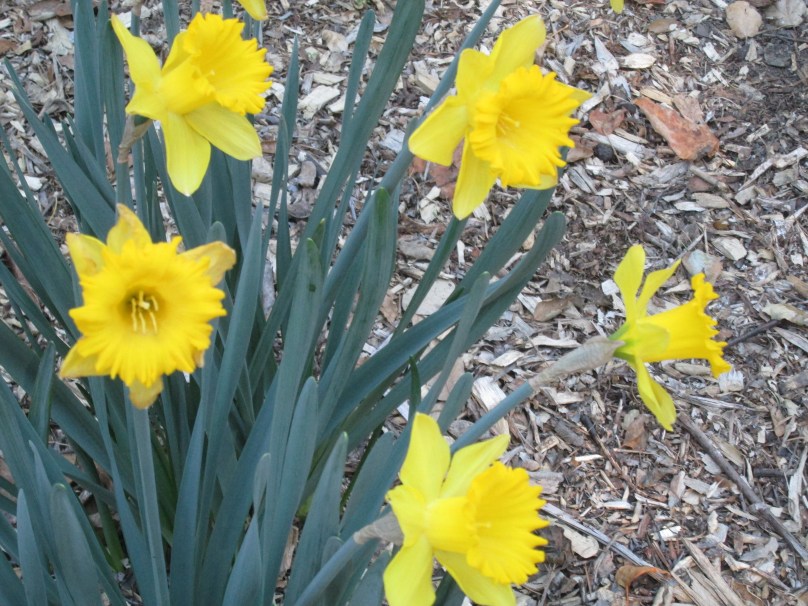
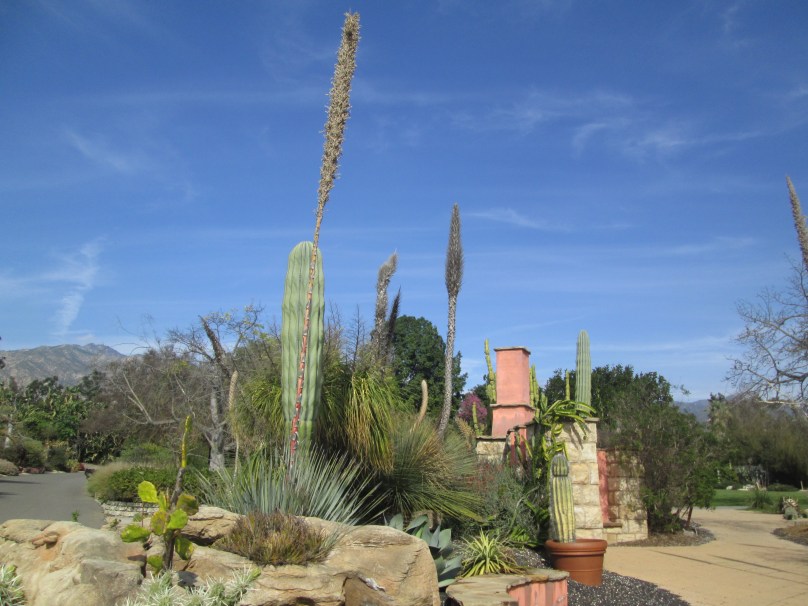
The Agua Caliente Cultural Plaza is well worth visiting. Afterwards, walk around in the ACC recreation of a desert landscape just outside the museum building.

A Weekend in the Desert

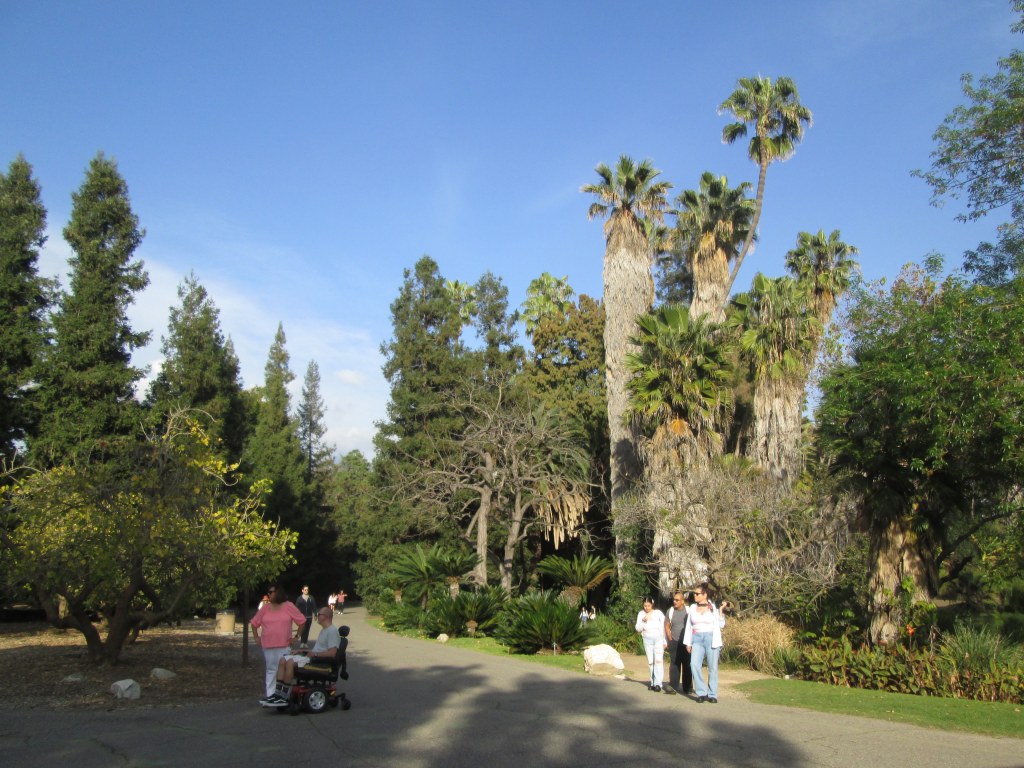
My Brother Dan at the Whitewater Preserve

This weekend, I will be visiting my brother Dan in the Coachella Valley. As Martine is still smarting from her two sweltering years at Twentynine Palms in the nearby Yucca Valley, she will not be coming with me. It is also probably the last time I will be visiting him at his Palm Desert home: He and his wife Lori are planning on moving to Santa Rosa in Northern California later this year. And I am unlikely to visit the desert in summer.

Consequently, the next time I will be posting to this blog will probably be on Monday or Tuesday. Hopefully, Dan will introduce me to some of the local sights.

The above picture is the last one I took with my old Canon PowerShot A1400. Not two minutes after I took this picture, I tripped on one of the rocks bordering the path (shown above) and crushed the lens of my camera. Fortunately, the memory card containing my pictures was still intact; and I was able to upload them to my system without any problems.

At some point this weekend, I hope to talk Dan into going to one of the Valley’s tamale restaurant. I was disconsolate when I learned that my last scheduled visit to the desert in mid-December (canceled due to illness) occurred during the annual Indio Tamale Festival.

In any case, Dan and I are both foodies. I expect we will have some great meals, both at restaurants and in his dining room. (Dan is a wizard of a chef.)

Oshogatsu

Elegant Japanese Kimonos

Today, Martine and I rode Metro Rail downtown to attend an event at the Central Library celebrating Japanese New Year, or Oshogatsu. In Japan, New Years is celebrated at the beginning of January, unlike Chinese New Year, which is based on a lunar calendar. So actually it was a little late to celebrate Japanese New Year, but I guess it was difficult to schedule the Mark Taper Auditorium at the library.

There were three main exhibits, each presented by a different locally-based Japanese-American organization.

The first was ikebana, or flower arranging. In twenty minutes, a young woman created a floral masterpiece consisting of two types of lilies, mums, pine and willow branches, and other plants. I wondered how the different components stayed in place. I learned that a kenzan, variously knoen in English as a “spiky frog” or “pin frog.” was used to hold the components in place. (See the photo below.)

Kenzan

The rest of the program consisted of a fashion show of different types of kimonos for women (and men as well as children), accompanied by music on the koto, a zither with thirteen or more strings. On stage were three kotos played in unison.

I was first introduced to the koto at Dartmouth College, where I heard a concert given by an accomplished Japanese soloist. That, and my love of Japanese films, have introduced me to the joys of Japanese koto music.

The kimonos for women were truly lovely. I was amazed however how intricate the obis (sashes) were and how long it took to tie them. A skilled kimono-wearer could tie an obi in four or five minutes. It would probably take a klutz like me the better part of the morning, only to end up with an unholy mess.

The Salton Civilization

Bogus Sign at Bombay Beach

Well, now, it’s pushing it a bit to call it a civilization. The people who live on the eastern shore of the polluted Salton Sea live under difficult conditions. The temperature during the summer drives most of them away to cooler climes. Drinking water, especially for the communities of Slab City, Salvation Mountain, and East Jesus is problematic. To put it simply, there isn’t any.

According to the Wikipedia entry on the “Sea”:

The modern lake was formed from an inflow of water from the Colorado River in 1905. Beginning in 1900, an irrigation canal was dug from the Colorado River to provide water to the Imperial Valley for farming. Water from spring floods broke through a canal head-gate, diverting a portion of the river flow into the Salton Basin for two years before repairs were completed. The water in the formerly dry lake bed created the modern lake.

Currently, the Salton Sea is approximately 15 by 35 miles (24 by 56 km) in dimension, containing some 318 square miles (823.6 square km). For a short time, it was a popular tourist destination, until the combination of runoff of pesticides from Imperial Valley farmland to the south and blowing contaminated dust from the evaporating lake is turning it into California’s equivalent of the Dead Sea.

The Receding Salton Sea from Its Eastern Shore

The Salton Sea’s eastern shore has attracted an interesting breed of snowbird during the cooler months (if there are any there). Bombay Beach has been taken over by artsy types, along with Salvation Mountain. In Slab City and East Jesus, one is likely to run across people who are just trying to escape the pressures of modern life, even if thy have to sacrifice easy access to drinking water and the power grid.

Borges at Disneyland

Painting of Argentinean Poet Jorge-Luis Borges (1899-1986)

This was a dream I had last night: I was taking my favorite 20th century writer, Jorge-Luis Borges on a tour of Disneyland. It wasn’t the real Disneyland: It was a dream Disneyland whose dimensions were two kilometers by two kilometers. It was interesting because it taught me something about Borges as well as something about myself.

We started in a two-story pavilion dedicated to horror. I was eager to guide Borges through the different galleries, promising a special treat on the second floor, where there was a gallery dedicated to Edgar Allan Poe. At this point, Borges started to say something disparaging about Poe; but I shrugged it off and went on to the second floor, while the poet got interested in one of the ground floor galleries.

I looked forward to taking Borges to one of the restaurants in the park, but Borges said he had no interest in another buffet.

Suddenly, we cut to the railroad that circled Disneyland. It wasn’t anything like the actual railroad that goes through the park, but a more modernized train with multiple passenger cars in which we were seated on long benches facing the direction the train was going. In Disneyland, the round-the-park train seats passengers facing to the right, so that they could see the many dioramas.

At the station, I took a seat and turned to my left to see if Borges was following me. He wasn’t. Instead, a middle-aged couple sat next to me. I became agitated, as the train passed seemingly through miles of open country—a far cry from the city of Anaheim around the park. Around the halfway point, I stopped at a station and started looking for a Disney public relations rep so that he could stage a search for the lost Argentinean writer.

At this point I woke up and said to myself, “What a strange dream!”

Air Lazarus

The Museum of Flying in Santa Monica

Once upon a time, the Museum of Flying in Santa Monica was two or three times bigger. Founded by Donald Douglas, Jr., of Douglas Aircraft fame, it was originally located north of the Santa Monica airport beginning in 1989 and included many exhibits furnished by an independent partner. In 2002, the museum folded.

After ten years, a new, smaller museum anchored by the Donald Douglas, Jr. collection opened south of the airport in smaller quarters.

Martine and I have always liked aircraft museums. Our favorites were the Palm Springs Air Museum and the Pima Air and Space Museum in Tucson, Arizona. What made all these aircraft museums interesting was the existence of numerous volunteer docents who piloted the planes during the wars of the late 20th century. As many of these docents reach a certain age and pass on, I suspect that the museums themselves will lose a lot of their present appeal. But for now, I think they are wonderful places to visit and learn aviation from Kitty Hawk to today.

Waco GXE Model 10 Biplane

When I first moved to Southern California, the Santa Monica Airport and much of the land surrounding it were all part of a gigantic MacDonnell Douglas Corporation factory, which after being merged out of existence sold its property to developers and to the general aviation facility that today is the Santa Monica Airport.

So even if the Museum of Flying is something of a Lazarus raised from the dead, we will continue to visit and enjoy it.

Easy Breakfast Quesadillas

Rajas de Jalapeño

This is perhaps my most common breakfast, which I have with my morning tea. It contains only three ingredients: (1) Good quality flour tortillas; (2) Monterey Jack cheese; and (3) Pickled jalapeño peppers.

If you can’t tolerate chile peppers, I suppose you could try something mild like Ortega chiles, but I can’t imagine that would taste good. I use either canned Mexican rajas de jalapeño, which may also include pickled carrots, onion, and even pieces of cauliflower or else any pickled jalapeños.

For the cheese, I always prefer Monterey Jack. A particularly good brand on the West Coast comes from Joseph Farms and is available at Ralphs supermarkets (owned by Kroger).

Of primary importance are the flour tortillas. My brand of choice is El Comal or La Banderita. Avoid cheap flour torts that tear easily along the edges or that taste like cardboard. Unfortunately, most of the popular supermarket brands fall into this category.

To prepare the quesadillas, I preheat the oven to 350° Fahrenheit ( 175° Celsius). I take a quarter cup of jalapeños and chop them up fine. Then with a cheese slicer, I cut four slices of Monterey Jack cheese. I take two flour tortillas and on the upper half of each place two slices of cheese and half the chopped jalapeños, Then I fold the torts in two, being careful that they not tear in the process. (This is one way of learning whether you’ve bought the right flour tortillas.) Place them in the oven and cook them until the edges of the tortillas begin to turn dark brown.

It is very likely that some of the cheese will drip, so I always place a sheet of foil underneath.

The result is a bit spicy, but a very pleasant way to start your day.