Mostly Botanical

Strange Cacti at L. A. Arboretum

Southern California owes a debt of gratitude to some of its past robber barons who have left some beautiful monuments behind them. I am thinking of Henry Huntington (Huntington Gardens), E. J. “Lucky” Baldwin (L. A. Arboretum), and Manchester Boddy (Descanso Gardens).

People usually come to Los Angeles to see Hollywood (a sad slum), the beaches (polluted), or Disneyland (outrageously expensive), but little do they think that the area’s botanical gardens are probably the most satisfying sights to be seen. While Martine and I could easily spend four hours tromping around the Arboretum, I could not imagine spending comparable time at any of the signature sights—except maybe Disneyland, if you are carrying an ample supply of gold bullion.

And only at the botanical gardens will you feel a sense of peace, surrounded by beauty and fresh air.

Trees at the Arboretum

Even if you don’t live in California, I urge you to check out the botanical gardens in your area. They are deserving of your support. And they are a great place to go with your family: Even the children I saw at the Arboretum appeared to be interested, even engaged.

Rain in the Offing

Statue of a Frog at the LA Arboretum

This being Valentine’s Day and facing a prediction of several days of rain, I took Martine to the Los Angeles Arboretum in Arcadia. Our last visit there was in 2017. As I looked at the many turtles basking on the shore of Baldwin Lake and the statue of a frog in the Meadowbrook section of the park, the thought of rain was not far from my thoughts. To my mind, turtles and frogs were symbols of wet weather to come.

A less mythical harbinger of rain were the fluffy stratus clouds I noticed as I looked up. To me, that meant that I should curl up with a good book and enjoy the storm, which the local weathermen are already referring to as an “atmospheric river.”

Stratus Clouds Over the Arboretum

Because I am not so mobile as Martine is, at several points along the trail I picked out a shady bench and finished reading Peter Harris’s excellent edition of Zen Poems. Meanwhile, Martine walked around and explored the many sections of the Arboretum. This way, we both got the most out of our visit.

Rain does not deter me as it used to. Now I see a rainy winter as not only a protection against raging wildfires, but a brush that paints the surrounding hills and mountains green and dots them with lovely wildflowers. Otherwise, Southern California takes on a desertlike tinge of brown and gives us hot summers smelling of burnt dust.

“Leaves of Three …”

Sign Warning of Poison Oak at Descanso Gardens

I remember the old Boy Scout saying, “Leaves of three, leave them be,” referring to how to recognize Poison Ivy and Poison Oak. As I sat on a bench overlooking the lake at Descanso Gardens, I noticed the sign, which was next to a thicket of highly suspicious plants, presumably poison oak.

It would have been tempting to touch one of the plants, but I have already been troubled by itchy legs attributable to my Type 2 Diabetes. So I just sat there for about half an hour waiting for Martine. She never came that way, so presumably she detoured onto another trail.

Descanso is riddled with trails going in all directions. That is one of the charms of the place, along with the large number of benches fronting scenic viewpoints. We eventually met at the Chinese garden, where I sat reading Zen Poems in a perfect location surrounded by camellias. Then we met yet again by a pond which used to have a dual fish fountain (see image below) years ago that we used to watch.

Fish Fountains at Descanso in 2007

Although the fish fountains are long gone, we still like to think about them. So it goes.

In the Land of Camellias

Perfect Camellia Blossom at Descanso Gardens

Today was Super Bowl Sunday. Yesterday, I said to Martine, “Let’s go somewhere. Everyone will be watching football, so traffic will be light.” And it was—except for the fact that Caltrans shrank the I-405 from six lanes to three for about six miles.

We had lunch at Martine’s favorite Armenian rotisserie chicken restaurant, Sevan Chicken in Glendale. Then we drove to Descanso Gardens and spent three hours there wandering around.

February is not normally known for flowers, but that doesn’t apply to camellias. According to the garden’s website:

There are more than 3,000 kinds of camellias ranging in color, form, and size. Native to Asia, camellias are hardy and have a long blooming season. The two most common species at Descanso are Camellia sasanqua that bloom in fall/winter and Camellia japonica that bloom in winter/spring.

Martine walked around a lot more than I did, but I found several comfortable benches and read from Zen Poems, a collection edited by Peter Harris, in which I found this apt poem:

Camellia Blossoms

My ancient hut’s a ruin, half-hidden under moss—
Who’d have his carriage pause before my gate?
But my servant boy understands that I’ve beckoned an honoured guest
For he leaves unswept the camellia blossoms that fill the ground.

An interesting sidelight: Unlike most Americans, I am not a coffee drinker. My beverage of choice is tea. Interestingly, tea is made from the leaves of the Camellia sinensis, or Chinese camellia.

Introducing Lord Byron

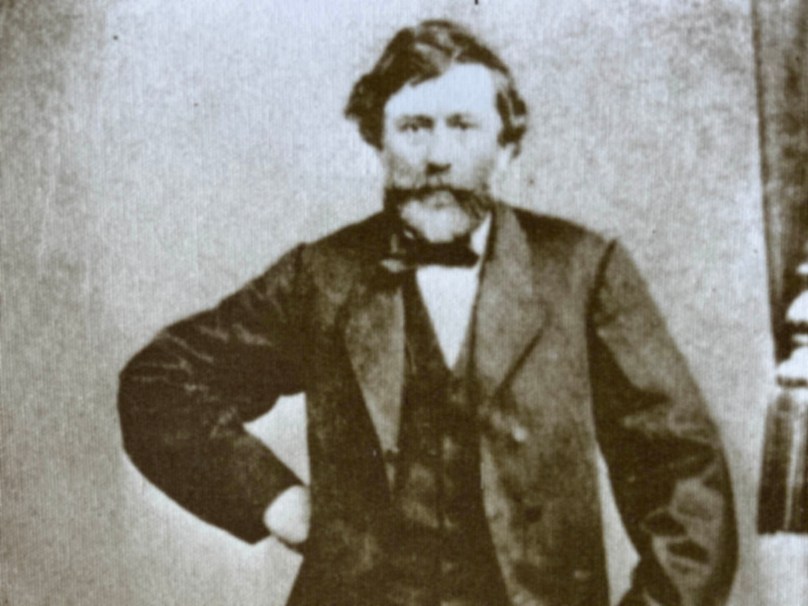
British Poet George Gordon, Lord Byron (1788-1824)

In that wonderful peak into the lives of two of England’s greatest poets we are indebted to Edward John Trelawny’s Records of Shelley, Byron, and the Author for eyewitness accounts. Although Trelawny was not altogether truthful at times, what would we give to have similar accounts of Shakespeare, Montaigne, and Erasmus, however imperfect?

I forgot that great actors when off the stage are dull dogs; and that even the mighty Prospero, without his book and magic mantle, was but an ordinary mortal. At this juncture Shelley joined us; he never laid aside his book and magic mantle; he waved his wand, and Byron, after a faint show of defiance, stood mute; his quick perception of the truth of Shelley’s comments on his poem transfixed him, and Shelley’s earnestness and just criticism held him captive.

I was, however, struck with Byron’s mental vivacity and wonderful memory; he defended himself with a variety of illustrations, precedents, and apt quotations from modern authorities, disputing Shelley’s propositions, not by denying their truth as a whole, but in parts, and the subtle questions he put would have puzzled a less acute reasoner than the one he had to contend with. During this discussion I scanned the Pilgrim [Byron] closely.

In external appearance Byron realised that ideal standard with which imagination adorns genius. He was in the prime of life, thirty-four; of middle height, five feet eight and a half inches; regular features, without a stain or furrow on his pallid skin, his shoulders broad, chest open, body and limbs finely proportioned. His small highly-finished head and curly hair had an airy and graceful appearance from the massiveness and length of his throat: you saw his genius in his eyes and lips. In short, Nature could do little more than she had done for him, both in outward form and in the inward spirit she had given to animate it. But all these rare gifts to his jaundiced imagination only served to make his one personal defeat (lameness) the more apparent, as a flaw is magnified in a diamond, when polished; and he brooded over that blemish as sensitive minds will brood until they magnify a wart into a wen.

His lameness certainly helped to make him sceptical, cynical, and savage. There was no peculiarity in his dress, it was adapted to the climate: a tartan jacket braided—he said it was the Gordon pattern, and that his mother was of that race. A blue velvet cap with a gold band, and very loose nankeen trousers, strapped down so as to cover his feet; his throat was not bare, as represented in drawings.

Pong

Sea Lions at Chace Park

It was a hot day, so I decided to take a book and lunch with me to Chace Park. When I arrived there, I was assailed by the pong of scores of sea lions resting on the docks of the Marina. It was decidedly a fishy aroma, and it was noisy with their incessant barking, so I cut my visit short.

As usual, I wondered: Were these seals or sea lions? A quick check of the Internet revealed that they were in fact sea lions. They hung out on the piers in large noisy groups, and they appeared to have small ears.

The park was also crowded with the usual suspects: arrogant crows, watchful sea gulls, and spindly squirrels. Other suspects included a large contingent of the homeless with loud radios. It was exactly conducive for reading. I read a couple of chapters of G. K. Chesterton’s Appreciations and Criticisms of the Works of Charles Dickens and made my way to my parked car to return home.

It was approximately 80° Fahrenheit (27° Celsius) at Chace Park; but the whole vibe was different from the summer, when the sea lions and homeless were less in evidence.

Escape from the Big Game

The View from My Brother’s Back Yard

There is always a big game on TV, so I usually make my escape from the drone of the sports announcers by heading to my brother’s back yard with a book. Fortunately, the book I was reading was a humdinger: Edward John Trelawny’s Records of Shelley, Byron, and the Author.

Unlike me, Dan likes to relax by watching football, basketball, and baseball games on the weekend. Unlike our late father, he is not a dyed-in-the-wool fan of any particular team: He enjoys the game even when the local boys lose, as the Los Angeles Rams did on Sunday against the Seattle Seahawks.

And, as I was with him all weekend, I had to entertain myself part of the day. This last weekend, the mercury in the early afternoons was in the low 70s Fahrenheit (low 20s Celsius). By the late afternoon, however, it started to cool down; so I was exposed to a broad spectrum of televised sports. My favorite was the game between the Denver Broncos and the New England Patriots in a white-out blizzard. All the yard indicators and hatch marks were covered with snow, forcing the stadium maintenance personnel to melt the snow at key points.

Football in the Snow

As always, it was fun to get together with my brother and sister-in-law. We watched several movies on TV, including Bubba Ho-Tep (2003). This was a film all three of us liked twenty years ago. In the intervening years, however, we seem to have changed and now regard the film with some disfavor. The other film we saw was Takeshi Kitano’s Broken Rage (2024), which started great but descended into randomness.

To make up for the sports and bad movies, the food was great, There are some wonderful Mexican restaurants in the Coachella Valley, and my brother’s cooking is superb or better.

Deracinated

I had a good time visiting my brother and sister-in-law in Palm Desert this last weekend. On Saturday, Dam took me to the Agua Caliente Cultural Plaza, which is, in effect, a museum of the beliefs and history of the Agua Caliente Band of Cahuilla Indians.

What impressed me most about the museum was a display of a ceremonial hut that played a video about how the Agua Caliente Cahuillas substantially gave up on their culture, language, and religion around 1950 after years of being pressured by white society to be more like them.

The tribe owns large chunks of Palm Springs in a checkerboard pattern as shown in the following map:

The Nine Tribes of the Cahuilla Nation

Also shown are the lands belonging to the eight other Cahuilla peoples and where they are located::

  1. Augustine Band of Cahuilla Indians (Coachella)
  2. Cabazon Band of Mission Indians (Indio)
  3. Cahuilla Band of Mission Indians of the Cahuilla Reservation (Anza)
  4. Los Coyotes Band of Cahuilla and Cupeño Indians of the Los Coyotes Reservation (Warner Springs)
  5. Morongo Band of Cahuilla Mission Indians of the Morongo Reservation (Banning)
  6. Ramona Band of Cahuilla (Anza)
  7. Santa Rosa Band of Cahuilla Indians (Between Palm Springs and Anza)
  8. Torres-Martinez Desert Cahuilla Indians (Thermal)

Dan and I were impressed by the tribe’s presentation of their history and beliefs. Because they own a substantial chunk of Palm Springs, the Agua Caliente Cahuillas (ACC) are considerably better off than the eight other tribes. They all live in the desert, but the ACC have Mount San Jacinto and the hot springs of Palm Springs.This gives them wealth in the sense that our culture values wealth, but at the cost of losing much of what made them who they are.

It is always fascinating to me when I am confronted with another culture. And there are so many cultures in North America. Some are strong like the Hopi and Navaho. Others, like the ACC are but a shadow of what they once were.

The Agua Caliente Cultural Plaza is well worth visiting. Afterwards, walk around in the ACC recreation of a desert landscape just outside the museum building.

A Weekend in the Desert

My Brother Dan at the Whitewater Preserve

This weekend, I will be visiting my brother Dan in the Coachella Valley. As Martine is still smarting from her two sweltering years at Twentynine Palms in the nearby Yucca Valley, she will not be coming with me. It is also probably the last time I will be visiting him at his Palm Desert home: He and his wife Lori are planning on moving to Santa Rosa in Northern California later this year. And I am unlikely to visit the desert in summer.

Consequently, the next time I will be posting to this blog will probably be on Monday or Tuesday. Hopefully, Dan will introduce me to some of the local sights.

The above picture is the last one I took with my old Canon PowerShot A1400. Not two minutes after I took this picture, I tripped on one of the rocks bordering the path (shown above) and crushed the lens of my camera. Fortunately, the memory card containing my pictures was still intact; and I was able to upload them to my system without any problems.

At some point this weekend, I hope to talk Dan into going to one of the Valley’s tamale restaurant. I was disconsolate when I learned that my last scheduled visit to the desert in mid-December (canceled due to illness) occurred during the annual Indio Tamale Festival.

In any case, Dan and I are both foodies. I expect we will have some great meals, both at restaurants and in his dining room. (Dan is a wizard of a chef.)

Oshogatsu

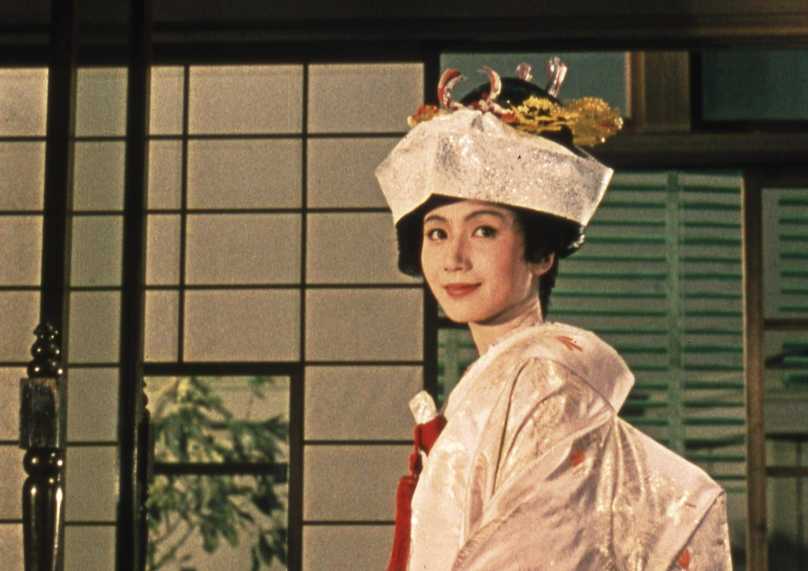
Elegant Japanese Kimonos

Today, Martine and I rode Metro Rail downtown to attend an event at the Central Library celebrating Japanese New Year, or Oshogatsu. In Japan, New Years is celebrated at the beginning of January, unlike Chinese New Year, which is based on a lunar calendar. So actually it was a little late to celebrate Japanese New Year, but I guess it was difficult to schedule the Mark Taper Auditorium at the library.

There were three main exhibits, each presented by a different locally-based Japanese-American organization.

The first was ikebana, or flower arranging. In twenty minutes, a young woman created a floral masterpiece consisting of two types of lilies, mums, pine and willow branches, and other plants. I wondered how the different components stayed in place. I learned that a kenzan, variously knoen in English as a “spiky frog” or “pin frog.” was used to hold the components in place. (See the photo below.)

Kenzan

The rest of the program consisted of a fashion show of different types of kimonos for women (and men as well as children), accompanied by music on the koto, a zither with thirteen or more strings. On stage were three kotos played in unison.

I was first introduced to the koto at Dartmouth College, where I heard a concert given by an accomplished Japanese soloist. That, and my love of Japanese films, have introduced me to the joys of Japanese koto music.

The kimonos for women were truly lovely. I was amazed however how intricate the obis (sashes) were and how long it took to tie them. A skilled kimono-wearer could tie an obi in four or five minutes. It would probably take a klutz like me the better part of the morning, only to end up with an unholy mess.