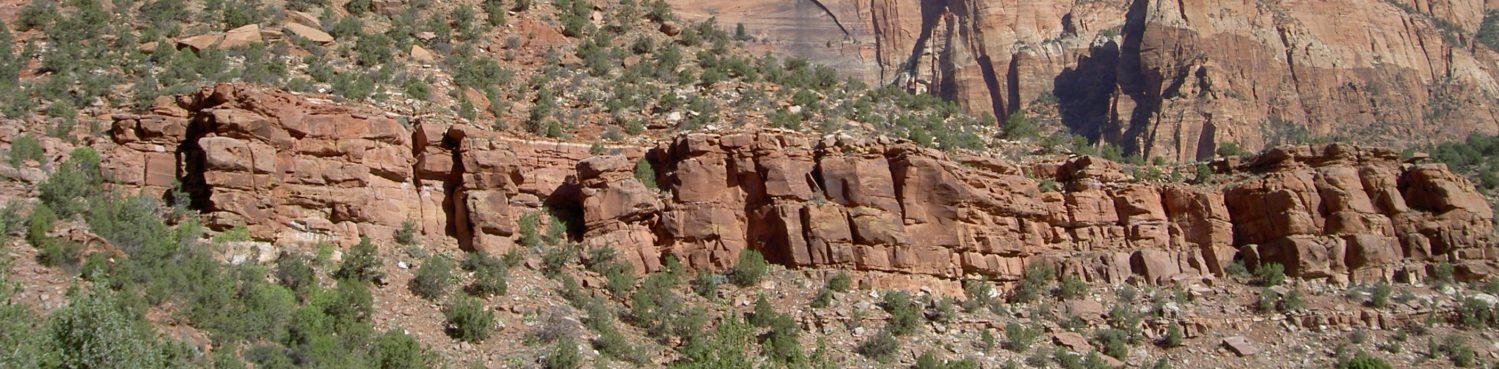
The Indian Canyons at Palm Springs

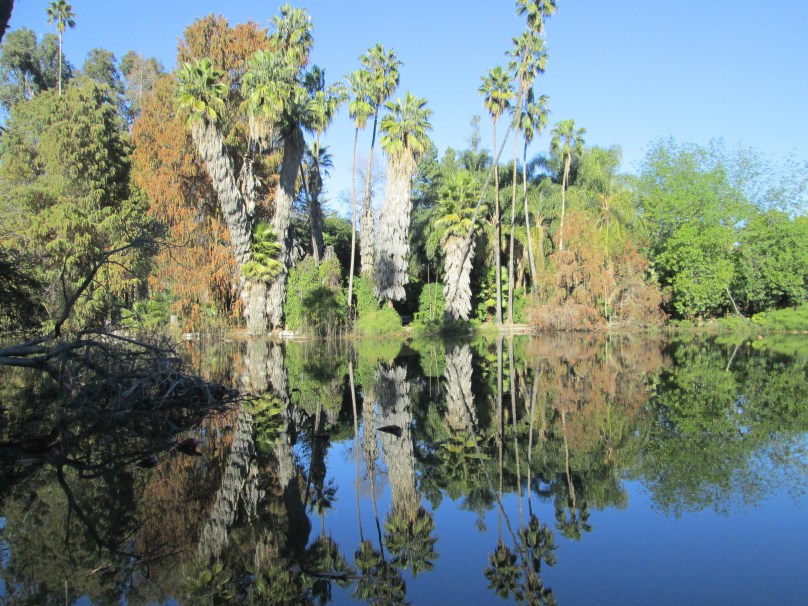
California Fan Palms at Palm Canyon

The area around Palm Springs is dominated by the huge mass of Mount San Jacinto. Nowhere else in California is there such a precipitous ascent from base to peak, 8,000 feet (2,438 meters).

While much of the surrounding landscape is bone dry, there are a number of lush canyons on Indian reservation land around the mountain. The Indians in question are the Agua Caliente Band of Cahuilla Indians, who own a crazy quilt of checkerboarded land in and around Palm Springs.

I have visited Palm and Andreas Canyons, and would welcome a chance to see Tahquitz Canyon (below) which was out of bounds to visitors for decades after having been desecrated by hippies in the 1960s. I have never been to Murray Canyon.

Waterfall at Tahquitz Canyon

There is also a Visitor Center (closed during the coronavirus outbreak) near Palm Canyon, where the Cahuillas sell books and souvenirs. Please note there is an admission charge to visit the Indian Canyons.

Because the area is bone dry most of the year, the tribe requires that visitors come equipped with between 16 and 48 ounces of drinking water.

The God Abandons Antony

Marc Antony on Cleopatra’s Barge

It was in the first century AD that Plutarch first mentioned the tale that, as he was to face ultimate defeat from both Octavian (later Augustus) and his love Cleopatra, that he was visited by a strange vision:

During this night, it is said, about the middle thereof, while the city was quiet and depressed through fear and expectation of the future, all at once certain harmonious sounds from all kinds of instruments were heard, and shouts of a crowd with Evoes and satyric leapings, as if some company of revellers not without noise were going out of the city; and the course of the procession seemed to be through the middle of the city to the gate leading outwards in the direction of the enemy, and at this point the tumult made its way out, being loudest there. And those who reflected on the sign were of opinion that the god to whom Antonius all along most likened himself and most claimed kinship with was deserting him.

In his play Antony and Cleopatra, Shakespeare makes mention of this vision in Act IV, Scene 3.

But it was the Greek poet Constantine Cavafy, a citizen of Alexandria, who wrote one of his greatest poems on the subject:

Constantine P. Cavafy

The God Abandons Antony

When suddenly, at midnight, you hear
an invisible procession going by
with exquisite music, voices,
don’t mourn your luck that’s failing now,
work gone wrong, your plans
all proving deceptive—don’t mourn them uselessly.
As one long prepared, and graced with courage,
say goodbye to her, the Alexandria that is leaving.
Above all, don’t fool yourself, don’t say
it was a dream, your ears deceived you:
don’t degrade yourself with empty hopes like these.
As one long prepared, and graced with courage,
as is right for you who proved worthy of this kind of city,
go firmly to the window
and listen with deep emotion, but not
with the whining, the pleas of a coward;
listen—your final delectation—to the voices,
to the exquisite music of that strange procession,
and say goodbye to her, to the Alexandria you are losing.

The poem is mentioned in Lawrence Durrell’s Justine and even printed there, but in Durrell’s translation. I have chosen instead to include the translation by Edmund Keeley and Philip Sherrard.

Fanatical About Libraries

The LA Central Library Flower Street Entrance

I have always depended on public libraries for much of my reading material. When I lived on the East Side of Cleveland, I went to the Cleveland Public Library branch on Lee Road, where a fellow Hungarian, Mr. Matyi, was the librarian. He also played the oboe for the Cleveland Philharmonic Orchestra.

They had a summer reading program in which I participated for so many years that they had to invent a participation certificate at my advanced level. (I wish I still had them.)

Even then, I also visited the main library on Superior Avenue in downtown Cleveland:

It was really quite beautiful, being funded by Andrew Carnegie’s vast fortune. (Can you imagine a modern billionaire doing something like that?)

When I came out West, I started by going to the main library in Santa Monica at the corner of Santa Monica Boulevard and 6th Street:

Although it was fairly large with two stories full of books, I actually outgrew it. I found that they got rid of too many of their classical titles, replacing them with more recent … well … dreck.

I was elated with the Expo Line connecting Santa Monica to Downtown LA opened in May 2016. At once, I signed up for a senior pass which enabled me to go from the Bundy Station (about a mile south of I lived) to the 7th Street Metro Center, which was three blocks south of the Los Angeles Central Library—for a mere 50¢.

Even with the library building being closed due to the coronavirus, the LA Library has started a “Library to Go” program which enabled me to put a hold on the books I want to read. Within a few days, I get an e-mail saying they are holding them for me, and I just take the train downtown to pick them up.

Over the last week I have been busy reading these three books:

  • Kōbō Abe’s Inter Ice Age 4, a 1958 sci-fi novel about global warming
  • Ivan Klíma’s Waiting for the Darkness, Waiting for the Light, about Czechoslovakia’s rocky path from Communism to Capitalism
  • Tim Butcher’s Blood River: A Journey to Africa’s Broken Heart, about an English writer who re-traces Henry M. Stanley’s journey along the length of the Congo River in the 1870s.

América Tropical

The Reconstruction of América Tropical in Downtown LA

In the 20th century, Mexico produced three great muralists: José Clemente Orozco, Diego Rivera, and David Alfaro Siqueiros. On other occasions, I have written about the influence on me of the Orozco frescoes at Dartmouth College. Sometimes, I think that my interest in Latin America began in the Reserve Room of Baker Library, where the frescoes were located.

Los Angeles has only a reconstruction of David Alfaro Siqueiros’s América Tropical, which was created in 1932 at its present location on Olvera Street. Unfortunately, Siqueiros’s revolutionary message angered LA business leaders, who had the mural painted over.

Reconstruction of Detail

Today, the fresco is restored—but, alas, only in black and white. Below is what the original looked like:

The Fresco As It Originally Appeared

It took a quarter century for the Getty Conservation Institute to restore the image which was obliterated by layers of white paint. You can read about it here. When the Covid-19 outbreak comes to an end, you can view the restoration in person.

Ice Storm

It Was a Very Slippery Celebration

My sixtieth birthday fell on January 13, 2005. My brother Dan decided to help me celebrate the date by flying up to Portland, Oregon, with me and taking me for a $100 shopping spree at Powell’s Books, which touts itself as the world’s largest independent bookstore.

We landed at Portland International Airport on my birthday and took a Portland Streetcar from PDX to our hotel, which was located in the center of town (I forget the name of it). Unfortunately, with our arrival there was a giant ice storm which crippled vehicular traffic and made walking on the sidewalk without crampons and ice axe quite iffy. We saw the cars swirling around in the streets, and we were lucky in not breaking any bones on the icy sidewalks.

Yet we managed to get around on foot … slowly.

Powell’s Books was fabulous. The last time I had visited a multi-story bookstore was Foyles on Charing Cross Road in London in 1977, on my way back from visiting Hungary and Czechoslovakia. I could have spent days—and a fortune in purchases—at Powell’s, but I managed to stay within a $100 limit, buying such books as Michael Cunningham’s The Hours, a book about the Middle East by Freya Stark, and three or four other titles.

My only regret was that when my brother turned sixty, I was unable to return the favor in a timely way. I was working in an accounting firm, and April 5 (his birthday) comes during tax  crunch time, when I had to work seven days a week to meet the April 15 deadline. Now that I am retired, I would like to find some way to return the favor, because what he did meant a lot to me.


Half of a Great Book

Danzig, Birthplace of Gûnter Grass

He was born in a fairy tale Polish city in 1927 of German and Kashubian parents. As the Second World War got under way in September 1939, Gûnter Grass found himelf in the Waffen SS and fighting on the Russian front just as the Wehrmacht was beginning its final descent into the maelstrom. In 2006, Grass, famous for his novel The Tin Drum, wrote an autobiography covering the 1940s and 1950s called Peeling the Onion: A Memoir.

The first half of the book is brilliant. As a young German soldier trying to keep the Red Hordes out of Berlin, Grass was essentially told where to be and what to do. German soldiers who wandered the battlefield without written orders found themselves hanged in droves from tree branches, many of which the young Grass passed as he wandered separated from his unit. People around him kept dying, but he somehow got back to Germany with minor wounds and spent time in military hospitals before being released into the chaos the followed the war.

His mother and younger sister had been raped by Russian troops, but refused to ever talk about the experience. The young Grass knew he wanted to be an artist of some sort, but took several years before his thinking began to jell.

The First Volume of Grass’s Autobiography

Peeling the Onion loses its focus during the years that Grass tries to find out what he is to do with his life. It takes a while for him to find that his parents and sister are still alive, and he joins up with them.

I strongly recommend the first half of this book. The second half? Not so much. Uncertainty is not quite so winning a literary trait. There are some excellent moments, but for the most part, I could have done without them.


No More Kicks on Route 66

Another Monstrosity Going Up in West L.A.

I live just a couple hundred feet south of U.S. Route 66, the “Mother Road,” as it comes close to ending by the shore of the Pacific Ocean. In my neighborhood, it is called Santa Monica Boulevard, which joins with Sunset Boulevard in East Hollywood and runs some ten miles from there to the Ocean. There is a mile-long stretch of Route 66 near me in which the old low-lying buildings are being replaced by high-rise apartment buildings mostly intended for filthy rich tenants.

There may be a few apartments in each building reserved for low-income tenants, but knowing the power of unscrupulous real-estate developers, most are not. And many of the units will be empty for years to come, especially as the coronavirus depression takes hold.

Martine and I cynically note the endless FOR LEASE signs on newish buildings. At the same time, there is a real shortage of housing for non-millionaires throughout the metropolitan area. Every month, it seems there are more tents with raggedy bums, more weather-beaten RVs, and more genuine homeless who have been turned out of their housing by greedy, unscrupulous landlords. The units in the building shown above will, no doubt, house only the well-to-do.

At the same time that multi-tenant units are springing up all over West L.A. (and other parts of the city), little attempt is being made to face the traffic problems that will inevitably ensue. Mayor Gil Garcetti thinks everyone will take the bus or rise the MetroRail trains; but I think that most of the people who can afford the new units would be afraid to take public transportation, as it brings them face to face with homeless turnstile-jumpers, and—oh horrors!—black people.

There will be a reckoning in the years to come—one that will topple the political ambitions of Garcetti and his associates who are altogether too cozy with the developers. And the developers? They will have moved on to cause problems elsewhere, as they always do.


Plague Diary 31: At the Library Portals

The Los Angeles Central Library on West 5th Street

The Los Angeles Central Library is an impressive structure. In 1926 the original structure was designed by Bertram Grosvenor Goodhue in a combination ancient Egyptian and Mediterranean Revival style. In 1986, there was an arson fire that destroyed some 400,000 volumes, or 20% of the library’s holdings—as well as causing damage to the structure. Fortunately, the library was rebuilt and restored to much of its original splendor. It was only three years ago that I started going to the library, only after the Expo rail line from Santa Monica to downtown LA was constructed.

Thanks to the coronavirus, however, I cannot go inside the library. But I can put books on hold and make an appointment to pick them up at the 5th Street entrance. This I did, showing up at 11:15 am and calling inside with my cell phone to give my name and library account number, whereupon a librarian came out with the books I ordered in a blue bag, accompanied by a complimentary LA Public Library deck of cards.

Unfortunately, one of the books I had put on hold, Dora Bruder by Patrick Modiano, was in the original French. I put a hold on the French edition by mistake. The book’s name is the same in English and French, so it was an easy mistake to make.

The big problem with going downtown during the plague is twofold:

  • Finding a place to eat
  • Finding a rest room

Thanks to one of the library cops (yes, they have their own police force), I found out that I could go across the street to the City National Plaza (formerly the Atlantic Richfield Plaza), eat at one of the few restaurants still open on the ground floor (Lemonade is pretty good), and get a free token to use the public restroom.


Surviving Hell

The Best Way to Beat the Heat: Iced Tea

Every morning, I make a full pot of tea in my little 1.5 liter metal Japanese teapot. Because it has a perforated insert into which I can spoon whole tea leaves without worrying about having to eat them as I drink the tea, I can dispense with tea bags altogether. I buy mostly Indian loose black teas (Darjeeling, Ceylon, Assam) by the pound. The general rule of thumb is that one pound (0.45 kilograms) brews some 240 cups of tea. Compare that with the Specialty Coffee Association’s estimate of 48 cups of coffee from one pound of beans.

In a heat wave such as we are now experiencing in Southern California—especially during the coronavirus quarantine—I become positively lizard-like. What keeps me from going reptile all the way is the iced tea I drink. As of 10 pm, there are only a few thimblefuls of tea left in my pot. While I was sitting in my library reading Marie NDiaye’s La Cheffe, I was cooled not only by the iced tea, but by the condensation from the glass sending icy droplets onto the hairs of my bare stomach (as I am not wearing a shirt while inside).

My Indian tea of choice lately has been the Ahmad of London brand, which is popular in the Indian and Iranian food stores in my part of town. At present, I am drinking their Darjeeling tea, which I find to be the best. It also happens to be the most expensive (600 grams for US$36).

I am particularly conscious of the heat because the apartment building in which I live was built in 1945, when insulation was not commonly used. That was before global warming. Now I feel as if I am living in one of those punishment hotboxes from Bridge on the River Kwai or Cool Hand Luke.

If you want to make your iced tea taste particularly good, add a splash of good dark rum, such as Myers’s Original Dark Rum from Jamaica. I also add the juice of a fresh lemon and some Splenda (as I am diabetic).


Escaping the Heat

Deep Shade, Ocean Breezes, and Boats

Burton W. Chace Park in Marina Del Rey is no longer a secret. Many people have discovered that, even when the rest of Los Angeles is searingly hot, there is always a cool breeze blowing on the peninsula that sticks out into the Marina. So I took the #16 Santa Monica bus (to avoid the stiff parking fees) to Lincoln and Mindanao Way and walked the half mile from the bus stop to the park. On the way is a handy Trader Joe store where I buy a healthy picnic lunch to take with me.

While there, I read Kaouther Adimi’s delightful book about an Algerian Bookshop that also served as Albert Camus’s first publisher. In the sun, the temperature easily reached the 90s, but in the shade I was comfortable. Martine stayed home resting.

One of the Massive Shade Trees at the Park

The park is so excellent that I am surprised that Donald Trump has not tried to bulldoze it and turn it into a tasteless high rise hotel with gold plumbing fixtures.

Curiously, the predominant language of the park visitors is Russian. They seem to know how to enjoy themselves. Good!

At home, I prepared another vegetarian curry for myself made with potatoes, tomatoes, and peas with rice—and a combination of Serrano and Hatch chiles that challenged this chile-head. All the while, Martine, who is suffering from Irritable Bowel Syndrome looked on ruefully while I ate something that would have exploded her intestines. All she could eat was a banana and a can of Progresso Chicken and Wild Rice soup. She has been suffering with this condition for two weeks now. Tomorrow, I’ll drive her to see the doctor.