Xhosa Nostra

Trevor Noah with His Favorite Punching Bag

Of late, I have been watching Trevor Noah’s The Daily Social Distancing Show at 11 pm on Comedy Central. When he first took over from Jon Stewart as the host of The Daily Show, I had my doubts about him; but in the intervening years he has become an engaging presence on the air in his own right.

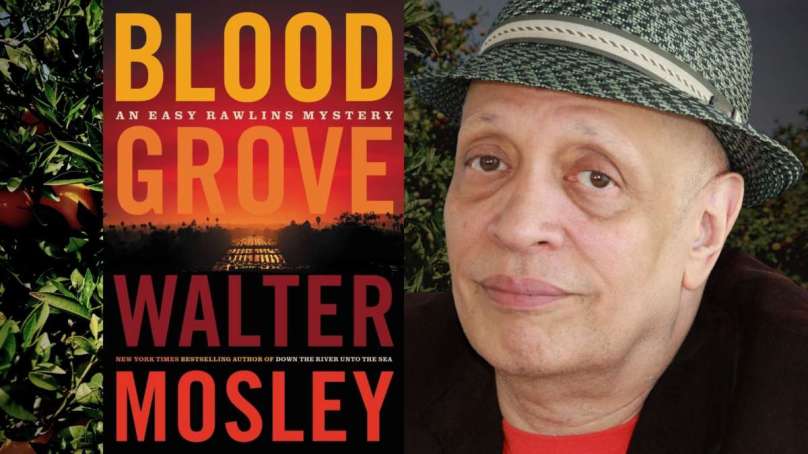
I even read Noah’s book Born a Crime: Stories from a South African Childhood. I don’t read many biographies, but Trevor’s was interesting. He was born in Johannesburg, South Africa of a Swiss father and a Xhosa mother. As the child of a mixed union, Trevor Noah was by his very existence in violation of South African law under Apartheid. It was interesting to see how he managed he become an entertainer and a small businessman against all odds.

Trevor Noah’s Autobiography

The book is worth reading and throws a lot of light on a welcome personality in these hard times. My only problem with his show is the terrible feng shui: There seems to be an edge of a bookshelf that is on the point of bopping him on the right side of his head. Perhaps he shouldn’t stand in the corner of his home set.

During the coronavirus outbreak and the presidency of the soon to be ex-Trumpster, one of the things that has kept me going is humor. Trevor Noah’s humor is cool and collected. Under the guise of pure entertainment, he manages to get in some very astute political satire and conducts some excellent interviews with various celebrities, such as soccer star Megan Rapinoe and newscaster Rachel Maddow. Like Jon Stewart, he cuts to his own cadre of guest commentators, who run the gamut from good to great.

Just Before the Quarantine

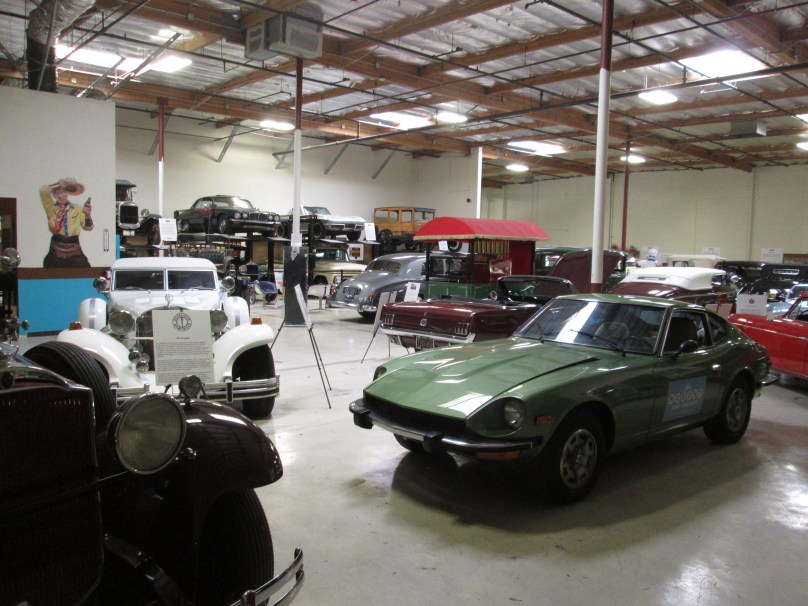
Martine Sitting in a Corvette at the Automobile Driving Museum

I was looking at the last photographs I took before the coronavirus quarantine slammed the door on our whole way of life. It was on February 7 that I returned from Mexico, having heard from the news on Al Jazeera about the strange flu in Wuhan, China.

Between February 7 and March 15, when the quarantine was fully in place, Martine and I visited the Andrés Pico Adobe in the San Fernando Valley, Heritage Park in Santa Fe Springs, Descanso Gardens in La Cañada-Flintridge, the Automobile Driving Museum in El Segundo (see photo above), and finally, just as the iron virus curtain was descending, a folk dance concert at the Magyar Ház given by the Karpatók Hungarian Folk Dance Ensemble. That last event was on March 15. I knew we were taking a chance by attending what could easily have become a “super spreader” event, but fortunately didn’t. It was, like all their events, top notch.

The Oak Forest at Descanso Gardens

The quarantine has taken a particular toll on Martine. Although I am a flaming Libtard, Martine listens to right-wing talk radio and complains incessantly about having to wear a mask. She does so whenever she enters a public building, but refuses to wear them on her daily walks to nowhere. She has been hurt by our inability to go anywhere because restaurants, parks, and museums are closed, and it becomes difficult to find a public bathroom that is still open.

Sometimes, I think many of the restrictions regarding Covid-19 are imposed because there are so many scofflaws who think that wearing a mask at all is an imposition on what they feel are their rights (pronounced “rats” with a Southern drawl). Such as the right to scream “Fire!” in a crowded theater or take a loaded AR-15 to Sunday School. In the end, we all suffer because of a hardcore cadre of jerks with which our country is so amply provided.

A Splash of Art

A Front Yard in Pasadena

It was eight years ago. My friend Bill Korn told me about a house he had discovered during one of his long walks. The front yard of this Pasadena property was a triumphant statement of a home-grown artist. I made the mistake of not noting the address, and I wonder if what we saw then is still there.

The art reminds me of the Watts Towers created by Simon Rodia out of various found objects. In this case, most of the objects were multicolored ceramics, toys, and other small items which were carefully cemented together by the owner of the house.

Broken Ceramics Cemented Together

I guess the front yard structures can be classified as a kind of gonzo art. Yet the effect is curiously pleasing. I’m sure that hundreds of hours went into creating these effects.

Some of the Trees and Succulents in the Yard

When we are able to travel once again and get together with friends and dine inside at a restaurant, I will have to find this place. It really struck a nerve with me.

Canalside Venice

Southern California’s Venice Neighborhood Canals

Back in the early twentieth century, Venice was planned as California’s answer to Venice, Italy. There were numerous canals with some nice (and some not-so-nice) houses. The following post is repeated from April 16, 2017.

It being another beautiful day, Martine and I took a walk along the Venice Canals. The six remaining canals are what remains of Abbot Kinney’s original 1905 plan for the area. In addition to the vertical Grand Canal and the Eastern Canal, there are four horizontal canals that link them. To remember them, I use the mnemonic ScHLoCk—for Sherman, Howland, Linnie, and Carroll.

In the past, we would visit the area only around the holidays, especially Halloween and Christmas, to see the decorations. But suddenly, one year, the decorations all but disappeared. The area is interesting, nonetheless, because of the residents’ attempts to create gemlike little gardens and house fronts. There were more than a few vacancies and notices portending structural modifications. There are numerous types of succulents and flowering plants on display, and not a few architectural monstrosities, especially of the modern variety.

I have a feeling that the neighborhood can go either way at this point, either becoming a slightly disreputable slum or a major tourist draw. Most of the other walkers were speaking French and other foreign languages, so it is obviously hitting the European and Asian guidebooks. In any case, it’s a pleasant walk.

Struthioniformes

Birds at OstrichLand USA in Solvang, California

Back in the days when there were places to go and when coronavirus was not rampant in the land, Martine and I liked to visit Solvang, about three quarters of an hour north of Santa Barbara. There was a great bookstore (the Book Loft), yummy Danish smorgasbords, Santa Inez Mission, great cookies, and OstrichLand USA.

Ostriches are considered part of the order of Struthioniformes, which includes, in addition to ostriches, kiwis, rheas, emus, and cassowaries. At OstrichLand, there are ostriches and emus.

There is something confrontational about ostriches. One would never consider petting one without risk of being attacked by a sharp beak. You can feed them, but many visitors are afraid to. They’ll take your proffered food, but only while casting a baleful glare at you.

Joshua Trees in the California Desert

Although they are not native to the Southwest, I think of ostriches the way I think of desert cacti: One would no more pet an ostrich than hug a cholla cactus or a Joshua Tree. They’re interesting to look at, but not pleasant to touch.

L.A. in the Civil War

Docent at Wilmington’s Drum Barracks (2008)

Southern California was separated from the main battlefields of the Civil War by thousands of miles, yet it was contested territory. The California State Legislature was a hotbed of secessionism, and there was talk of separating the state into two halves, with the southern half being part of the Confederate States of America.

Two military officers stationed in the area became major players in the East: Albert Sidney Johnston becoming a general for the Confederacy, and Winfield Scott Hancock for the Union.

Winfield Scott Hancock, One of the Heroes of Gettysburg

Fortunately for the Union, there was a strong cadre of Yankee sympathizers in town. These included Phineas Banning, responsible for building the Port of Los Angeles; District Attorney Ezra Drown; rancher Jonathan Warner; and publisher Charles Conway.

The only remaining military facility from those days is in Wilmington—the Drum Barracks, just south of Phineas Banning’s palatial estate.

Los Angeles in 1861

If you’d like to read a more detailed account of how L.A. fared during the Civil War, with numerous photos, I recommend you check out this website from TV station KCET, entitled “We Have Been and Are Yet Secessionist”—Los Angeles When the Civil War Began.

The Indian Canyons at Palm Springs

California Fan Palms at Palm Canyon

The area around Palm Springs is dominated by the huge mass of Mount San Jacinto. Nowhere else in California is there such a precipitous ascent from base to peak, 8,000 feet (2,438 meters).

While much of the surrounding landscape is bone dry, there are a number of lush canyons on Indian reservation land around the mountain. The Indians in question are the Agua Caliente Band of Cahuilla Indians, who own a crazy quilt of checkerboarded land in and around Palm Springs.

I have visited Palm and Andreas Canyons, and would welcome a chance to see Tahquitz Canyon (below) which was out of bounds to visitors for decades after having been desecrated by hippies in the 1960s. I have never been to Murray Canyon.

Waterfall at Tahquitz Canyon

There is also a Visitor Center (closed during the coronavirus outbreak) near Palm Canyon, where the Cahuillas sell books and souvenirs. Please note there is an admission charge to visit the Indian Canyons.

Because the area is bone dry most of the year, the tribe requires that visitors come equipped with between 16 and 48 ounces of drinking water.

The God Abandons Antony

Marc Antony on Cleopatra’s Barge

It was in the first century AD that Plutarch first mentioned the tale that, as he was to face ultimate defeat from both Octavian (later Augustus) and his love Cleopatra, that he was visited by a strange vision:

During this night, it is said, about the middle thereof, while the city was quiet and depressed through fear and expectation of the future, all at once certain harmonious sounds from all kinds of instruments were heard, and shouts of a crowd with Evoes and satyric leapings, as if some company of revellers not without noise were going out of the city; and the course of the procession seemed to be through the middle of the city to the gate leading outwards in the direction of the enemy, and at this point the tumult made its way out, being loudest there. And those who reflected on the sign were of opinion that the god to whom Antonius all along most likened himself and most claimed kinship with was deserting him.

In his play Antony and Cleopatra, Shakespeare makes mention of this vision in Act IV, Scene 3.

But it was the Greek poet Constantine Cavafy, a citizen of Alexandria, who wrote one of his greatest poems on the subject:

Constantine P. Cavafy

The God Abandons Antony

When suddenly, at midnight, you hear
an invisible procession going by
with exquisite music, voices,
don’t mourn your luck that’s failing now,
work gone wrong, your plans
all proving deceptive—don’t mourn them uselessly.
As one long prepared, and graced with courage,
say goodbye to her, the Alexandria that is leaving.
Above all, don’t fool yourself, don’t say
it was a dream, your ears deceived you:
don’t degrade yourself with empty hopes like these.
As one long prepared, and graced with courage,
as is right for you who proved worthy of this kind of city,
go firmly to the window
and listen with deep emotion, but not
with the whining, the pleas of a coward;
listen—your final delectation—to the voices,
to the exquisite music of that strange procession,
and say goodbye to her, to the Alexandria you are losing.

The poem is mentioned in Lawrence Durrell’s Justine and even printed there, but in Durrell’s translation. I have chosen instead to include the translation by Edmund Keeley and Philip Sherrard.

Fanatical About Libraries

The LA Central Library Flower Street Entrance

I have always depended on public libraries for much of my reading material. When I lived on the East Side of Cleveland, I went to the Cleveland Public Library branch on Lee Road, where a fellow Hungarian, Mr. Matyi, was the librarian. He also played the oboe for the Cleveland Philharmonic Orchestra.

They had a summer reading program in which I participated for so many years that they had to invent a participation certificate at my advanced level. (I wish I still had them.)

Even then, I also visited the main library on Superior Avenue in downtown Cleveland:

It was really quite beautiful, being funded by Andrew Carnegie’s vast fortune. (Can you imagine a modern billionaire doing something like that?)

When I came out West, I started by going to the main library in Santa Monica at the corner of Santa Monica Boulevard and 6th Street:

Although it was fairly large with two stories full of books, I actually outgrew it. I found that they got rid of too many of their classical titles, replacing them with more recent … well … dreck.

I was elated with the Expo Line connecting Santa Monica to Downtown LA opened in May 2016. At once, I signed up for a senior pass which enabled me to go from the Bundy Station (about a mile south of I lived) to the 7th Street Metro Center, which was three blocks south of the Los Angeles Central Library—for a mere 50¢.

Even with the library building being closed due to the coronavirus, the LA Library has started a “Library to Go” program which enabled me to put a hold on the books I want to read. Within a few days, I get an e-mail saying they are holding them for me, and I just take the train downtown to pick them up.

Over the last week I have been busy reading these three books:

  • Kōbō Abe’s Inter Ice Age 4, a 1958 sci-fi novel about global warming
  • Ivan Klíma’s Waiting for the Darkness, Waiting for the Light, about Czechoslovakia’s rocky path from Communism to Capitalism
  • Tim Butcher’s Blood River: A Journey to Africa’s Broken Heart, about an English writer who re-traces Henry M. Stanley’s journey along the length of the Congo River in the 1870s.

América Tropical

The Reconstruction of América Tropical in Downtown LA

In the 20th century, Mexico produced three great muralists: José Clemente Orozco, Diego Rivera, and David Alfaro Siqueiros. On other occasions, I have written about the influence on me of the Orozco frescoes at Dartmouth College. Sometimes, I think that my interest in Latin America began in the Reserve Room of Baker Library, where the frescoes were located.

Los Angeles has only a reconstruction of David Alfaro Siqueiros’s América Tropical, which was created in 1932 at its present location on Olvera Street. Unfortunately, Siqueiros’s revolutionary message angered LA business leaders, who had the mural painted over.

Reconstruction of Detail

Today, the fresco is restored—but, alas, only in black and white. Below is what the original looked like:

The Fresco As It Originally Appeared

It took a quarter century for the Getty Conservation Institute to restore the image which was obliterated by layers of white paint. You can read about it here. When the Covid-19 outbreak comes to an end, you can view the restoration in person.