You Can’t Stop the Change

Walter Mosley, Author of the Easy Rawlins Mysteries

Yesterday afternoon, I “attended” the Los Angeles Times Festival of Books symposium entitled California Dreamin’: Los Angeles in the 1960s and 1970s. Actually, the event was virtual, so I tuned in with my computer for what turned out to be an excellent discussion. The moderator was USC Professor David L. Ulin, and the guest speakers were novelist Walter Mosley and political analyst Ron Brownstein.

One of the most interesting points made was about political mobilization against cultural change. Irrespective what the hippies tried to do in the 1960s, enough voters were freaked out to elect Republicans like Ronald Reagan and Donald Trump. As Mosley said at one point, the voters’ response was along the lines of “T don’t want to hear the truth; I want to hear what makes me feel good.” However, cultural change eventually wins out. For example, today’s youth do not tend to oppose homosexual marriage or transgender identification.

The Atlantic Editor Ron Brownstein

This was an interesting conclusion to someone like me, who is amazed that a shrinking demographic like that of the Republican Party can still win elections. For now, anyhow.

After the one-hour discussion ended, I immediately ordered the featured books by Mosley and Brownstein shown in the above photographs.

I arrived in Los Angeles at the tail end of 1967. One would have had to be deaf and blind to recognize the ferment that was taking place—only to be replaced by the 1970s and the onrush of a paranoid political conservatism.

Lost in Oxnard

Interior of the Murphy Auto Museum in Oxnard, CA

Way back in Cleveland during my childhood, there was a TV host who called himself Ghoulardi. He screened horror films and made fun of local figures and places—and he mad fun of one very distant place called Oxnard in Ventura County, California. He even had a raven whom he called Oxnard on his show.

Today, Martine and I drove to Oxnard looking for the new location of the Murphy Auto Museum, which was on a street called Eastman. I spent an hour circling around the place on Rice (where I missed the turnoff, which had a small sign) and Oxnard Road (which didn’t intersect). Eventually, I stopped at an Arco Service Station and found a smog technician who set me straight.

1930 Silver Phantom Rolls Royce with “Boat Back”

We had been to the old location of the Murphy about three times in the past. The museum had to move to a smaller location (about one-third the size) because the former landlord saw an opportunity to make more money. (Bad cess on him!) I am hoping that the Murphy manages to survive under its straitened circumstances and grow back to what it used to be.

It’s Not Just Cars: There Are Also Exhibits of Popular Culture

We did the museum in about an hour (it used to take us three hours) and sought out the local Chick-Fil-A for chicken sandwiches and French Fries. And then I drove back to L.A.

Boardwalk

Pacific & Windward, the Center of Venice, California

If you squint hard when you look at the above picture, you can see the set of the Mexican border town in Orson Welles’s Touch of Evil (1958) in which Charlton Heston plays a Mexican drug enforcement officer—one of his weirder roles.

Now it’s just ground zero for one of Los Angeles’s main tourist attractions: The Venice Boardwalk. The boardwalk runs roughly between the Santa Monica Pier and the Venice Pier. It’s only when you cross the border from Santa Monica into Venice that the fun begins. There are scores of tattoo parlors, cafés, tourist junk shops, fortunetellers, psychics, and handcrafts. including a lot of dubious art. The Midwestern tourists who come by the busload see what they think is the “real” Los Angeles, whereas what they see has been created largely for their benefit.

I sort of enjoy the tatty atmosphere of the Boardwalk, but I mainly go because it contains one of Los Angeles’s last surviving bookshops, Small World Books. Today I picked up a copy of James M. Cain’s last novel, The Cocktail Waitress, and a book by Alan Watts about Buddhism. Then I had a slice of pepperoni pizza from Rey’s and trundled back to my car, which was parked at a confusing intersection of streets a few blocks away near Electric and Abbot Kinney.

If you go a few blocks south on Pacific, you will find the bridge over the Venice canal that was the scene of where Joseph Calleia plugs Orson Welles’s corrupt Captain Hank Quinlan.

Carvaganza

A Perfect Car for the Road in Los Angeles

This weekend, a number of museums opened up for Covid-weary Angelenos, among whom are Martine and me. First we ate—indoors—at Du-Par’s Restaurant at the Original Farmers’ Market at 3rd and Fairfax. Then we breezed down Fairfax to the Petersen Automotive Museum at the corner of Fairfax and Wilshire.

Unfortunately, the current exhibits were more oriented toward the bearded and tattooed grundgerati. The museum’s former emphasis on the history of the automobile has been replaced by racing cars, including Maseratis, Lamborghinis, and others. In addition, there were a number of fantasy cars such as the monster above, which was designed for some movie which I likely never saw.

A Lamborghini Racing Car for the Cash-Non-Challenged

Still and all, it was nice to go eat out at a restaurant and visit a museum—quite a change from the previous twelve months. The Petersen was packed to overflowing with visitors who had no idea what social distancing was and why it is still essential. On the plus side, the wearing of masks was de rigeur.

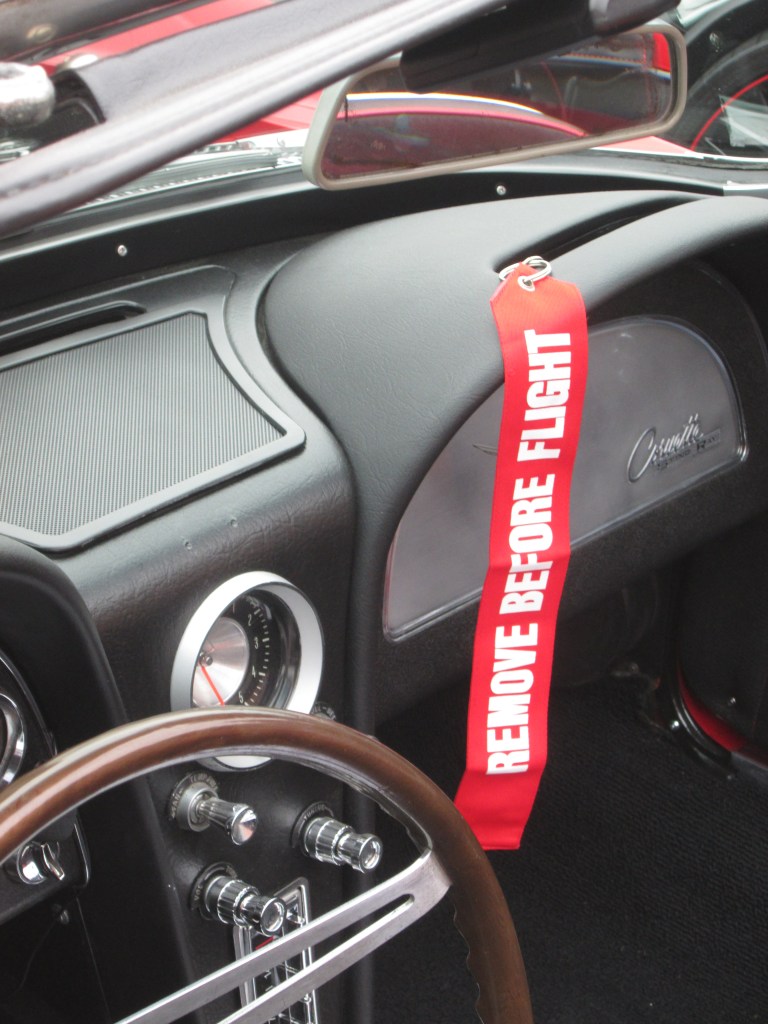
Finally, here is a peak of the dashboard of the original Back to the Future car:

Dash and Front Seat of the Original Back to the Future Car

I Might As Well Be Back in Cleveland

Southern California Is Being Buffeted by Winds

When I lived in Cleveland and in New Hampshire, I was the plaything of various seasonal allergies. There was the sneezing (and the bloody noses), the itching eyes, and borderline asthma. Now with the Winterspring Complex we are now experiencing, it’s back again. Not only do my eyes itch, but the discharge is sticky, such that I have to open my eyes with my fingers in the morning. And I am going through handkerchiefs like they’re going out of style. (I don’t use Kleenex because I feel bad about destroying trees just so I can blow my nose in them.)

As my friend Bill Korn says, these winds are usually accompanied by winter rainstorms, but we have had precious few of those. The current rainy season, which will end soon, is another bad one—just a few inches of mostly occasional showers and only one thorough wetting.

California is well on its way to becoming the next Atacama Desert, which is the world’s driest desert, clocking in at less than 3 mm of precipitation a year. That’s not even as big as one of my sneezes.

The Atacama Desert of Chile and Peru

When the weather starts getting hot, my allergies will gradually disappear. But then I’ll start complaining about the heat.

Eve Babitz’s L.A.

The Sunset Strip, Where L.A. Came to a Head

Whenever I read Eve Babitz, I think of L.A. the way it was when I first came here from Cleveland by train at the tail end of 1966. Being a stuck-up Easterner and a graduate of an Ivy League college, I naturally thought there was something fundamentally wrong about the West Coast. In time (lots of time) I grew even to love it.

I just finished reading Eve Babitz’s novel L.A. Woman, which brought memories rushing into my brain:

And I was an L.A. woman. In fact, looking back on those one-night stands, I must have been crazy. Yet there were thousands of girls living between Sunset and Santa Monica in between La Brea and La Cienega who painted the town red like me—and who got away with it too.

When I arrived, Eve was hanging out with Jim Morrison of the Doors, whom she just refers to as Jim in the novel. Every weekend when the weather permitted, thousands of Teeny-Boppers rioted on the Sunset Strip. The war in Viet Nam was entering a new and uglier phase, and I thought that nowhere else were there women quite so beautiful as the ones I saw on the street every day.

Eve Babitz When She Was Younger

Eve Babitz was, to put it mildly, a righteous babe. What set her apart from all the others was that she had a brain and was able to describe her wild life without prejudice.

If you want to see Los Angeles from a different perspective, I recommend these books of hers as an excellent place to start:

  • Eve’s Hollywood (1974)
  • Slow Days, Fast Company: The World, The Flesh, and L.A. (1977)
  • Sex and Rage: Advice to Young Ladies Eager for a Good Time (1979)
  • L.A. Woman (1982)
  • Black Swans: Stories (1993)

I have read all five of the above and look forward to reading her recently published collection of essays entitled I Used to Be Charming: The Rest of Eve Babitz (2019).

Ladies of the Road

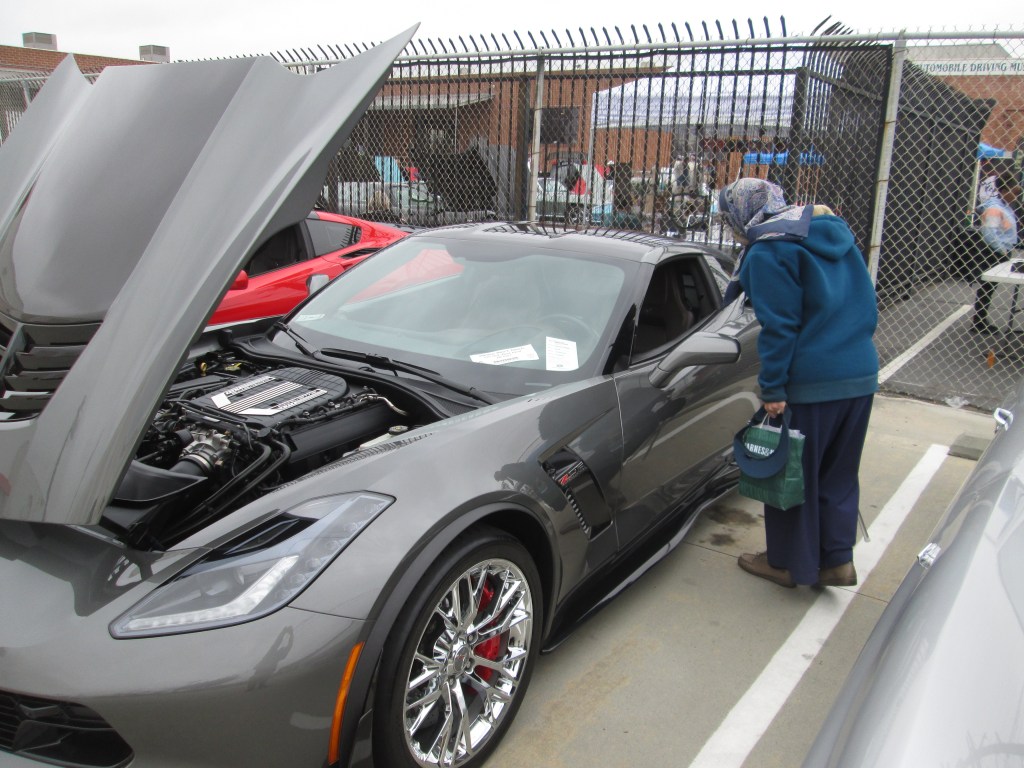
Another Fun Event at the Automobile Driving Museum: The Women’s Car Show

On Saturday, Martine and I dropped in at the Automobile Driving Museum in El Segundo to see a car show dedicated to the wheels of women auto enthusiasts. This weekend, for the first time I began to detect a spring of hope in this grim pandemic season. Americans are getting vaccinated, and businesses are slowly beginning to open up again. (For the first time in over a year, we ate indoors at Ye Olde King’s Head Restaurant in Santa Monica.)

I was curious to see what a Women’s Car Show would be like, and found that the ladies liked vintage cars as much as men do. The men, however, would not accompany it with a fashion show.

Poster for the Women’s Car Show

Martine has developed a real fondness for the Automobile Driving Museum and its various events. I enjoy going because there are so few things that she likes so much. I also enjoy being with car enthusiasts, because many of the old cars are indeed works of art that I can well appreciate.

Wanna Ride, Babe?

Cool Bulldog at the Automobile Driving Museum in El Segundo

Martine misses the car shows at El Segundo’s Automobile Driving Museum, which is temporarily closed during the Covid-19 quarantine. Before the dread coronavirus made its way around the world, we would go places—especially on the weekends—and I would post blogs about the places we visited.

There are several things about the Automobile Driving Museum (ADM) which make it particularly welcome to us. For one thing, Martine loves the classic American cars, particularly the Corvettes. Unlike most auto museums, the ADM allows you to sit behind the wheel and fantasize you are driving a classic.

Also, El Segundo is the home of the Old Town Music Hall with its Wurlitzer Organ and program of old films. It, too, is closed during the quarantine.

Finally, Martine loves In-N-Out Burgers on Sepulveda Boulevard. Although we can’t eat inside at present—Guess Why?—the restaurant is open for take-out. Fortunately, In-N-Out knows how to do take-out and always has.

Library-To-Go

The Flower Street Entrance to the Los Angeles Central Library

The Central Library still looks like this, though most of the buildings around it have changed. What is more, after a devastating 1986 fire, the building was expanded on the Grand Avenue side and remodeled. Fortunately, the murals on the second floor rotunda were saved, leaving some of the old library highlights still intact.

Because of the coronavirus lockdown, patrons of the library may not enter the building. If I want access to the library’s holdings, however, I can access the Library-To-Go service. It involves four steps:

  • Select the books I want to read using the library’s website
  • Place a hold on those books and check the status every few days
  • When the books are marked as being available, use the library website to make an appointment for pickup
  • Show up at the approximate appointment time at the 5th street entrance, phone the librarians inside, and wait until they deliver the books to you in a brown paper bag

I am currently set to go downtown on Thursday morning to pick up four books: Jamyang Khyentse’s What Makes You NOT a Buddhist; Ma Jian’s Red Dust: A Path Through China; Rachel Kushner’s The Flamethrowers: A Novel; and Olga Grushin’s The Dream Life of Sukhanov. As I am still working on my Januarius Project. this month I am reading only books by authors I have not previously read.

Thanks to the library’s vast holdings, I can easily reserve books that are out of print and difficult to find.

Aleupkigna

Baldwin Lake at the Los Angeles Arboretum in 2017

One of the most paradisaical places in Southern California is the Los Angeles Arboretum, and most specifically—particularly in years when the artesian wells in the area are flowing—Baldwin Lake and “Baldwin’s Belvedere,” the Queen Anne-style cottage and its grounds on the shore of the lake.

Where the Arboretum now sits used to be called Aleupkigna by the Gabrielino Indians who occupied the site. Then, in 1875, Elias Jackson “Lucky” Baldwin purchased the land and turned it into his estate.

Lucky Baldwin’s “Belvedere,” a Queen Anne Cottage on the Shore of the Lake

As soon as the coronavirus quarantine begins to fade away, Martine and I would like to spend a leisurely day there feeding the geese and ducks (which we’re not supposed to do, but you tell Martine that).

The Gabrielino Indians who lived here are pretty much scattered to the four winds, except they gather together at times to remember what they lost. The tribe has no reservation and is not recognized by some government authorities. One of their main sites is within walking distance of me: Kuruvungna Springs, also called Gabrielino Springs, is on the grounds of University High School at Barrington and Goshen in West Los Angeles. Every year, they have a low-key powwow at the Springs around Columbus Day.