Rats!

They Look Enticing ... But Not Just to Humans

They Look Enticing … But Not Just to Humans

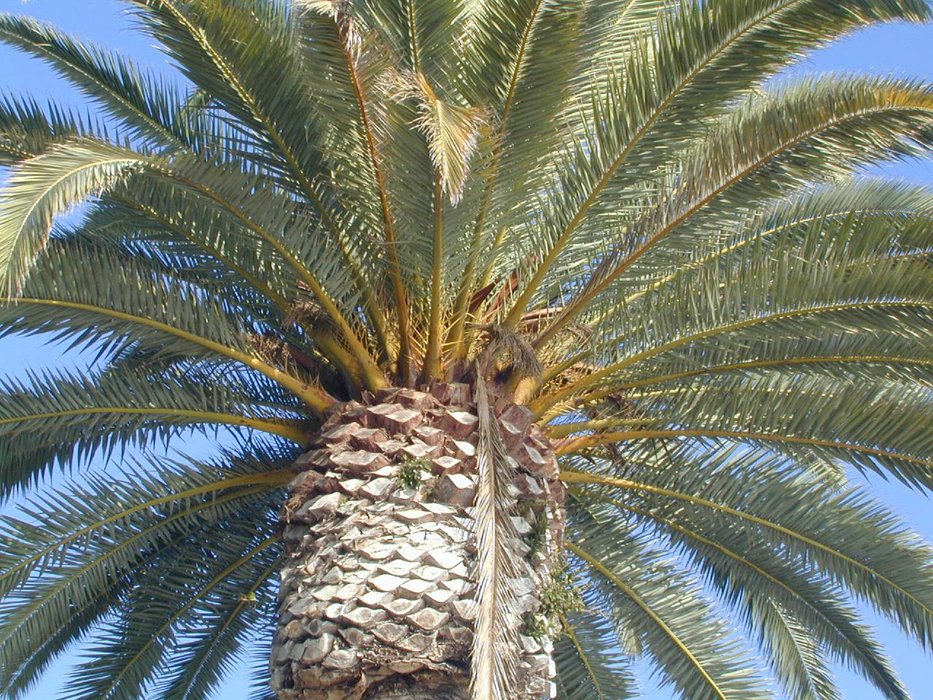
Palm trees are a part of the scenery of Southern California that draws admiring comments from Easterners and Midwesterners. Unfortunately, those stately palms can also be a home for roof rats, and often act as an invasion path to your house or apartment.

According to Los Angeles County’s Department of Public Health, the following steps should be taken by homeowners who have palm trees:

  1. Remove all dead palm fronds. (After a high wind, you will find lots of them.)
  2. Trim tree limbs and tall plants six feet away from roof, attic vents, eaves, and utility lines. Thin ivy and
    other thick vegetation, and leave clearance beneath bushes to prevent harborage for rodents.

There are other precautions mentioned in the 4-page document (for which you will need Adobe Acrobat ro read).

One thing that many people do not realize is that the dense foliage of such beautifully landscaped houses such as those in Beverly Hills are effective at attracting rats. According to the New York Times:

“Beverly Hills is a nice place to be a rat,” Ray Honda explained, admiring the cool, verdant landscape of the moneyed class, with its fruit trees, bird feeders, swimming pools and dog-food bowls. “It’s a very good address.”

Mr. Honda, a Los Angeles County health inspector whose speech and demeanor bring Peter Lorre to mind, was quick to append, “the four-legged kind,” adding: “More rats than people, probably. And when they get really bad you can smell them.”

Across Beverly Hills and the other lush corridors of Los Angeles, rats —yellow-bellied, pink-tailed, flea-bitten rats —are wriggling through the woodwork and rooftops. They have come down from the trees and in from the fields, forced into neighborhoods by a strangling drought that has gripped the region. They are eating from dog bowls and drinking from swimming pools and acting in surly ways not normal to the genus.

The article does not mention two-legged rats, but Beverly Hills has always had a large population of those as well.

As much as I like Southern California, I have to admit that we have some unique problems of our own.
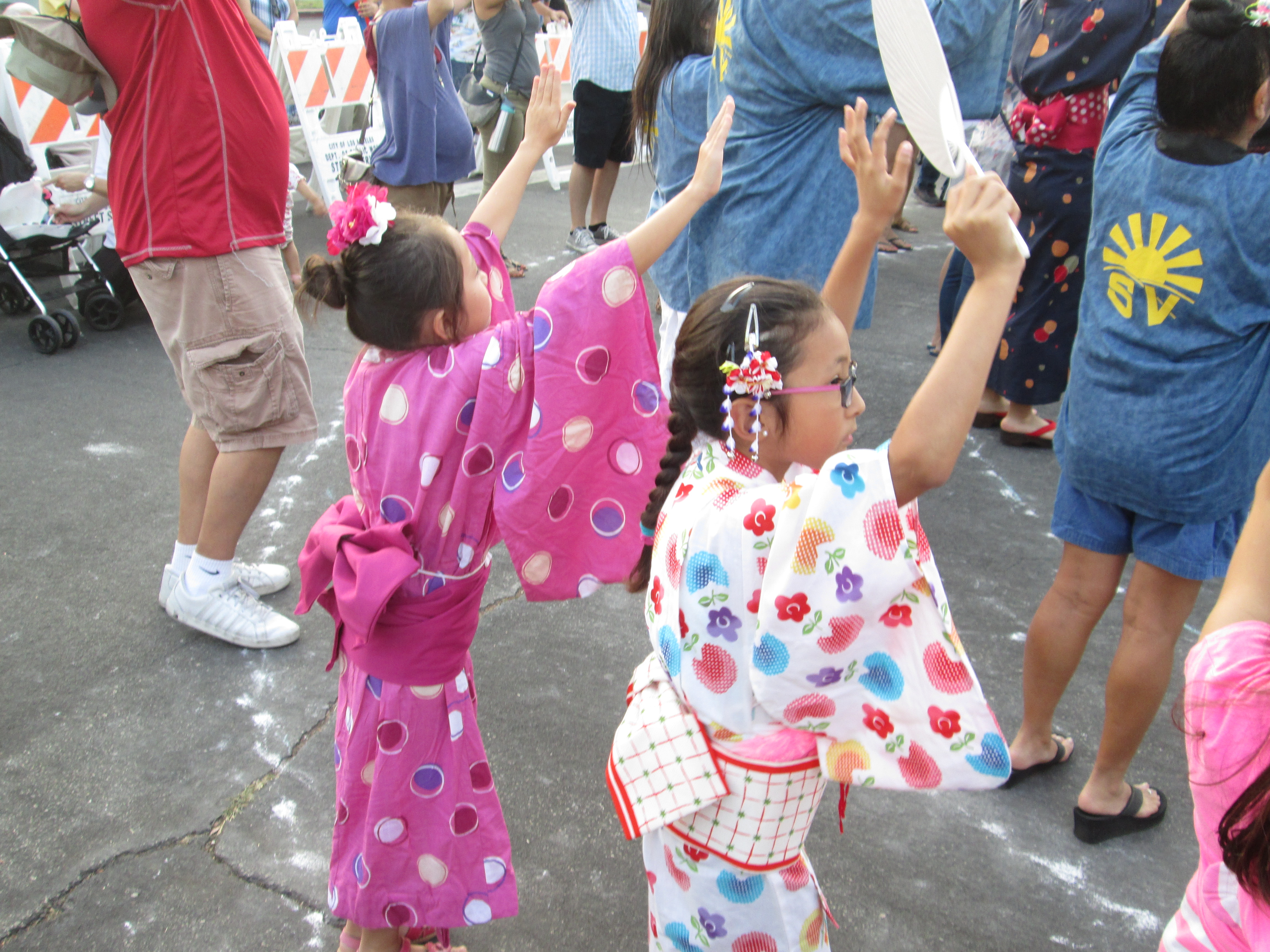

 

Dancing for the Dead

Two Little Girls in Kimonos Dancing to Honor Their Ancestors

Two Little Girls in Kimonos Dancing to Honor Their Ancestors

This last weekend, as in most years, Martine and I attended the Obon Festival at the West Los Angeles Buddhist Temple. It is a joyous affair, especially when one considers all the dancing is to honor one’s ancestors who have passed on to the other side. According to Japan-Guide.Com:

Obon is an annual Buddhist event for commemorating one’s ancestors. It is believed that each year during obon, the ancestors’ spirits return to this world in order to visit their relatives.

Traditionally, lanterns are hung in front of houses to guide the ancestors’ spirits, obon dances (bon odori) are performed, graves are visited and food offerings are made at house altars and temples.

In West L.A., aside from services in the temple, which we didn’t attend, most of the festivities revolve around good eating and the traditional bon odori dances. Present were Japanese from over a dozen nearby Buddhist temples from as far away as Oakland and Visalia. Many Japanese go from one temple to the other during the multi-week Obon celebrations. As separated old friends from different areas greet one another, it adds to the gaiety of the dancing.

As I have written before, my favorite food item is the pork udon noodle soup on which I sprinkle some Shichimi Togarashi, a Japanese red chili powder with black sesame seeds and various herbs and spices.

Goes Great with Udon Soup!

Goes Great with Udon Soup!

In all, I had two bowls of the stuff, which made me feel downright good about my ancestors and happy to be there at the Obon festival. I hope to continue going until such time as I join my own ancestors.


Unaccustomed Cool Breezes

Burton W. Chace Park in Marina Del Rey

Burton W. Chace Park in Marina Del Rey

As the siege of hot, humid weather continues throughout Southern California—fed by moist monsoonal clouds from Mexico—it behooved me to find someplace where I could be cool. There is one odd little park in Marina Del Rey which is on a small peninsula surrounded on three sides by boat channels.

For some reason which I cannot understand, even on the hottest days of the year, a cool breeze is always blowing. On Sunday, Martine and I spent several hours there with Bill and Kathy Korn. Today I went by myself, taking a new Santa Monica Big Blue Bus line (the #16) that takes me from within three blocks of where I live to within three blocks of the park for a measly half dollar.

Once there, I found myself a bench in the shade and proceeded to read Yugoslavia: Death of a Nation by Laura Silber and Allan Little, and also parts of a Henry David Thorough essay called, simply, “Walking.” I had my earphone and MP3 player as well and enjoyed a concert of Peruvian folk music.

It was, altogether, a good afternoon. I must do it again a few more times this summer.


In Praise of Old Cars

Cadillac El Dorado Dashboard

Cadillac El Dorado Dashboard

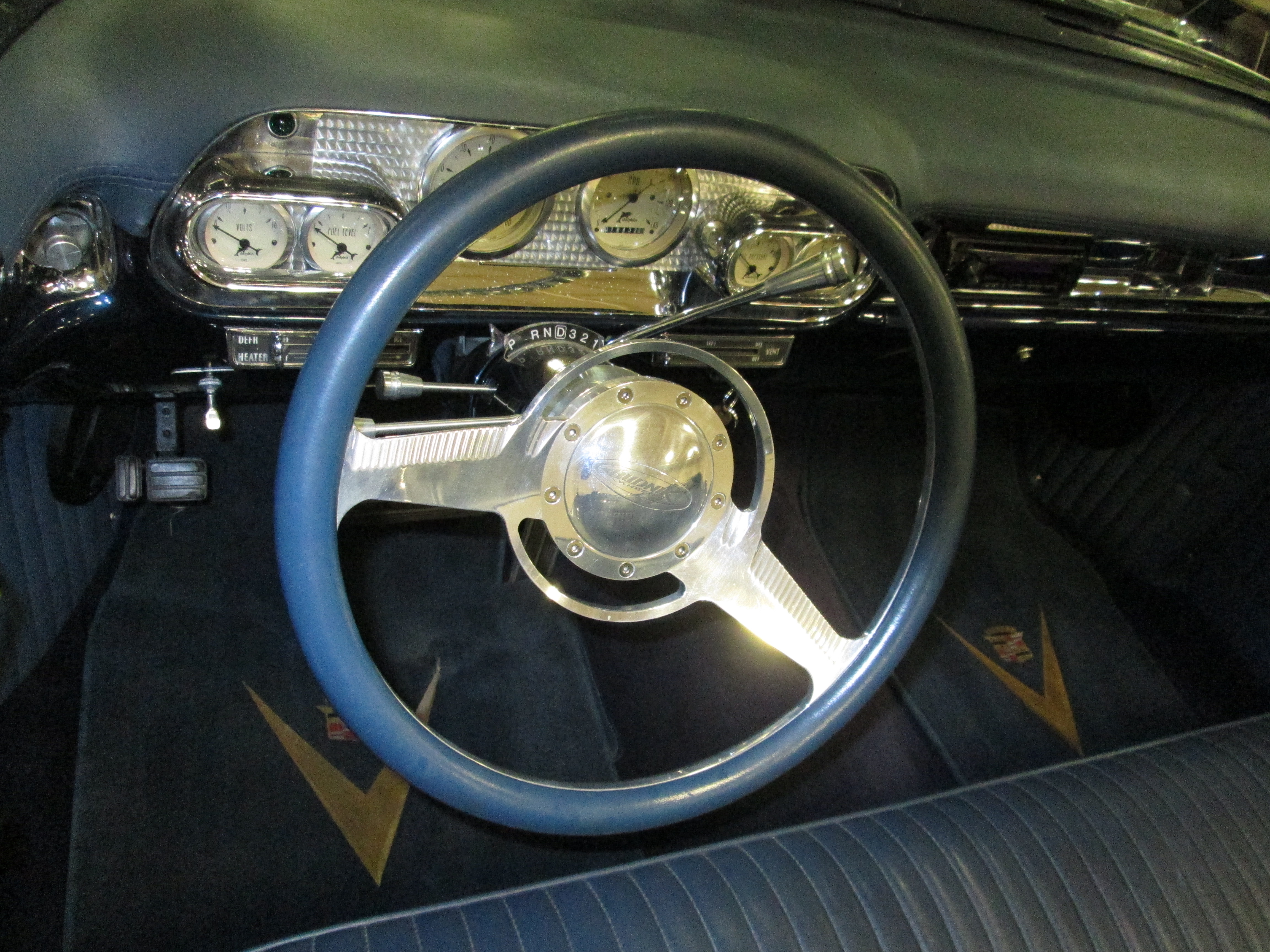
Martine and I drove to Oxnard today to pay a return visit to the Murphy Auto Museum. We began our trip with a big surprise. When we were there in April, Martine had left her Magellan cane seat in the rest room. After three months’ absence, a volunteer went into the back room, fetched it in a few seconds, and handed it over to Martine. We were both bowled over. That put our visit on a good footing from the word go.

Unlike the two major auto museums in L.A., the Murphy concentrates on American cars, many only 10 or 20 years old, that are beautifully restored and cared for, such as the metallic blue El Dorado from the above photo (I forget the model year) .

There was a special exhibit of vintage trailers, including a large Airstream and a small teardrop. It led me to dreaming about getting a small camper van for visiting desert campgrounds. (If only I had the money!) A number of the trailers were custom-made and manufactured from a variety of materials with varying degrees of professionalism.


Groovin’ at CAAM

Detail from Faith Ringgold’s Groovin’

Detail from Faith Ringgold’s “Groovin’”

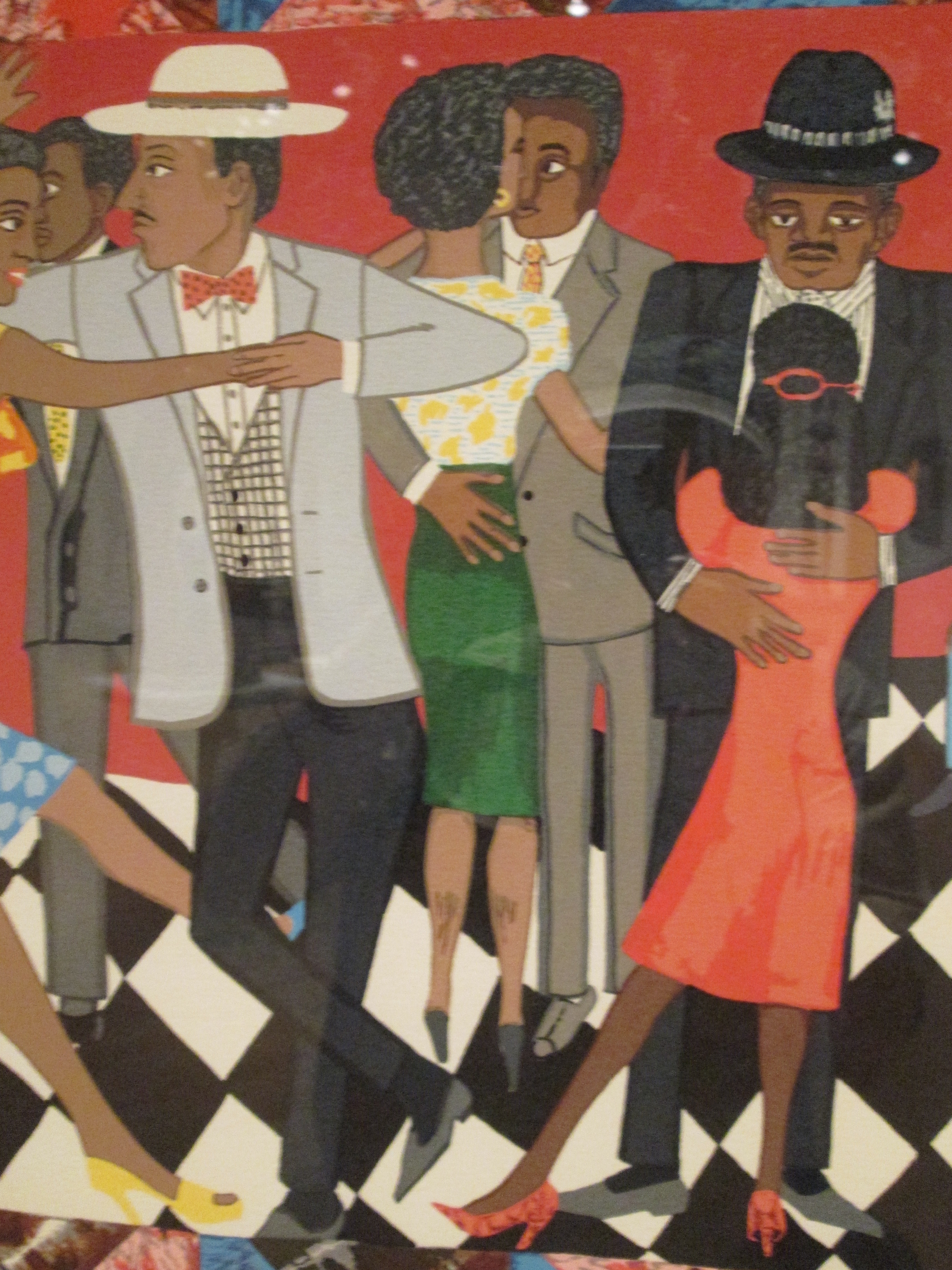
The opening of the Expo Line from Santa Monica to Downtown Los Angeles has opened up a whole new world for me. Once or twice a week, I take the train downtown and explore the ethnic richness of the city center. Today, I went to the California African American Museum (CAAM) in Exposition Park.

I have always felt that African Americans have made an outsize contribution to our culture, especially in music, entertainment, and literature. CAAM gave me the opportunity to see a number of highly original artworks that are not “normally” seen by white people.

There are four galleries at CAAM, two large ones for the permanent collection and two smaller ones for rotating exhibits.

Dancers by Overton Loyd

Dancers by Overton Loyd

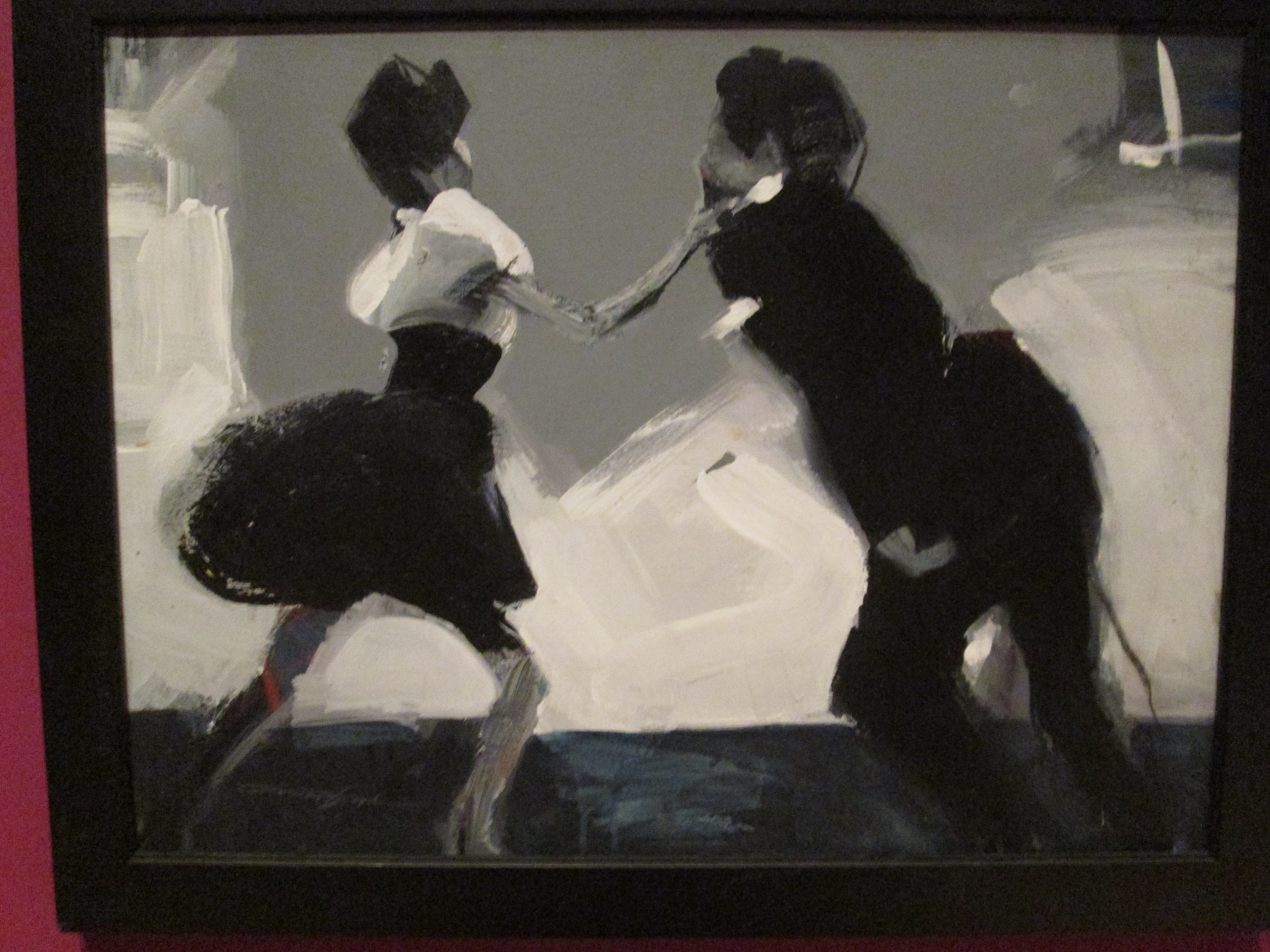
The rotating exhibits on view at present in the two smaller galleries are a retrospective of the works of Overton Loyd and an exhibition of hip hop photography by various artists.

Why did I choose two works showing dancers? It’s not that the exhibit was slanted toward them, but that I was drawn to them. Both paintings are intense, with the Ringgold’s slow rhythms and the abstract dynamism of the Loyd.

Although I profess not to live most modern art, there is something about the black artists who have struggled in obscurity to create beauty and meaning that appeals to me. I hope to check in at CAAM every once in a while to see what’s on exhibit.

The West Cork Flying Column

Military Re-Enactors at Old Fort MacArthur

Military Re-Enactors at Old Fort MacArthur

This year marks the 100th anniversary of the start of the Irish War of Independence. In April 1916 a group of volunteers took over the Dublin Post Office, were captured and executed by the British. Yesterday, I went by myself (Martine not feeling well) to the Old Fort MacArthur days in San Pedro.

Present was a group of military re-enactors modeled on the West Cork Flying Column commanded by Thomas Barry (as described in his excellent Guerilla Days in Ireland: A Personal Account of the Anglo-Irish War). I have run across this group before and admire their knowledge of their country’s history and their adherence to verisimilitude. Also, they have the best music by far of any group at the show.

The Irish War of Independence went on until December 1921 when the signing of the Anglo-Irish Treaty created the Irish Free State.

L.A. Writer: John Fante

John Fante, L.A. Novelist, Short Story Writer, and Scriptwriter

John Fante, L.A. Novelist, Short Story Writer, and Scriptwriter

This is a series about writers whose work is predominantly set in Los Angeles.Last Month, I wrote about Eve Babitz (who is still alive).  I am wondering whether to open this series up to people who came from other countries, such as Aldous Huxley or Raymond Chandler, who have written works that have added to the Southern California scene. Omitted will be writers like Nathanael West (The Day of the Locust) who are primarily oddities or one-shots.

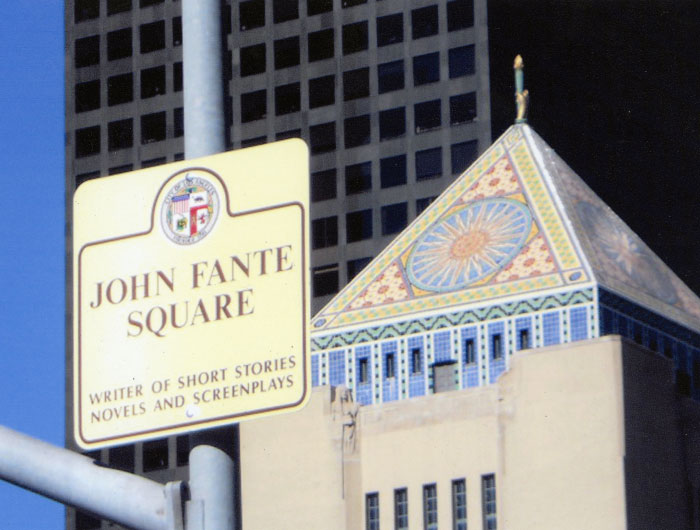
At the corner of West 5th Street and South Grand Avenue, hard by the Los Angeles Central Library, is a sign commemorating John Fante Square (see below), just on the edge of the old Bunker Hill neighborhood made famous by the writer’s Arturo Bandini novels. These include:

  • Wait Until Spring, Bandini (1938)
  • The Road to Los Angeles (1936, Published 1985)
  • Ask the Dust (1939)
  • Dreams from Bunker Hill (1982)

The best of them that I have read is Ask the Dust, which I finished reading this morning in the Central Library just outside the foot of Bunker Hill, where Fante and his hero Bandini lived.

Sign Commemorating John Fante Square with the Tower of the Central Library

Sign Commemorating John Fante Square with the Tower of the Central Library

Arturo Bandini wanted more than anything else to be a great writer, but we see him on the edge of poverty and trying unsuccessfully to find a love interest—in the worst possible way. His choice in Ask the Dust is a hophead Mexican waitress named Camilla Lopez with whom he has a love/hate relationship that ends badly. He is torn between his Italian Catholic upbringing and the glitzy Hollywood life of famous writers and film people.

It is in no way a Hollywood novel. In fact, Bandini and Lopez don’t even drive through Hollywood or have any interest in seeing films together.

Today, Bunker Hill is no longer a ghetto of cheap boarding houses; rather, it is full of high rise banks and corporate headquarters that tower over the lowlands of Downtown L.A. The old funicular, Angel’s Flight, which rises to the top of Bunker Hill from Hill Street across from the Grand Central Market is still in existence, though it is not presently in operation.

The life of John Fante has a particular interest for me because the end of his life was characterized by severe diabetes. In 1978, he went blind. Subsequently, he lost both of his legs to the disease. He died in 1983 at the age of 74.


Santa Monica and Saint Monica

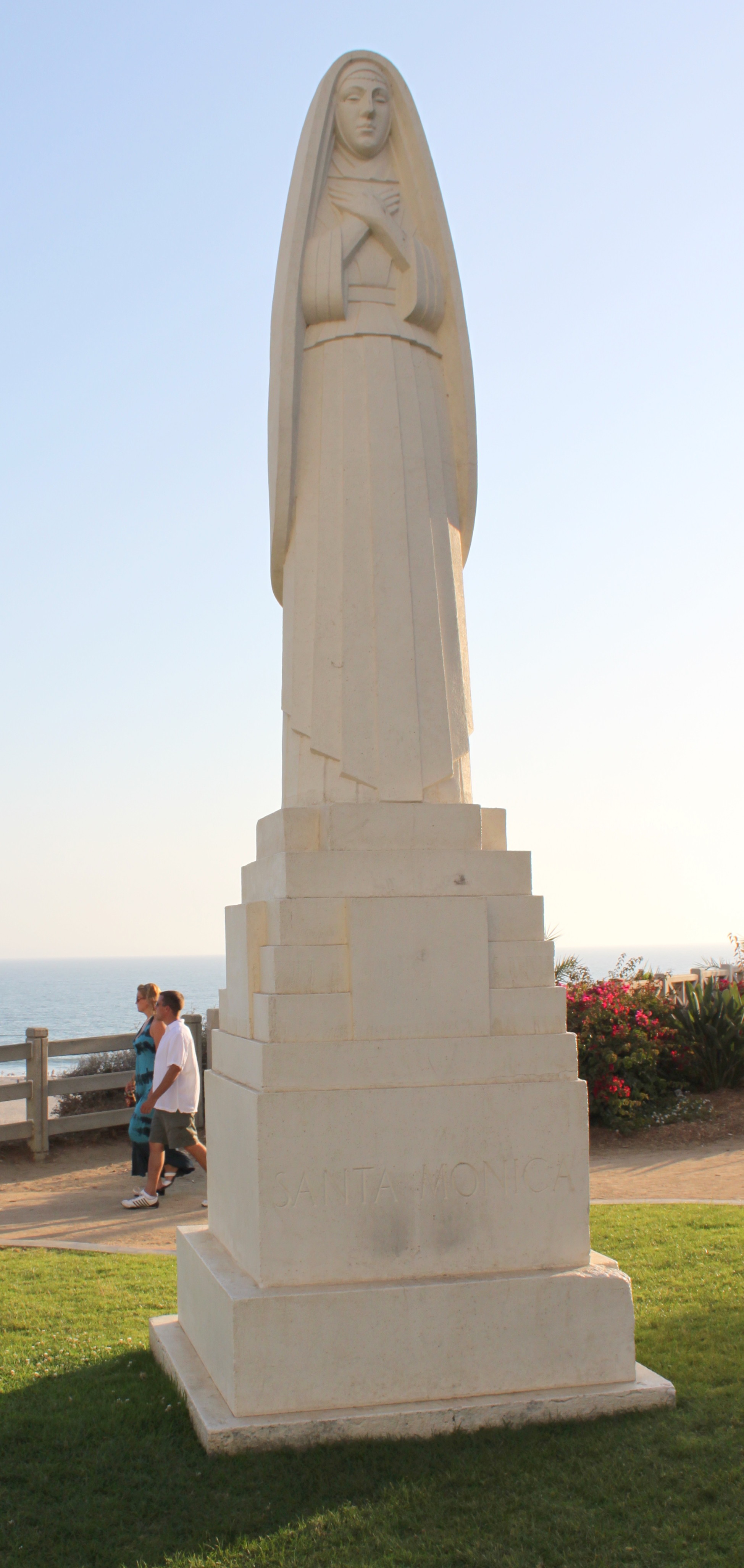
Statue of St. Monica in Santa Monica’s Palisades Park

Statue of St. Monica in Santa Monica’s Palisades Park

I’ve walked past this statue hundreds of times in the last half century. I always wound up shaking my head because St. Monica is made to look so Nordic. It’s like all those blonde blue-eyed Jesuses favored by Evangelicals. Protestant America doesn’t like to admit that, in certain countries surrounding the Mediterranean, people come with dark hair, brown eyes, and various skin shades of a darker hue.

Saint Augustine was born in present day Algeria, where, presumably, his mother Saint Monica, lived. Here is a painting of Saint Monica by artist John Nava which more closely corresponds to how she may have looked:

Painting of St. Monica by John Nava

Painting of St. Monica by John Nava

This painting is from a Saint Monica’s Church in Trenton, New Jersey. Too bad the people in Santa Monica are afraid of ’fessing up that their eponymous saint could be … shudder! … colored. And also likely to be banned from the local country club.


Pilgrims

Homeless in Santa Monica’s Palisades Park

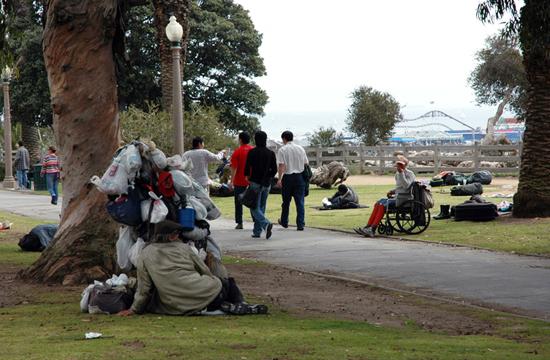
Homeless in Santa Monica’s Palisades Park

The title of this post comes from Joseph Conrad’s The Heart of Darkness:

I went to work the next day, turning, so to speak, my back on that station. In that way only it seemed to me I could keep my hold on the redeeming facts of life. Still, one must look about sometimes; and then I saw this station, these men strolling aimlessly about in the sunshine of the yard. I asked myself sometimes what it all meant. They wandered here and there with their absurd long staves in their hands, like a lot of faithless pilgrims bewitched inside a rotten fence.

Except, the pilgrims of whom I speak are not European ivory traders in the Congo, but either the homeless or people who do not wish to be labelled “homeless,” so they merely appear to be “in transit” with multiple bags.

Now that I work only two days a week, I like to spend more time in libraries, specifically downtown L.A.’s Central Library or Santa Monica’s Main Library. Curiously I see more pilgrims in Santa Monica, which comic Harry Shearer has dubbed “the Home of the Homeless.” Most are young, approximately half are black, and they travel with a lot of “stuff.” Usually, they just drop into a chair and doze off. Some use the Internet to try to find a way out of their present circumstances.

The library discourages homeless that smell very bad or have too many bags with them, as they inhibit families and students from using the books and computers. That tends to discriminate against elderly bums who have lived on the streets for years and and who have accumulated a vast store of “stuff.” (I have seen some with regular choo-choo trains of multiple supermarket carts.)

At night, Palisades Park along the bluffs overlooking the Coast Highway turns into a large encampment full of tents, shopping carts, plastic bags full of rags and food scraps, and whatnot.

There are Salvation Army and other accommodations in Santa Monica for the homeless, but I suspect not enough. And many of the homeless, as I hinted, are “in transit” and do not consider themselves to be homeless. A goodly number are stark raving mad, and a couple are probably homicides or arsons waiting to happen.


The Big Irish Fair

The Merry Wives of Windsor

The Merry Wives of Windsor

It was time for the Big Irish Fair and Musicfest in Long Beach. So Martine and I headed down to El Dorado Park and sat down for a day of extreme heat and delightful Irish music.

We concentrated on the more traditional groups at the Royal Tara Stage, which included harpists, fiddlers, and the fun girl band who called themselves the Merry Wives of Windsor. Although their website concentrates on their Renaissance Faire appearances, here they were clad in mufti. Conveniently, the stage was in the comfortable shade of several large pines.

I was particularly taken with their fiddler, Darien DeVries with her dancing eyes (right, above). They played a mixture of Irish, English, and original music with toasts and jokes between numbers.

Also notable was the harp playing of Dennis Doyle, who sang several tunes in Gaelic. Included in his act was (strangely) the best re-telling of James Joyce’s story, “The Dead,” from his Dubliners.