
The Dance Goes On

Little Girls in Greek Costumes

Little Girls in Greek Costume

Yesterday afternoon, Martine and i went to the Valley Greek Festival at St. Nicholas in North Hills. It was a cool overcast day, but people came from all over the Valley to party. Unfortunately, there were some signs of increased organization and decreased quality, especially in the food service area. But it’s still fun, what with all the music and Greek dancing. (No, I didn’t dance: I was not born with the ability to move in time to music without causing pain to my dancing partners’ feet.)

We took our usual tour of the church. Greek Orthodox churches can be pretty spectacular, and St. Nicholas is one of them. In case you were wondering, yes, it’s Saint Nick, Santa Claus, after whom the church is named. For some reason, this year there was no Question and Answer session with one of the parish priests, which I rather miss. Although I was raised a Catholic, I have a lingering admiration for Orthodoxy.

Doctrinally, the major difference between Catholicism and Orthodoxy is a single word—filioque—in the Nicene Creed. Also, their priests can be married; whereas Roman Catholic clergy must remain celibate. Curiously, there are several different rites of he Catholic Church, under Papal jurisdiction, in which marriage is also permitted.


Down On His Luck

From a New Book on LA Crime Scene Photos from 1953

From a New Book on LA Crime Scene Photos from 1953

Crime writer James Ellroy has come out with a new book of crime scene photos from 1953. The book is called, simply, LAPD ’53. The victim is one Jésus Fernández Muñoz, who, according to Ellroy’s description, was “a good guy down on his luck. The coroner’s register one-sheet is perfunctory. It’s an accidental death. He was walking on or sleeping on a concrete beam below the Aliso Street bridge.” He suddenly dropped 50 feet to the hard surface of the L.A. River, which in that area is a concrete flood channel.

I always loved Ellroy’s L.A. detective novels, especially the so-called L.A. Quartet, consisting of:

  • The Black Dahlia (1987)
  • The Big Nowhere (1988)
  • L.A. Confidential (1990)
  • White Jazz (1992)

I’ve read a few others, but need to read more, as I think he is one of the best working today. And his picture of Southern California is right on the money. I understand he is working on a new series set in L.A.


Short Line

Our Train Pulling Up to the Gate

Our Train Pulling Up to the Gate

In Ventura County’s Santa Clara River Valley, there is a railroad line that runs roughly between Piru and Santa Paula, with Fillmore as its base. Most trains run on Saturdays and some Sundays, with most trains running from Fillmore to Santa Paula, stopping for sufficient time for passengers to see the Santa Paula Agricultural Museum or the California Oil Museum. On the way back, there is a stop at the Loose Caboose, where one can buy locally grown fruit, olives, and honey as well as see cockatiels, parakeets, peacocks, koi, and goats.

We got an acceptable lunch on the Powhatan Dining Car on the train, and sat back as we rolled past hundreds of fruit orchards. (Santa Paula considers itself the citrus capital of the United States.)

The Fillmore & Western Railway is essentially a fun enterprise. If you’re expecting 100% authenticity or haute luxury, you will be disappointed. Your four-hour journey will be restful and low-key. Many of our fellow passengers seemed to be retired farmers, who had interesting things to say about the farmland through which we passed.

Fillmore and Santa Paula are only about a dozen miles apart, but Martine and I had a good time and would consider coming back.

Tarnmoor’s ABCs: Venice

A Million Miles from St. Mark’s

A Million Miles from the Adriatic

All the blog posts in this series are based on Czeslaw Milosz’s book Milosz’s ABC’s. There, in the form of a brief and alphabetically-ordered personal encyclopedia, was the story of the life of a Nobel Prize winning poet, of the people, places, and things that meant the most to him.

My own ABCs consist of places I have loved (Iceland, Patagonia, Quebec, Scotland), things I feared (Earthquakes), writers I have admired (Chesterton, Balzac, Proust, and Borges); locales associated with my past life (Cleveland, Dartmouth College, and UCLA), people who have influenced me (John F. Kennedy), foods I love (Olives and Tea), and things I love to do (Automobiles and Books). This blog entry is my own humble attempt to imitate a writer whom I have read on and off for thirty years without having sated my curiosity. Consequently, over the weeks to come, you will see a number of postings under the heading “Tarnmoor’s ABCs” that will attempt to do for my life what Milosz accomplished for his. To see my other entries under this category, hit the tag below marked “ABCs”. I don’t guarantee that I will use up all 26 letters of the alphabet, but I’ll do my best. The fact that I made it as far as the letter “V” makes me wonder sometimes.

Los Angeles has been described as a varying number (depending on who’s doing the quoting) of suburbs in search of a city. After all, what is the real difference between Sherman Oaks and Encino, Mar Vista and Palms, or Rancho Park and West L.A.? Some of the communities in the county are distinctive because of their ethnicity, such as Monterey Park (Chinese), East L.A. (Mexican), Gardena (Japanese), Pico-Union (Central American), and Glendale (Armenian).

One neighborhood that is known more for its culture than its ethnicity is Venice. When Abbot Kinney first thought of the idea of artificial canals in a community bordering the ocean in 1905, naturally, the name “Venice” popped into his head. In the 1960s, the area was known as Los Angeles’s answer to Haight-Ashbury. Charles Manson and his gang hung around the area. Jim Morrison and the Doors advertised itself at first as a Venice band.

At the same time that the Hippies became the predominant population, some prominent artists also set up shop in the area, such as Charles and Ray Eames. Others associated with Venice included Charles Arnoldi, Jean-Michel Basquiat, John Baldessari, Larry Bell, Dennis Hopper, and Ed Ruscha. Abbot Kinney Boulevard is dotted with art galleries.

You can get your name on a grain of rice, buy any number of T-shirts with funny sayings, eat funnel cakes (whatever those are), or order sausages from Jody Maroni’s Sausage Kingdom.

I frequently walk along the Boardwalk where it begins just south of Venice Boulevard to Small World Books, one of the best remaining independent bookstores in Southern California. Frankly, I enjoy the sleaziness of the area—perhaps not enough to hang out there after the sun sets.


Majális

Celebrating May Day and Mothers’ Day Together

Celebrating May Day and Mothers’ Day Together

On the first Sunday in May, the Grace Hungarian Reformed Church in Tarzana celebrates May Day and Mothers’ Day together. Although we are not members of the church, we regularly show up for some good Hungarian home cooking and some cute children’s singing and recitations.

Available were not only the world-class Magyar pastries, including ground walnut rolls and a lethal type of cream pastry called crémes (pronounced CRAY-mesh), but two kinds of soups—including Hungarian goulash—sausages, flekken, and assorted beverages. You can see the menu in Hungarian below:

Program (and Menu) for the Fesztivál

Program (and Menu) for the Fesztivál

The only unfortunate event is that, toward the middle of he afternoon, I saw one elderly lady trip over a concrete parking stop and break her right shoulder. She was scared and didn’t know what to do, but one of the parishioners drove her to a the hospital. It was eerie actually seeing the same sort of thing that happened to me happen to someone else. Except that I was in the company of a friend who is a nurse for the county and who knew exactly what to do. It’s no picnic, especially at her advanced age.


The Fragrance of Spring

Jasminum polyanthum

Jasminum polyanthum

Now that tax season is over, and I am slowly coming back to normal after my broken shoulder ordeal, I am beginning to notice some of the more beautiful aspects of spring in Southern California. For me, spring in L.A. means jacaranda trees in bloom with their purple flowers. But I have written about jacarandas before—and noted that they originated in Argentina or Bolivia.

What I want to talk about today is the variously called white jasmine, pink jasmine, or—to be scientific about it, Jasminum polyanthum. Everywhere I go, there seems to be sturdy jasmine bushes with their aromatic blossoms, which last into the beginning of summer, as do the jacaranda blossoms by the way.

In a 2013 post, I misidentified our jasmine bushes as Star Jasmine, or Trachelospermum jasminoides. The Los Angeles Times set me straight in an article entitled “Jasmine, the Fragrant Harbinger of Spring.”

I love to pinch a few jasmine blossoms off the bush, rub them in my hands, and bring the sweet-smelling mixture to my nose. In my experience, only lilacs have a stronger and sweeter scent. I don’t have to go far: There is a sturdy bush right at the foot of the stairs to my second-floor apartment.

Like the jacaranda, the white jasmine is an invasive plant, but a welcome one. According to Wikipedia, it originated in the area around China and Myanmar.


Emeric Toth and the City

Emeric Toth Is My Alter Egp

First Impressions of a Megalopolis

This posting is reprinted from Yahoo! 360 from February 2009, when I wrote some quasi-fictional pieces starring my alter ego, one Emeric Toth.

What was there to love about this city? Ten million plus people living their lives on a series of shelves between the mountains and the sea. Most of the time, the sun beat down relentlessly on the people, the buildings, and the gigantic road network that radiated like octopus appendages out from the center. When he first arrived there over forty years ago, Emeric Toth heard Los Angeles described as seventy-five towns in search of a city. He remembered the confusion on the ride to his first apartment from Union Station. He started downtown, went some five miles and—bam!—there was another downtown by Hollywood. A few miles further and—bam!—another downtown by a new place called Century City.

He had heard about the strangeness of the place and its inhabitants, who lived in metastasizing suburbs that stretched out for miles in every direction but one: The sea was an effective barrier.

The new state governor was an actor named Ronald Reagan, whom Toth had seen co-starring with a chimpanzee in Bedtime for Bonzo (1939). The whole hippie thing was just beginning, which he traced with some amusement in the weekly newspaper called the Los Angeles Free Press, or Freep for short. The Vietnam war was just beginning to arouse massive resentment: In just two short years, Johnson would refuse to run for a second term because he felt tainted by the war. That’s when presidents cared what people thought.

So many things have changed, most notably Emeric Toth himself. The city was still recognizably the same, grimier in some instances, and new and shiny in others. He sat at a local café slowly savoring a small pot of Darjeeling tea as he watched the young people chattering away at adjacent tables. In another forty years, those kids would still be there, drinking whatever the beverage of choice would be, but he himself would not be. But some part of himself would be still be attenuated and distributed across the hundreds of square miles of buildings and freeways and occasional green spaces and towering peaks (if they’ll be able to see them then) and above all that dark green and black ocean whose waves break endlessly on the shore of Santa Monica Bay.

Turtles—But No Rain

Turtles at Mulberry Pond

Turtles at Mulberry Pond

There is a Native American rain ritual involving turtles, which, being a Hungarian American, I feel would not work if I performed it. So I watched the turtles at Descanso Gardens, which seemed to be having a population explosion. Maybe they’re doing the rain turtle ceremony themselves; and maybe, later in March, we will have a proper inundation.

I have come to suspect, however, that weather forecasters are evil sorcerers. Whenever we get some measurable rain, and we’ve had more so far than last year at this time, I believe that the forecasters suck it all up for filling their swimming pools. They take such pleasure in telling us after every rain that it did nothing to relieve the drought: In fact, it probably made it worse.

Then, whether the weather gets hot and dry, they take even more pleasure in announcing how lovely the weather is, what with all the surrounding brown hillsides with are bound to catch fire in the fall.

There’s more here than meets the eye!

Tulpomanie

That’s Dutch for “Tulip Mania”

That’s Dutch for “Tulip Mania”

Tulips are my favorite flowers. Sadly—in Southern California anyhow—they are in bloom only during the months of March and April. Wouldn’t you know it: That’s just when I am most occupied doing overtime work on taxes. When I got an e-mail from Descanso Gardens saying the tulips were in bloom, I wasted no time getting out there with my camera. Even though Martine has not been feeling good lately, the flowers and the warm weather made her feel a little better. As for me, it was a major lift for my spirits.

There was a time in the Seventeenth Century that tulips were big business in the Netherlands. Introduced to Europe late in the previous century from Turkey, tulips spread like wildflower (sorry about the pun). British journalist Charles Mackay wrote a book in 1841 called Extraordinary Popular Delusions and the Madness of Crowds, in which there was a chapter about Dutch tulip mania, or tulpomanie. At its height around 1637, a single bulb for the tulip called “The Viceroy” (see below) cost between 3,000 and 4,200 guilders—this while the average skilled tradesman made around 300 guilders for an entire year.

Catalog Picture of “The Viceyoy” Tulip

Catalog Picture of “The Viceroy” Tulip

If you are interested in reading more, you can still find the Mackay book around, and you may be even more interested in reading Alexandre Dumas Père’s The Black Tulip, which dramatizes the whole tulip mania period in Holland. When the City of Haarlem offers 100,000 guilders to anyone who can produce a black tulip, all hell breaks loose.

Land of Little Rain

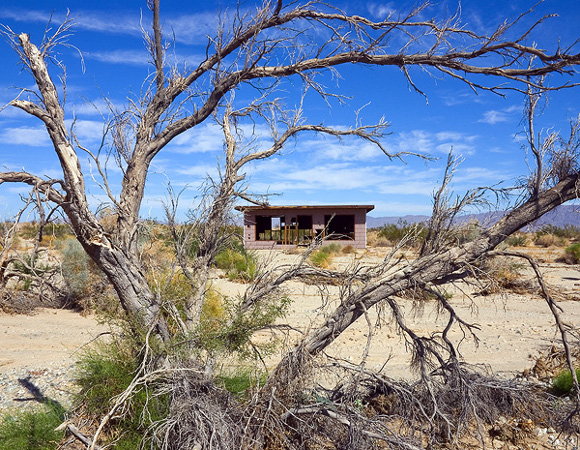
Is This Where We’re Headed?

Is This Where We’re Headed?

The title for this post is the same as a that of a classic book by Mary Austin about her life in the Owens Valley. While there is little doubt that deserts can be starkly beautiful—as for instance Death Valley or the National Parks of Southern Utah—it can be frustrating to have forecast rain turn into little more than a dirty drizzle.

I call it a dirty drizzle because there’s only enough rain to smear my windshield when I run my wipers. As my windshield wiper reservoir is leaking and its replacement costs a small fortune for my twenty-year-old Nissan Pathfinder, I spend a good part of .L.A.’s so-called rainy season driving around looking through a coating of dirt.

I have no faith in weather forecasters. Why? Because they are only intent on selling advertising. Therefore, they tend to wildly exaggerate any rain forecast. Even if there’s so much as a 10% chance of showers, newsmen will spend hours telling us to look for the forecast in the next fifteen minutes, er…, half hour, er… hour. What usually happens, the mountains to the north of us get the rain, or the deserts beyond the mountains. What we get, at most, is a pittance.

People in the Northeast must be looking at us with ill-suppressed envy, as they struggle with snow and cold and “polar vortexes,” whatever those are. In the meantime, we continue to dry out. Our state’s agriculture, once the envy of the nation, is looking at a potential dust bowl.