Leaves and Concrete

My Preferred Walking Surface

My Preferred Walking Surface

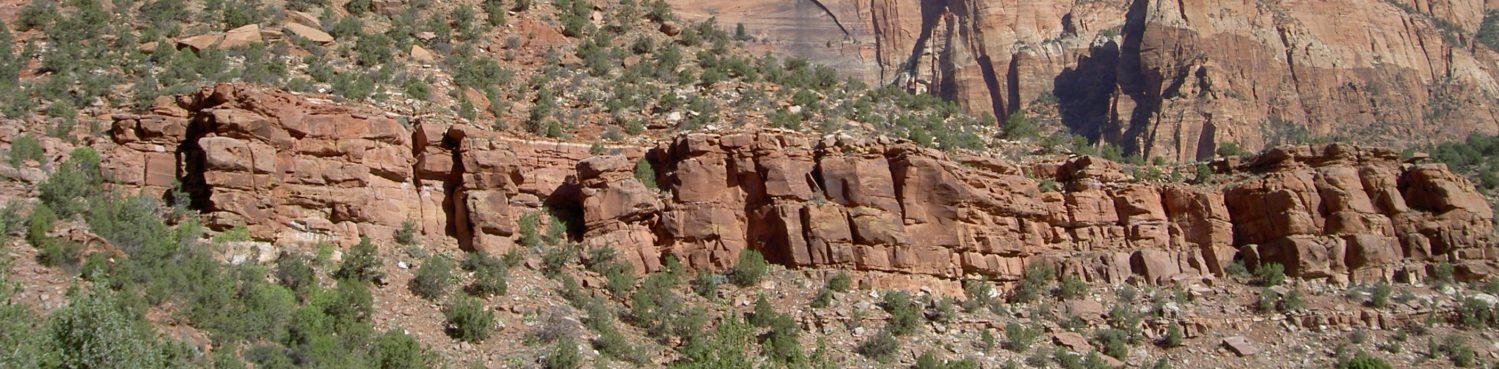
One of my meditations at Descanso Gardens related to the type of surface we walk on. For us city-dwellers, most of our lives are spent walking on artificial surfaces such as concrete, asphalt, wood, or padded carpets. Yesterday, I cut through the 150-acre wood consisting mostly of oak trees and camellias, roughly from a point just south of the lilac garden to the cactus garden on the other side of the park.

During most of that time, I was treading on a lush carpet of dead leaves and fallen camellia blossoms as pictured above. It was the most resilient surface on which I have ever walked. So much death all around me! But was it really? How much of our skin and hair do we slough off every day of our lives? Yet they are renewed (well, except maybe the hair), as are the leaves and camellia blossoms. It is a little death among so much life. And it made me think that, perhaps, we ourselves are like leaves or blossoms of a much larger living entity.

We hardly ever see ourselves that way, what with our gimme gimme now now lives and somewhat tawdry needs. Going to Descanso always makes me think about our role in the larger life of the planet. We have destroyed so many of the green spaces that make us realize our part in the universe; and, as a result, we have become unhappier and more disconnected.
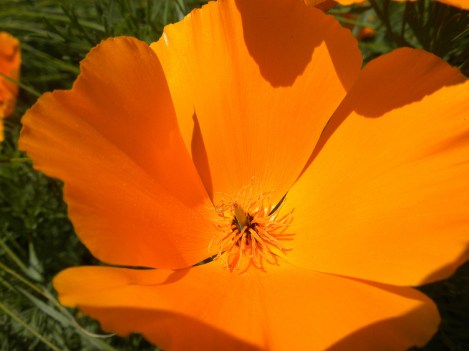
Eschscholzia californica

Macro Image of a California Poppy

Macro Image of a California Poppy (Eschscholzia californica)

We got an extra day off from work today, so Martine and I drove to Descanso Gardens in La Cañada-Flintridge, perched in the hills above Glendale. We have always associated the gardens with peace of mind, and today was no exception. Martine and I usually split off for a couple of hours and meet at the front gate just before closing time. While she wanders to her favorite sites, I look to get lost on the lesser known trails and perhaps do a bit of meditation.

The plethora of California poppies—the official state flower—kept distracting me. I took a number of close-ups, including the picture above, There is something so simple and yet so splendid about these blossoms that they kept interrupting my meditations. One never knows when one will run into a clump of these.

If it weren’t for tax season, I would have made a point of visiting the Antelope Valley California Poppy Preserve about fifteen miles west of Lancaster. Some 1,745 acres are full of California poppies and other native wildflowers, and there is a small visitor center maintained by the California Department of Parks and Recreation. (Of course, with the state’s current budgetary problems, I don’t even know if the park is still being funded.)


Islands of Peace

The Church at Mission Santa Barbara

The Church at Mission Santa Barbara with Martine in the Foreground

The California Missions are probably the state’s best claim to a rich history going back to the eighteenth and nineteenth centuries. I find it nothing less than amazing that most if not all of Franciscan Father Junipero Serra’s missions are still in existence, after all the earthquakes, fires, and other disasters to which California is prone.

Mission Santa Barbara is one of four missions dedicated to converting and regimenting the Chumash Indians of the area (the others are La Purisima in Lompoc, Santa Ynez in Solvang, and San Buenaventura in Ventura). Although Father Serra was declared beatified by Pope John Paul II in 1988, there are still unresolved issues regarding mistreatment of the Indians. Each of the missions also contained Spanish military barracks for troops enforcing the political dictates of the Spanish Viceroys. So it is not uncommon to find stories where the Indians were both helped and repressed by the Missions and their dual religious and political functions.

Chumash Painting of St. Francis

Chumash Painting of St. Francis

Whatever really happened at these missions, today they are, collectively, a cultural treasure—islands of peace dotted along the California coast from San Diego to San Francisco Solano in Sonoma. I have visited perhaps ten of them so far and hope to see the rest of them eventually.

Martine and I visited Mission Santa Barbara (for the third or fourth time) on Saturday during our recent trip to the area.


Back from the Dead

The Luftwaffe Drew This Card Too Often

The Luftwaffe Drew This Card Too Often

I have always enjoyed visiting aircraft museums. The one in Palm Springs is nothing short of spectacular. The Western Museum of Flight in Torrance is smaller, but fun to visit. Until 2002, there was a great Museum of Flying on the north end of Santa Monica Airport. Then it closed down. We heard that they were looking for a place to move somewhere in the desert. It appears they never found one.

Then, all of a sudden, we heard that it was re-opening on the south side of Santa Monica Airport. Finally, Martine and I paid it a visit yesterday afternoon. The new Museum of Flying is about one-fourth the size of the old one and focuses heavily on the airport’s history with Douglas Aviation, back when it was named Clover Field. Still it was sufficiently interesting to engage our attention for a few hours.

Russian Yakovlev Yak-3 Fighter from World War Two

Russian Yakovlev Yak-3 Fighter from World War Two

Among other displays, they had a Russian Yakovlev Yak-3 fighter parked outside (above). The much beloved plane was preferred by Russian pilots over the planes supplied by the United States during the days of Lend-Lease, such as the P-51 Mustang and the Supermarine Spitfire.

It was good to see the Museum of Flying back from the dead. I hope they can accumulate enough money and volunteers to grow back to what they used to be before a greedy landlord snuffed them out of existence to get a higher rent.


The Grittiness of Outer Space

Endeavour in its Hangar at the California Science Center

Endeavour in its Hangar at the California Science Center

Today, Martine and I did something a little different. I was curious to see the NASA Space Shuttle Endeavour, which was on display in a large hangar at the California Science Center in downtown Los Angeles. To get there, we took the relatively new Metro Expo Line from its current end of the line in Culver City to the Expo Park/USC Station.

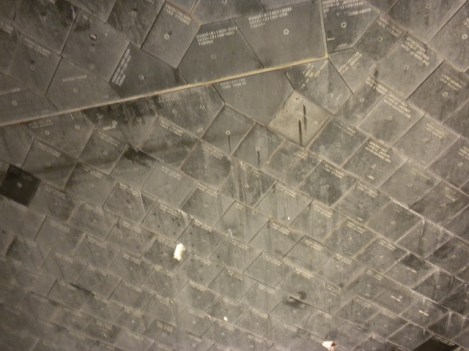
The Endeavour was amazing. There was nothing Disneyfied or cleaned up about its appearance. The shuttle had spent some 296 days in space between its maiden voyage in 1992 and its arrival in Los Angeles in September 2012. It had circumnavigated the earth 4,671 times for a total of 123 million miles. Instead of looking nice and neat and clean, there was something gritty about its looks, especially around the nose cone: The heat of re-entry placed the most stress on the protective tiles tiles (see below) that covered its surface.

Some of the Heat Protecting Tiles on the Underside of Endeavour

Some of the Heat Protecting Tiles on the Underside of Endeavour

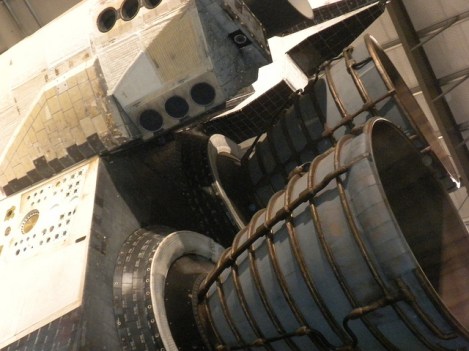
Most amazing was the area around the rear engines (see below). Never again will I think of outer space as something squeaky clean: It’s either too hot or too cold, and the stress of re-entry is enough to wreak havoc on just about any made-made materials.

One of the Rear Engines of Endeavour

One of the Rear Engines of Endeavour

It was an awe-inspiring experience to see Endeavour and to appreciate the work of thousands of talented men and women who, for a period of some twenty years, guided its destiny.

Martine thought that the Endeavour should have been cleaned up a bit more before it was presented to the general public. I, on the other hand, liked it just the way it was.

A Sense of Loss

Huell Howser (1945-2013)

Huell Howser (1945-2013)

Every evening after dinner, I usually get on the computer and enter my income and expenditures on QuickBooks. During that time, about twelve feet from me, Martine watches one of Huell Howser’s TV shows on KCET, usually California’s Gold, California’s Green, or Visiting. What all three shows have in common is the amiable host paying homage to some locale or event or person connected with California.

People have made fun of Huell’s Tennessee drawl and his seeming naiveté in doing his interviews. There’s even a drinking game in which the participants have to take a swig every time Huell says “Wwwwwooooowwww!” or or “Gooooolllllllyyyyyy!” or “That’s amazing” or “historic” or any number of other of his habitual expressions.

Many were the times I would walk away from my computer and sit next to Martine because I found myself getting interested in one of his interviews. Over the years, Huell and I have visited many of the same places—because Huell got me hooked.

But now we no longer have Huell Howser, because he died yesterday in Palm Springs at the age of sixty-seven. He had retired in September from his show, sparking rumors that he was being forced out. Despite his approachability, however, the Tennessean was a private person who was fighting a long illness which was getting the upper hand.

Both Martine and I feel a sense of loss. In a city where there are not many really likeable public figures, everybody loved Huell. And he loved California and delighted in introducing interesting sidelights of his adopted state to anyone who would listen. And listen we did. For KCET, insofar as I’m concerned, he was the whole station’s raison d’être. When some people leave us, they leave behind a gaping hole. Who can replace someone so amiable, so knowledgeable, so adventurous, and withal such a character as Huell?

I know that his shows will continue to be watched in reruns. He will continue to influence our road trips through the State of California, especially in our Southern California neck of the woods. A neck of the woods that somehow has gotten more lonely without Huell to appreciate them.

To get a flavor of his shows, watch this video on YouTube (about a dog that eats avocados). And read this tribute that appeared in today’s Los Angeles Times.

It’s a Wexler

Back Yard of Wexler House at 499 Farrell Street

Back Yard of Wexler House at 499 Farrell Street

Until I spent a few days with my brother in Palm Springs over the Christmas Holiday, I had no idea of the work of architect Donald Wexler. Apparently, he has had an outsized influence on the architecture of Palm Springs and the more posh Coachella Valley cities adjoining it. My brother rented a Wexler house at 499 Farrell Street at the corner of Alejo in Palm Springs’s “Movie Colony” neighborhood.

I tend to take a dim view of much modern domestic architecture, but I must admit that Wexler’s work looked good in its lower desert setting, with Mount San Jacinto looming in the background. Not that his houses are particularly comfortable: The house that my brother Dan rented had no windows per se, only massive sliding glass doors that tended to superheat in the afternoon sun, plus a few glass ceiling panels.

If I had to rate the Wexlers I saw, I would give them an A for looks, but only a C for comfort. The lower desert can be fiercely hot, especially in the summer months with temperatures soaring to 115-120 degrees in the afternoons. Many of these houses were built in the 1950s and 1960s, when energy costs were low. During the summer, I would expect that one’s electric bill would likewise soar. Perhaps that’s where the pool and patio (see above) come into play. December can be pretty cold in Palm Springs, so Martine and I didn’t bother to bring our swimsuits.

Apparently, Donald Wexler is still alive, though, in his eighties, I am sure his architectural career is a thing of the past. Still, it is interesting to view his work, which you can do by clicking here, here, and here.


Foodies

Thirty-Something Foodies Grazing

Thirty-Something Foodies Grazing

Foodies are to dining what indie films are to movies. They represent a dilettantism gone ape. It’s very like those guys who hog the self-serving soda dispenser mixing Dr. Pepper with Mountain Dew and Raspberry Ice Tea in hopes of coming up with the magical beverage that tastes just right—as if they were some kind of gonzo new-age alchemists.

I work in Westwood, which adjoins the southern boundary of the UCLA campus. In the last year, a number of decent restaurants have shuttered their doors forever and been replaced by restaurants appealing to Foodies.

What are Foodies? They are essentially amateurs who concentrate on consuming, preparing, analyzing, and (endlessly) chatting about food. You can find them on the boards of Chowhound.Com making fine distinctions about tacos, hot dogs, Asian noodles, pastrami, and any number of other esoteric food-based subjects. In Los Angeles, many are aficionados of various catering trucks that tweet their next parked locations to their customers. Now, there is even one restaurant in Westwood (TLT Food) that started out as a catering truck operation.

Characterizing Foodie-oriented restaurants is a certain cluelessness regarding what most people who are not 30-Somethings like. For instance, as a diabetic, I scrupulously avoid sugared drinks. One nearby Foodie restaurant called Fundamental is typical of the genre, with unusual concoctions that you have to be of a certain age to like. If, like me, you are a diabetic, fuggeddaboutit!

I used to rely on Foodie chatter to find new restaurants: Now I can only assume that the websites will send me to some 30-Something dive where the hamburgers are loaded with mango chutney, the hot dogs topped with aioli, and the French fries laden with celeriac root and vindaloo paste. Almost always, sugar is added to make the incongruous mix more palatable to the young.

It’s not that I’m against any kind of food experimentation: It’s just that experimentation for its own sake rarely produces a tasty meal. It gets more complicated when I go out with Martine, who refuses to eat at restaurants that have incongruous foods on their menu, even when they are among other plainer and more traditional foods. For this reason, she refuses to eat at California Pizza Kitchen, even though she would probably like their thin-crust Sicilian pizza.


Bighorn Sheep

Bighorn Sheep at Palm Desert’s Living Desert

Bighorn Sheep at Palm Desert’s Living Desert

Christmas weekend was our third or fourth visit to the Living Desert in Palm Desert, California, but it was the first time I actually saw any bighorn sheep close enough to photograph. Bighorn sheep are famously shy with regards to human contact—for good reason. Every once in a while, one could see them at a great distance wending their way across some remote crags.

Once, at Capital Reef National Park in Utah, we saw a group of them close up. But this is the first time we saw any of them in California, though I’ve looked at Anza-Borrego Desert State Park, Joshua Tree National Park, Death Valley, and other places over the last thirty years.

Disney and the Gipper

Mock-Up Costume Upon Which the Dress of Snow White Was Modeled

Mock-Up Costume Upon Which the Dress of Snow White Was Modeled

When we were at the Grier Musser Museum yesterday, its curator, Susan Tejada, told us about a large Walt Disney exhibit at the Ronald Reagan Presidential Library in the Simi Valley. It didn’t take much convincing for Martine, who likes the library at Christmastime because of their Christmas Trees of Other Nations exhibit.

Well, things didn’t turn out as we expected. To begin with, the parking lot was filled to overflowing, so we had to park a mile down the hill. Fortunately, the crowds had been anticipated; and there was a shuttle bus service that plied up and down the hill all day. Even then, we had to wait in a line for almost half an hour just to get inside. And when we did, the exhibits were a mob scene.

You see, Southern California is full of tourists who have come to see the Rose Bowl and its Tournament of Roses Parade. While they are here, they take bus tours to such locales as Hollywood (why?), the Reagan Library, and the Santa Monica Pier. We ran into several hundred Wisconsin Badgers fans sporting name tags hung around their necks.

What Martine and I did was to force our way through the crowds to the Disney exhibit, which was put on by D23, the Official Disney Fan Club, and then we split up. Martine went to see as much of the standard exhibits as she could, while I repaired to the Ronald Reagan Country Café and read W. Baring Pendleton’s excellent biography of English journalist and reformer, William Cobbett.

It was worth seeing the Disney exhibit—despite the crowds—but I think I had the better idea of sitting in the café with some green tea and reading a good book. I was already familiar with most of the regular exhibits. Oh, and the Christmas Trees of Other Nations? The Reagan Library stopped doing that three years ago. Tant pis!