Learn Your Classics!

Botticelli’s Venus

Botticelli’s Venus

The English letters are twenty-six in number. There is nothing like beginning at the beginning; and we shall now therefore enumerate them, with the view also of rendering their insertion subsidiary to mythological instruction, in conformity with the plan on which some account of the Heathen Deities and ancient heroes is prefixed or subjoined to a Dictionary. We present the reader with a form of Alphabet composed in humble imitation of that famous one, which, while appreciable by the dullest taste, and level to the meanest capacity, is nevertheless that by which the greatest minds have been agreeably inducted into knowledge.

THE ALPHABET.

A was Apollo, the god of the carol,
B stood for Bacchus, astride on his barrel;
C for good Ceres, the goddess of grist,
D was Diana, that wouldn’t be kiss’d;
E was nymph Echo, that pined to a sound,
F was sweet Flora, with buttercups crown’d;
G was Jove’s pot-boy, young Ganymede hight,
H was fair Hebe, his barmaid so tight;
I, little Io, turn’d into a cow,
J, jealous Juno, that spiteful old sow;
K was Kitty, more lovely than goddess or muse;
L, Laocoon—I would’nt have been in his shoes!
M was blue-eyed Minerva, with stockings to match,
N was Nestor, with grey beard and silvery thatch;
O was lofty Olympus, King Jupiter’s shop,
P, Parnassus, Apollo hung out on its top;
Q stood for Quirites, the Romans, to wit;
R, for rantipole Roscius, that made such a hit;
S, for Sappho, so famous for felo-de-se,
T, for Thales the wise, F.R.S. and M.D.
U was crafty Ulysses, so artful a dodger,
V was hop-a-kick Vulcan, that limping old codger;
Wenus—Venus I mean—with a W begins,
(Vell, if I ham a Cockney, wot need of your grins?)
X was Xantippe, the scratch-cat and shrew,
Y, I don’t know what Y was, whack me if I do!
Z was Zeno the Stoic, Zenobia the clever,
And Zoilus the critic, Victoria for ever!—Percival Leigh (1813-1889), Paul Prendergast, or: The Comic Schoolmaster

A Change of Leeches

Ambrose Bierce

Ambrose Bierce

That I should give my hand, or bend my neck, or uncover my head to any man in mere homage to, or recognition of, his office, great or small, is to me simply inconceivable. These tricks of servility with the softened names are the vestiges of an involuntary allegiance to power extraneous to the performer. They represent in our American life obedience and propitiation in their most primitive and odious forms. The man who speaks of them as manifestations of a proper respect for “the President’s great office” is either a rogue, a dupe or a journalist. They come to us out of a fascinating but terrible past as survivals of servitude. They speak a various language of oppression and the superstition of man-worship; they carry forward the traditions of the sceptre and the lash. Through the plaudits of the people may be heard always the faint, far cry of the beaten slave.

Respect? Respect the good. Respect the wise. Let the President look to it that he belongs to one of these classes. His going about the country in gorgeous state and barbaric splendor as the guest of a thieving corporation, but at our expense—shining and dining and swining—unsouling himself of clotted nonsense in pickled platitudes calculated for the meridian of Coon Hollow, Indiana, but ingeniously adapted to each water tank on the line of his absurd “progress,” does not prove it, and the presumption of his “great office” is against him.

Can you not see, poor misguided “fellow citizens,” how you permit your political taskmasters to forge leg-chains of your follies and load you down with them? Will nothing teach you that all this fuss-and-feathers, all this ceremony, all this official gorgeousness and brass-banding, this “manifestation of a proper respect for the nation’s head” has no decent place in American life and American politics? Will no experience open your stupid eyes to the fact that these shows are but absurd imitations of royalty, to hold you silly while you are plundered by the managers of the performance?—that while you toss your greasy caps in air and sustain them by the ascending current of your senseless hurrahs the programmers are going through your blessed pockets and exploiting your holy dollars? No; you feel secure; power is of the People, and you can effect a change of robbers every four years. Inestimable privilege—to pull off the glutted leech and attach the lean one!—Ambrose Bierce, Antepenultimata (1912)

“Grassed Down and Forgotten”

tess

Cover of Tess of the D’Urbervilles

The past was past; whatever it had been it was no more at hand. Whatever its consequences, time would close over them; they would all in a few years be as if they had never been, and she herself grassed down and forgotten. Meanwhile the trees were just as green as before; the birds sang and the sun shone as clearly now as ever. The familiar surroundings had not darkened because of her grief, nor sickened because of her pain.

She might have seen that what had bowed her head so profoundly—the thought of the world’s concern at her situation—was founded on an illusion. She was not an existence, an experience, a passion, a structure of sensations, to anybody but herself. To all humankind besides Tess was only a passing thought. Even to friends she was no more than a frequently passing thought. If she made herself miserable the livelong night and day it was only this much to them—’Ah, she makes herself unhappy.’ If she tried to be cheerful, to dismiss all care, to take pleasure in the daylight, the flowers, the baby, she could only be this idea to them—’Ah, she bears it very well.’ Moreover, alone in a desert island would she have been wretched at what had happened to her? Not greatly. If she could have been but just created, to discover herself as a spouseless mother, with no experience of life except as the parent of a nameless child, would the position have caused her to despair? No, she would have taken it calmly, and found pleasure therein. Most of the misery had been generated by her conventional aspect, and not by her innate sensations.—Thomas Hardy, Tess of the D’Urbervilles

The Deception

Loneliness

Loneliness

Another wonderful quote from the website Laudator Temporis Acti:

“Fleetwood, you are too much alone. I hear people talk of the raptures of solitude; and with what tenderness of affection they can love a tree, a rivulet, or a mountain. Believe me, they are pretenders; they deceive themselves, or they seek, with their eyes open, to impose upon others. In addition to their trees and their mountains, I will give them the whole brute creation; still it will not do. There is a principle in the heart of man which demands the society of his like. He that has no such society, is in a state but one degree removed from insanity. He pines for an ear into which he might pour the story of his thoughts, for an eye that shall flash upon him with responsive intelligence, for a face the lines of which shall talk to him in dumb but eloquent discourse, for a heart that shall beat in unison with his own. If there is any thing in human form that does not feel these wants, that thing is not to be counted in the file for a man: the form it bears is a deception; and the legend, Man, which you read in its front, is a lie. Talk to me of rivers and mountains! I venerate the grand and beautiful exhibitions and shapes of nature, no man more; I delight in solitude; I could shut myself up in it for successive days. But I know that Christ did not with more alacrity come out of the wilderness after his forty days’ sequestration, than every man, at the end of a course of this sort, will seek for the interchange of sentiments and language. The magnificence of nature, after a time, will produce much the same effect upon him, as if I were to set down a hungry man to a sumptuous service of plate, where all that presented itself on every side was massy silver and burnished gold, but there was no food.”—William Godwin, Fleetwood: or, The New Man of Feeling (1805)

Thumbs Up to You, Roger!

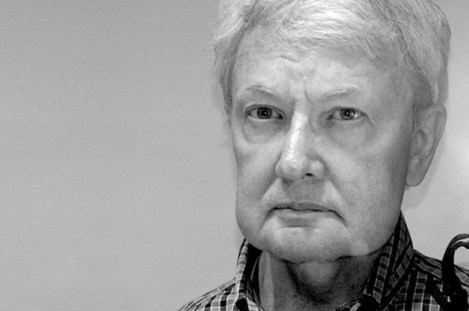
Roger Ebert (1942-2013)

Roger Ebert (1942-2013)

The following is taken from Roger Ebert’s autobiography, entitled Life Itself: A Memoir. As a bit of a film critic myself, I did not always agree with Roger’s views, but I thought he radiated a certain integrity that is largely missing among film critics, who tend to be notorious whores in the pay of the media conglomerates. I hope you will be impressed as much as I was by reading the following:

I know it is coming, and I do not fear it, because I believe there is nothing on the other side of death to fear. I hope to be spared as much pain as possible on the approach path. I was perfectly content before I was born, and I think of death as the same state. I am grateful for the gifts of intelligence, love, wonder and laughter. You can’t say it wasn’t interesting. My lifetime’s memories are what I have brought home from the trip. I will require them for eternity no more than that little souvenir of the Eiffel Tower I brought home from Paris.

I don’t expect to die anytime soon. But it could happen this moment, while I am writing. I was talking the other day with Jim Toback, a friend of 35 years, and the conversation turned to our deaths, as it always does. “Ask someone how they feel about death,” he said, “and they’ll tell you everyone’s gonna die. Ask them, In the next 30 seconds? No, no, no, that’s not gonna happen. How about this afternoon? No. What you’re really asking them to admit is, Oh my God, I don’t really exist. I might be gone at any given second.”

Me too, but I hope not. I have plans. Still, illness led me resolutely toward the contemplation of death. That led me to the subject of evolution, that most consoling of all the sciences, and I became engulfed on my blog in unforeseen discussions about God, the afterlife, religion, theory of evolution, intelligent design, reincarnation, the nature of reality, what came before the big bang, what waits after the end, the nature of intelligence, the reality of the self, death, death, death.

Many readers have informed me that it is a tragic and dreary business to go into death without faith. I don’t feel that way. “Faith” is neutral. All depends on what is believed in. I have no desire to live forever. The concept frightens me. I am 69, have had cancer, will die sooner than most of those reading this. That is in the nature of things. In my plans for life after death, I say, again with Whitman:

I bequeath myself to the dirt to grow from the grass I love,
If you want me again look for me under your boot-soles.

And with Will, the brother in Saul Bellow’s Herzog, I say, “Look for me in the weather reports.”

Raised as a Roman Catholic, I internalized the social values of that faith and still hold most of them, even though its theology no longer persuades me. I have no quarrel with what anyone else subscribes to; everyone deals with these things in his own way, and I have no truths to impart. All I require of a religion is that it be tolerant of those who do not agree with it. I know a priest whose eyes twinkle when he says, “You go about God’s work in your way, and I’ll go about it in His.”

What I expect to happen is that my body will fail, my mind will cease to function and that will be that. My genes will not live on, because I have had no children. I am comforted by Richard Dawkins’ theory of memes. Those are mental units: thoughts, ideas, gestures, notions, songs, beliefs, rhymes, ideals, teachings, sayings, phrases, clichés that move from mind to mind as genes move from body to body. After a lifetime of writing, teaching, broadcasting and telling too many jokes, I will leave behind more memes than many. They will all also eventually die, but so it goes.

O’Rourke’s had a photograph of Brendan Behan on the wall, and under it this quotation, which I memorized:

I respect kindness in human beings first of all, and kindness to animals. I don’t respect the law; I have a total irreverence for anything connected with society except that which makes the roads safer, the beer stronger, the food cheaper and the old men and old women warmer in the winter and happier in the summer.

That does a pretty good job of summing it up. “Kindness” covers all of my political beliefs. No need to spell them out. I believe that if, at the end, according to our abilities, we have done something to make others a little happier, and something to make ourselves a little happier, that is about the best we can do. To make others less happy is a crime. To make ourselves unhappy is where all crime starts. We must try to contribute joy to the world. That is true no matter what our problems, our health, our circumstances. We must try. I didn’t always know this and am happy I lived long enough to find it out.

One of these days I will encounter what Henry James called on his deathbed “the distinguished thing.” I will not be conscious of the moment of passing. In this life I have already been declared dead. It wasn’t so bad. After the first ruptured artery, the doctors thought I was finished. My wife, Chaz, said she sensed that I was still alive and was communicating to her that I wasn’t finished yet. She said our hearts were beating in unison, although my heartbeat couldn’t be discovered. She told the doctors I was alive, they did what doctors do, and here I am, alive.

Do I believe her? Absolutely. I believe her literally — not symbolically, figuratively or spiritually. I believe she was actually aware of my call and that she sensed my heartbeat. I believe she did it in the real, physical world I have described, the one that I share with my wristwatch. I see no reason why such communication could not take place. I’m not talking about telepathy, psychic phenomenon or a miracle. The only miracle is that she was there when it happened, as she was for many long days and nights. I’m talking about her standing there and knowing something. Haven’t many of us experienced that? Come on, haven’t you? What goes on happens at a level not accessible to scientists, theologians, mystics, physicists, philosophers or psychiatrists. It’s a human kind of a thing.

Someday I will no longer call out, and there will be no heartbeat. I will be dead. What happens then? From my point of view, nothing. Absolutely nothing. All the same, as I wrote to Monica Eng, whom I have known since she was six, “You’d better cry at my memorial service.” I correspond with a dear friend, the wise and gentle Australian director Paul Cox. Our subject sometimes turns to death. In 2010 he came very close to dying before receiving a liver transplant. In 1988 he made a documentary named “Vincent: The Life and Death of Vincent van Gogh.” Paul wrote me that in his Arles days, van Gogh called himself “a simple worshiper of the external Buddha.” Paul told me that in those days, Vincent wrote:

Looking at the stars always makes me dream, as simply as I dream over the black dots representing towns and villages on a map.

Why, I ask myself, shouldn’t the shining dots of the sky be as accessible as the black dots on the map of France?

Just as we take a train to get to Tarascon or Rouen, we take death to reach a star. We cannot get to a star while we are alive any more than we can take the train when we are dead. So to me it seems possible that cholera, tuberculosis and cancer are the celestial means of locomotion. Just as steamboats, buses and railways are the terrestrial means.

To die quietly of old age would be to go there on foot.

That is a lovely thing to read, and a relief to find I will probably take the celestial locomotive. Or, as his little dog, Milou, says whenever Tintin proposes a journey, “Not by foot, I hope!”

An Old Man

It’s the Same Everywhere

It’s the Same Everywhere

An old Man,
Is loath to bid the world goodnight, hee knowes the grave is a long sleepe, and therefore would sit up as long as hee could. His soule has long dwelt in a ruinous tenement, and yet is so unwilling to leave it that it could be content to sue the body for reparitions. He lives now to be but a burthen to his friends, as age is to him, and yet his thoughts are as farre from death as he is nigh it. Howsoever time bee a continued motion, yet the Dyall of his age stands still at 50, that’s his age for ten yeares afterward, and love’s such a friend that like a flattering glasse tels him hee seemes farre younger. His memory is full of the actions of his youth, which hee often historifies to others in tedious tales, and thinks they should please others because himselfe. His discourses are full of parenthesis, and his wordes fall from him as slowly as water from an Alimbecke; drop by drop. He loves the chimney corner and his chaire which he brags was his grandfathers, from whence he secures the cubboard from the Catts and Dogges, or the milke from running over, and is onely good to build up the architecture of a seacole fyre by applying each circumstant cynder. When his naturall powers are all impotencyes, hee marries a young wench for warmth sake, and when hee dyes, makes her an estate durante viduitate onely for widowhood. At talke hee commonly uses some proverbiall verses gathered perhaps from cheese-trenchers or Schola Salerna, which he makes as applyable, as a mountebank plasters to all purposes, all occasions. Hee cals often to the Servingman for a cup of Sacke, and to that end stiles him friend; and wonders much that new wine should not bee put in old bottles. Though the proverbe be, once a man and twice a childe, yet he hopes from his second childhood to runne backe into his teenes, and so bee twice a man too. Lastly, hee’s a candle burnt to the snuffe, the ruines onely of a man, whose soule is but the salt of his body to keepe it from stincking, and can scarcely performe that too.—Wye Saltonstall, Picturae Loquentes (1635)

The Polymath

An Old Scholar

An Old Scholar

Keith was a pertinacious and omnivorous student; he sought knowledge not for a set purpose but because nothing was without interest for him. He took all learning to his province. He read for the pleasure of knowing what he did not know before; his mind was unusually receptive because, he said, he respected the laws which governed his body. Facts were his prey. He threw himself into them with a kind of piratical ardour; took them by the throat, wallowed in them, worried them like a terrier, and finally assimilated them. They gave him food for what he liked best on earth: ‘disinterested thought’. They ‘formed a rich loam’. He had an encyclopædic turn of mind; his head, as somebody once remarked, was a lumber-room of useless information. He could tell you how many public baths existed in Geneva in pre-Reformation days, what was the colour of Mehemet Ali’s whiskers, why the manuscript of Virgil’s friend Gallus had not been handed down to posterity, and in what year, and what month, the decimal system was introduced into Finland. Such aimless incursions into knowledge were a puzzle to his friends, but not to himself. They helped him to build up a harmonious scheme of life—to round himself off.—Norman Douglas, South Wind

“Relevance”

The Importance of History

The Importance of History

Contemporary ideas need to be weighed not against others of the same period but against those of the past, and it is here that the average, modern student is defenceless. His interests and leisure reading are confined to an alarming extent to contemporary writers and thinkers who, despite their apparent individualism, are all really working in the same direction. It is ironic that the current demand at universities is for more relevance (that is to say, contemporaneity) in the curriculum. If acceded to, this will result in a still larger degree of temporal provincialism and an even more profound ignorance of the history of ideas than now prevails.—Duncan Williams, Trousered Apes

How To Deflect a Bribe

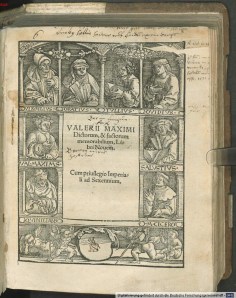
ValeriusMaximusManius Curius was the most rigid model of Roman frugality and the most perfect example of courage. When the Samnite envoys were brought in to see him, he was sitting on a rustic bench beside the fireplace and taking his dinner from a wooden bowl; you can imagine the kind of meal it was from its presentation. He thought nothing of the wealth of the Samnites, but they were amazed at his poverty. They had brought him a huge amount of gold presented by their state, and speaking kindly they invited him to accept it, but he burst out laughing and said at once, “You have been sent on a pointless, not to mention stupid, mission; tell the Samnites that Manius Curius would rather rule over rich men than become a rich man himself; take away that expensive gift, which was invented to do mischief to men, and remember that I cannot be defeated in battle or corrupted by money.”—Valerius Maximus, Memorable Deeds and Sayings

Rilke on Women

Taken by Surprise and Vanquished?

Taken by Surprise and Vanquished?

Women, in whom life abides and dwells more immediately, fruitfully and confidently, must indeed have become in essence more mature human beings, more human humans than men, who being light and lacking the weight of bodily fruit pulling him down below life’s surface, undervalues in his arrogance and rashness what he claims to love. Carried to term in pain and humiliation, this humanity of women will—once she has shed the conventions of the solely feminine through these changes in her external status—become evident, and those men who cannot feel this coming today will end up being taken by surprise and vanquished.—Rainer Maria Rilke, Letters to a Young Poet