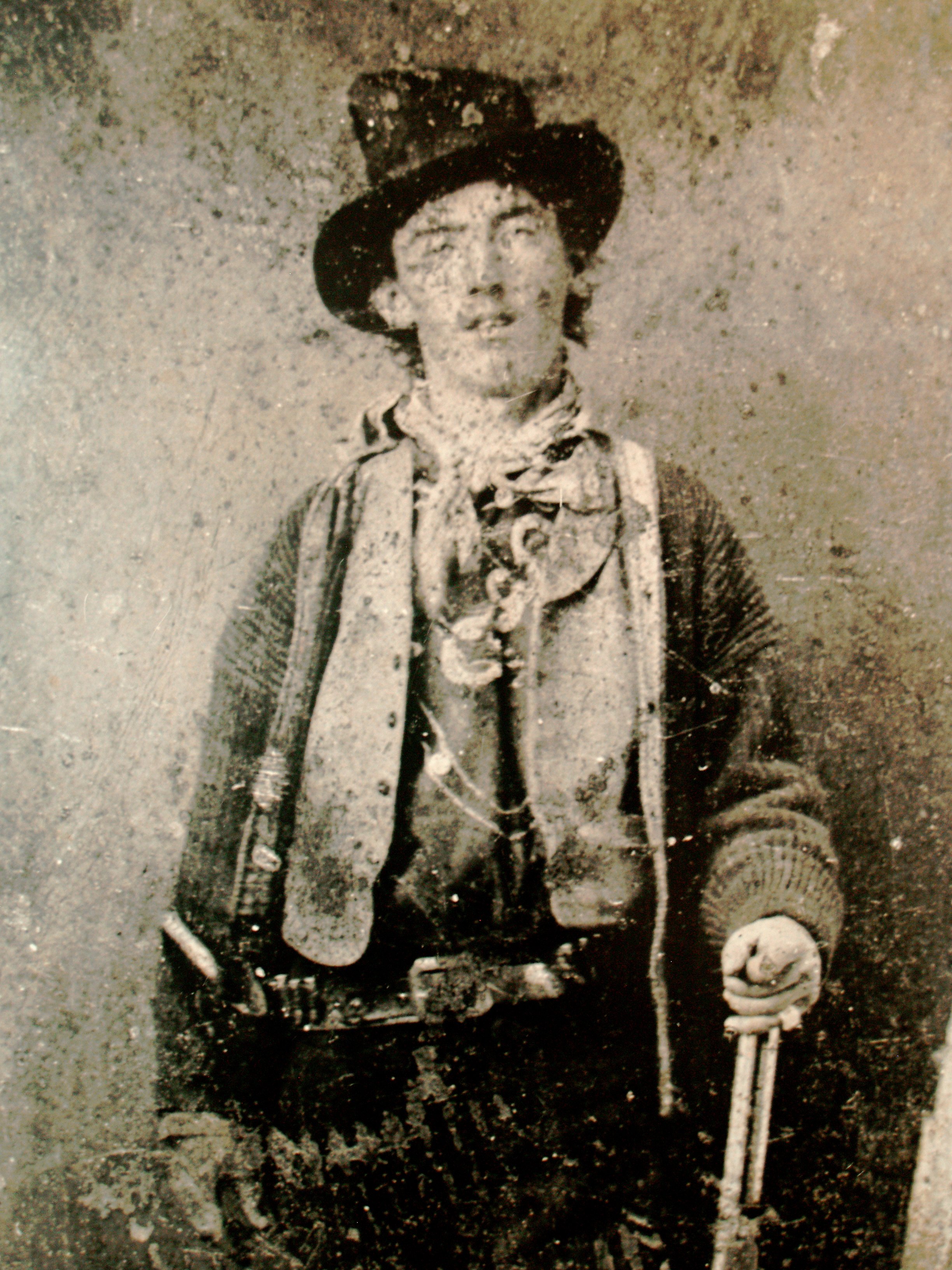
Billy the Kid and the Lincoln County War

Billy the Kid

The town of Lincoln, New Mexico, looks very much today the way it did in 1876 when the Lincoln County War flared up. On one hand were Dolan and Murphy, who ran a store on the main drag, when another store operated by Tunstall and McSween opened up down the street. One of the key figures in the conflict between the two sides was a young man who has come to be known as Billy the Kid. He was known to be handy with a gun and was blamed for several murders.

He tried to exonerate himself, but the governor of the territory at the time, General Lew Wallace (author of Ben-Hur), weaseled out of his promise to support him. Billy was holed up in the courthouse which had been the Dolan store and held for trial.
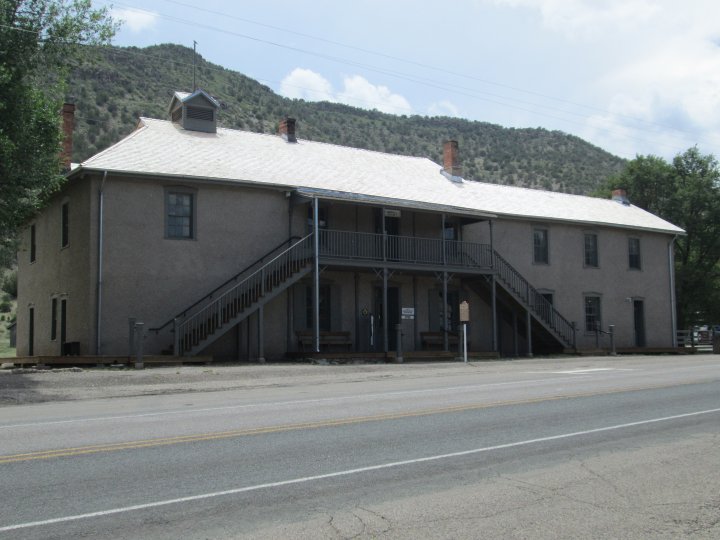
The Lincoln Courthouse, Formerly the Dolan Store

Billy managed to get a gun and shoot the two deputies who were guarding him, J. W. Bell and Bob Ollinger. He managed to escape from Lincoln, but was finally gunned down in Fort Sumner by Sheriff Pat Garrett. (We didn’t make it to Fort Sumner, but I’m saving it for a future trip.)

Below is a bullet hole supposedly from Billy’s gun while he was trying to escape from the Lincoln Courthouse.

A Bullet Hole from Billy’s Gun?

Martine and I enjoyed Lincoln. The whole town is more or less devoted to the legend of Billy the Kid and the Lincoln County War.
Kilroy Was Here

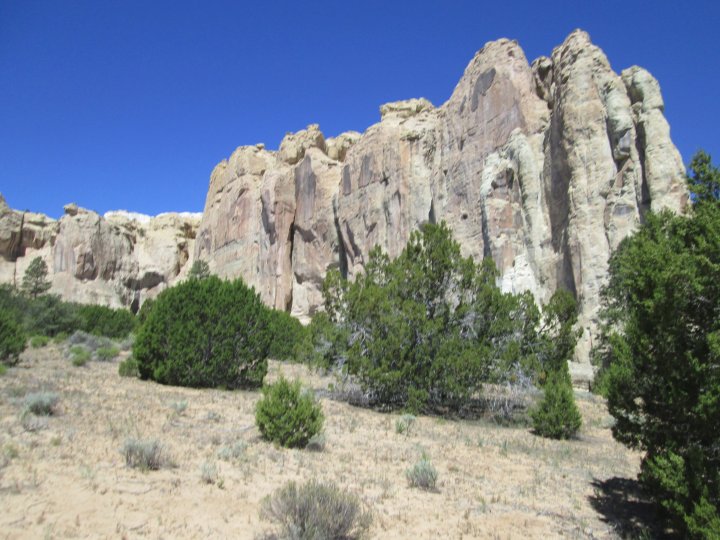
El Morro National Monument in Ramah, NM

One place I have visited several times in my travels through New Mexico is El Morro National Monument, known for bearing “graffiti” from the Anasazi, the Spanish Conquistadores with Oñate and Coronado, and American scouting parties of the 1850s. There they all are, along the east bluff of the butte. And if that’s not enough, you could climb to the top (only a couple hundred feet) to see the ruins of Atsinna, the ruins of a well defended Anasazi pueblo with long views in every direction.

The day we went, there was an interesting ranger presentation on the United States Camel Corps, which came into existence at the behest of Secretary of War Jefferson Davis in 1853. Many of the names signed on the wall of El Morro was from members of this short-lived army unit. Eventually, the idea was abandoned; and many of the camels were sold into zoos, and some even ended up at Fort Tejon on the Grapevine between Los Angeles and Bakersfield.

Anasazi Petroglyphs at El Morro

El Morro is just one of the many attractions along New Mexico Highway 53, which runs through the Zuñi Reservation, near Ramah’s Wild Spirit Wolf Sanctuary, El Morro, and El Malpais National Monument ending up at Grants and I-40. If you are traveling between Gallup and Grants, it is far better to go out of your way and spend some time along this fascinating route.


Out of This World

At the Roswell UFO Museum

One of the highlights of our recent New Mexico trip was a visit to the Roswell UFO Museum, where Martine and I cavorted with certain other out-of-state visitors. We had been there briefly in 2003, but we had to be in Albuquerque before nightfall, and it was several hundred miles of hard driving. This time, we spent more time and were royally entertained.

Whether or not UFOs landed in Roswell on a July night seventy years ago almost doesn’t matter. There are so many millions and billions and trillions of stars that there must be life of some sort out there. Whether we will ever see it is a matter of conjecture. Martine believes it really happened and that the military put a lid on it. But then, she was a civilian military employee in New Jersey and California for some eighteen years and would not put such behavior past them.

Martine Carefully Reading the Displays

There is plenty to read in the numerous displays about the Roswell incident—enough to fill a 500-page thickly packed volume. Much of the information is from the next door neighbor of the guy who witnessed it, or his nephew seven times removed. It doesn’t altogether invalidate the information, but it does make my antennae twitch a bit.

I myself have never seen any UFOs or constructed any sculpture out of mashed potatoes. Still, I can take a tolerant view of all this—if for no other reason that it is enjoyable. I regularly read science fiction (I am now reading Harry Harrison’s Deathworld 3), and am an aficionado of sci-fi movies. I’m even a bit of a Trekkie, though I prefer the original series and its sequel with Jean-Luc Picard. Let me loose in a place like the UFO Museum, and I will have a good time, irrespective of any assaults on my credibility.

Will Trumpf’s Wall Keep These Aliens Out? I Fear Not

If you find yourself in the wilds of Southeastern New Mexico, you could do worse than visit Roswell. And you can justify it by attaching to it a visit to nearby Carlsbad Caverns National Park.

A Ticket To Ride

It Was a Fortuitous Coincidence

In May 2016, two things occurred that greatly affected my life. For starters, I was requested to work part time—just two days a week rather than the full five. Right around the same time, the MTA Expo Line opened, connecting Santa Monica and West LA with Downtown. As I get closer to full retirement, I suddenly find myself with places to go and things to do.

Oh, I could have taken my car, but I would have had to pay a fortune to park it in some narrow lot where it would get badly dented. With a Senior TAP card, I can now go downtown for thirty-five cents (seventy-five cents during rush hour). The train takes me to the 7th Street Metro Center, from where I could take other trains to Long Beach, Pasadena, North Hollywood, and East Los Angeles.

Most important, it let me off just two blocks south of the Central Library with its eight floors of books and its cozy nooks for reading. Then, I found out that I could even take out books that were marked reference only, if I could convince a librarian that I was serious (and I can).

Final Destination of the Expo Line: The 7th Street Metro Center

If I had stayed at home instead, even with my face buried in a book, I would only have gotten on Martine’s nerves. Instead, I started the mindfulness meditation classes held on Thursdays at 12:30 pm. I was able to explore Chinatown and Little Tokyo as well as Universal City Walk and South Pasadena; and I have filed away several interesting destinations for possible future trips.

I know many people who not only know nothing about Los Angeles’s public transportation system, but are afraid to try. They are afraid of getting lost or being forced to sit next to a snooling bum.

Betty, Veronica, and Racism in America

One Can Learn a Lot from These Two Young Women

Both Women Were Equally AttractiveI came back to my apartment early this afternoon while Martine was watching The Courtship of Eddie’s Father (1963) on TCM starring Glenn Ford, Dina Merrill, and Stella Stevens. The two latter stars are in competition with each other to marry Glenn, who is the father of Eddie (played by Ron Howard), his son from an earlier marriage. It is Stella, the blonde, who wins, while the raven-haired Dina ends up sucking a mop in left field.

The film made me think of the Archie comic books I used to read in my youth. In these comics, the blonde Betty is pitted against the dark-haired Veronica for Archie’s affections and, not coincidentally, ours. I seem to remember that my sympathies were with Betty, and probably intended by the cartoonist to be so. There is something of the Dragon Lady about Veronica.

Both Women Were Equally Attractive

I grew up thinking that blondes were more beautiful. After all, there were Marilyn Monroe, Scarlett Johansson, Dominique Sanda, Brigitte Bardot, Uma Thurman, Grace Kelly, and Catherine Deneuve—not to mention several hundred others. It was only later that I fell for brunettes like Nastassja Kinski and Natalia Tolokonnikova of the Russian rock group Pussy Riot.

But for the longest time, I was in love with golden-haired beauties. I cannot help but wonder whether it was a subtle form of racism implicit in the dichotomy between Betty and Veronica. Thank God, now I think all kinds of women are beautiful, even the green ones shown on the old Star Trek show. Fortunately, I have not become fixated exclusively on the green ones, because else I would be desperately lonely.

Green Women Can Be Nice…


In the Right Place at the Right Time

This Overpass on SR 14 Collapsed in Both 1971 and 1994

Assembling California is the fourth volume of John McPhee’s geology tetralogy, the other volumes of which are Basin and Range, In Suspect Terrain, and Rising from the Plains. I delayed finishing the quartet because, as a California resident, I relished the enjoyment I would get from reading Assembling California. My only disappointment is that, being an Easterner, McPhee was mostly enthralled by Northern California, especially the area around I-80. Oh, well, it happens.

Assembling California is all about a fact that the geology, in its own way, replicates how the people of California came together from everywhere. So, too, did the pieces of rock that form the state migrate from all over the world and stick together—a process which will continue over millions of years to take the start apart just as it put it all together. Geologist Eldridge Moores writes:

People look upon the natural world as if all motions of the past had set the stage for us and were now frozen. They look out at a scene like this and think, It was all made for us—even if the San Andreas Fault is at their feet. To imagine that turmoil is in the past and somehow we are now in a more stable time seems to be a psychological need. Leonardo Seebler, of Lamont-Doherty, referred to it as the principle of least astonishment. As we have seen this fall, the time we’re in is just as active as the past. The time between events is long only with respect to a human lifetime.

I, for one, have been through two major quakes—the Sylmar Quake of 1971 and the North Hills Quake of 1994.

There are times when I stop and listen, waiting for the earth to rise up again and send me into paroxysms of terror. Whether I live or die will depend if “I am in the right place at the right time.” I can pretend that I will never experience another earthquake, but the chances are good that I will.

Eschscholzia californica

A

Field of California Poppies

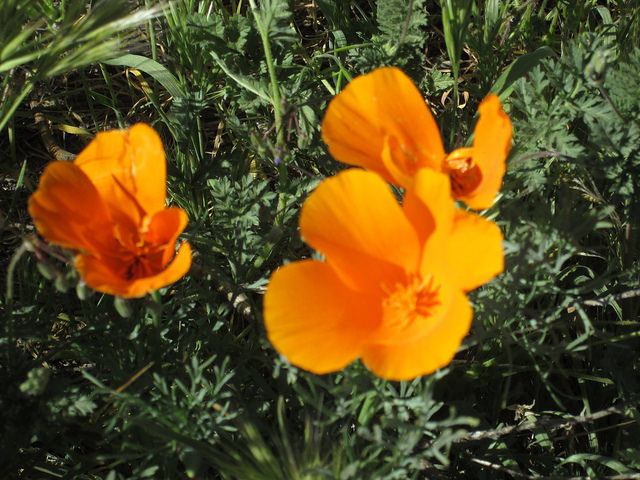
After a wet winter, such as this has been, there is a brief explosion of bright orange for a few weeks in the Spring. Don’t worry: It’s not Donald J. Trumpf. It is the California Poppy (Eschscholzia californica) in all its glory. Today, my friend Bill Korn and I went to the Antelope Valley California Poppy Reserve in the high desert valley running east and west between I-5 and California 14. We took separate routes and arrived there within fifteen minutes of each other.

The California Poppy is the official state flower of California: It is considered an offense to pick any of them. They are truly lovely, though, and the Poppy Preserve was crawling with thousands of people who came out to wander in fields of flowers. There were one-hour lines outside the bathrooms and the portable toilets.

We took several trails and saw the pointillist dots of bright orange extending in several directions.

Poppy Fields with San Gabriel Mountains in Background

I’m happy that I was able to work only half a day doing taxes before making my getaway. It was a good day!

Art and Inequality

Glass Hood Ornament on 1930s Automobile

Glass Hood Ornament on 1930s Automobile

Why is it that the most beautifully designed automobiles ever made came from the 1930s, a decade that was very good for the very rich, but not so good for everyone else?

On Saturday, Martine and I decided to risk going to visit the Nethercutt Collection despite the threat of an approaching rainstorm. We had a great afternoon looking at classic automobiles and got onto the freeway for the homeward trip just when the raindrops started to fall.

This particular visit raised that question about 1930s auto design. It appears that, sometimes, the greatest art comes during bad times. Going back as far as Ancient Greece, the Age of Pericles with its great tragedians was also the time of the horrible Peloponnesian War. John Milton did his best work under Oliver Cromwell’s Protectorate. Marcel Proust wrote just as France was sliding toward the Great War of 1914-1918.

Does this mean that America may produce great art during the dictatorship of Donald J. Trump? Maybe not: There was little of note produced during the Bubonic Plague.

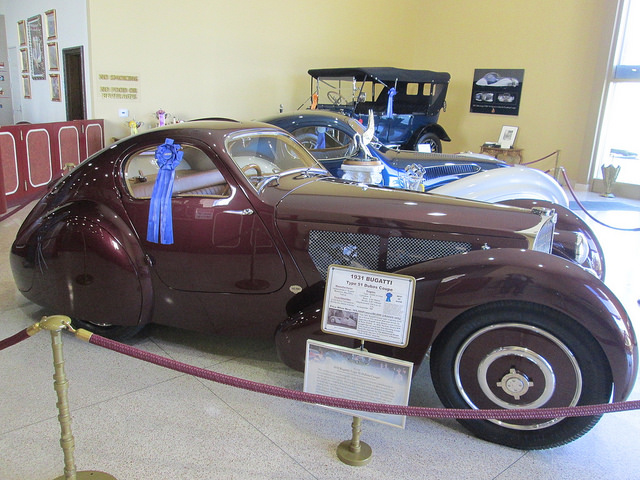
Prize-Winning 1932 Bugatti

Prize-Winning 1932 Bugatti

I guess it takes more than widespread misery to create a period of great art. We’ll just have to see what emerges in the years to come.

In the Cloud Forest

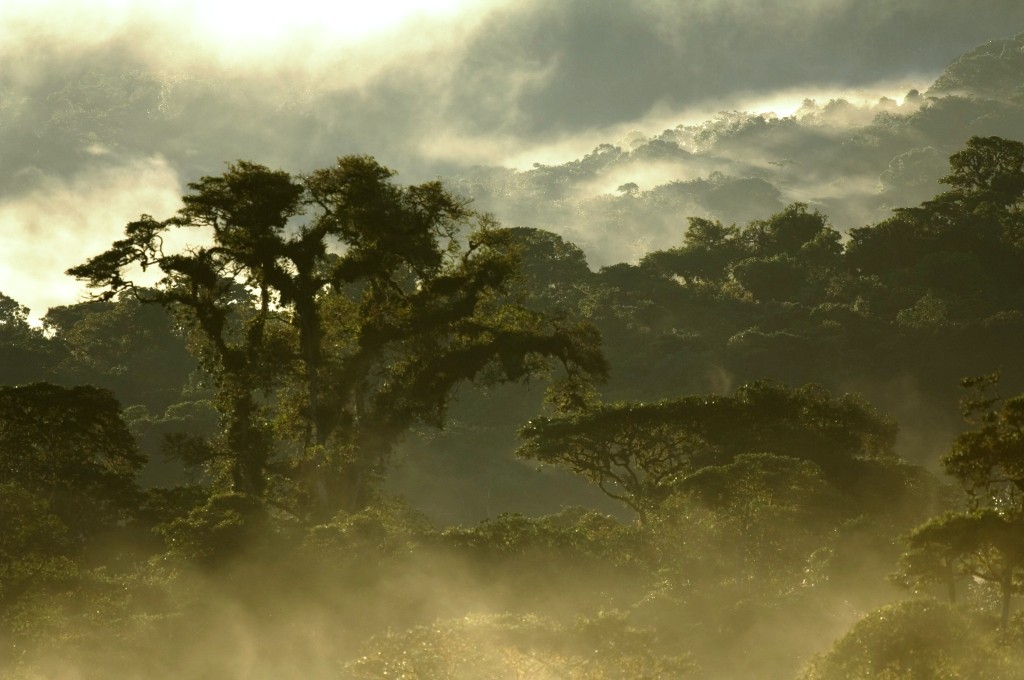
The Cloud Forest Around Bellavista

The Cloud Forest Around Bellavista

All through this horrible tax season Easter Week, my mind has been floating free, dreaming of the things I want to see on my next vacation. I have already written about Quito, the Quechua crafts market at Otavalo, and the tourist railroads of Ecuador. Today my dreams are turning toward the high cloud forests of the Andes, over a mile in altitude, with their exotic birds such as the lemon-spectacled tanager, the pale-browed tinamou, the fasciated tiger-heron, and thousands more.

If my brother agrees, I’d like to spend a few days at a lodge in the cloud forest, perhaps such as the Tandayapa Bird Lodge west of Quito. A few days hiking in the misty forests and looking for exotic multi-colored birds would be soothing to my soul.

Mountain Tanager

Mountain Tanager

There are several patches of cloud forest in the Ecuadorian Andes. It would be fun to choose from among them. The trip is months away, but it is at times like this, when otherwise I would be under heavy stress, that I let my thoughts fly south.


My Christmas Place

Reykjavik

Reykjavik

At Christmas time, my thoughts turn to Reykjavik, Iceland. I always think of the small city—the world’s northernmost capital—as my special Christmas place.

Not that I have ever been there at Christmas, which at that latitude is dark twenty-two hours a day around the winter solstice. No, like most of the other tourists, I have only been here in the summer. Then why do I think of Reykjavik when I think of Christmas? Is it the warmth of its people in that freezing seasonal darkness? Is it the thirteen Yule Lads of Icelandic lore that have woven their spell on me?

Here is a photo of the port of Reykjavik taken by Páll Stefánsson of The Iceland Review. His photographs have a way of keeping his little land foremost in my mind.

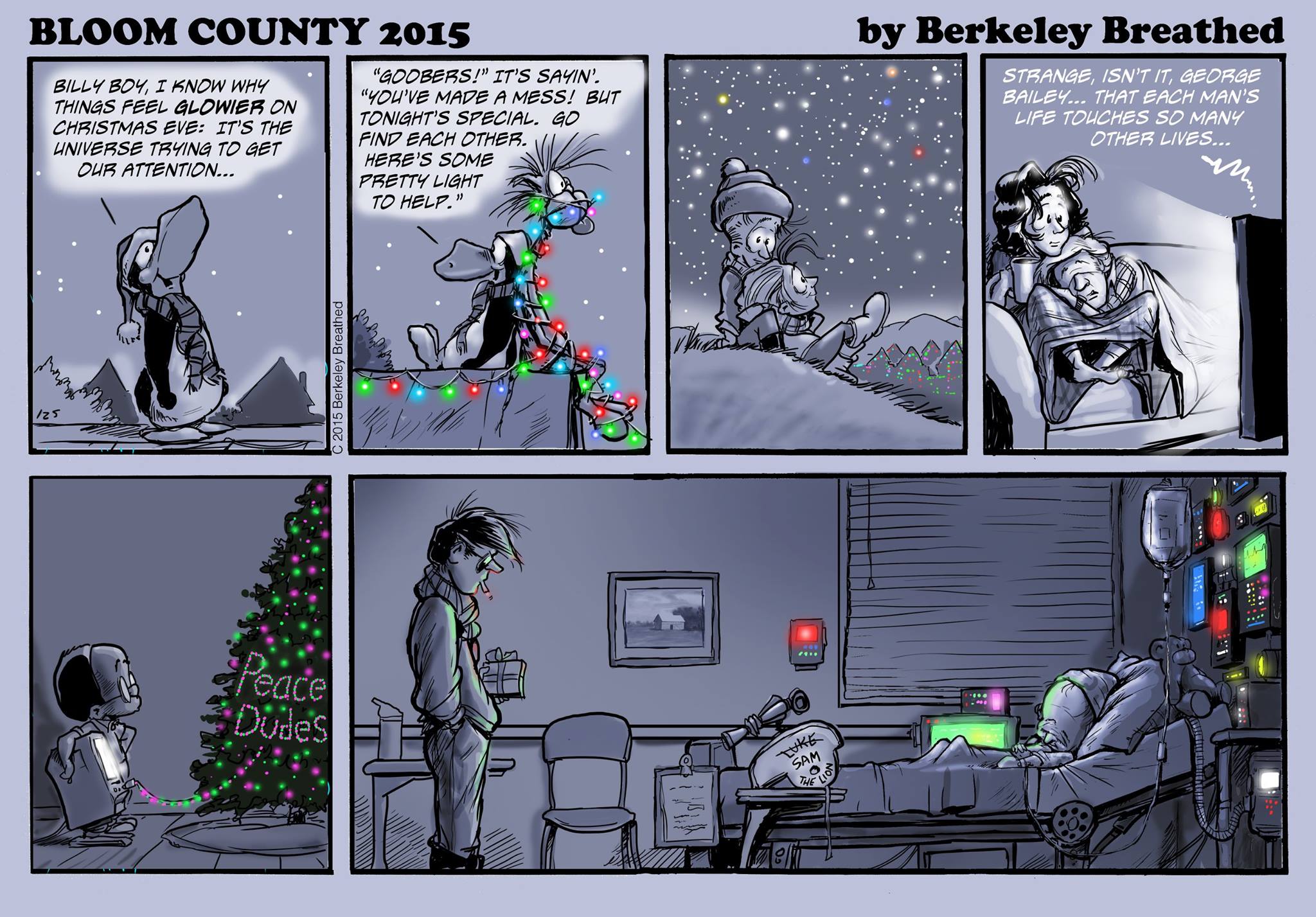
As for the “real” meaning of Christmas, I give you this comic strip by Berkeley Breathed:

A Merry Christmas to All!

A Merry Christmas to All!