A City I Love

Buenos Aires

Buenos Aires, Plaza de Mayo

In front of Retiro Train Station, a serious attempt was made to pick my pockets at a time I was carrying several thousand dollars in cash. A couple came up behind me and squirted me with a mixture of steak sauce and mustard while “helpfully” attempting to clean me off with paper towels (which they just happened to have in their hands) and steering me to a nearby bathroom where their accomplices would finish the job. But I was on to that dodge, so I took a sharp right and stopped a cab.

While walking the streets, I had to be careful not to trip on the array of broken sidewalk tiles. (This particularly bothered Martine in 2011.)

Subways, trains, and buses are so crowded that it can take your breath away. One day I took a ride on Subte A to the end of the line at San Pedrito and back in hopes of riding the old subway cars, which supposedly are stuill in use. The cars were all new, and standing room only.

So why do I love Buenos Aires?

There is something about the city’s faded splendor that reminds one of Europe again and again. I think there was a conscious attempt to imitate Paris and Madrid back when Argentina was riding high as the main supplier of canned meat to both sides in the First World War. But then hard times came, but the splendor still shone through—not everywhere, but sometimes in surprising places. The Galeria Pacifico on Calle Florida is probably one of the most gorgeous indoor shopping centers anywhere.

There are dozens of old cafés, many dating back to the late 1800s—places where you can get a good meal, attentive service, and sit and read a book or newspaper without being rousted out. Places like La Biela in Recoleta, and La Puerto Rico and the Palacio Español in Monserrat. These places are usually crowded with older men, and I felt that I fit right in.

I don’t know how many more times I can walk the streets of this fabled old city, but I hope the gods allow me the chance to return at least once or twice.


The Folk Singer

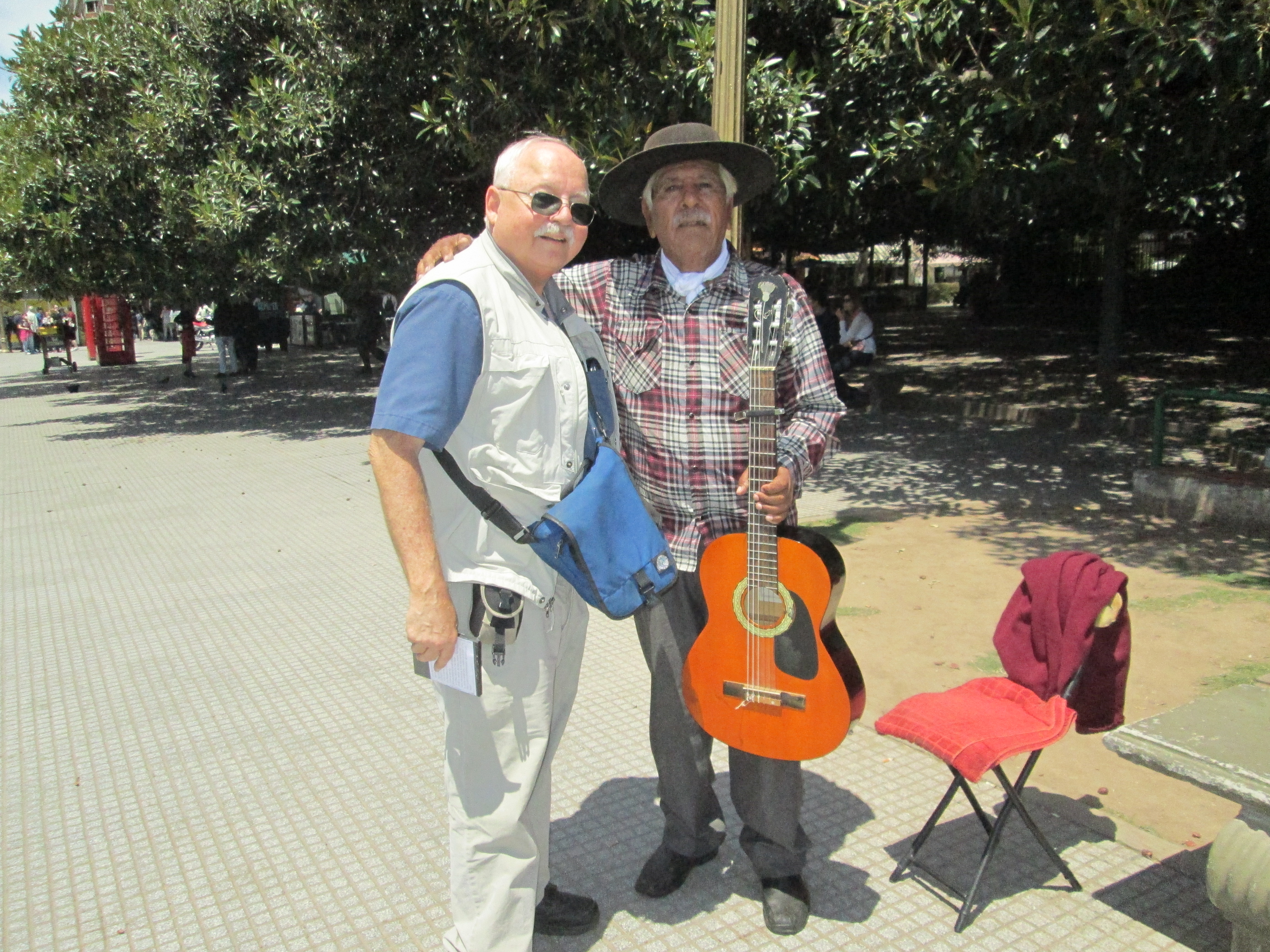
With Folk Singer Juan Carlos Balvidares, “El Caminante Argentino”

With Folk Singer Juan Carlos Balvidares, “El Caminante Argentino”

In 2011, Martine and I encountered a folk singer in front of the Café La Biela, sitting in the shade of an Ombú tree. I remember his singing vividly and so was delighted to encounter him again at the same place on the day after I landed in Buenos Aires. Señor Balvidares is the author of numerous tangos, milongas, zambas, vals, and chacareras. He has traveled around the world singing his songs.

This time, I bought a CD of his music. You can get some idea of his style by looking at this YouTube site. Click here for him performing in the barrio of San Telmo.

I have written previously about the late Carlos Gardel and his great tangos of the 1920s and 1930s. Balvanera may not have Gardel’s dulcet tones, but his music is an authentic and living link to the songs of the gauchos of the Argentine and Uruguayan pampas. Although he plays largely for tourists today, I enjoyed listening to his music—then and now.


Going South

My Mind Is Already in South America

My Mind Is Already in South America

Although I am still here, pretty much all my free time is involved with resolving loose ends and packing. Depending on the availability of computers, I may post a few unillustrated blogs from South America, but the next time you hear from me is likely to be around Thanksgiving.

Under Four Flags

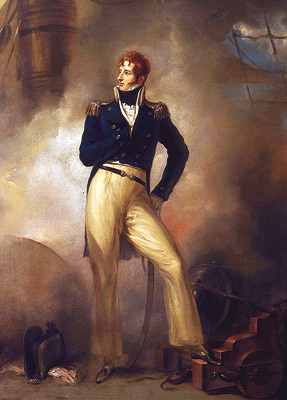
Lord Thomas Cochrane (1775-1860)

Lord Thomas Cochrane (1775-1860)

He must have been an amazing sight to his enemies, towering over six feet with red hair. Lord Thomas Cochrane, 10th Earl of Dundonald, was an impoverished Scot of noble birth who was a brilliant attacking sea captain. Because of various circumstances, mostly relating to his problems with authority, he was perhaps the most brilliant naval strategist who did not actually command a fleet. Had the Admiralty not been so venal and corrupt, he could have shortened the Napoleonic Wars by incursions against the mainland of France, forcing Napoleon back from Russia ahead of schedule. But that was not to be.

Some people are not meant to get along well with politicians. (I am one such myself, though not with one thousandth the talent of the Scotsman.) Cochrane developed a whole slew of enemies, hobnobbing as he did with Radicals as William Cobbett and Sir Francis Burdett. He even spent time at King’s Bench Prison for stock fraud—a mostly bogus charge cobbled together by his enemies with a complaisant and corrupt judge on the bench.

Stripped of his Order of the Bath and drummed out of the Navy, Cochrane accepted an offer the command the navy of the emerging Republic of Chile. He fought a number of sharp naval actions until the Spanish Pacific Fleet was driven off. Then he assisted Dom Pedro I of Brazil fight for that country’s independence from Brazil.

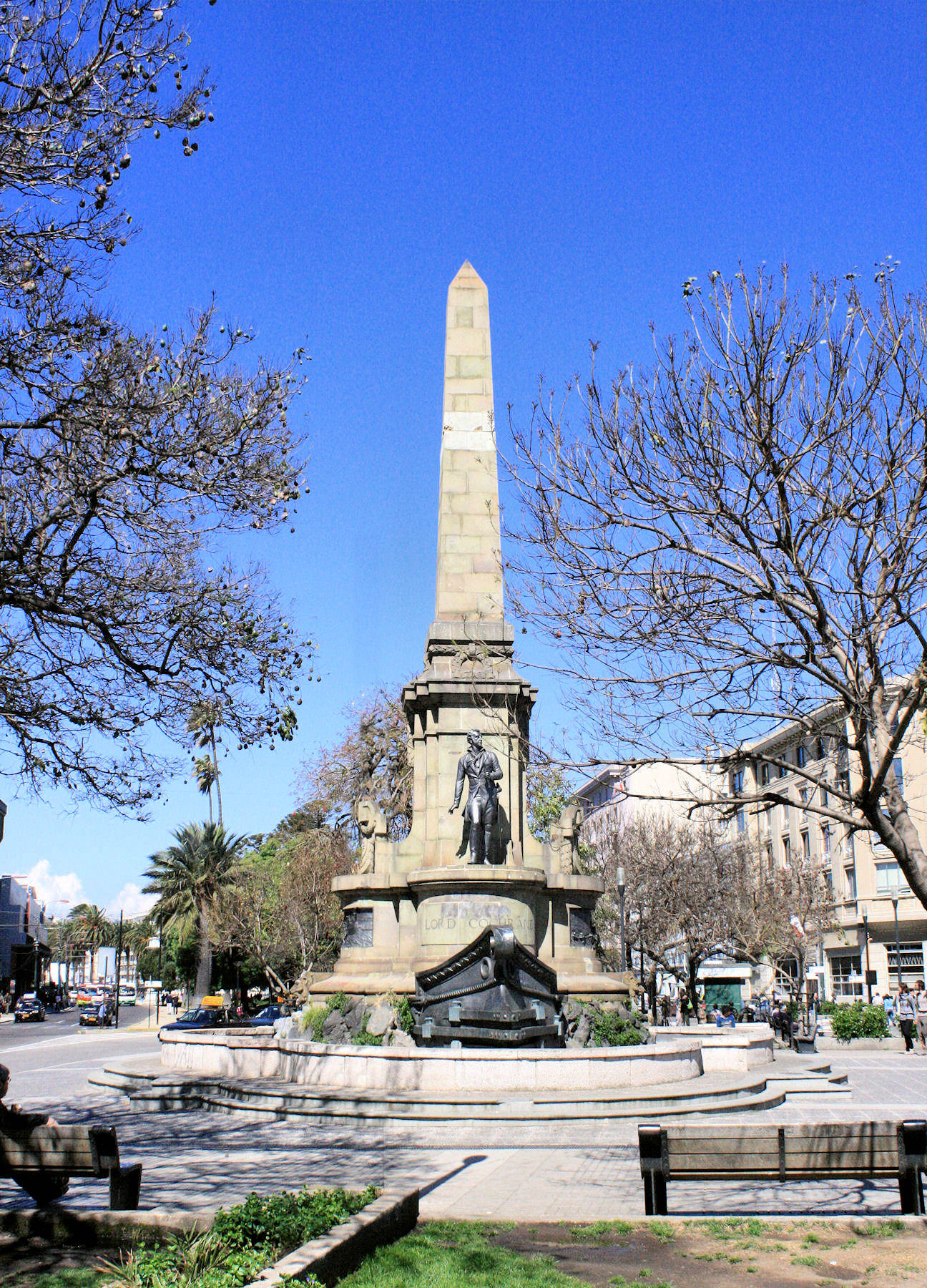
Memorial to Cochrane in Valparaiso, Chile

Memorial to Cochrane in Valparaiso, Chile

Finally, he ended up commanding the fleet of the Greeks who were then fighting to free themselves from the Ottomans. Here he was least effective, largely because of the rampant factionalism of the Greeks. According to Donald Thomas in his excellent biography Cochrane, “he wrote to the Chevalier Eynard of the Philhellenic Committee in Paris, describing the government of Greece as depending on ‘bands of undisciplined, ignorant, and lawless savages.’” This was a far cry from the well-trained British and Chilean sailors he had commanded.

Eventually, Greece won her independence, but only after the British, Russians, and French combined to dictate terms against the Turks.

Cochrane reminds me of General George Patton, another brilliant military leader who paid a heavy price for refusing to kiss the butts of military administrators.

The West Cork Flying Column

IRA Re-Enactors 2014

IRA Re-Enactors 2014 at Old Fort MacArthur

At the Old Fort MacArthur Days military re-enactments, I always enjoyed stopping over to visit with the West Cork Flying Column, named after one of the most active and successful Irish Republican Army (IRA) units during the struggle for independence between 1919 and 1921. For one thing, they always had the best music; for another, this era has always been one of the biggest gaps in my historical knowledge.

This time, I picked up a list of recommended books from the group and proceeded to read Tom Brady’s Guerilla Days in Ireland about his command of the actual West Cork Flying Column in combating British regular army units, as well as the Auxiliary Division and the much-hated Black and Tan mercenaries.

Tom Brady During the Troubles

Tom Brady During “The Troubles”

Brady’s unit was perhaps the largest, most active, and most successful unit of the IRA fighting against the British-led units. Where many other parts of Ireland were relatively quiescent, the West Cork Flying Column conducted large scale attacks on barracks, burning houses of British loyalists in retaliation for British burnings of IRA sympathizer houses, attacks on patrols, as well as sabotage of railroads and bridges. And this with a maximum armed strength of approximately 150 men against the thousands fighting under the Union Jack.

Unlike many guerrilla leaders today, Brady cared deeply for the welfare of his men. He was always careful to identify and praise the fallen both in the description of the action fought and in a lengthy Appendix at the back of the book where he lists them alphabetically and identifies their origin.

Now my appetite for more background on recent Irish history has been whetted, and I plan to read more.


Musical Madeleine

LAPD Emerald Society Piper

LAPD Emerald Society Piper

You’ve probably heard about Marcel Proust’s triggering of his memory by eating French cookies known as madeleines. Well, since I’m diabetic, I have to use something else to trigger my memories. In that department, I find that, for me, nothing works better than music.

The police bagpipe player (above) was practicing a song that suddenly hit me between the eyes. I walked up to her and startled her by asking the name of the song she was playing. One of her colleagues answered for her with something that sounded like “Saigon.” He mentioned that it was played in a movie called Empire something. That’s when it all came back to me: The song is called “Suo Gân,” which means lullaby in Welsh. The movie is Steven Spielberg’s Empire of the Sun (1989), based on J.G. Ballard’s autobiographical novel of the same name about spending World War Two as a child in a Japanese concentration camp near Shanghai.

I love the song. You can watch it on YouTube performed by the Kings College Choir.

My Favorite Spielberg Film

My Favorite Spielberg Film

I’ve seen Empire of the Sun several times and even read Ballard’s book. There is something incredibly beautiful about so many Welsh songs that I plan to write a posting about some of my favorites in the next week or so. If you feel starved to hear some now, watch the film How Green Was My Valley (1941), which features some beautiful examples.

What exactly did hearing a few notes from “Suo Gân” do for me when I heard them played by a police bagpiper at last Sunday’s Irish Fair in Long Beach? It sent me back to Wales, which I visited twice in the 1970s. Welsh is the most musical language I have ever heard; and I loved wandering around listening to people speak in places like Betws-y-Coed, Conwy, and Abergavenny.

Although I am a person of words and literature, music strikes me at my innermost core—even when I hear just a few notes.


Oh, No! Not Again!

Chile’s Calbuco Volcano in Eruption

Chile’s Calbuco Volcano in Eruption

It’s getting to be downright monotonous. Four years ago, when Martine and I were planning our trip to Argentina, we had originally decided to included San Carlos Bariloche on the eastern slope of the Andes on our itinerary. But then, a Chilean volcano decided to trash the whole area. Here’s what I wrote at that time:

It looks like some sort of ghastly aviation accident, doesn’t it? But no, what you are seeing above [actually below, in this posting] is a grounded aircraft in San Carlos de Bariloche covered in volcanic ash from the eruption of the Puyehue-Cordon Caulle volcanic complex in neighboring Chile. Not only was the airport at Bariloche closed for lack of visibility, but the ash drifted eastward over the South Atlantic by Trelew and Puerto Madryn.

I have just named three of my main destinations for our upcoming trip to Argentina five months from now. No doubt the eruptions will cease soon, if they have not already done so.

One thing we can expect is that there will be a lot more blowing dust and ash given the prevailing winds in Patagonia and the huge amount of ash generated by the eruption.

Our plan is to go to Bariloche via one of the few remaining long-haul passenger railways in Argentina, the Tren Patagonico connecting Viedma with Bariloche. Viedma is five hours north of Puerto Madryn by bus, so we’ll have the opportunity of seeing more of the Atlantic coast between the two cities.

Plane Covered with Ash at Bariloche’s Airport

Plane Covered with Ash at Bariloche’s Airport

Well, the eruptions from Cordon Caulle kept going until several states along the Eastern Andes were declared a disaster zone. So we skipped Bariloche and went to El Calafate instead, which did not disappoint.

Now the Chileans are doing it again to me, with Calbuco in eruption. And, of course, I am planning once again to visit Bariloche in November. I can only hope that this particular event does not last as long as the one four years ago. So far, the only area in Argentina that has been affected is around Neuquén, several hours to the north of where I’ll be.

I just noticed that the ash has already made its way to Buenos Aires, closing all international flights from Ezeiza airport.

The Buenos Aires Herald has included a great video shot by a Chilean tourist at the moment Calbuco blew its top. You can find it by clicking here.

Just Icing My Shoulders

My Blogs Will Be Back Soon

My Blogs Will Be Back Soon

With luck, my home computer will be back online tomorrow. As for tonight, I’ll just ice my shoulders, thank you! I’m not having much of a pain problem with my fracture—except when I’m trying to sleep. Then it throbs and various pains emerge along my arms and legs. Not at all pleasant! A week from today, the orthopedist will see me again and rule on my progress, if any.

2014 in review

The WordPress.com stats helper monkeys prepared a 2014 annual report for this blog.

Here’s an excerpt:

The concert hall at the Sydney Opera House holds 2,700 people. This blog was viewed about 13,000 times in 2014. If it were a concert at Sydney Opera House, it would take about 5 sold-out performances for that many people to see it.

Click here to see the complete report.

Where Did the Other 80% Go?

The Altar of La Merced Church in Lima

The Altar of La Merced Church in Lima

According to John Hemming’s excellent history, The Conquest of the Incas, only 20% of the gold went to the King of Spain. Where did the rest go? Pizarro and the conquistadores probably got the lion’s share, but after visiting dozens of Peruvian churches, I am beginning to think that the Church came in for a huge windfall, if not sooner, then later. You can see it at the Cathedral and San Pedro in Lima, in addition to the Church of the Company in Arequipa and the massive Cathedral in Cusco.

The first church I visited in Lima was La Merced on Jirón de la Union, whose altar is shown above. As I visited more and more churches, I saw the tons of gold and silver lavishly displayed, so much so that many of them are victims of larceny, such as the church at Maca at Colca Canyon. (Although stripped of much of its gold, it still looks impressive to me.) In the nearby church at Coporaque, I discovered a motion detector that tracked my movements in the nave with an audible beep.

Nowhere have I ever seen such a display of wealth. It is no surprise that many of the churches, such as the Cathedral at Cusco, have security personnel to protect the churches’ wealth.

There was another side to the splendor of the great Peruvian churches.

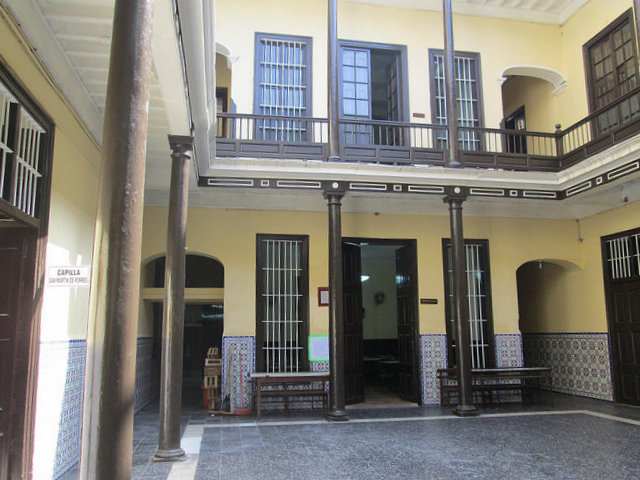
The Birthplace and Chapel of St. Martin de Porres in Lima

The Birthplace and Chapel of St. Martin de Porres in Lima

On Callao near the intersection with Tacna is the birthplace and chapel of St. Martin de Porres. The chapel is tiny (you can see the sign by the leftmost door) and contains only a prie dieu and a statue of the saint, along with a bin for prayer requests and another for contributions. The building also contains doctors’ offices and a cafeteria for the elderly poor of the neighborhood. In fact, when I was waiting for the building to open at 2:30 pm, I shared the doorway with one of the volunteers, a sweet lady who spoke little English, which added to my little Spanish, managed to allow us to communicate. Needless to say, I made a contribution.

I neglected to say that St. Martin de Porres was black and a descendent of slaves. The stories about his life have a certain sweetness to them, and he is much loved by the people of Lima.