Paradise from an Old Quarry

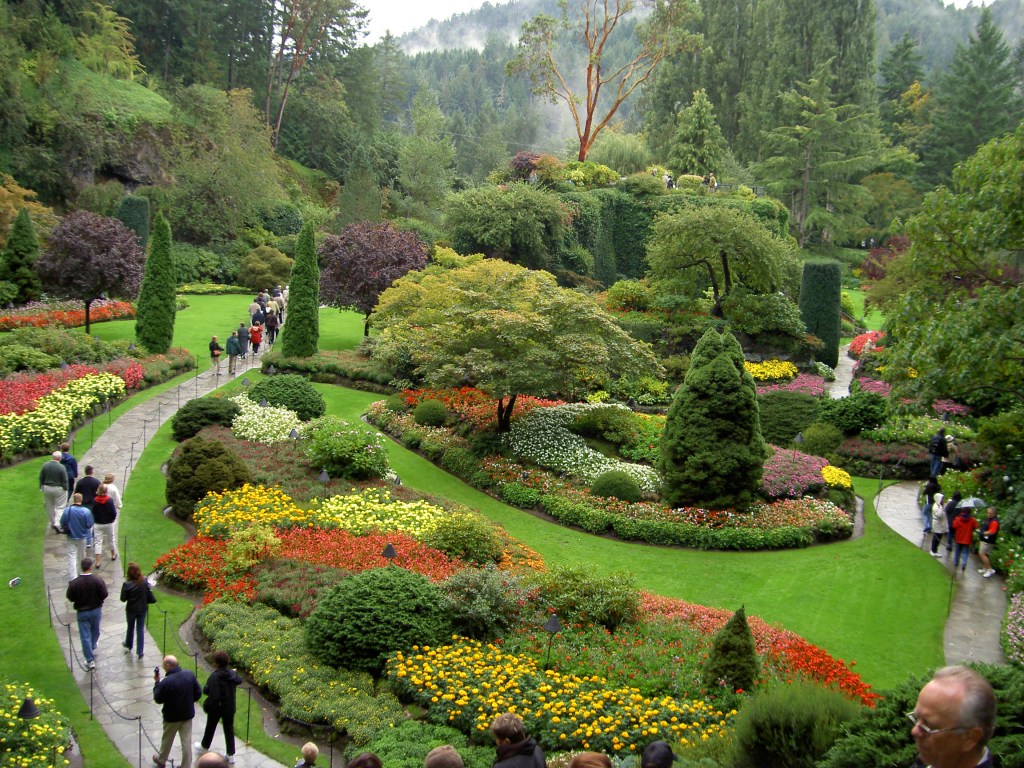
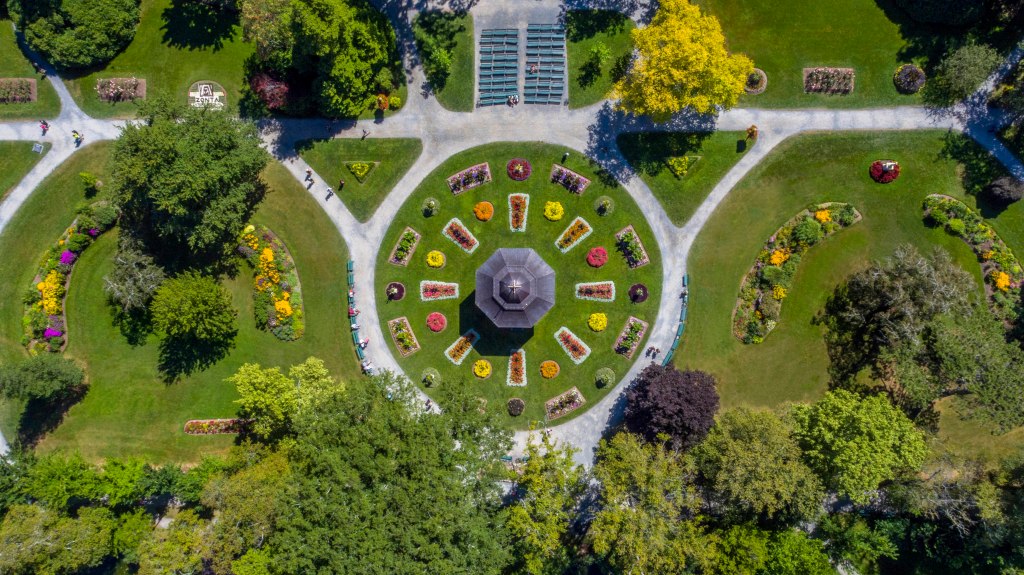
Butchart Gardens in Brentwood Bay, British Columbia

Eighteen years ago, I took a solo trip to Victoria and Vancouver, British Columbia. One of the highlights of my trip was my first visit to Butchart Gardens, fifty-five acres of botanical paradise a short distance from Victoria. Usually, botanical gardens look their best in bright sunshine. Curiously, Butchart shone as much in the rain as it did, later that afternoon, in bright sunshine.

I spent hours exploring the grounds, rewarding myself with a delicious English tea for lunch.

Back in 1904, the grounds were part of a large limestone quarry that looked dismal, until the wife of the owner Click here to see how Jenny Butchart turned that ruined earth into a small paradise. Today it is a National Historic Site that draws thousands of visitors from around the world.

A few years later, I returned with Martine, who also fell in love with the place.

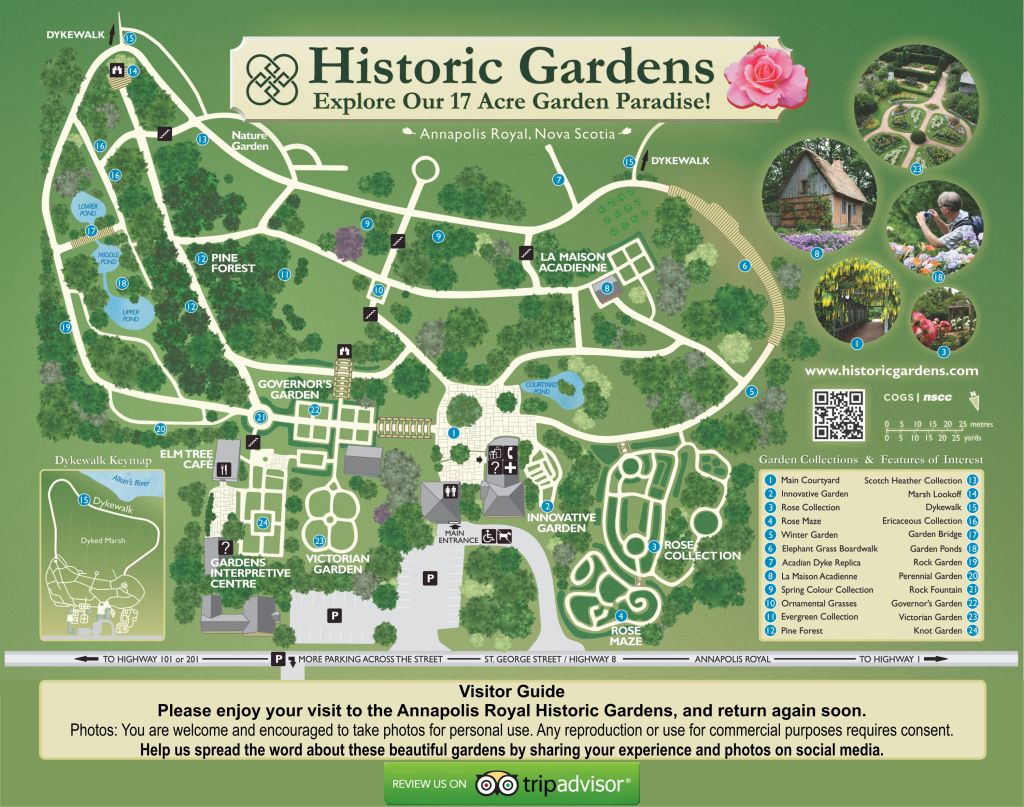
Come to think of it, Butchart Gardens was one of two botanical gardens we visited in Canada. The other one was in Annapolis Royal, clear on the other side of Canada. I will write about it at some point in the coming week or so.

Cuy

BBQ Guinea Pig (Cuy)

In the Andes, one of the main sources of meat are guinea pigs. They are easy to raise, particularly if you don’t give them names or regard them as pets. The above picture was taken in Otavalo, Ecuador, famous for its Saturday tianguis, or market.

I have eaten many local foods, but never bothered to sample cuy, mostly because it is regarded as being full of tiny bones. According to one website:

All over Peru, towns honor the importance of cuy to their cuisine. Pachamanca, a traditional cooking method involving earthen ovens, often features guinea pig meat. A mural in the main cathedral of Cusco depicts Jesus and his disciples eating guinea pig at the Last Supper. During an annual festival in the town of Churin, residents celebrate cuy by dressing the animals up in colorful costumes. And across the country, townspeople gather and eat guinea pigs in honor of folk saints as part of a celebration known as jaca tsariy.

Guinea Pig Served at the Last Supper

In Chivay, Peru, I ate alpaca, which wasn’t half bad. I had the opportunity to eat edible clay at Sillustani, Peru; but I passed on it. That didn’t protect me from getting a horrible case of travelers’ diarrhea aboard a boat on Lake Titicaca.

In general, I took to the local cuisines of the Andean countries I visited. Perhaps one of the most interesting phenomena was the prevalence of chifas, Chinese restaurants, in all but the smallest towns. Even at Machu Picchu, I had a tasty wonton soup in the cool of the evening before my trip up the mountain.

Day of Infamy

On our first full day in Hawaii, Martine and I plan to visit the Pearl Harbor National Memorial in Honolulu. We had been there before, in 1996, but I am more interested this time in reading up on Hawaii history before I go. The last time, I frankly thought I wouldn’t care for O’ahu, because it was so touristy. Now I begin to realize that it is touristy for good reason.

There are many stories about how the Pearl Harbor attack of December 7, 1941 came to be. Some have even speculated that Franklin Roosevelt knew in advance about the attack, since we had already cracked the Japanese Navy secret code. According to this theory, FDR wanted the U.S. in the war, and he was tired of the Congress lollygagging about what to do about Germany and Japan. It is interesting that none of the aircraft carriers were in the harbor during the time of the attack; and the battleships there were pretty long in the tooth.

That’s not to take away from Japan’s accomplishment. We lost a lot of good men—but probably no more than we would have lost of Congress had delayed for another six months to a year.

I remember that the whole Pearl Harbor National Memorial was pretty impressive back then. I am sure that it is even more impressive now.

This afternoon, I did a bit of research on how to use the Honolulu bus system to travel between Waikiki and the Memorial. I suppose we could pay big bucks and take a shuttle, but we could get off by paying four dollars for the both of us, round trip. I used the website TheBus.Org to obtain route maps and schedules.

It Is Done

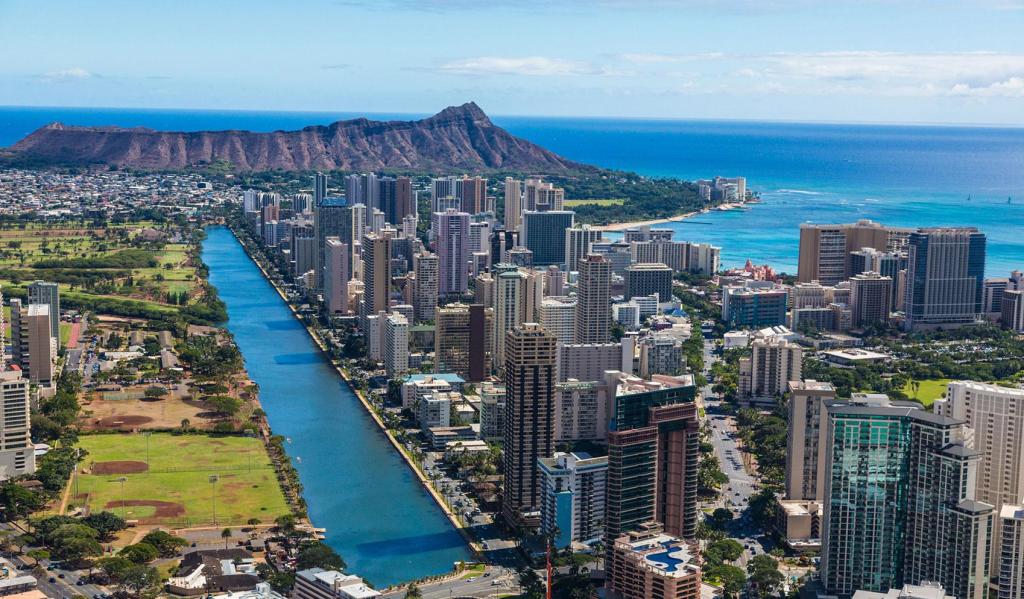
Waikiki, the Ala Wai Canal, and Diamond Head

Today I made the final payment on our September vacation in Honolulu. We got a good price on a package deal including the flight, transfer to and from the airport, and the hotel. All that remains are meals, admission fees, shopping, and public transportation.

Notice, I do not include an automobile. When Martine and I stayed at the Pacific Beach Hotel in 1996, a rental car was included, with no parking fees at the hotel. Today, car rental fees have gone through the roof, and hotels charge anywhere from $35 to $45 a night just for parking on their grounds.

How much will Martine and I pay for public transportation on Honolulu’s bus system? For both of us, the total will come to a mere $12.00 total. Right after we check in at our hotel, we head to the nearby Ala Moana shopping center and pick up a HOLO card for seniors, free of charge, at the office of the Satellite City Hall there. Thereafter, once we have dished out $12.00 in fares (three round rips for two people at $2 each), the bus is free.

Americans hate taking public transportation. Neither Martine nor I mind it. In 1996, we drove all around the island; consequently, we don’t feel we have to repeat it.

In future posts, I will describe the places we plan to visit.

Fun in the Sun?

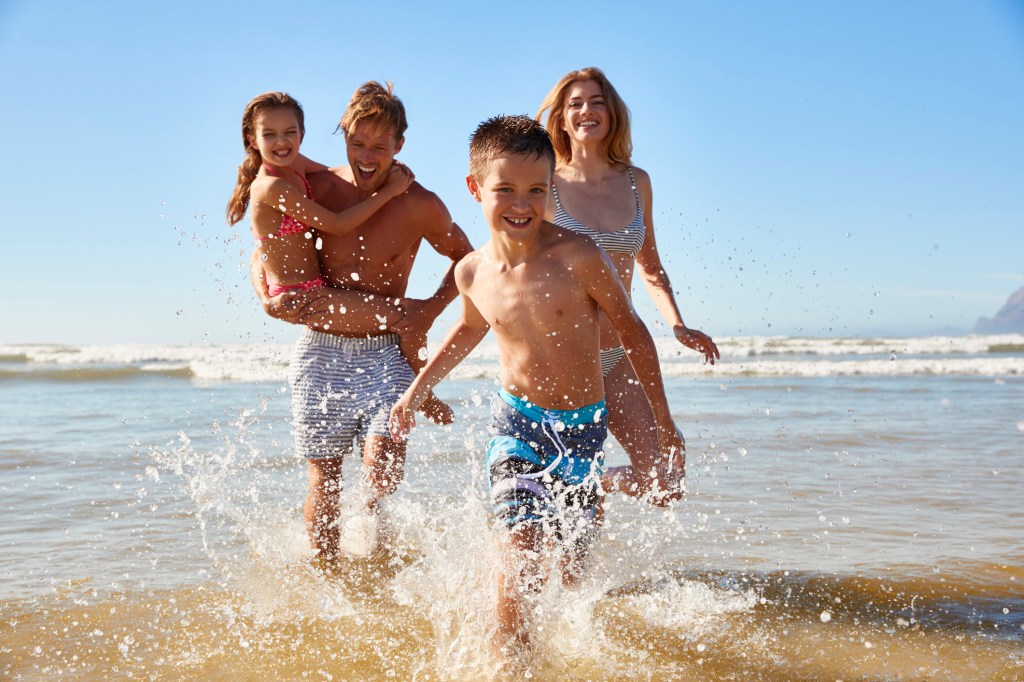
Family On Summer Beach Vacation Run Out Of Sea Towards Camera

Ah yes, Paradise on Earth. As a people, we have traditionally viewed summer beach vacations as the closest one could get to Heaven while alive. When I first came out to California in the late 1960s, I thought so, too. While working part-time at System Development Corporation in Santa Monica, I spent many afternoons lying on a towel and reading steamy fiction like Lawrence Durrell’s Alexandria Quartet.

The water was fun to a certain extent, but I was never a board or body surfer, though I went in often enough to be savaged by the occasional rough wave. Also, I tended to burn—especially as I had no one to slather my back with sun tan lotion.

While I live only two miles from the beach at Santa Monica, I don’t spend time there any more, unless I take a walk on the boardwalk connecting Santa Monica to Venice. Part of the reason is that the water is more polluted than ever, especially because we are only 20-30 miles (32-48 km) from the nation’s largest port, where freighters and tankers regularly foul the waters with petrochemical waste.

So when Martine and I go to Hawaii in a couple months, are we planning for any beach time? Not really. Although the waters at Waikiki are less polluted, the sun is stronger; and we both have fair skin. We are more interested in visiting Honolulu as a destination rather than trying to live in a pharmaceutical commercial.

I suppose if we lived east of the Mississippi, we would yearn for sunshine; but, living in Southern California, we have sunshine on most days of the year. In fact, September tends to be one of the hottest months of the year in Los Angeles. So we are likely escaping even hotter (albeit drier) weather at home.

Seven Dolls

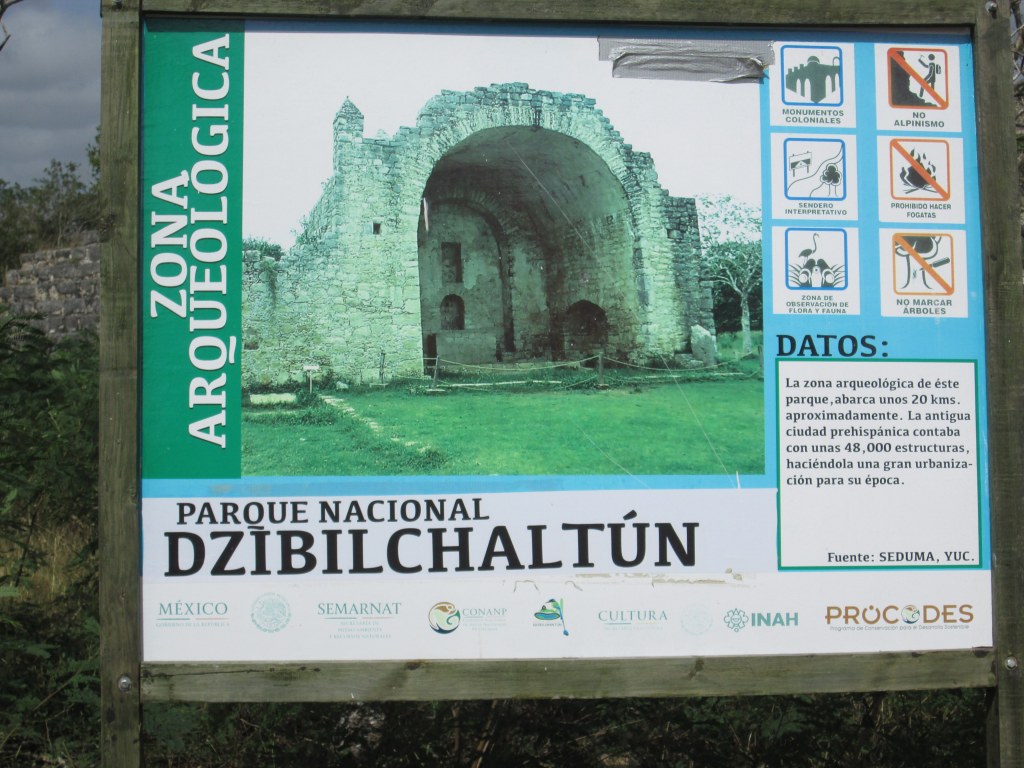
Sign at Entrance to the Ruins

There are untold thousands of Meso-American archeological sites scattered through Mexico, Guatemala, Belize, and Honduras. Sometimes, it’s fun to visit some of the lesser-known sites. I have particularly fond memories of Dzibilchaltún, which is about 10 miles (16 kilometers) north of Mérida. It was the first Maya ruin I visited back in 1975 with my guide Manuel Quiñones Moreno. We set on the steps of a temple and played several games of chess, which I lost handily.

So it was fun to visit it again in 2020. Now there was an entrance hall, an admission fee, and a rather nice museum. Plus, the cenote was filled with children diving into the limestone-cooled waters.

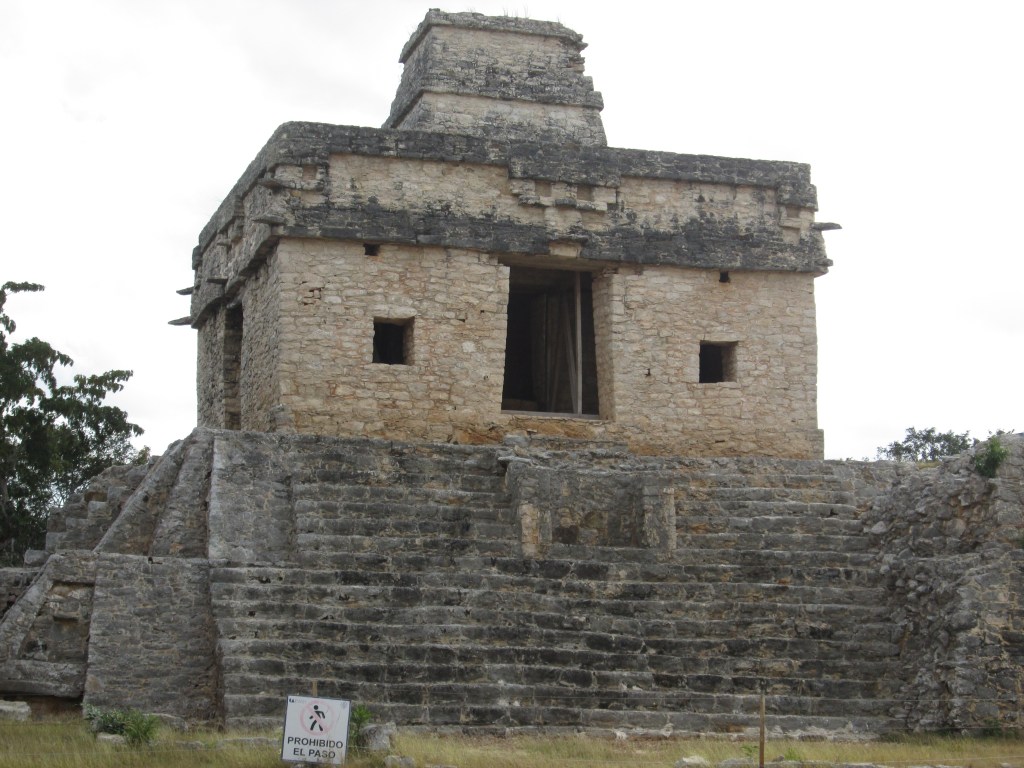
The Temple of the Seven Dolls

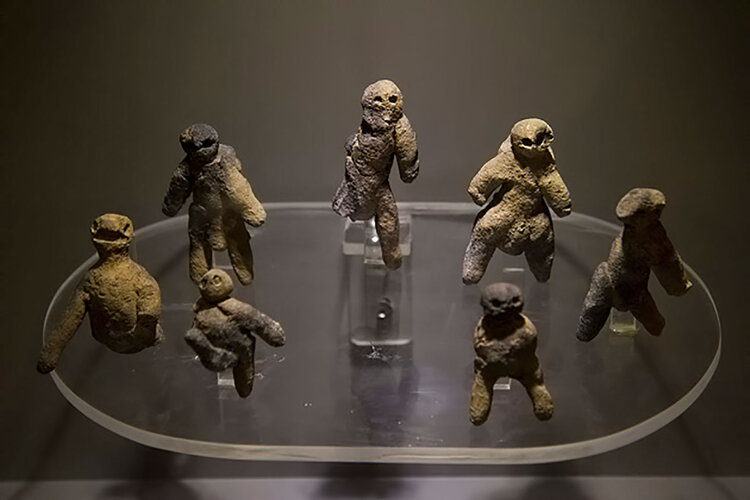
Above is the most famous structure at Dzibilchaltún, the Temple of the Seven Dolls, named after a number of figurines that were found by archeologists buried under one of the altars.

The Seven Dolls Buried in the Temple

Dzibilchaltún is not a world class beauty like Uxmal, Chichén Itza, Copán, or Tikál, but it helps fill in vital parts of the Maya story. Although it doesn’t have a lot of first-class structures, the city was inhabited for over a thousand years. It was close to the coastal salt flats that led to the one item most frequently used in the coastal trade with other peoples, namely: salt.

And I have happy memories because this is one of the places where I began my travels as a young man.

Fragrant Hills

The Tomb of the Kamehameha Dynasty of Hawaiian Kings

Honolulu’s Royal Mausoleum (or Mauna ‘Ala, “Fragrant Hills”) is the home of most of the two Hawaiian Royal Families of the Kamehameha and Kalakaua dynasties—with the sole exception of Kamehameha I “The Great,” who is buried in Maui.

As you can see from the fresh flower leis on the tomb, today’s Hawaiians revere the memory of their kings and regard the mausoleum as holy ground. Martine and I hope to visit it when we go to Hawaii in three months, perhaps visiting nearby Queen Emma’s Summer Palace the same day.

The Tomb of the Kalakaua Dynasty

It was King Kamehameha IV and his consort Queen Emma who had the mausoleum built in 1862. Unfortunately, the first occupant was their four-year-old son Prince Albert.

In addition to all the Hawaiian kings after Kamehameha I, many of the retainers and chiefs are also interred nearby. For a list of the occupants, click here.

Queen Lili‘uokalani on Hawaiian Postage Stamp

I include the above postage stamp image just to demonstrate that the Kingdom of Hawaii was a self-governing entity before being annexed by the United States in 1898. Queen Lili‘uokalani was the last monarch of the Hawaiian Islands.

Mauka and Makai

Postcard Map of O’ahu

This afternoon I finally took the plunge. I had been delaying reserving my flight and hotel in Hawaii until Martine got her passport (without which she couldn’t take a flight, as she doesn’t have a REAL ID drivers license). She finally got her passport in the mail on Saturday; and, today I went to the Culver City office of the Auto Club and made our reservation.

Now I have some direction and can do some more detailed planning on destinations and public transportation.

Speaking of direction, the whole north/south/east/west system of directions is generally not used in Hawaii. Think of it for a second: Hawaii is a collection of volcanic mountains upraised from the floor of the ocean. With few exceptions, most people live within hailing distance of the Pacific; and relatively few live in the interior. Therefore, the words Hawaiians most frequently used for directions are mauka and makai—namely, inland and shore.

In Honolulu, the same words are used; but since it is a big city, there are two additional directions: Toward Ewa (west of Pearl Harbor) or toward Diamond Head.

It’ll take some getting used to, but I can understand its usefulness.

Royal Palaces on American Soil

The Iolani Palace, Honolulu

Most Americans are not aware that there are at least three royal palaces in the Hawaiian Islands. Two of them are in the Honolulu area: the Iolani Palace downtown and Queen Emma’s Summer Palace on the Pali Highway. Martine and I have been to the Iolani Palace in 1996 and intend to revisit it on our upcoming trip to O’ahu along with Queen Emma’s Summer Palace.

Hawai’i was a perfectly viable kingdom when the United States annexed the islands in 1898. In the wake of the Spanish-American War, Americans were eager for new colonies; and there was already in place a willing cadre of American settlers willing to raise Old Glory. The reigning monarch, Queen Lili’uokalani was kept a prisoner in the Iolani Palace under suspicion of “treason,” namely for being loyal to her country.

Interior Queen Emma’s Summer Palace

The other palace is connected with a happier time, when Queen Emma (1836-1885), wife to King Kamehameha IV preferred the cooler temperatures of her hillside retreat, which today is a museum operated by the Daughters of Hawai’i. The same group operates a third royal palace on the Big Island of Hawai’i, the Hulihe’e Palace in Kailua-Kona.

In my reading in preparation for our trip, I am concentrating on the period between Captain Cook’s landing on the islands in 1778 and the American annexation in 1898. The memory of the royal families of Kamehameha and Kalakaua is still alive in the islands. There is even a Royal Mausoleum in Honolulu where most of the royal family is interred.

Not So Fragile After All

Isabella Lucy Bird (1831-1904)

Were Victorian women really as fragile as depicted? Take the case of Isabella Lucy Bird, who is described in her Wikipedia entry as follows:

From early childhood Bird was frail, suffering from a spinal complaint, nervous headaches, and insomnia. The doctor recommended an open-air life, and consequently, Bird learned to ride in infancy, and later to row. Her only education came from her parents: her father was a keen botanist who instructed Bird in flora, and her mother taught her daughters an eclectic mix of subjects. Bird became an avid reader. However, her “bright intelligence, [and] an extreme curiosity as to the world outside, made it impossible for her brain and her nature generally to be narrowed and stiffened by the strictly evangelical atmosphere of her childhood.”

So what did this proper lady do for kicks? She traveled around the world for several decades, writing a series of creditable travel classics. I am currently reading Six Months in the Sandwich Islands, amongst the Palm Groves, Coral Reefs and Volcanoes (1874), which described her seven-month stay in the Hawaiian Archipelago.

Other books and articles describe her travels to Australia, the American West, Japan, Malaya, Greece, Persia, Tibet, China, Korea, and Morocco.

Isabella Bird was by no means the only woman solo traveler of her time. There was also Lady Florence Dixie (1855-1905), who wrote an excellent book about Patagonia; Frances Trollope (1779-1863), mother of novelist Anthony Trollope, who wrote of her travels in the United States; and Lady Hester Stanhope (1776-1839), who traveled extensively in the Middle East.

Dame Freya Stark (1893-1993)

Somewhat later, there was Dame Freya Stark, who traveled by herself among the Arabs and lived to the ripe old age of a hundred. I have read several of her books, which are uniformly excellent.

I can only look upon these women travelers with wonder and admiration.