Where Everbody Knows Your Name

Not Always an Advantage!

Not Always an Advantage!

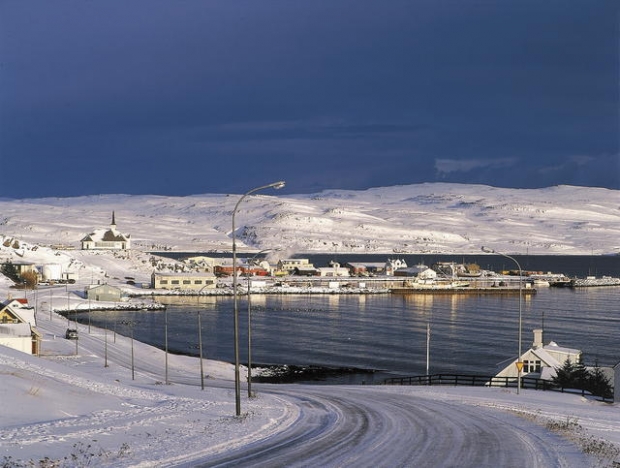
The theme song of the old Cheers TV sitcom touts the advantages of hanging out “Where Everybody Knows Your Name.” But what if you lived in a small city in an even smaller country where you can’t go anywhere without recognizing friends, acquaintances, and co-workers? Such is the case in Reykjavik, Iceland. The population of Reykjavik is only 199,000, and the population of Iceland stands at 322,000.

I was reading an interesting article on The Reykjavik Grapevine by Valur Gunnarsson entitled “Why Is There No Dating in Iceland?” according to which:

If you were to go out on a date with someone, say to the movies or a coffee shop, you would invariably bump into someone you know. Said person would give you a curious glance, perhaps followed by a smirk and then ask everyone you mutually know: “Are those two seeing each other?” The cat is out of the bag by now and your first and perhaps only date suddenly feels more like an engagement ceremony.

Much better then to wait until the lights go out, everyone you know has gone home, is too drunk to care or engaged in their own business. In other words, going out, getting hammered and then heading home with whoever happens to be standing next to you at closing time carries much less social penalty than meeting in broad daylight. It is widely understood that what happens at the bar doesn’t really count. Leave it until the morning after to figure out if you two really have something in common and if the same thing happens again next weekend with the same person, you have yourself a relationship.

One of the reasons the dating scene in Reykjavik is no notorious is that men and women can’t get to know each other in a social setting without being observed and commented on by their peers. Young Icelanders tend to hang out in bars and go home with one another for an “afterparty” around closing time. What happens at or after the “afterparty” is anybody’s guess, but the word is that it’s a pretty wild scene. There is even a book by the notorious Roosh Vorek entitled Bang Iceland: How to Sleep with Icelandic Women in Iceland, which is a popular item among the more randy international travelers.

(Allow me to say that I have had no such dealings with Icelandic women during my two trips to their country. I’m a respectable old man who needs his sleep.)

Gunnarsson continues:

The flipside of drunken sex is that Icelandic relationships actually develop quite quickly. Whereas in bigger cities the whole vetting process may take weeks or even months while you are asked about everything except your bank statements and family history of mental disease (and sometimes even that), people here tend to jump directly into a committed relationship right after the second sleepover, or thereabouts. In fact, it is generally considered bad form not to. Once doesn’t matter, but do it twice without following through and you start to get a bad reputation.

This all goes back to point two again. The smallness. Dating several people at the same time is socially impossible. Everyone would know. Fistfights would ensue. Better to do the trial and error one person at a time, which is why Icelanders tend to have a series of either one-night stands or serious relationships, but no overlapping dates. So now you know.

One result of this non-dating sexual behavior is that there is a large number of illegitimate children born on the island. Fortunately, there is little or no stigma attached to a single parent entering into a marriage. It does have the advantage of stirring up an otherwise rather static gene pool. (In 2013, it was estimated that 93.44% of the population is of Icelandic ancestry.)

A Two-Tiered Highway System

Bus Accident in the Andes

Bus Accident in the Andes

Peru is a major destination for international tourism. It can also be a deadly one. While the nation has improved the highway system connecting such tourist magnets as Lima, Arequipa, Nazca, Cusco, and Arequipa, many large towns in the Andes are linked by roads that are unsafe. This is compounded by the fact that not only the highways, but also the long-distance bus lines, are also two-tiered. A point-to-point Cruz del Sur, Oltursa, or Ormeño bus will generally get you to your destination safely; but a second class bus plying the roads between such cities as Huancayo and Ayacucho takes much longer, picks up and drops off passengers whenever requested, and is likely to have an overtired driver who has been at the job for over twelve hours. When that is combined with night driving, inclement weather, and bad roads, the result can be a fatal accident such as the one illustrated above.

According to the Peru This Week website:

Congresswoman [Veronika] Mendoza has highlighted the inequality inherent in the consistent state of disrepair of roads in rural Peru. “It absolutely cannot be that only roads on tourist routes are in a good condition while the internal transport highways that Cusquenos use aren’t being cared for in the same way,” Mendoza stated, later adding that “We also have to consider the additional difficulty for transportation that the arrival of the rainy season will bring.”

Statistics released by Sutran, Peru’s national government land transport authority, reveal that road deaths have risen dramatically in the past year. According to El Comercio, deaths caused by road accidents from January to August 2013 have risen 36.5% compared with the same period last year.

Many American tourists are interested in following the line of the Andes and visiting the highland cities with their spectacular mountain views and native arts and crafts. While this is not impossible, there is considerable risk attached to such an itinerary.

Photo of Serrano Boy

Photo of Serrano Boy

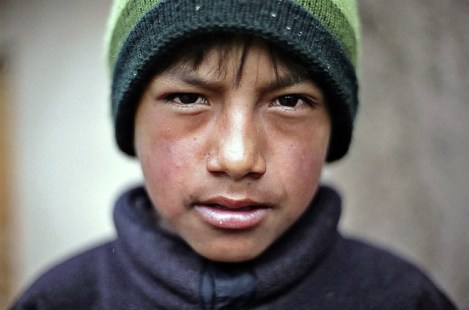
Part of the problem is that, as in other countries that are racially divided, Peru suffers from racism against serranos and cholos, descendants of the Incas and other peoples inhabiting the Andes. We tend to think of the Andean tribal peoples as being the majority in Peru, but that is not the case: The narrow coastal desert zone holds the majority of the population as well as the economical and political power. The result is that the rural Andes are underserved by good roads and public transportation.

If and when my planned trip to Peru takes place, I will be careful to take the first class buses to major tourist destinations—at least until I have been able to scope out the situation myself.

Fish Story

The Stefnir Preparing to Sail from Isafjördur

The Stefnir Preparing to Sail from Isafjördur

One of the stories I tell my friends about my recent trip to Iceland is that, at most of the seafood restaurants where I ate, I could look out the window and find ships of the fishing fleet. Here, I am standing outside the Cafe Edinborg in Isafjöordur, where I had the most flavorful and moist halibut of my life. Sure enough, right in front of me was the fishing trawler Stefnir ready to sail. According to a bus driver with whom I was speaking, the ship was idle for a long time because it had caught its quota of fish early and was only now ready to work on its next period’s quota. You can find out more about these quotas, which are big news throughout the island and strictly enforced, by visiting the website of the Ministry of Fisheries and Agriculture.

When roughly half of the gross national product is attributable to the fishing fleet, it behooves Iceland to carefully guard fishing stocks so that the tiny nation doesn’t suddenly find itself out of luck as a result of overfishing.

From the 1950s to the 1970s, Iceland actually fought several engagements with Britain because the latter’s trawlers ignored Iceland’s territorial water claims. You can read about the so-called Cod Wars on Wikipedia. In Reykjavik, I actually saw one of the Coast Guard ships involved in the hostilities (see below).

Icelandic Coast Guard Vessel

Icelandic Coast Guard Vessel

Iceland does not have an army nor a navy, but it takes its Coast Guard seriously. How else can it continue to maintain its fishing presence in the territorial waters against the encroaching vessels of other countries?

One Day in Isafjördur …

Icelandic Weightlifters in the Rain

Icelandic Weightlifters in the Rain

I had just spent a couple of hours at Isafjördur’s little Westfjords Folk Museum and started to trudge back to my youth hostel in a drizzle that was progressively growing worse, when all of a sudden I came across a sight that struck me by its incongruousness, especially given the weather. Just outside the tourist information center, several hefty Icelandic men were hoisting over their heads what looked like a hot water heater. Surrounding them were several locals cheering them on and taking pictures. I had never seen weightlifters before working with improvised weights, but I guess it’s all the same thing. After all, we were right by the fishing port, and there were several large scales in evidence that could be used to verify the weight.

Despite my eagerness to get out of the weather, I stuck around for the end of the show. Afterwards, I took several pictures of the contestants. They turned out to be a friendly group and didn’t mind posing for a few snapshots.

One of the things that I love most about travel are the little surprises, such as the time in Merida, Mexico, when there was a brass band concert on the zócalo around six in the morning. Another time, in Guadalajára, there was a parade of Mexican military cadets through the center of town, accompanied by several bands playing marching music. Finally, on a frigid day in London, there were a number of slightly blue fashion models in clad in skimpy bikinis for the opening of some store.

In the end, what remembers most fondly were the things one didn’t plan for, that just unfolded in front of one’s eyes. It is always special to be there on the spot when that happens.

Spiritual Testing

Machu Picchu

Machu Picchu

What gives value to travel is fear. It is the fact that, at a certain moment, when we are so far from our own country (a French newspaper acquires incalculable value. And those evenings when, in cafés, you try to get close to other men just to touch them with your elbow.) We are seized by a vague fear, and an instinctive desire to go back to the protection of old habits. This is the most obvious benefit of travel. At that moment we are feverish but also porous, so that the slightest touch makes us quiver to the depths of our being. We come across a cascade of light, and there is eternity. That is why we should not say that we travel for pleasure. There is no pleasure in traveling, and I look upon it more as an occasion for spiritual testing. If we understand by culture the exercise of our most intimate sense—that of eternity—then we travel for culture. Pleasure takes us away from ourselves in the same way as distraction, in Pascal’s use of the word, takes us away from God. Travel, which is like a greater and a graver science, brings us back to ourselves.—Albert Camus, Notebooks 1935-1942

El Tren de la Sierra

It All Began in 1980...

It All Began in 1980…

My interest in visiting South America first began when I read Paul Theroux’s The Old Patagonian Express: By Train Through the Americas back around 1980. Even earlier, my interest had been whetted by reading the stories, essays, and poems of Jorge Luis Borges—though the South America of Borges was more nonspecific, almost mythical.

Theroux, on the other hand, was an intelligent and highly snarky American who decided in the 1970s to travel by train—insofar as it was possible—from Boston to Patagonia in Argentina. One of the routes he took, El Tren de la Sierra ran from Lima’s Desamparados (“forsaken”) station to Huancayo high in the Andes. It is one of two Peruvian rail routes that claims to be the second highest in the world; the highest is the recently opened rail route connecting Xining, Golmud, and Lhasa in Tibet. According to Wikipedia’s list of the Highest Railways in the World, the high point of the route is at Ticlio, altitude 4,829 meters (15,843 feet). The Tibet run is a scant 800 feet higher at Tangguia.

I am thinking of taking the same route as Theroux if and when I go to Peru. His goal was to go by train to Huancayo and take land transportation to Cuzco, from whence he would visit Machu Picchu and Lake Titicaca. The problem is, it is faster and far more convenient to go back to Lima and take the bus to Cuzco: Travel along the ridge line of the Andes is sometimes possible, but mostly not. Rains, snows, mud, and avalanches take their toll, especially between Ayacucho and Cuzco. Based on the map on the endpapers of my copy of The Old Patagonian Express, it looks as if Theroux flew from Huancayo to Cuzco, though I am not sure that is possible.

On his trip, Theroux ran into problems with altitude sickness, the dread soroche. To help combat the headaches and nausea, railroad employees handed out plastic balloons filled with oxygen, which afforded him some relief. There are some medications that are said to help, including Diamox, which has some gnarly after-effects, and a local preparation called Sorojchi. The locals also chew coca leaves with lime or drink a tea made with coca leaves called mate de coca. If I go, I’ll have to be prepared.  Here is Theroux’s description of his symptoms:

It begins as dizziness and a slight headache. I had been standing by the door inhaling the cool air of these shady ledges. Feeling wobbly, I sat down  and if the train had not been full I would have lain across the seat. After an hour I was perspiring and, although I had not stirred from my seat, I was short of breath. The evaporation of this sweat in the dry air gave me a sickening chill. The other passengers were limp, their heads bobbed, no one spoke, no one ate. I dug some aspirin out of my suitcase and chewed them, but only felt queasier; and my headache did not abate. The worst thing about feeling so ill in transit is that you know if something goes wrong with the train—a derailment or a crash—you will be too weak to save yourself. I had a more horrible thought: we were perhaps a third of the way to Huancayo, but Huancayo was higher than this. I dreaded to think what I would feel like at that altitude.

Theroux didn’t think much of Peru: He thought the whole place rather ramshackle. But then, that’s what Martine thought of Buenos Aires, which I love.