One Hundred Years of Camus

French Writer Albert Camus, Born 100 Years Ago Today

French Writer Albert Camus, Born 100 Years Ago Today

There are few recent writers and thinkers in the West who have influenced me as much as Albert Camus, who was born a hundred years ago today in Dréan, Algeria. As a philosopher, I think he was far more of an “honest broker” than his countryman Jean-Paul Sartre; and his ideas have far more relevance to everyday human life than the English and European philosophers who spent the last century analyzing language. In fact, to my mind, there has been very little in Western philosophy that has moved me since Marcus Tullius Cicero’s Tusculan Disputations some two thousand years ago.

Central to his thinking is the Greek myth of Sisyphus. According to Wikipedia:

As a punishment for his trickery, King Sisyphus [of Corinth] was made to roll a huge boulder up a steep hill. Before he could reach the top, however, the massive stone would always roll back down, forcing him to begin again. The maddening nature of the punishment was reserved for King Sisyphus due to his hubristic belief that his cleverness surpassed that of Zeus himself. Zeus accordingly displayed his own cleverness by enchanting the boulder into rolling away from King Sisyphus before he reached the top which ended up consigning Sisyphus to an eternity of useless efforts and unending frustration. Thus it came to pass that pointless or interminable activities are sometimes described as Sisyphean.

What Camus does with this idea is interesting:

I leave Sisyphus at the foot of the mountain. One always finds one’s burden again. But Sisyphus teaches the higher fidelity that negates the gods and raises rocks. He too concludes that all is well. This universe henceforth without a master seems to him neither sterile nor futile. Each atom of that stone, each mineral flake of that night-filled mountain, in itself, forms a world. The struggle itself toward the heights is enough to fill a man’s heart. One must imagine Sisyphus happy.

His novels published during his lifetime—The Stranger (1942), The Plague (1947), and The Fall (1956)— are worth reading and re-reading, not only for their ideas, but for their style. I hope to read more of the author’s journalism, essays and Notebooks in the coming year. Also recommended are his plays, particularly Caligula (1938) and The Misunderstanding (1944).

I still remember a lecture at Dartmouth College almost half a century ago in which Professor Robert Benamou pointed out how, in The Stranger, the trial of Meursault for murder deliberately makes the accused appear to be habitually amoral and criminal by a clever use of the past imperfect tense—whereas in fact, the first half of the book shows a series of unique occurrences that by no means define his character.

The more of Camus I read, the more I think he is the only one of the Twentieth Century Existential philosophers who had anything to say to me.


The Man Who Chased Earthquakes

Vladimir Keilis-Borok (1921-2013)

Vladimir Keilis-Borok (1921-2013)

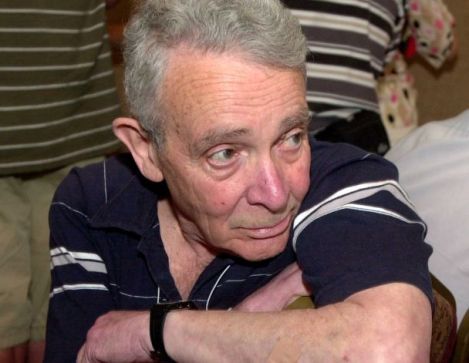
Last year, my neighbor Luis had knee surgery at St. John’s Hospital in Santa Monica. Because he is in his eighties and lives by himself, he spent several days recuperating at a nursing care facility across the street from the hospital. His roommate turned out to be a famous Russian scientist by the name of Vladimir Keilis-Borok, whose life work was trying to find a way of predicting earthquakes using mathematical data culled from data about faults and previous tremors.

Martine and I had seen Vladimir only twice during our visits to Luis and found him to be brilliant and engaging. He spent much of his time at the nursing facility working on mathematical models on his laptop computer. During one of my visits, he asked if I could recommend someone to help him with his computerwork. I immediately thought of my friend Mikhail, who spoke Russian and knew many computer people in L.A.’s Russian community. Somehow, it never went anywhere. Perhaps the funding just wasn’t there.

I was saddened to see that the Russian scientist passed away last week. A glowing obituary appeared in the Los Angeles Times commemorating his accomplishments and his pursuit of that Holy Grail of earthquake prediction. If somehow someone could put it all together, his work could be responsible for saving the lives of untold millions of people who, like myself, live near major fault zones.

A Tribute to an Old Enemy

General Vo Nguyen Giap of Viet Nam

General Vo Nguyen Giap of North Viet Nam

He was the greatest military figure of the Twentieth Century. In turn, he defeated the Armed Forces of France at Dien Bien Phu in 1953, and of the United States in 1975. Oh, and along the way, he defeated the Chinese Red Army in 1979, when they decided to invade Viet Nam in response to the latter’s occupation of Cambodia in 1978. And he cheated death for 102 years, dying today in Hanoi.

France, the United States, and China—in succession!

I could only wish the United States had produced a military leader as accomplished as Giap; but whenever they tried to, they ran into the hide-bound Pentagon and Washington bureaucracy. People like Billy Mitchell, George S. Patton, and Douglas MacArthur had the potential; but they did not have the political backup.

So, General Giap, I toast you as an honorable enemy!

Thumbs Up to You, Roger!

Roger Ebert (1942-2013)

Roger Ebert (1942-2013)

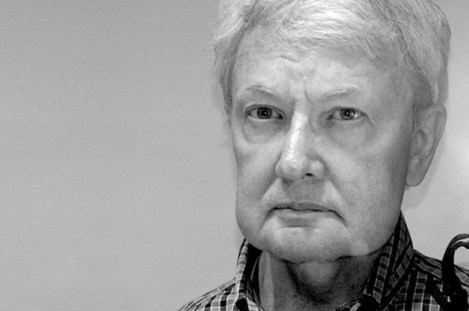
The following is taken from Roger Ebert’s autobiography, entitled Life Itself: A Memoir. As a bit of a film critic myself, I did not always agree with Roger’s views, but I thought he radiated a certain integrity that is largely missing among film critics, who tend to be notorious whores in the pay of the media conglomerates. I hope you will be impressed as much as I was by reading the following:

I know it is coming, and I do not fear it, because I believe there is nothing on the other side of death to fear. I hope to be spared as much pain as possible on the approach path. I was perfectly content before I was born, and I think of death as the same state. I am grateful for the gifts of intelligence, love, wonder and laughter. You can’t say it wasn’t interesting. My lifetime’s memories are what I have brought home from the trip. I will require them for eternity no more than that little souvenir of the Eiffel Tower I brought home from Paris.

I don’t expect to die anytime soon. But it could happen this moment, while I am writing. I was talking the other day with Jim Toback, a friend of 35 years, and the conversation turned to our deaths, as it always does. “Ask someone how they feel about death,” he said, “and they’ll tell you everyone’s gonna die. Ask them, In the next 30 seconds? No, no, no, that’s not gonna happen. How about this afternoon? No. What you’re really asking them to admit is, Oh my God, I don’t really exist. I might be gone at any given second.”

Me too, but I hope not. I have plans. Still, illness led me resolutely toward the contemplation of death. That led me to the subject of evolution, that most consoling of all the sciences, and I became engulfed on my blog in unforeseen discussions about God, the afterlife, religion, theory of evolution, intelligent design, reincarnation, the nature of reality, what came before the big bang, what waits after the end, the nature of intelligence, the reality of the self, death, death, death.

Many readers have informed me that it is a tragic and dreary business to go into death without faith. I don’t feel that way. “Faith” is neutral. All depends on what is believed in. I have no desire to live forever. The concept frightens me. I am 69, have had cancer, will die sooner than most of those reading this. That is in the nature of things. In my plans for life after death, I say, again with Whitman:

I bequeath myself to the dirt to grow from the grass I love,
If you want me again look for me under your boot-soles.

And with Will, the brother in Saul Bellow’s Herzog, I say, “Look for me in the weather reports.”

Raised as a Roman Catholic, I internalized the social values of that faith and still hold most of them, even though its theology no longer persuades me. I have no quarrel with what anyone else subscribes to; everyone deals with these things in his own way, and I have no truths to impart. All I require of a religion is that it be tolerant of those who do not agree with it. I know a priest whose eyes twinkle when he says, “You go about God’s work in your way, and I’ll go about it in His.”

What I expect to happen is that my body will fail, my mind will cease to function and that will be that. My genes will not live on, because I have had no children. I am comforted by Richard Dawkins’ theory of memes. Those are mental units: thoughts, ideas, gestures, notions, songs, beliefs, rhymes, ideals, teachings, sayings, phrases, clichés that move from mind to mind as genes move from body to body. After a lifetime of writing, teaching, broadcasting and telling too many jokes, I will leave behind more memes than many. They will all also eventually die, but so it goes.

O’Rourke’s had a photograph of Brendan Behan on the wall, and under it this quotation, which I memorized:

I respect kindness in human beings first of all, and kindness to animals. I don’t respect the law; I have a total irreverence for anything connected with society except that which makes the roads safer, the beer stronger, the food cheaper and the old men and old women warmer in the winter and happier in the summer.

That does a pretty good job of summing it up. “Kindness” covers all of my political beliefs. No need to spell them out. I believe that if, at the end, according to our abilities, we have done something to make others a little happier, and something to make ourselves a little happier, that is about the best we can do. To make others less happy is a crime. To make ourselves unhappy is where all crime starts. We must try to contribute joy to the world. That is true no matter what our problems, our health, our circumstances. We must try. I didn’t always know this and am happy I lived long enough to find it out.

One of these days I will encounter what Henry James called on his deathbed “the distinguished thing.” I will not be conscious of the moment of passing. In this life I have already been declared dead. It wasn’t so bad. After the first ruptured artery, the doctors thought I was finished. My wife, Chaz, said she sensed that I was still alive and was communicating to her that I wasn’t finished yet. She said our hearts were beating in unison, although my heartbeat couldn’t be discovered. She told the doctors I was alive, they did what doctors do, and here I am, alive.

Do I believe her? Absolutely. I believe her literally — not symbolically, figuratively or spiritually. I believe she was actually aware of my call and that she sensed my heartbeat. I believe she did it in the real, physical world I have described, the one that I share with my wristwatch. I see no reason why such communication could not take place. I’m not talking about telepathy, psychic phenomenon or a miracle. The only miracle is that she was there when it happened, as she was for many long days and nights. I’m talking about her standing there and knowing something. Haven’t many of us experienced that? Come on, haven’t you? What goes on happens at a level not accessible to scientists, theologians, mystics, physicists, philosophers or psychiatrists. It’s a human kind of a thing.

Someday I will no longer call out, and there will be no heartbeat. I will be dead. What happens then? From my point of view, nothing. Absolutely nothing. All the same, as I wrote to Monica Eng, whom I have known since she was six, “You’d better cry at my memorial service.” I correspond with a dear friend, the wise and gentle Australian director Paul Cox. Our subject sometimes turns to death. In 2010 he came very close to dying before receiving a liver transplant. In 1988 he made a documentary named “Vincent: The Life and Death of Vincent van Gogh.” Paul wrote me that in his Arles days, van Gogh called himself “a simple worshiper of the external Buddha.” Paul told me that in those days, Vincent wrote:

Looking at the stars always makes me dream, as simply as I dream over the black dots representing towns and villages on a map.

Why, I ask myself, shouldn’t the shining dots of the sky be as accessible as the black dots on the map of France?

Just as we take a train to get to Tarascon or Rouen, we take death to reach a star. We cannot get to a star while we are alive any more than we can take the train when we are dead. So to me it seems possible that cholera, tuberculosis and cancer are the celestial means of locomotion. Just as steamboats, buses and railways are the terrestrial means.

To die quietly of old age would be to go there on foot.

That is a lovely thing to read, and a relief to find I will probably take the celestial locomotive. Or, as his little dog, Milou, says whenever Tintin proposes a journey, “Not by foot, I hope!”

A Sense of Loss

Huell Howser (1945-2013)

Huell Howser (1945-2013)

Every evening after dinner, I usually get on the computer and enter my income and expenditures on QuickBooks. During that time, about twelve feet from me, Martine watches one of Huell Howser’s TV shows on KCET, usually California’s Gold, California’s Green, or Visiting. What all three shows have in common is the amiable host paying homage to some locale or event or person connected with California.

People have made fun of Huell’s Tennessee drawl and his seeming naiveté in doing his interviews. There’s even a drinking game in which the participants have to take a swig every time Huell says “Wwwwwooooowwww!” or or “Gooooolllllllyyyyyy!” or “That’s amazing” or “historic” or any number of other of his habitual expressions.

Many were the times I would walk away from my computer and sit next to Martine because I found myself getting interested in one of his interviews. Over the years, Huell and I have visited many of the same places—because Huell got me hooked.

But now we no longer have Huell Howser, because he died yesterday in Palm Springs at the age of sixty-seven. He had retired in September from his show, sparking rumors that he was being forced out. Despite his approachability, however, the Tennessean was a private person who was fighting a long illness which was getting the upper hand.

Both Martine and I feel a sense of loss. In a city where there are not many really likeable public figures, everybody loved Huell. And he loved California and delighted in introducing interesting sidelights of his adopted state to anyone who would listen. And listen we did. For KCET, insofar as I’m concerned, he was the whole station’s raison d’être. When some people leave us, they leave behind a gaping hole. Who can replace someone so amiable, so knowledgeable, so adventurous, and withal such a character as Huell?

I know that his shows will continue to be watched in reruns. He will continue to influence our road trips through the State of California, especially in our Southern California neck of the woods. A neck of the woods that somehow has gotten more lonely without Huell to appreciate them.

To get a flavor of his shows, watch this video on YouTube (about a dog that eats avocados). And read this tribute that appeared in today’s Los Angeles Times.