Of late, I have become addicted to limes. In the morning, I squeeze a wedge of lime into my cup of hot tea (currently Darjeeling). At dinnertime, I mix the juice of half a small lime with a glass of tea remaining in the pot since morning, and add a packet of non-caloric Splenda to sweeten it.
Sometimes, when I think I am drinking too much tea (as I am wont to do), I just replace the cold tea with water, sometimes adding a dash of tequila, particularly when it is hot.
Typically, I buy limes by the bag. The unit price at the market is ridiculously high, and I have no difficulty finishing a bag of twenty or so limes within a few days.
What about lemons? I used to use lemons the way I use limes, but I have come to prefer the flavor of limes. During my travels in Mexico and Central America, I have rarely seen lemons at all. I presume that they grow there, but the locals, like me, probably prefer the taste of limes.
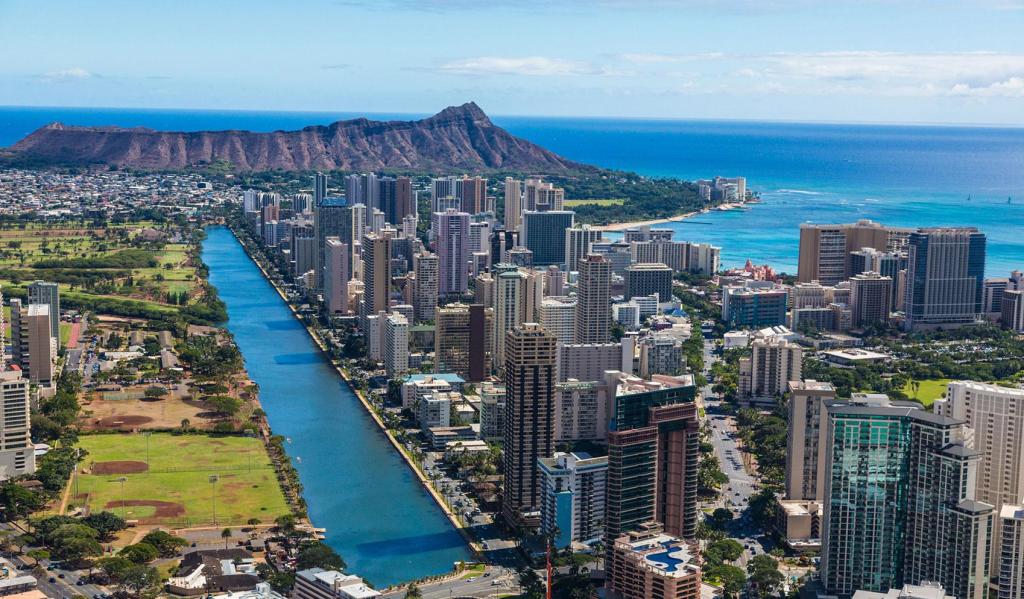
On our first full day in Hawaii, Martine and I plan to visit the Pearl Harbor National Memorial in Honolulu. We had been there before, in 1996, but I am more interested this time in reading up on Hawaii history before I go. The last time, I frankly thought I wouldn’t care for O’ahu, because it was so touristy. Now I begin to realize that it is touristy for good reason.
There are many stories about how the Pearl Harbor attack of December 7, 1941 came to be. Some have even speculated that Franklin Roosevelt knew in advance about the attack, since we had already cracked the Japanese Navy secret code. According to this theory, FDR wanted the U.S. in the war, and he was tired of the Congress lollygagging about what to do about Germany and Japan. It is interesting that none of the aircraft carriers were in the harbor during the time of the attack; and the battleships there were pretty long in the tooth.
That’s not to take away from Japan’s accomplishment. We lost a lot of good men—but probably no more than we would have lost of Congress had delayed for another six months to a year.
I remember that the whole Pearl Harbor National Memorial was pretty impressive back then. I am sure that it is even more impressive now.
This afternoon, I did a bit of research on how to use the Honolulu bus system to travel between Waikiki and the Memorial. I suppose we could pay big bucks and take a shuttle, but we could get off by paying four dollars for the both of us, round trip. I used the website TheBus.Org to obtain route maps and schedules.
Though he lost the use of his eyes in the 1950s, Jorge Luis Borges was appointed to head the National Library of Argentina. He was the second blind librarian there, the first being Paul Groussac. Borges works on the theme of his blindness and Groussac’s in the following poem:
Poem of the Gifts
No one should read self-pity or reproach
into this statement of the majesty
of God, who with such splendid irony
granted me books and blindness at one touch.

Care of this city of books he handed over
to sightless eyes, which now can do no more
than read in libraries of dream the poor
and senseless paragraphs that dawns deliver

to wishful scrutiny. In vain the day
squanders on these same eyes its infinite tomes,
as distant as the inaccessible volumes
that perished once in Alexandria.

From hunger and from thirst (in the Greek story),
a king lies dying among gardens and fountains.
Aimlessly, endlessly, I trace the confines,
high and profound, of this blind library.

Cultures of East and West, the entire atlas,
encyclopedias, centuries, dynasties,
symbols, the cosmos, and cosmogonies
are offered from the walls, all to no purpose.

In shadow, with a tentative stick, I try
the hollow twilight, slow and imprecise—
I, who had always thought of Paradise
in form and image as a library.

Something, which certainly is not defined
by the word fate, arranges all these things;
another man was given, on other evenings
now gone, these many books. He too was blind.

Wandering through the gradual galleries,
I often feel with vague and holy dread
I am that other dead one, who attempted
the same uncertain steps on similar days.

Which of the two is setting down this poem—
a single sightless self, a plural I?
What can it matter, then, the name that names me,
given our curse is common and the same?

Groussac or Borges, now I look upon
this dear world losing shape, fading away
into a pale uncertain ashy-gray
that feels like sleep, or else oblivion.
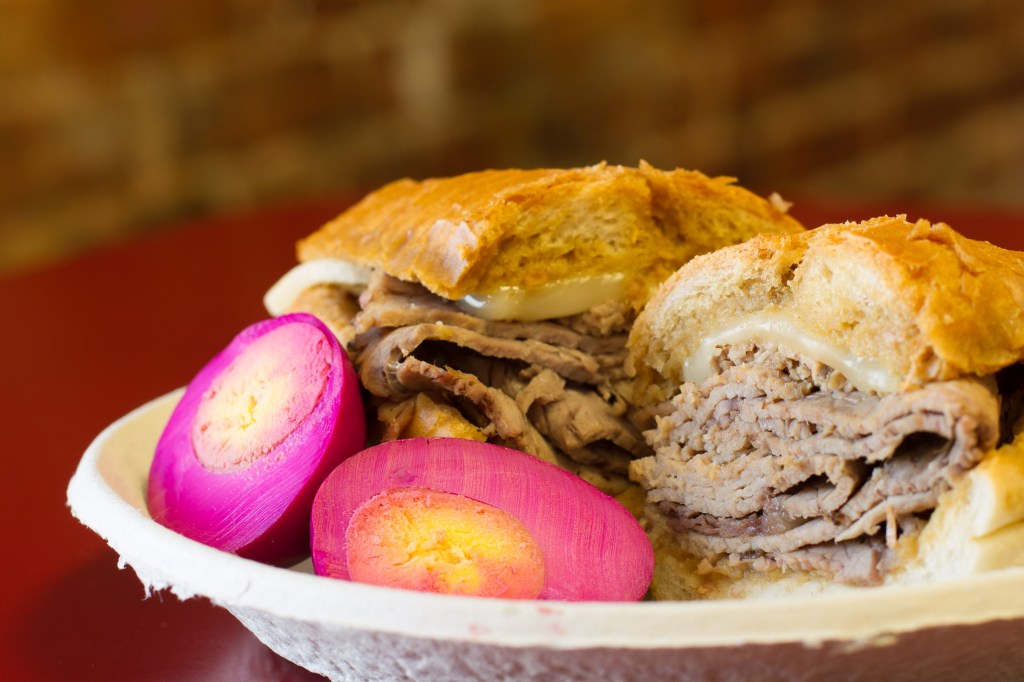
Philippe’s Dipped Roast Beef Sandwich with Pickled Egg
Martine has always liked good plain food, preferably old-fashioned American chow. There are fewer and fewer places which serve that type of food. One of the best is Philippe’s The Original, which sits at the corner of Alameda and Ord at the edge of Chinatown and just a few steps north of Olvera Street and its Mexican restaurants. Also, it is within walking distance of Union Station.
Philippe’s was opened 114 years ago and has been popular from the first. Whenever there is a home game at nearby Dodger Stadium, the lines could run out the front door. On any given day, you can find policemen, firemen, railroad employees, and God only knows. Everyone could use a great sandwich. Once Martine was there when there were even a bunch of Contra Costa County cops from Northern California chowing down on Philippe’s famous single-dipped roast beef sandwiches.
Philippe’s Restaurant
At a time when there are any number of “creative” chefs building little towers of unlikely ingredients into tasteless messes, it is good to find a place that knows how to (1) keep it simple and (2) keep it tasty.
I do not share Martine’s requirement for simple food, my preferences being Asian and Mexican; but I do appreciate having a restaurant in town where I can take her without giving her a pain in the tum. And I actually like their food, too.
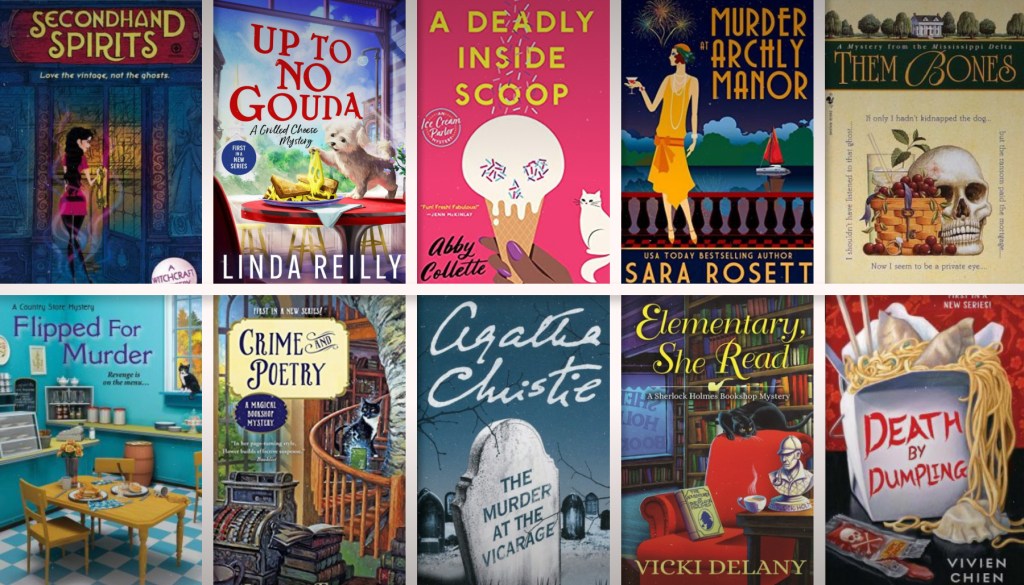
On my occasional visits to the few bookstores that remain, I have become conscious that some dealers have split mysteries into two categories:
The traditional hard police procedurals and noir works
“Cozy mysteries”
What? If they find a cadaver in a “cozy mystery,” does it not smell? Does it look nice rather than ghastly? One thing for sure, it tends to be either British or it imitates British mysteries. I am not implying that all British mysteries are “cozy,” because they aren’t. Take the works of Ian Rankin and P. D. James—which are anything but “cozy.”
I suspect that the sub-genre is meant to appeal mostly to women readers who like tales emphasizing ratiocination (as Poe called it) rather than being exposed to any form of unpleasantness. (Curiously, Dorothy Sayers’s excellent The Unpleasantness at the Bellona Club verges on “cozy” at times.)
Unpleasantness doesn’t bother me. I just finished reading Charles Willeford’s The Way We Die Now with its bloody murder of two Floridian backwoods baddies, and I found it rather soothing in a strange way.
Avoiding all unpleasantness, however, would bother me. I have always felt that whatever we most studiously avoid winds up biting us in the ass.
Today I made the final payment on our September vacation in Honolulu. We got a good price on a package deal including the flight, transfer to and from the airport, and the hotel. All that remains are meals, admission fees, shopping, and public transportation.
Notice, I do not include an automobile. When Martine and I stayed at the Pacific Beach Hotel in 1996, a rental car was included, with no parking fees at the hotel. Today, car rental fees have gone through the roof, and hotels charge anywhere from $35 to $45 a night just for parking on their grounds.
How much will Martine and I pay for public transportation on Honolulu’s bus system? For both of us, the total will come to a mere $12.00 total. Right after we check in at our hotel, we head to the nearby Ala Moana shopping center and pick up a HOLO card for seniors, free of charge, at the office of the Satellite City Hall there. Thereafter, once we have dished out $12.00 in fares (three round rips for two people at $2 each), the bus is free.
Americans hate taking public transportation. Neither Martine nor I mind it. In 1996, we drove all around the island; consequently, we don’t feel we have to repeat it.
In future posts, I will describe the places we plan to visit.
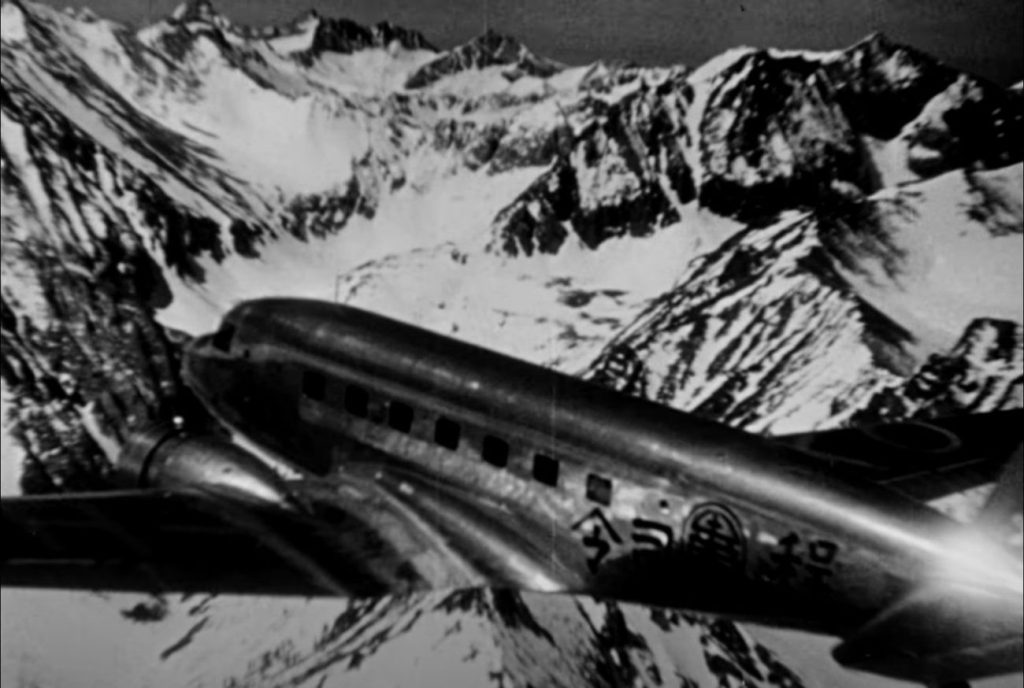
The following is one of the short short stories from Barry Gifford’s Sad Stories of the Death of Kings. It was one of the best stories in the book, and I thought at once of sharing it with you. The first paragraph is a scene from the movie Lost Horizon.
The little plane was barely visible through dense night fog as it sat on the ground. Then the engine turned over and the single propeller started to rotate, scattering mist as the plane nudged forward, feeling its way toward the runway. Chinese soldiers suddenly burst out of the airport terminal and began firing their rifles furiously in an attempt to prevent the plane from taking off. Tiny lights from the aircraft’s cabin winked weakly from within its whitish shroud while the plane taxied, desperately attempting to gather speed sufficient for takeoff. The soldiers stood confused, firing blindly and futilely until the aircraft lifted into blackness and escape.
Roy fell asleep after watching this opening scene of the film Lost Horizon. He liked to watch old movies late at night and in the early morning hours, even though he had to be up by 7:00 a.m. in order to be at school by eight. On this particular night, Roy dreamed about four boys his age, fourteen, in Africa, who discover a large crocodile bound by rope to a board hidden in bushes, abandoned by the side of a dusty dirt road. A stout stick was placed vertically in the crocodile’s mouth between its upper and lower jaws in order to keep the mouth open as widely as possible and prevent its jaws from snapping shut.
The crocodile could not move or bite, so the boys decided to drag it by the tail end of the board to a nearby river and release it. As they approached the river’s edge, it began raining hard and the ground suddenly became mushy and very slippery. To free the crocodile, they placed the board so that the croc’s head faced the river. One of the boys tore a long, sinewy vine from a plant and cautiously wound it around the stick. Another boy had a knife and prepared to cut the rope. The other two boys kept a safe distance. The boy with the knife sliced the rope in two at the same time the other boy tugged forcefully at one end of the vine, pulling out the stick. The crocodile did not immediately move or close its enormous mouth. The boys stood well away from it, watching. After a few moments, the crocodile hissed loudly and slowly slithered off the board and wobbled to the water’s edge, slid into the dark river and disappeared from view. The boys ran off as the downpour continued.
When Roy woke up, it was a few minutes before seven. He turned off the alarm before it could ring and thought both about the plane fleeing Chungking and the African boys rescuing the crocodile. What was the difference, he wondered, between waking life and dream life? Which, if any, was more valid or real? Roy could not make a clear distinction between the two. He decided then that both were of equal value, two-thirds of human consciousness, the third part being imagination. The last plane from Chungking took off with Roy aboard, bound for the land of dreams. What happened there only he could imagine.
I find myself liking Barry Gifford’s work more the more I read him. Here is a poem called “True Love.” And I didn’t even know he wrote poetry!
True Love
Your sickness made me
a little sick, it's
true—I still
feel it
     Mayakovsky got down
          on his knees
     and declared
               his love
to his last
          mistress
        a few hours after
           he'd met her
Remember me
at the hotel
            in Paris,
         on my knees
            in the lift?
We're all the same
men of too much passion
and a little talent—
    some a little more
                  than others
    We fool ourselves
       into thinking
                  we're strong
          then complain
      the rest of our lives
          crippled by
            the consequences
As I sit at the computer writing this blog, I am hearing a series of small explosions as firebugs everywhere are setting off illegal fireworks. Did all this happen because of our national anthem with its “rocket’s red glare,” or is it just some universal male incendiaries’ attempt to see how much of a bang they could get out of life without losing their fingers and toes?
I tend to ignore most holidays. The closest I came to celebrating the Glorious Fourth was to serve corn on the cob for dinner. No barbecue. No firecrackers. No patriotic movies or songs. No flags. No red, white, and blue.
[BANG! A particularly loud explosion just went off nearby.]
It is ironical that the people who most clothe themselves in the American flag are people who want to destroy what our country stands for. On January 26, 2021, the insurrection in Washington looked from a distance like a patriotic gathering. It was only when you zoomed in closer that you found just how appalling it all was. I’ll bet the attendees at that particular hullabaloo are second to no one in setting off fireworks and waving the flag—that is, those who are not serving time in prison.
So here I am, a guy who loves his country but doesn’t feel he has to prove it to anybody.
Family On Summer Beach Vacation Run Out Of Sea Towards Camera
Ah yes, Paradise on Earth. As a people, we have traditionally viewed summer beach vacations as the closest one could get to Heaven while alive. When I first came out to California in the late 1960s, I thought so, too. While working part-time at System Development Corporation in Santa Monica, I spent many afternoons lying on a towel and reading steamy fiction like Lawrence Durrell’s Alexandria Quartet.
The water was fun to a certain extent, but I was never a board or body surfer, though I went in often enough to be savaged by the occasional rough wave. Also, I tended to burn—especially as I had no one to slather my back with sun tan lotion.
While I live only two miles from the beach at Santa Monica, I don’t spend time there any more, unless I take a walk on the boardwalk connecting Santa Monica to Venice. Part of the reason is that the water is more polluted than ever, especially because we are only 20-30 miles (32-48 km) from the nation’s largest port, where freighters and tankers regularly foul the waters with petrochemical waste.
So when Martine and I go to Hawaii in a couple months, are we planning for any beach time? Not really. Although the waters at Waikiki are less polluted, the sun is stronger; and we both have fair skin. We are more interested in visiting Honolulu as a destination rather than trying to live in a pharmaceutical commercial.
I suppose if we lived east of the Mississippi, we would yearn for sunshine; but, living in Southern California, we have sunshine on most days of the year. In fact, September tends to be one of the hottest months of the year in Los Angeles. So we are likely escaping even hotter (albeit drier) weather at home.








 Tarnmoor
You must be logged in to post a comment.