A Prickly Individual

Trinidad-Born Author V.S. Naipaul (1932-2018)

What happens when one of your favorite authors forms a friendship with another of your favorite authors and then writes a book about that friendship? That’s the case when Paul Theroux came out in 1998 with Sir Vidia’s Shadow: A Friendship Across Five Continents. Both authors wrote not only novels but travel books. IMHO, Naipaul was the better novelist (by a long shot); but Paul Theroux’s travel books are far better—to the extent that they have played a major role in the way I lived my life over the last forty years.

Sir Vidiadhar Surajprasad Naipaul was born in Trinidad of a Hindu Indian family. He parlayed his colonial background into a brilliant series of novels which eventually gained for him a knighthood (in 1990) and the Nobel Prize in Literature (in 2001). He encountered Paul Theroux in Uganda, where both were living for a while. They became fast friends even before Theroux published his first novel.

That friendship became an instrumental part of Theroux’s life. Even when separated by thousands of miles, they wrote to each other frequently. He was even sexually attracted to Naipaul’s first wife, Patricia, who died in 1996.
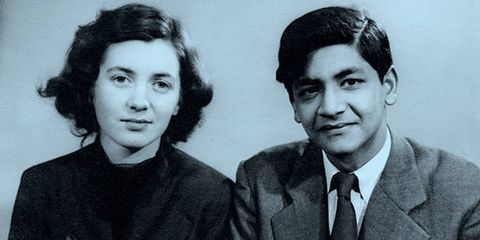
Patricia and Vidia Naipaul

Throughout the long friendship, Vidia Naipaul turned out to be a rather prickly individual. Some of it was due to his Brahmin fastidiousness:

“I can’t sleep in that bed,” he said. “It’s tainted. Why did he do it? The foolish, ignorant man!”

“What happened?” I asked.

“One of the workmen in Vidia’s bedroom was explaining something,” Pat began.

His face twisted in nausea, Vidia said, “And he sat on my bed…. He put his bottom on my bed.”

What would have bothered me more than it seemed to bother Theroux was that Naipaul was notorious about not picking up the check when they went out for dinner. And this was at a time when Paul was at the beginning of his career and constantly short of funds.

When Patricia died, the friendship suddenly came apart. Shortly after the funeral, Vidia married an Indian woman named Nadira, whom he had met previously in Africa. Quite suddenly, all of Paul’s attempts to contact Vidia were intercepted by Nadira, who was highly critical of the American writer.

The coffin nail was driven into the friendship when Paul and his son were taking a walk in London and suddenly encountered Vidia, who did not acknowledge him. When Paul addressed him, Vidia finally recognized him. When asked if he had received a recent fax from Paul, Naipaul was reluctant to discuss the matter further. When Paul asked what was to be done, Naipaul answered, “Take it on the chin and move on.”

Theroux was shocked:

He knew. It was over. It never occurred to me to chase him. There would be no more. And I understood the shock of something’s being over, like being slapped—hurt as the blood whipped through my body. “Like being hit by a two-by-four,” my friend had said when Vidia insulted her in Oregon.

This exchange takes place on the last page of the book. Theroux could have done a job of character assassination on his old friend, but he chose not to. After all those years, the friendship had meant a great deal to him, even if it ended badly.

I, too, have had prickly friends. Some I walked away from. Some I took up with again after a number of years had transpired. Would I have done differently than what I wound up doing in the end? Probably not.

In the end, I really liked Theroux’s book, which demonstrated that—for a time—his friendship with Vidia had great value in his life.
“I Am Everything I Have Already Lost”

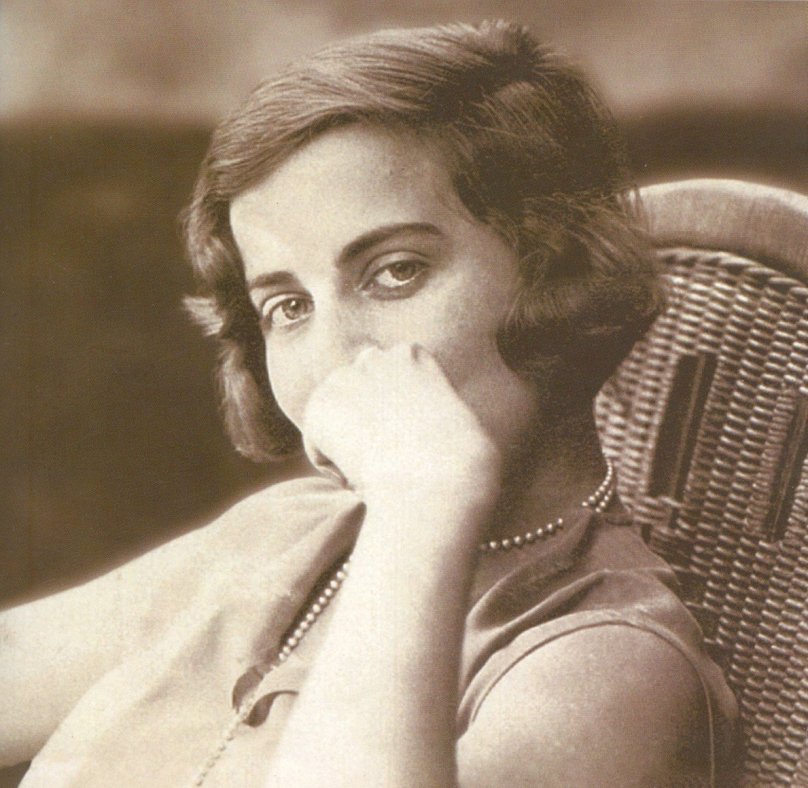
Argentinean Poet and Writer Silvina Ocampo Aguirre (1903-1993)

I’m not about to call her a poetess, because she could hold her own in the literary world of women and men. She was a great writer who was married to another great writer, Adolfo Bioy Casares, friend of Jorge Luis Borges. I understand she is buried in Recoleta Cemetery in Buenos Aires, which I have visited three times without finding her grave. I will have to make another visit and try harder to find her so that I can pay homage to her beauty and talent.

The following poem is from her collection Poemas de amor desesperado (Poems of Desperate Love, 1949).

Song

Oh, nothing, nothing is mine,
not the tone of my voice, nor my absent hands,
nor my distant arms!
I have received it all. Oh, nothing, nothing is mine.
I am like the reflections of a gloomy lake
or the echo of voices at the bottom of a blue
well when it has rained.
I have received it all:
like water or glass
that turns into anything,
into smoke, into a spiral,
into a building, a fish, a stone, a rose.
I am different from me, so different,
like some people when they are in society.
I am all the places I have loved in my life.

I am the woman I hated most.
and the perfume that wounded me one night
with decrees of an uncertain destiny.
I am the shadows that entered a car,
the luminosity of a port,
the secret embraces hidden in the eyes.
I am the knife of jealousy,
and the aches red with wounds.
Of the long eager glances I am the sparkle.
I am the voice I heard behind the blinds,
the light, the air above the cypress trees.
I am all the words that I adored
on the lips, in the books that I admired.
I am the greyhound that fled in the distance,
the solitary branch among the branches.
I am the happiness of a day,
the whisper of the flames.
I am the poverty of naked feet,
with children going silently away.
I am what they did not tell me and I knew.
Oh, I wanted everything to be mine!
I am everything I have already lost.
But everything’s elusive like the wind and the river,
like the golden summer flowers
that die in your hands.
I am everything, but nothing, nothing is mine,
not the pain, nor the joy, nor the terror,
not even the words of my song.


This poem can be found in the excellent edition of Silvina Ocampo’s poetry published by NYRB/Poets and translated and edited by Jason Weiss.

The Eyes of the Inca

The Peru of a Hundred Years Ago Through Peruvian Eyes

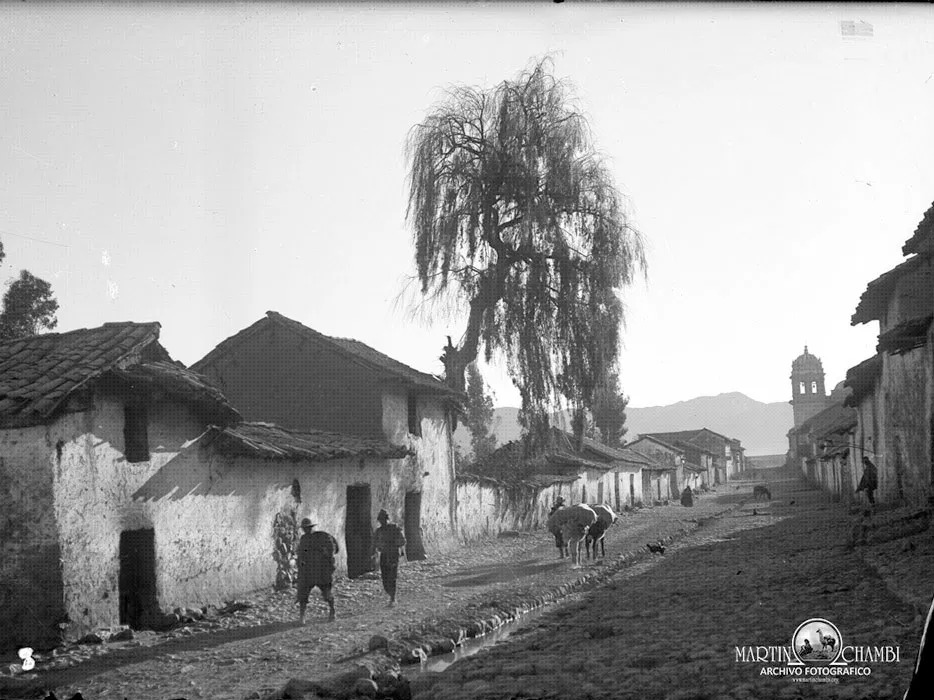
Martín Chambi Jiménez (1891-1973) was a Peruvian photographer who was active until a 1950 earthquake destroyed much of his beloved Cuzco. In his studio, he took pictures like the above musical group with their traditional instruments. But he also traveled around, photographing the altiplano of Peru, the city of Cuzco, and such sites as the ruins of Machu Picchu.

Cuzco Street Scene

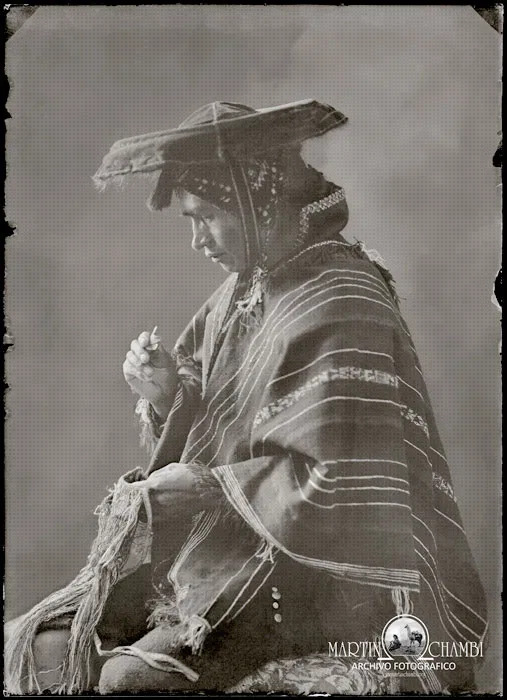
In 1979, the Museum of Modern Art in New York displayed an exhibition of Chambi’s photographs, which traveled to other cities and inspired other shows displaying his work. Chambi was a native-born speaker of Quechua, the language of the Incas, and he saw the people and the landscape as only a native could see them.

Quechuan Woman Chewing Coca Leaves

Below is one of the many images he shot at the ruins of Machu Picchu.

Machu Picchu As It Was 100 Years Ago

Photographers like Chambi are a rare link to the past in faraway places that were not in the mainstream of Western European Civilization.

Social Distancing Follies

The Adventist Health.White Memorial Medical Plaza in East Los Angeles

Today, I drove Martine for an ophthalmologist appointment in East Los Angeles. I went up to the waiting room with her, but was asked to leave because of social distancing requirements. So what happened? I had to stand in the corridor, which was full of other family members who weren’t really social distancing. And there wasn’t any seating to be had.

There is a bridge over César Chavez Boulevard (visible in the above photo), which would be an ideal place to sit—except it was posted all over with signs saying that, because of social distancing, no one may sit down there.

Perhaps one cannot catch the ’Rona when one is on one’s feet. At least, that seems to be the prevailing assumption. If the medical receptionist can’t see you in the corridor, then presumably you are, by definition, social distancing. ¡Que idiota!

Places: Puerto Montt, Chile 2015

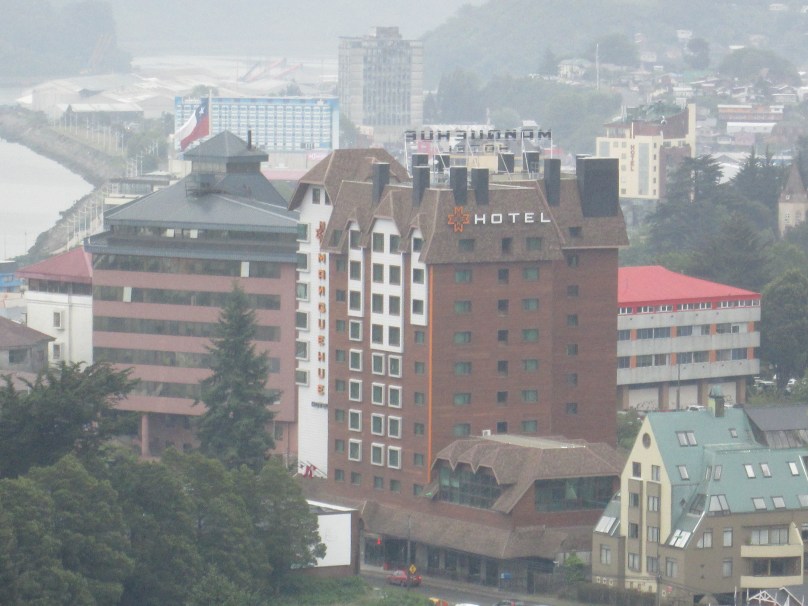
Puerto Montt in the Fog

This is the beginning of a new series based on places I have visited since 2001 and always illustrated by my own photographs. In common with all the places I decide to feature is my desire to go back and spend more time in the vicinity. I visited Puerto Montt briefly in 2015 on a trip I started in Buenos Aires, going on to Iguazu Falls (on the Argentina side), San Carlos de Bariloche, Puerto Varas, Valparaíso, and Santiago.

In her book Among the Cities, Jan Morris describes Puerto Montt as the southern terminus of the Pan American Highway. Actually, it continues on the Island of Chiloé across Reloncavi Sound as far as the town of Quellón, from which one could travel by ferry to Chaitén. The port was named after Manuel Montt, who was President of Chile from 1851 to 1861.

The Cathedral of Puerto Montt, Built Entirely of Native Alerce Wood

The Sea Creatures of Puerto Montt

The highlight of my visit to Puerto Montt was the incredible fish market, which Jan Morris described very picturesquely back in 1961:

And wettest, strangest, most southern, most remote, more alien than any melon-flower are the sea creatures of Puerto Montt, dredged through the rain out of the Pacific. There are heavy eels with muscular flanks, big flat fish like slabs of fat, giant clams, crinkled oysters by the million, mountains of spiky urchins, glistening and globular.

If I weren’t on a bus tour, I would have loved to stay for a giant seafood dinner, but I was scheduled to take an all-night TurBus sleeper to Valparaíso.

Unfinished Business

I would dearly love to go back to Puerto Montt for that seafood dinner, and then head across the sound to the Island of Chiloé, which is famous for its UNESCO-recognized wooden churches and wet forests. The Chilotes dispute with the Peruvians the development of the potato, which grows extensively on the island, and which is served with seafood in a local stew known as curanto.

How May I Hinder You?

At My Friend Bill’s House in Altadena

Today, for the first time in over a year, I visited with one of my friends. And you can see the joy in my face in the above photo. I had no idea that Bill Korn would post the image on Facebook, but he did. So I thought I would share the sunshine with you.

Ever since I was a boy, I hated posing with a pleasant smile. Somewhere I have a photo of me as a ten-year-old trying to wreck one of my mother’s pictures. I got even with her years later when we visited Marineland of the Pacific (long since closed) posing her next to a huge sign with an arrow pointing at her and the words, “To the walrus exhibit.”

As you can see, I am not a good subject for pleasant posed pictures. Sure you can pose me next to a beautiful view, but I’ll be giving you the ol’ stink-eye.

Lost in Oxnard

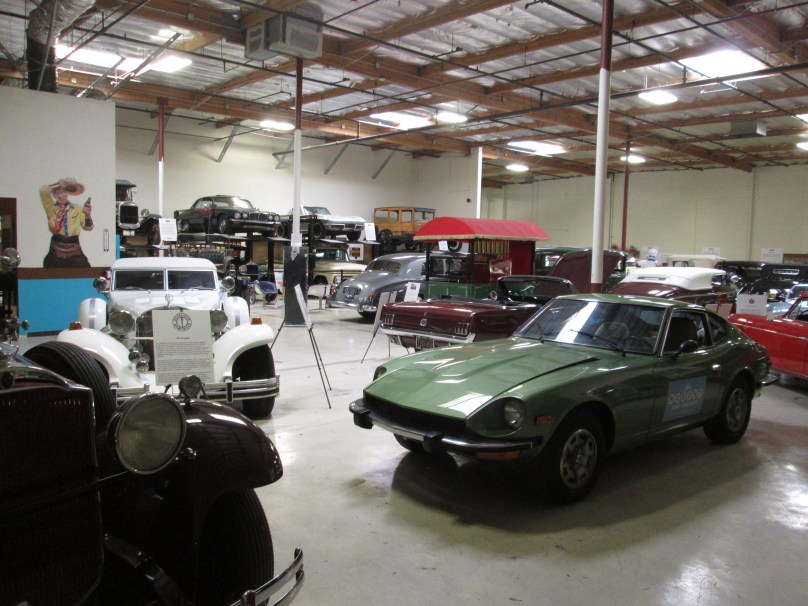
Interior of the Murphy Auto Museum in Oxnard, CA

Way back in Cleveland during my childhood, there was a TV host who called himself Ghoulardi. He screened horror films and made fun of local figures and places—and he mad fun of one very distant place called Oxnard in Ventura County, California. He even had a raven whom he called Oxnard on his show.

Today, Martine and I drove to Oxnard looking for the new location of the Murphy Auto Museum, which was on a street called Eastman. I spent an hour circling around the place on Rice (where I missed the turnoff, which had a small sign) and Oxnard Road (which didn’t intersect). Eventually, I stopped at an Arco Service Station and found a smog technician who set me straight.

1930 Silver Phantom Rolls Royce with “Boat Back”

We had been to the old location of the Murphy about three times in the past. The museum had to move to a smaller location (about one-third the size) because the former landlord saw an opportunity to make more money. (Bad cess on him!) I am hoping that the Murphy manages to survive under its straitened circumstances and grow back to what it used to be.

It’s Not Just Cars: There Are Also Exhibits of Popular Culture

We did the museum in about an hour (it used to take us three hours) and sought out the local Chick-Fil-A for chicken sandwiches and French Fries. And then I drove back to L.A.

Things Not Worth Doing: One of a Series

Do You Know Anyone Whose Opinion Was Changed by One?

This was originally posted on June 29, 2014.

I have always wondered why people are so willing to advertise their opinions, their place of work, info about their families and whatever, especially by sticking bumper stickers on their cars. I can think of at least three reasons why this is not such a good idea:

  1. There are parts of town where I would not like to advertise my political beliefs, such as in Orange or San Diego Counties. My car is not a new one, but at least it still runs for now.
  2. It is distinctively possible that your favorite candidate could turn out to be an unregenerate louse. After all, why would someone want to go into politics any more unless one is on a power trip? (It didn’t used to be that way, but it is today.)
  3. Bumper stickers are a lot like tattoos: They’re a lot easier to apply than to remove.

As for myself, this blog is my bumper sticker. If, after reading it, you think I am a political conservative, you must not have read it very carefully.

The Eyes of Dorothea Lange

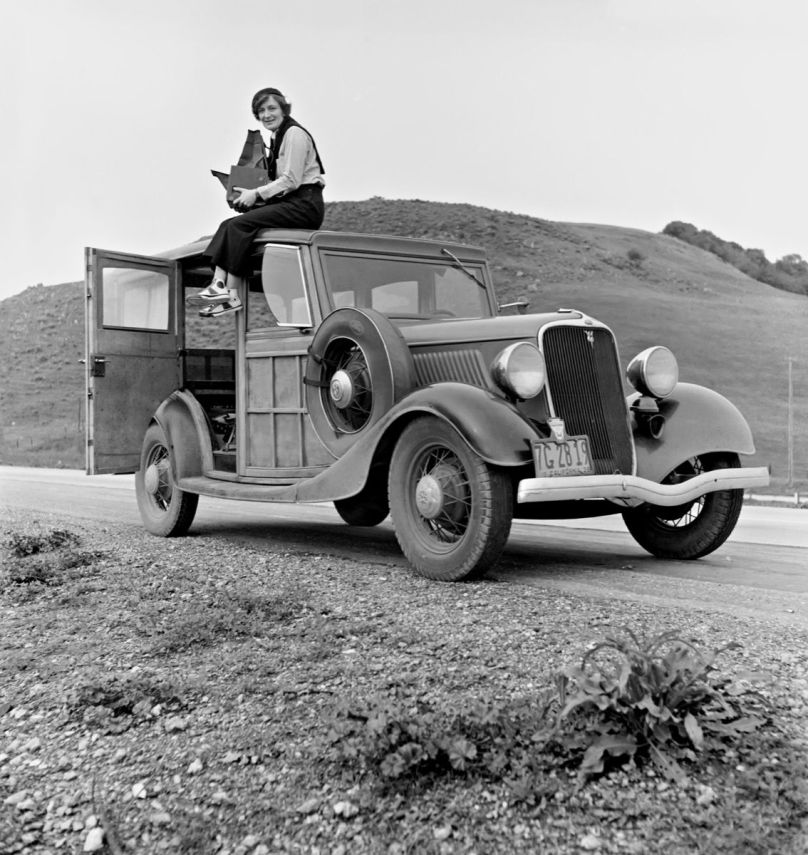
Dorothea Lange (1895-1965) with View Camera

Ever since I attended an exhibit of Henri Cartier-Bresson’s work at Dartmouth College in the mid 1960s, I have been a strong believer in the art of photography. Photographers like Ansel Adams, Walker Evans, Diane Arbus, Edward Weston, and Robert Capa have been like gods to me—as was Dorothe Lange. I present only two of her photographs here, but they speak mostly for themselves.

Migrant Mother, Nipomo, CA, 1936

This is Lange’s most famous photograph—one of the canonical images of America during the Depression years. I am amazed at the effect of her two older children averting their eyes from the camera while their mother contemplates her situation.

The Road West, U.S. 54 in Southern New Mexico

Once again, Lange draws beauty out of desolation in this stark image of a highway running straight through the New Mexico desert. U.S. 54 runs north/south through the heart of New Mexico, bypassing the White Sands Missile Range where the first atomic bomb was exploded in 1945. I have been through the area at least twice on my way to Capitan and Alamogordo, New Mexico.

Reliving a Transcendent Moment

There It Was: Mount Chimborazo

This post originally appeared on November 12, 2016, shortly after I returned to Los Angeles from Ecuador.

The text is from Matthew 18:22: “Jesus saith unto him, I say not unto thee, Until seven times: but, Until seventy times seven.” It refers to how many times one must forgive transgressors. That inspired the Swedish author, Lars Görling, wrote a novel entitled 491, which was made into a film by Vilgot Sjöman.

This is a very roundabout way of remembering the route Dan and I took as we emerged from the twisted warren of unmarked streets which is Ambato, one of Ecuador’s largest cities. We were looking for the E-35, which is the Pan-American Highway. Instead we were on E-491, which took us through a number of towns and villages which were not on my map of the country. Nor, for that matter, was E-491.

Then, as we rounded a hill, quite suddenly, we saw the volcano Chimborazo dead ahead of us. The clouds had moved aside, allowing us to see the glaciers on Ecuador’s tallest mountain. If you measure altitude from the center of the earth rather than sea level, it is the tallest mountain on earth, looming in splendid isolation from the rest of the Andes.

A Herd of Wild Vicuñas

As we drew closer to the mountain, we espied a large herd of wild vicuñas on both sides of the road. Dan and I stopped to take pictures in the rarefied air, which must have been 15,000 feet altitude.

Throughout its length, E-491 was spectacular. Even the Indian villages along the route were more interesting. And then, as we approached the city of Riobamba, we crossed the Pan-American Highway. We spent the night in a spare, but scrupulously clean hotel near the railroad station. By then, we were on the “wrong” side of Chimborazo, which was now covered in clouds.

That was the end of our getting lost: The next day, we easily made our way to Cuenca in about five hours.