Atacama and Altiplano

Political Demonstration in La Paz, Bolivia

Still on lockdown from the quarantine, I am dreaming of a vacation that includes Peru, the northern tip of Chile, and the Altiplano region of Bolivia. I may be too old for this trip (at age 76), but I continue to collect information. In terms of transportation, it involves a round trip flight from Los Angeles to Lima, Peru.

There are three legs to this trip.

First I head south in two or three stages to Tacna, Peru, which is on the border with Chile and its Atacama Desert, and over the border to Arica. The stages might include Paracas, Huacachina, and (most definitely) Arequipa.

From Arica, I head northeast to the Bolivian border, possibly stopping at Putre and the Parque Nacional Lauca. From this point until the end of the trip, I am at high altitude, from twelve to fifteen thousand feet (between 3600 and 4600 meters). I will be subject to soroche, or altitude sickness. I will have to use coca leaves and an alkaloid to keep me from becoming seriously ill.
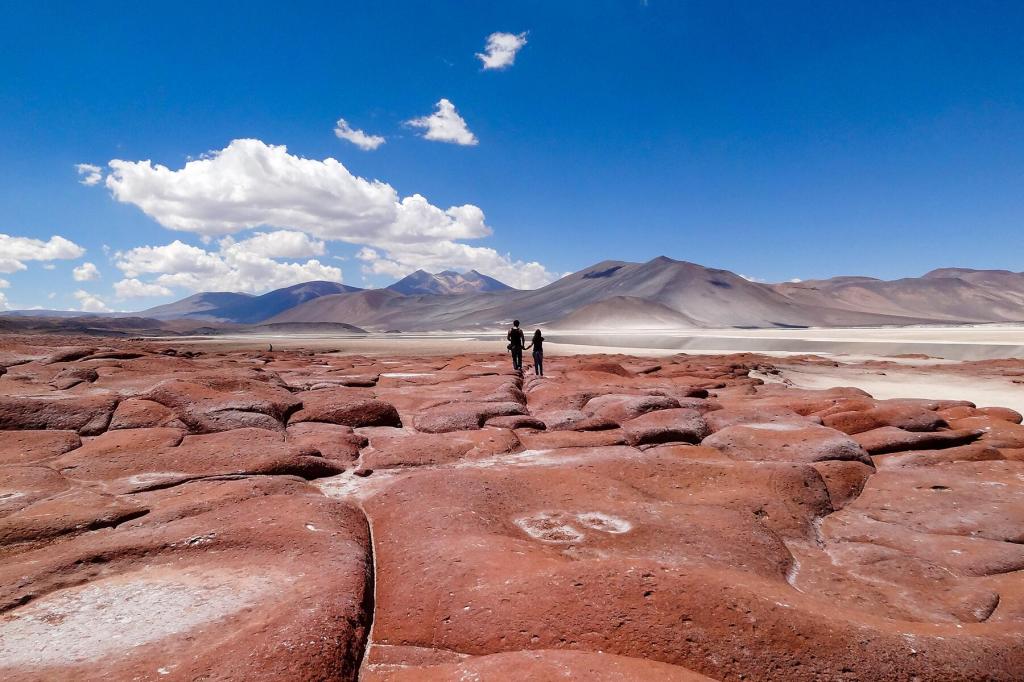
Chile’s Atacama Desert, Which Receives No Rain To Speak Of

From Arica to La Paz, Bolivia is only seven hours by bus, continuing on my northeasterly direction.

I will recover from my bus ride for a few days in La Paz, possibly seeing the ruins at Tiwanaku. Then I head northwest to Copacabana, where I will be on the shores of Lake Titicaca. I will spend a night on the Isla del Sol, and take a bus to Puno in Peru. From Puno, I will take either a bus or train to Cusco, where I will see several local Inca ruins (though not necessarily Macchu Pichu, which I saw in 2015). From Cusco, I fly to Lima and eventually back to Los Angeles.
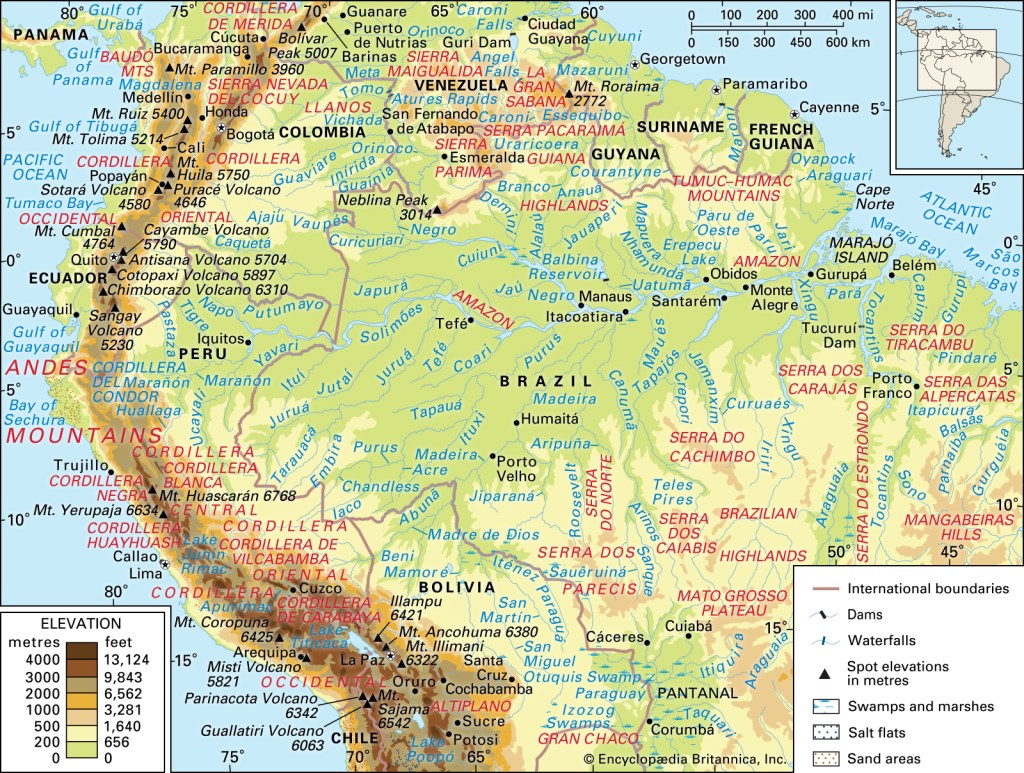
The Whole Trip Is in the Extreme Southwest of This Map

What interests me in this area are, in addition to the mountains and deserts, the cultures of the mountain peoples living in the area. Originally, I was very interested in the Inca, but then I realized that they were not as advanced as I had thought. One exception: Their stonework is amazing. Also, this is the area from which the Spanish conquistadores extracted most of their wealth, leaving behind some incredible churches full of gold, silver, and incredible paintings.

If it turns out I am too old for this trip, I will reluctantly skip Bolivia and continue to head southward in Chile until I reach Santiago.

The Month of Reading Women

This Month I Am Reading Only Books Written by Women, Such as Virginia Woolf

I read a lot of books, but I feel I have not given women authors their due. So far, I have read Celeste Ng’s Little Fires Everywhere and am within a few pages of finishing Joyce Carol Oates’s The Man Without a Shadow. Ng is new to me, but I have always loved Oates, though I haven’t nearly enough of her prolific works.

Among the books I will be selecting from for the rest of March (in no particular order):

  • Something by Svetlana Alexievich, most likely Secondhand Time [Russia]
  • Rosario Santos’s The Fat Man from La Paz: Contemporary Fiction from Bolivia*
  • Ludmilla Petrushevskaya’s The Time: Night* [Russia]
  • Marilynne Robinson’s Gilead* [USA]
  • Simone de Beauvoir’s The Ethics of Ambiguity [France]
  • Patricia Highsmith’s The Black House [USA]
  • Dorothy B. Hughes’s In a Lonely Place [USA]
  • Selma Lagerlof’s The Saga of Gosta Berling* [Norway]
  • Virginia Woolf’s To the Lighthouse [England]
  • Clarice Lispector’s Hour of the Star [Brazil]
  • Silvia Moreno-Garcia’s Gods of Jade and Shadow* [Mexico/Canada]
  • Marie NDiaye’s Three Strong Women [France]
  • Dawn Powell’s The Locusts Have No King* [USA]
  • Valeria Luiselli’s Lost Children Archive* [Mexico/USA]

Invariably, I will not read some of the above and likely add some other writers, such as Charlotte Brontë, Willa Cather, Madeleine Albright, or Helen Hunt Jackson. It all depends on how I like the books I have selected.

Books marked with an asterisk [*] are by authors I have not yet read.

The Vast Armies of the Benighted

A Scene from the Merchant Ivory Production of A Room with a View (1986)

I have never ceased to marvel how some homosexual authors as Marcel Proust were so brilliant at translating their knowledge of relationships into a more “acceptable” heterosexual context. This is also true of E. M. Forster, whose A Room with a View I have recently read. The following is taken from Chapter Seventeen of that novel:

It did not do to think, nor, for the matter of that, to feel. She gave up trying to understand herself, and joined the vast armies of the benighted, who follow neither the heart nor the brain, and march to their destiny by catch-words. The armies are full of pleasant and pious folk. But they have yielded to the only enemy that matters—the enemy within. They have sinned against passion and truth, and vain will be their strife after virtue. As the years pass, they are censured. Their pleasantry and their piety show cracks, their wit becomes cynicism, their unselfishness hypocrisy; they feel and produce discomfort wherever they go. They have sinned against Eros and against Pallas Athene, and not by any heavenly intervention, but by the ordinary course of nature, those allied deities will be avenged.

Watch But Don’t Touch

Mohave Desert Scene with Joshua Tree in Foreground

Yesterday I did a search for poems about the desert and came up with a winner. “Desert” was written by Josephine Miles way back in 1934, but it has a contemporary feel. One thing for sure: There are no tree huggers in the desert, what with all the spiny plants. Moreover, the ground itself is unfriendly, full of sharp stones. The only thing Miles leaves out is the wind-blown dust.

Desert
When with the skin you do acknowledge drought,
 The dry in the voice, the lightness of feet, the fine
 Flake of the heat at every level line;

 When with the hand you learn to touch without
 Surprise the spine for the leaf, the prickled petal,
 The stone scorched in the shine, and the wood brittle;

 Then where the pipe drips and the fronds sprout
 And the foot-square forest of clover blooms in sand,
 You will lean and watch, but never touch with your hand.

“Cactus Slim”

One of My Favorite Places in the Coachella Valley

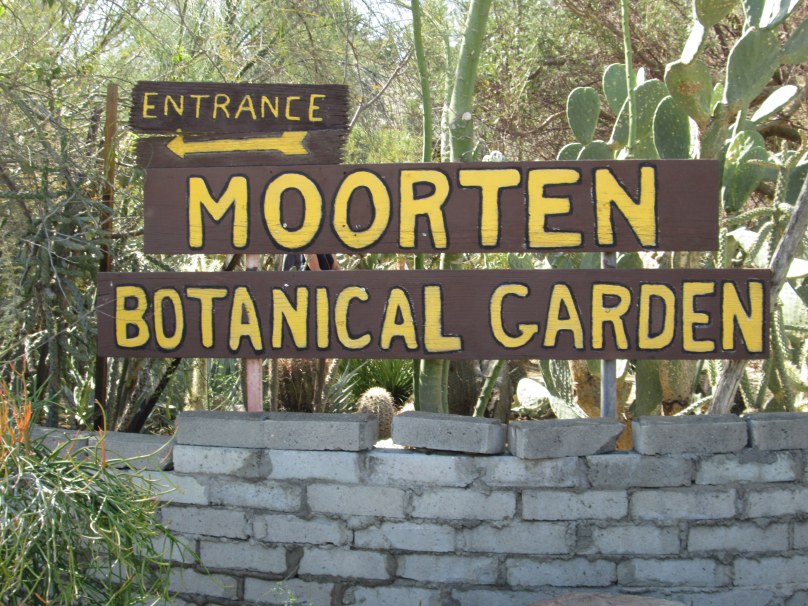
During my weekend in the desert, my brother and I didn’t get much of a chance to go gallivanting around. I did manage to introduce him to one of my favorite places, which, surprisingly, he had never visited. I am referring to the Moorten Botanical Garden on South Palm Drive in Palm Springs.

The garden was founded by Chester “Cactus Slim” Moorten who had come to California during the silent film era and acted in Mack Sennett’s Keystone Cops films. By the 1930s, he had received a diagnosis of tuberculosis and was urged by his doctors to check into a sanitarium. Instead, he moved to the Palm Springs area and opened a cactus nursery. The story is told in Garden Collage magazine in a 2016 article by Molly Beauchemin which you can find here.

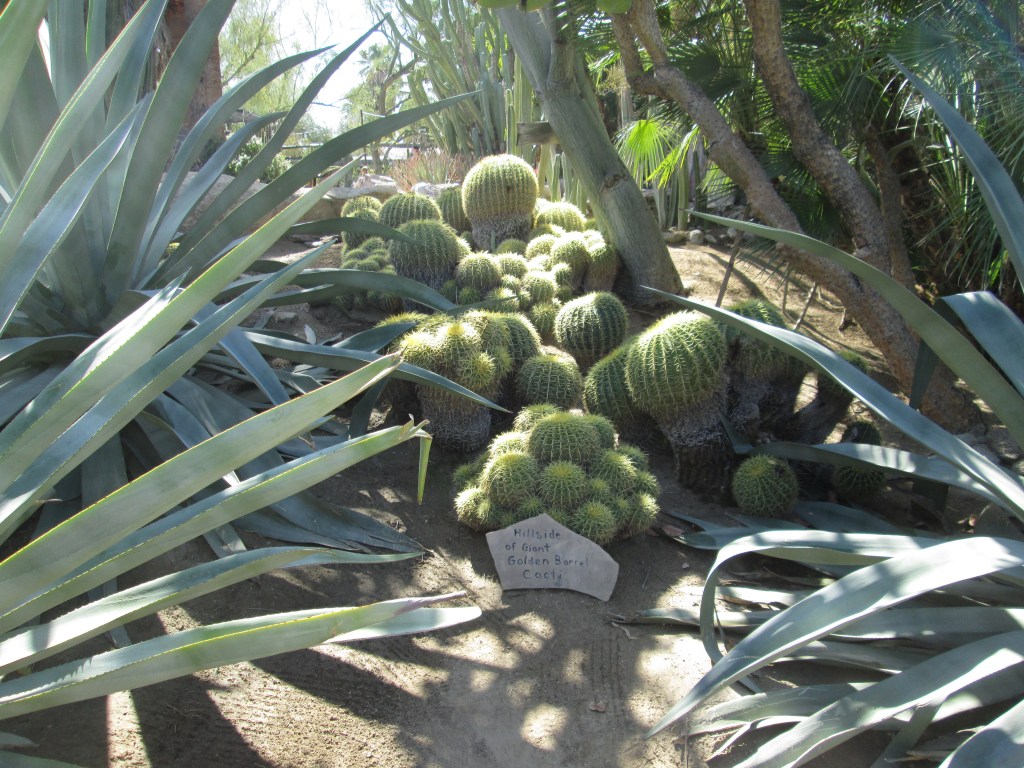
Acres of Incredible Cacti and Other Succulents

Dan and I enjoyed an hour exploring the paths overgrown with thousands of varieties of the desert foliage. The garden also does a land office business selling potted cacti to visitors.

One of the Most Photogenic Places in the Coachella Valley

Chester Moorten’s son Clark now runs the botanical garden. Plant varieties are carefully labelled with the plants’ scientific and popular names. There is even a greenhouse with hundreds of rare varieties which normally wouldn’t otherwise grow in the Palm Springs area.

For more information, you can visit the garden’s website: Moorten Botanical Garden.

Weekend in the Desert

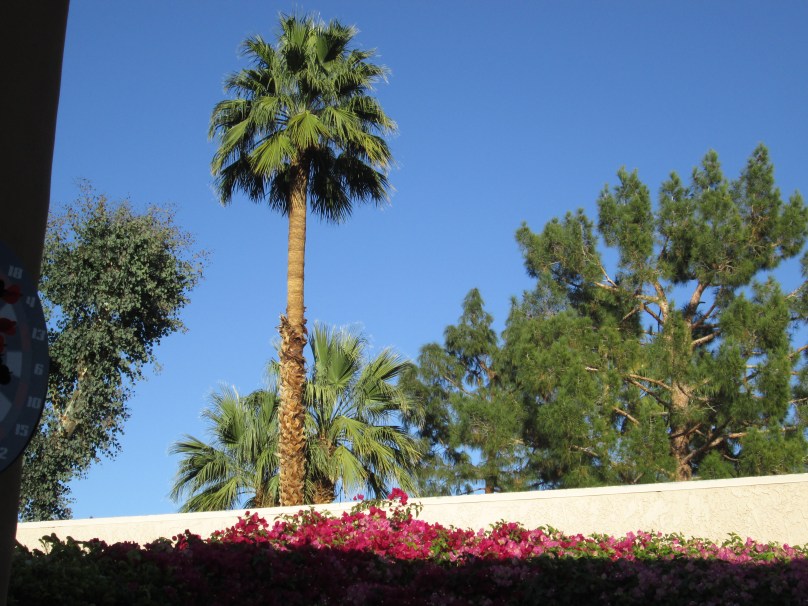
Looking Up from the Book I Was Reading, This Was the View

It was good to see my brother again after four months of quarantining alone with Martine. Because she hates the desert (having lived and work for two years in Twentynine Palms), Martine stayed behind in L.A. and engaged in several cleaning projects which would have been difficult with me tromping about the place.

Dan and my sister-in-law Lori were, as usual, excellent hosts. Dan went out of his way to cook several gourmet meals including a vegetarian lasagna with eggplant and spinach as well as corned beef and cabbage with potatoes and carrots. We didn’t visit many places, because the Coachella Valley is still under a Covid-19 lockdown. But I did manage to read two whole books sitting in Dan’s back yard. The weather was perfect, an even 70° Fahrenheit (21° Celsius) with an occasional cool breeze.

The photo above was taken from the chair in which I was reading Hilaire Belloc’s Selected Essays and Jon Krakauer’s Classic Krakauer: Essays on Wilderness and Risk. (I love reading essays, as I consider myself to be something of an essay writer, but in a small way.)

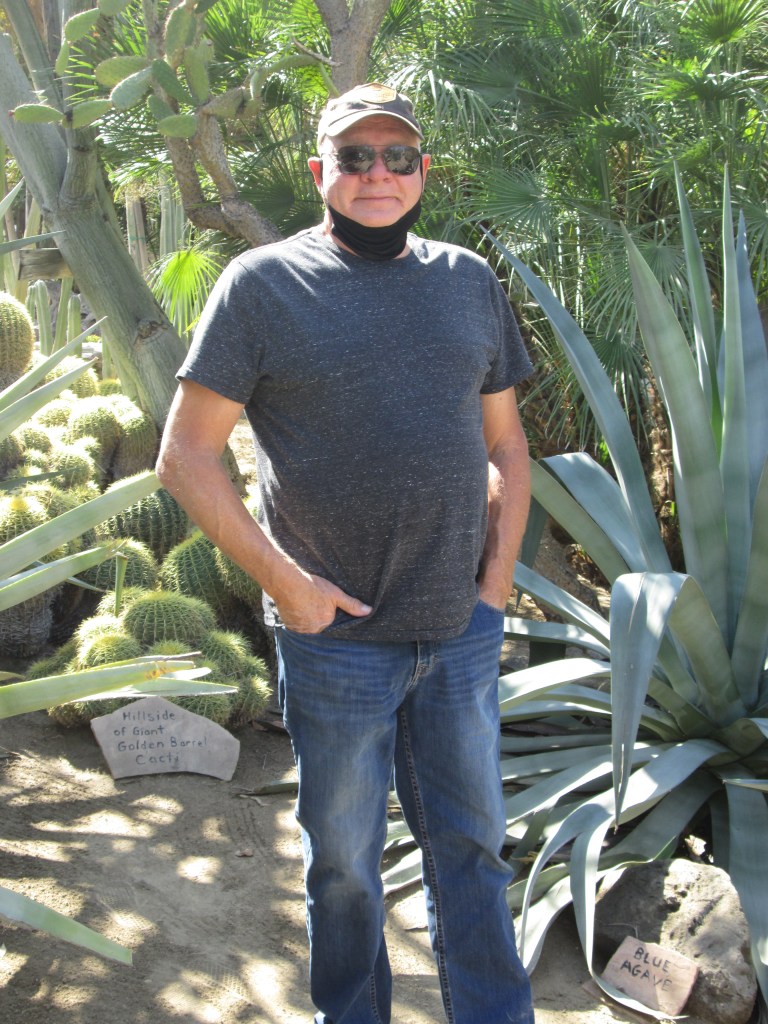
My Brother Dan at the Moorten Cactus Garden in Palm Springs

Because Dan lives in the lower desert of California, I would not venture to visit him during the blazingly hot summer months. I hope that he can make it to L.A., or I will have to wait until the fall to drive out again.

Desert Bound

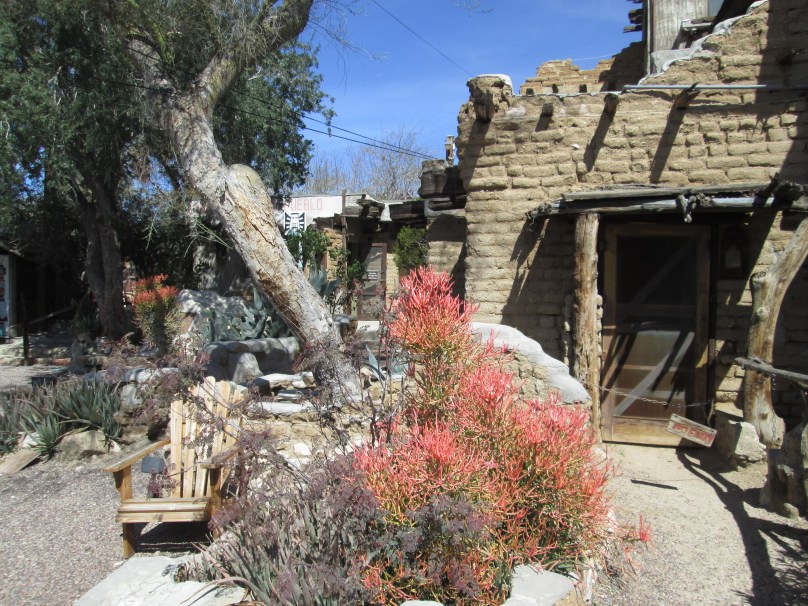
Cabot Yerxa’s Pueblo in Desert Hot Springs

This weekend I will drive out to the Coachella Valley to see my brother. It won’t be long before the temperature goes up to 100° F (37° Celsius) and over each day. Although Dan has air conditioning at his place, I don’t want to step outside only to be instantly dehydrated.

At this time of year, the desert can be beautiful. Alas, it has been a dry year, and thus not a great time for wildflowers. I remember times when I visited the desert in February and March to find it filled with uncounted millions of wildflowers, ranging from tiny blossoms to large cactus flowers.

Consequently, I will not post again until Monday, March 1. I hope to take a lot of pictures to use in next week’s posts.

My First Poet

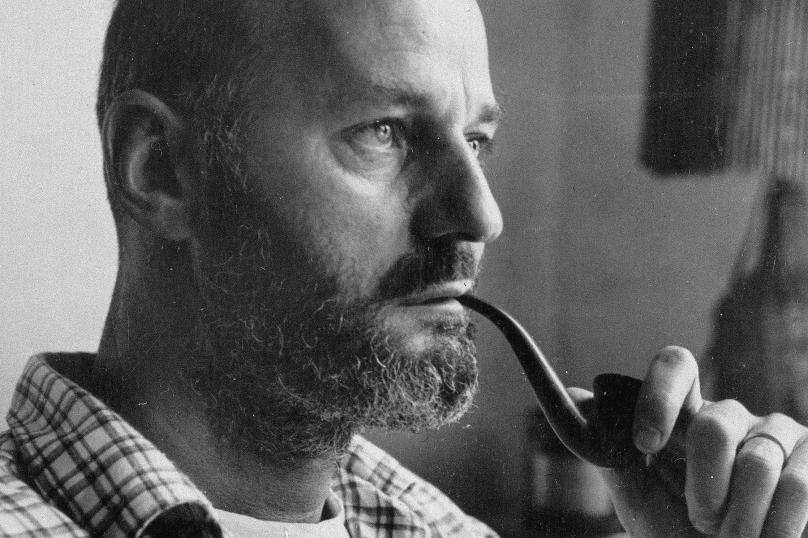
Lawrence Ferlinghetti (1919-2021) As He Looked When I Met Him

It was my freshman year at Dartmouth College. When I heard that beatnik poet Lawrence Ferlinghetti was going to visit the campus, give a poetry reading from his recently published collection A Coney Island of the Mind, and answer questions, I decided to show up. In all, there were about twenty-five students in the audience, plus a few professors.

I really enjoyed the poems, such as this one, which is called “I Am Waiting”:

I am waiting for my case to come up  
and I am waiting 
for a rebirth of wonder  
and I am waiting          
          for someone to really discover America  
and wail 
and I am waiting  
for the discovery 
of a new symbolic western frontier  
and I am waiting 
for the American Eagle  
to really spread its wings  
and straighten up and fly right  
and I am waiting 
for the Age of Anxiety  
to drop dead  
and I am waiting  
for the war to be fought 
which will make the world safe  
for anarchy 
and I am waiting  
for the final withering away  
of all governments  
and I am perpetually awaiting  
a rebirth of wonder 
 
I am waiting for the Second Coming  
and I am waiting 
for a religious revival 
to sweep through the state of Arizona  
and I am waiting 
for the Grapes of Wrath to be stored  
and I am waiting 
for them to prove  
that God is really American  
and I am waiting 
to see God on television  
piped’ onto church altars  
if only they can find  
the right channel  
to tune in on  
and I am waiting 
for the Last Supper to be served again  
with a strange new appetizer  
and I am perpetually awaiting  
a rebirth of wonder 
 
I am waiting for my number to be called  
and I am waiting 
for the Salvation Army to take over  
and I am waiting 
for the meek to be blessed 
and inherit the earth  
without taxes and I am waiting  
for forests and animals  
to reclaim the earth as theirs  
and I am waiting  
for a way to be devised  
to destroy all nationalisms  
without killing anybody 
and I am waiting 
for linnets and planets to fall like rain  
and I am waiting for lovers and weepers  
to lie down together again 
in a new rebirth of wonder 
 
I am waiting for the Great Divide to ‘be crossed  
and I am anxiously waiting 
for the secret of eternal life to be discovered  
by an obscure general practitioner  
and I am waiting 
for the storms of life  
to be over  
and I am waiting  
to set sail for happiness  
and I am waiting  
for a reconstructed Mayflower  
to reach America  
with its picture story and tv rights  
sold in advance to the natives  
and I am waiting  
for the lost music to sound again  
in the Lost Continent  
in a new rebirth of wonder 
 
I am waiting for the day  
that maketh all things clear  
and I am awaiting retribution  
for what America did 
to Tom Sawyer  
and I am waiting  
for the American Boy  
to take off Beauty’s clothes  
and get on top of her  
and I am waiting  
for Alice in Wonderland  
to retransmit to me  
her total dream of innocence  
and I am waiting  
for Childe Roland to come  
to the final darkest tower  
and I am waiting  
for Aphrodite 
to grow live arms  
at a final disarmament conference  
in a new rebirth of wonder 
 
I am waiting  
to get some intimations  
of immortality  
by recollecting my early childhood  
and I am waiting  
for the green mornings to come again  
youth’s dumb green fields come back again  
and I am waiting  
for some strains of unpremeditated art  
to shake my typewriter  
and I am waiting to write 
the great indelible poem 
and I am waiting 
for the last long careless rapture  
and I am perpetually waiting  
for the fleeing lovers on the Grecian Urn  
to catch each other up at last  
and embrace 
and I am waiting  
perpetually and forever  
a renaissance of wonder            

Lawrence Ferlinghetti died on Monday, February 22, which is Washington’s birthday, at the ripe old age of 101, just a month shy of his 102nd.

I was too shy to ask the poet any questions, being a detested freshman. But I did enjoy seeing him handle the know-it-alls that asked questions only to make themselves look good. Ferlinghetti may have been a poet, but he knew how to handle wise asses.

Vastness Breeds Craziness

America Divided? Look to the Land and Its Myths

This evening, two thoughts came together in my mind with a kind of grim ferocity. On one hand, I am troubled by the 74 million voters who backed Trump in 2020. Where did they come from? And why?

On the other hand, I read a wonderful essay by Geoff Dyer entitled “Ranging Across Texas” in the July 17, 2020 issue of The Times Literary Supplement. Dyer is one of those writers whose words set me to thinking. Ostensibly, his essay is about his experience reading Larry McMurtry’s Lonesome Dove. In it he quotes V. S. Naipaul who, in writing about John Steinbeck, says, “A writer is in the end, not his books, but his myth. And that myth is in the keeping of others.”

My ideas on this are still not well formed, but I am thinking that there is something about the American landscape and its vastness that gives rise to the crazies who belong to the Oath Keepers, QAnon, the Proud Boys, and others. In the narrowness of the European continent, people have to work together at the risk of repeated mutual slaughters. Americans, however, can hole up in a small town in the middle of nowhere and be as crazy as loons.

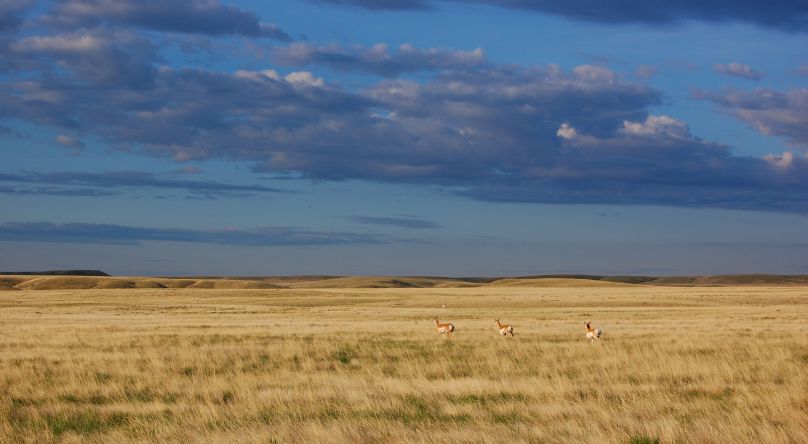
America is vast, particularly the West and the Great Plains, where much of Trump’s support is concentrated. (The rest is in the South, where the Civil War is still being contested in slow motion.)

In one of his essays, McMurtry writes:

In time I came to feel that there ought to be some congruity between prose and landscape. You wouldn’t adopt a Faulknerian baroque if your story was to be set on the flat unbaroque plains of west Texas.

I remember my visits to Patagonia where, in the rain shadow of the Andes, where there is almost always a howling wind, there is a similar history of crime and even anarchy.

We don’t much celebrate Columbus Day any more, because we are becoming more acutely conscious of the fact that we massacred millions of Indians for their land. In Patagonia, that was even more of a crime: There are relatively few aborigines in Argentina after the “Conquest of the Desert” of General Julio Argentino Roca in the 1870s.

I guess we have always tried to paper over our crimes with fine thoughts. We just have to recognize, in the words of Kyd’s The Spanish Tragedy, “Hieronymo is mad agayne!”

Prophet and Visionary

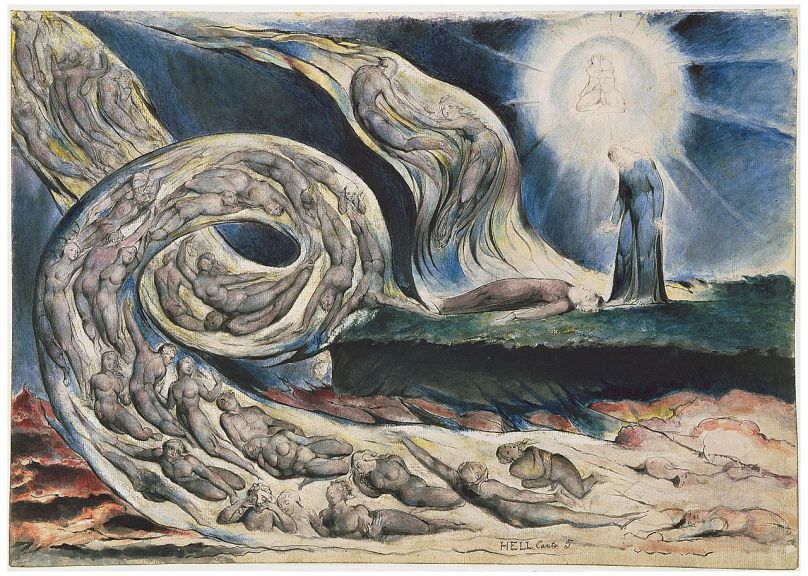
Blake’s Swirling Lovers from Dante’s Inferno

I have always loved the poetry of William Blake (1757-1827), particularly “The Marriage of Heaven and Hell.” But now I am increasingly becoming interested in his art, which exhibit the seemingly contradictory qualities of naiveté and authoritativeness. The scene above is from Canto V of the Inferno, in Robert Pinsky’s translation:

And cursing the power of Heaven. I learned
     They suffer here who sinned in carnal things—
     Their reason mastered by desire, suborned.
 As winter starlings riding on their wings
     Form crowded flocks, so spirits dip and veer
     Foundering in the wind’s rough buffetings

The Complaint of Job

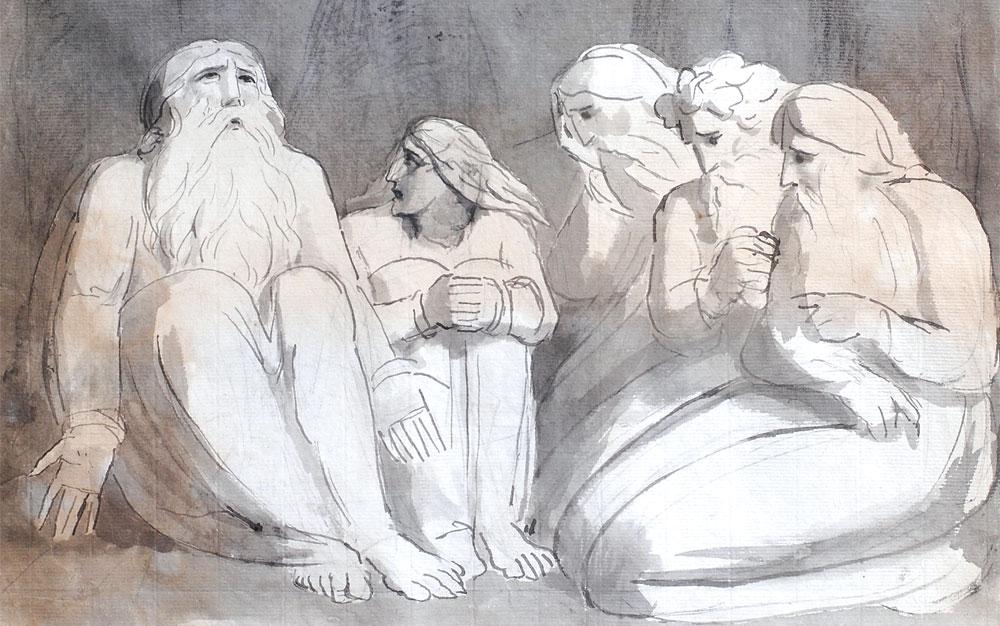
In the above drawing, we see Job at the left, with his taunting friends Eliphaz, Bildad, and Zophar on the right. Like much of Blake’s art, the image is almost deceptively simple. Note the positioning of the fingers on his right hand indicating Job’s increasing agitation. The “friends” appear smug and serious, assuming identical positions.

“The Ancient of Days”

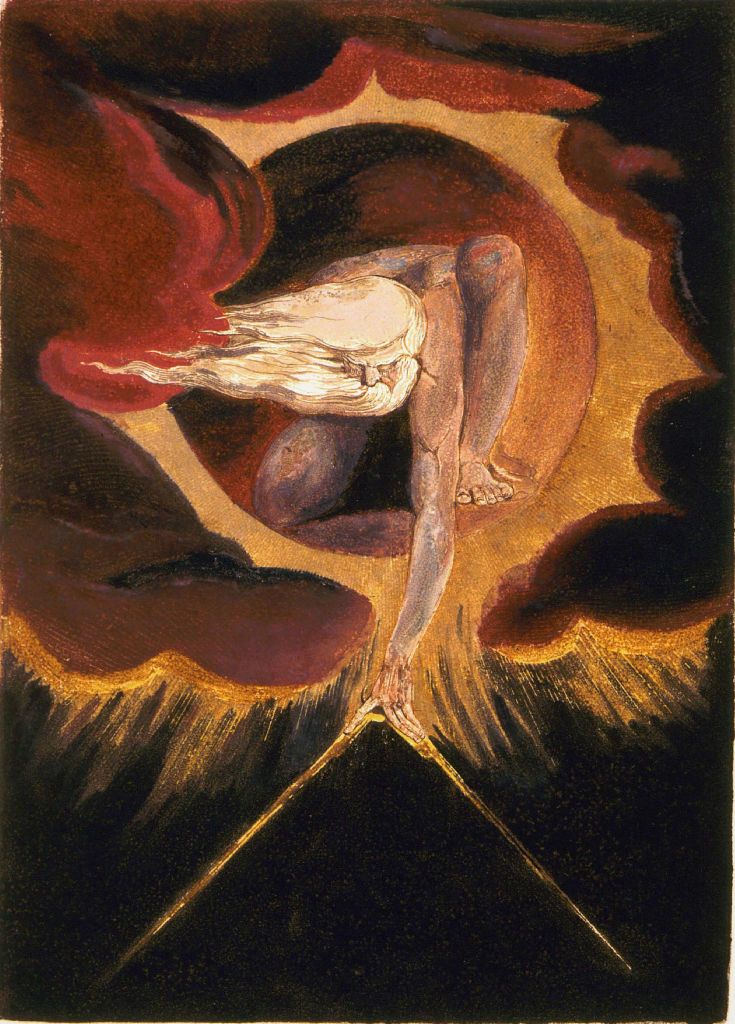
Only Blake had the chutzpah to show God the Father intent in the act of creation. This is my favorite of the images shown here. You can see the force emanating from the Deity’s fingertips as dark clouds encircle him.

According to London’s Tate Gallery:

A committed Christian who was hostile to the Church of England (indeed, to almost all forms of organised religion), Blake was influenced by the ideals and ambitions of the French and American revolutions. Though later he rejected many of these political beliefs, he maintained an amiable relationship with the political activist Thomas Paine; he was also influenced by thinkers such as Emanuel Swedenborg. Despite these known influences, the singularity of Blake’s work makes him difficult to classify. The 19th-century scholar William Michael Rossetti characterised him as a “glorious luminary”, and “a man not forestalled by predecessors, nor to be classed with contemporaries, nor to be replaced by known or readily surmisable successors”.

Posted in art