
So Long, White America

Is This What We’ve Come To?

In an essay on James Fenimore Cooper appearing in his 1923 Studies in Classical American Literature, British novelist D. H. Lawrence wrote:

But you have there the myth of the essential white American. All the other stuff, the love, the democracy, the floundering into lust, is a sort of by-play. The essential American soul is hard, isolate, stoic, and a killer. It has never yet melted.

I can’t believe that Lawrence got it so right on the money a hundred years ago.

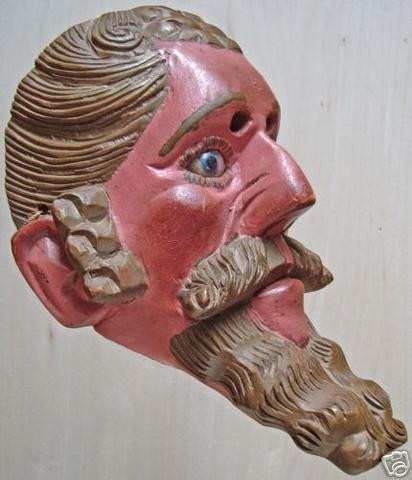
Last year, I gave up on the Democratic Party. This year, I’m giving up on the white race. When I get the 2020 Census form, I will identify myself as being of Other race. The peoples belonging the the Finno-Ugric Language Family—comprising Finns, Hungarians, Estonians, Karelians, Komi, Udmurts, Mari, Mordvins, Khanties, and Mansis—derive ultimately from the Ural Mountains, which straddle the border between Europe and Asia. Rather than count myself in the same race as the a**holes in the above photo, I am now of Finno-Ugric race. I can also called myself Asian. I’ll see how I feel about it later.

But white? Uh-uh!


Serendipity: African Laughter

A Laughing Epidemic Swept Tanzania in 1961

Between 1962 and 1964, there was a laughter epidemic in Tanzania that started in one girls’ school and spread like wildfire around the country. The following is from the How Stuff Works website.

At a small girls’ boarding school in Tanganyika (now Tanzania), three students started to giggle. Starting and stopping abruptly, their fits would last anywhere from a minute or two to several hours. This “laughter” proved contagious — soon other girls were doing the same thing. No one could concentrate on their schoolwork, and restraining the laughing students proved ineffective. Six weeks later, more than half of the school’s middle and high schoolers had caught the laughing bug.

School officials shut the place down. But when they reopened it two months later, the laughing plague immediately restarted and the school was once again shuttered. The laughing epidemic spread to other schools and lasted somewhere between six and 18 months.

So what caused this? “The bad news is, it had nothing to do with humor. There was no merriment. Laughter was one of many symptoms,” said linguist Christian F. Hempelmann, who researched the incident. He noted that the students also had fits of pain, fainting, crying and rashes.

He blamed excessive stress for the uncontrollable giggles. The boarding school where the laughter began was a very strict one. Plus the country had just gained its independence, and people were anxious about the future. With all of the terrorism in the world today, experts say another laughing epidemic wouldn’t be surprising.

Check out this video regarding the incident:


Fish in My Life

Icelandic Cod, One of My Favorites

Here I am, talking about food again. Today for lunch, Martine and I went to Captain Kidd’s Seafood Restaurant in Redondo Beach for a delicious fish feast. Martine had sautéed Alaskan cod while I had fish tacos.

When I was young, I wouldn’t eat any seafood. Don’t forget: I was raised near Lake Erie, the shallowest of the Great Lakes, which was badly polluted until recently. When I saw fish in their natural element, they were mostly floating in a state of advanced decay on the surface of the lake. The only other place I saw them was at church fish fries. I occasionally attended, under duress, but did not like the fish: I merely nibbled on the French Fries. (That was before I discovered what malt vinegar does to improve fried fish and potatoes.) We never had fish at home.

It was not until I came to California that I began to eat fish. I ascribe this to (1) being distantly removed from family pressures and (2) the influence of my co-workers when I began working in the computer software industry. And from eating cooked fish, it was only a small stutter-step to eating sushi. My sushi-eating reached its peak in the 1980s and 1990s, when it was most fashionable in Southern California. Now I find it too expensive, and I find that really good places with trained Japanese sushi chefs are now few and far between.

I even eat shellfish from time to time, but I find I have a curious allergy to shrimp and lobster caught in warm waters. The symptoms are like a sudden onset of strep throat pain lasting for up to two hours. When I go to cold-water places like Canada and Iceland, I have no trouble with either; and I positively love good lobster.

This past week, I’ve had fresh fish three times. Twice it was in the form of spicy fish fillet in black bean sauce at local Chinese restaurants. The Hong Kong Barbecue on Broadway in Chinatown makes a particularly tasty version.


Food Scraps

What Ever Happened to Good Plain Food?

I open this post by splitting a couple of hairs. First of all, this has nothing to do with Anthony Bourdain’s unfortunate demise. I am not familiar either with his work as chef or his book(s) or his television program. Secondly, I am writing this at Martine’s behest. Anyone who knows me well knows that I like ethnic food best. It is Martine whose digestive system shies away from any attempt at fanciness, which she associates with things like raw onions or strong spices. Going to an unfamiliar restaurant is something she associates with an assault on her Irritable Bowel Syndrome (IBS).

As the cook in our little household, I try my best to prepare simple dishes without too many exotic ingredients but with a good, clean taste. At times, I am tempted to add hot chilis, as I am a notorious chili-head. But I resist the temptation, or my little girl goes hungry. Restaurants are even more difficult: Martine aims for the tried and true places, like Sevan Chicken and Elena’s Greek and Armenian Restaurant in Glendale; All India Cafe, the Rosemary Grill,  and Darya Persian Restaurant in my neighborhood; Label’s Table and Canter’s Deli East of here; and The Main Course in Rancho Park. At each of those places, she will typically order the same dish every time, while I typically skip around the menu. If that one dish doesn’t satisfy, she writes the restaurant off her list as a lost cause.

Several years ago, I wrote a post entitled “Don’t Toque to Me About Chefs!” in which I lambasted the profession for trying too hard to be creative without necessarily serving good food. It almost seems as if many chefs were trying too hard to be original. There used to be a great Hungarian restaurant in the San Fernando Valley called the Hórtobágy owned by a chef called Lászlo. Apparently, the genius in the kitchen at his restaurant was an elderly lady who cooked delicious Hungarian meals that reminded me of my childhood. Then Lászlo opened another restaurant nearby called Maximilian’s at which he was the chef. Every dish was smothered with raw onions. Yeccch!


Two Worlds

Koi in Mulberry Pond, Descanso Gardens

This post originally appeared in November 2008 when I was posting—briefly—on Blog.Com.

I loved this picture I shot at Descanso Gardens a couple of weeks ago. On one hand, the camera is looking at a koi in a shallow pond swimming among the rocks. A scant inch or so above his fins is an entirely different world of air and trees and birds. In one world, you need gills; in the other, either a lung or photosynthesis. Standing by the side of the pond, we can look at the fish. But does the fish look at us? Or are we some distorted image that lies on an irrelevant plane above the surface of the water? Somewhere in that world I am standing with my Nikon Coolpix camera waiting for the right moment to bring both worlds together.

As I look at the koi swimming in Mulberry Pond, I cannot help but think that the patterns they form with respect to one another as they glide by is a form of handwriting employed by the Creator. To communicate with whom? I do not understand this script, though I think it is beautiful in a fluid way. If I could understand it, would I  reach enlightenment? The camera would go back into its case on my belt, and I would reel with a weightless feeling as I was one with everything I saw and felt.

I frequently think that everything around us is a form of writing which we, alas, are too dim to understand. Perhaps, in time….


A Day at Universal Studios

Mohan Gopalakrishnan and Son Aravind by the Hogwarts Express Locomotive

The last two days I have been busy with an old friend visiting Los Angeles from India. I used to work at Urban Decision Systems with Mohan Gopalakrishnan, a brilliant young programmer who went on to work for a number of computing companies in the United States and India. He was accompanied by his 14-year-old son Aravind.

Today, I drove them to Universal Studios in the San Fernando Valley. We did all the usual tourist things: In addition to the Studio Tour, we saw the Special Effects Show and took a wild Jurassic Park Boat Ride. I was surprised that, at this date in June, there were so many thousands of tourists in attendance. Still, it was worth it. We had a lot of fun and managed to catch up on old times.

Mohan repeated his invitation to visit him in Chennai, where he lives, but I have already written a post about my hesitation to visit India. Who knows? Perhaps I might might take him up on his invite at some point, but I would first have to overcome my fears.


LGBTQRSTUVWXYZ

We’ll Have To See About Adding More Colored Stripes

What do minority groups (of any stripe) do to get back at people who give them a hard time? Very simple. They keep changing the officially approved name by which they are to be referred. Needless to say, that doesn’t make for open communication—especially as one is always uncertain if one is using the right term of address. For instance: Negro, Black, African-American. Or: Indian, Amerind, Native American.

For sexual preference, there are any number of mostly pejorative terms. What is Fred Astaire’s The Gay Divorcee really about? Can an American teenager see that film without wincing at its title?

That wince is now a feature of American life. It even extends to Latin America. I once wrote a blog mentioning Peruvian Indians. The next morning, I noticed a comment that the moniker I used is now considered racist and I should call them campesinos. What? Does that mean that all Peruvian farmers are descended from native peoples? That can’t be true, as I know there are Peruvians of Japanese extraction, many of whom are profitably engaged in agriculture. And where do all the Chinese vegetables at Peruvian chifas (Chinese restaurants) come from if not from Chinese farmers living in Peru?

The most ridiculous politically correct minority name by far is LGBTQ. The Q (for Queer) was added later. Why? Who likes the idea of being referred to as a Queer? That’s a term from the bad old days, no?

I predict that sexual minorities will not be successfully integrated into our culture until all these politically correct terms are trashed. Whatever dignity is gained from the term is lost by the unwillingness of the majority culture to engage on that level. And what about that flag with all the colors? It’s like the American flag in the old days when they added not only a new star but a new stripe every time a state joined the union. And besides, how many other colors can we add?


The Centinela Adobe

One of Los Angeles’s Original 19th Century Adobes

Just north of the Los Angeles Airport, adjacent to the southbound lanes of the San Diego Freeway (the I-405), is one of the 43 surviving adobes around Los Angeles. Sitting somewhat incongruously on a suburban street full of ticky-tack postwar single-family homes, the adobe is run by the Historical Society of Centinela Valley. The Centinela Adobe is the original structure of a huge Mexican land grant comprising some 25,000 acres of the Rancho Aguaje de la Centinela, including parts of the communities of Inglewood and Westchester.

Built in 1834, the adobe is generally open only on Sunday afternoons. Martine and I were there at opening time and had a great tour of the premises by one of the volunteers who was both knowledgeable and forthcoming on the many historical exhibits.

Looking at the above photograph, it looks as if the structure is a wood frame house. A kitchen extension built later is indeed built with wood, but the main part of the structure is built with mud bricks (such as the ones shown in the picture below), covered with stucco, and painted over with white paint. Originally, the roof consisted of tar taken from the La Brea Tar Pits. It lasted about a hundred years, until the 1930 Long Beach earthquake forced the Historical Society to install a modern roof.

Adobe Mud Bricks of Which the Main Building Is Constructed

In September, there will be a big Mexican-style fiesta at the adobe which I plan to attend. Next weekend, there will be a barbecue, but as a diabetic, I tend to eschew the usually heavily sugared barbecue sauces.

People tend to think that California is a state without a history. In fact, Los Angeles goes back to the year 1781 and has flown the flags of Spain, Mexico, and the United States. Parts of the state were also under Russian control in the 1850s—but very briefly. I plan on visiting more of the adobes and ranchos that were the base that the second largest city in the United States was built.

Føroyar

Waterfalls, Cliffs, Raging Seas, Desolation … Looks Perfect!

My brother makes fun of my choice of travel destinations. “You always pick these desolate places,” he says, “like Iceland or Patagonia or the dark side of the Moon.” He, on the other hand, vacations in Fiji or Tahiti or Kauai. I’d like to think it’s because he’s lived inland for most of his life; and—because he works so hard constructing beautiful homes—that beaches have a certain appeal for him.

In the meantime, I have discovered a new European destination that looks incredibly desolate: The Faroe Islands (Føroyar in Faroese), located midway between Norway and Iceland. A semi-independent archipelago, the Faroes is partly controlled by Denmark, especially as regards its economy and security. Some 50,000 people.

The Village of Gjógv (Try Repeating That 10 Times Quickly)

Like Iceland, the Faroes were originally inhabited by Irish monks, but then their rent was raised by Viking invaders. Right offhand, I would say that this archipelago is the most isolated part of the European continent. My interest was piqued by a BBC photo essay featuring postmasters of some particularly remote locales. I took one look and said to myself: I think that’ll be next—after my upcoming Guatemalan adventure.

Torshavn, Capital of the Faroes

The only thing I might not like about the Faroes is the diet of their inhabitants: pilot whales, puffins, and various odd bits from the sea. Oh, hell, who am I kidding? I’d probably love the stuff.


Pre-Columbian Writing

Detail from the Dresden Codex

At the time the Spanish landed in he New World, there was only one Pre-Columbian culture that had a written alphabet, and that was the Maya. Now I have heard that in earlier centuries, the Zapotecs and Mixtecs of Northern Mexico had a written alphabet, but stopped using it after a certain point. Curiously, the Aztecs and Inca did not have their own alphabet, however advanced they may have been in other respects.

Right now, the only instances we have of writing in Mayan are glyphs at various Maya ruins and four surviving codices that escaped the religious zeal of the Spanish missionaries in destroying what they perceived to be heretical. And since the subject matter related to Maya religion, it was heretical insofar as Christianity was concerned.

The most famous destroyer of Mayan codices was Diego de Landa, the Franciscan Bishop of Yucatán in the 16th century. In a famed book burning conducted in 1562, de Landa had 27 codices burned at Mani. He described the Maya as being disconsolate at the destruction of so much of their culture at one time. Curiously, it was the same de Landa who wrote the Relación de Las Cosas de Yucatán, which preserved an astonishing amount of the culture and language, such that it is still studied by Maya scholars. It is still available in a Dover Publications paperback.

Do you see the dots and dashes in the above detail from the Dresden Codex just above the four seated figures? They are, in order, the numbers 16, 4, 9, 13, zero (yes, the Maya had discovered zero), 5, 12, 2, and 1. As you can probably surmise from this, the dashes represented the number five or a multiple of fives; and a dot, a one or multiple of ones up to four. It was a vigesimal system, meaning to the base 20 rather than base 10 like ours. Very likely, the numbers in the illustration represent a “long count” calendar date fixing a particular event in time. You can read more about Maya mathematics here.

The other interesting thing about the Mayan alphabet is that some symbols were hieroglyphic and stood for an entire word and others phonetic, standing for syllables. This confused scholars for years.

At the time I started visiting the Maya world, only the calendrical symbols had been decoded (mostly thanks to the selfsame good/bad Diego de Landa). In the last forty years, we have discovered that the Maya have a history. We have learned names of rulers and translated descriptions of events commemorated by Maya rulers.