Assemblée dans un parc

Watteau de Lille (Louis-Joseph Watteau, dit). “Assemblée dans un parc”. Huile sur toile, vers 1785. Paris, musée Cognacq-Jay.

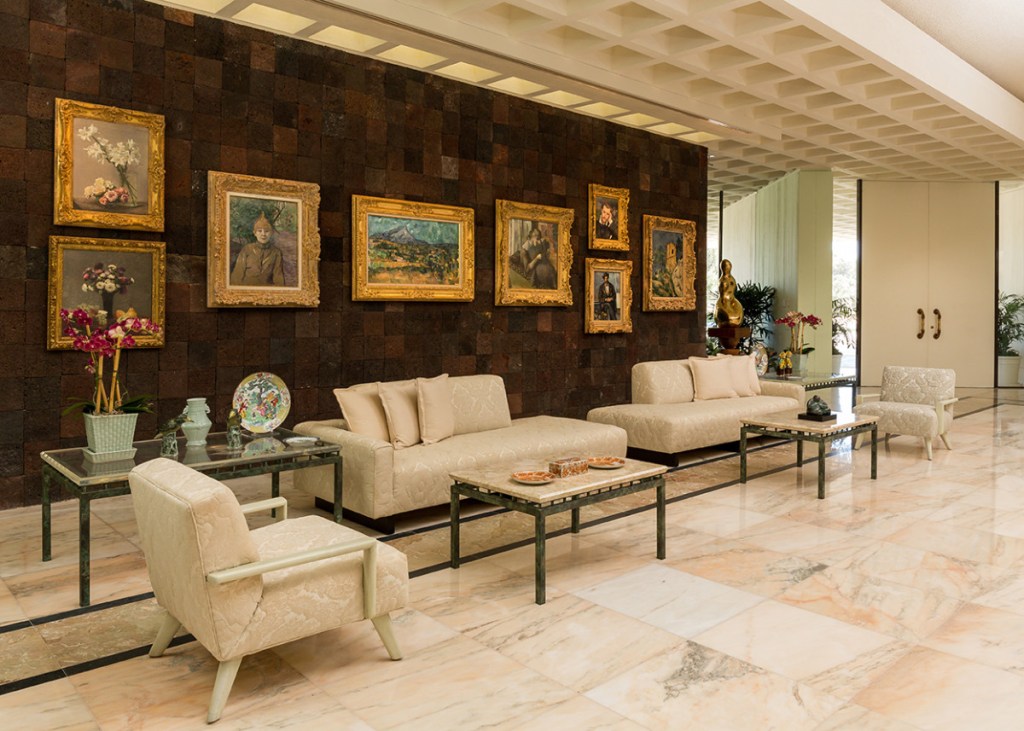
I have always loved the paintings of Jean-Antoine Watteau (aka Watteau de Lille and Louis-Joseph Watteau). There is a kind of sad elegance in them, frequently in a beautiful natural setting. I saw the above painting at a small art museum in Paris that is little visited. The Musée Cognacq-Jay is dedicated to the art of the 18th Century and features, besides Watteau, such painters as Boucher, Fragonard, Greuze, Chardin, Tiepolo, and Robert.

Most of the works therein were acquired between 1900 and 1927 by Ernest Cognacq, founder of the Samaritaine department store, and his wife Marie-Louise Jay. The building the collection sits in is an elegant structure redolent of the 18th century. Situated at 8 rue Elzévir, it is close to the Marais District of Paris.

Musée Cognacq-Jay

If you love art, I have no doubt you would find the Cognacq-Jay more interesting than the nearby Picasso Museum or the Pompidou Center. Unless, of course, you are a big fan of modern art, which I am not.

“I Write Your Name”

French Poet Paul Éluard (1895-1952)

When I was studying French literature at Dartmouth College, I fell in love with the poems of Paul Éluard. I could not find a good translation of my favorite poem, “Pour vivre ici,” and I was too lazy to translate it myself without doing an injustice to the poem. (Perhaps, some other time.) Here, however, is another of his poems that I loved:

Liberté

On my school notebooks
On my desk and on the trees
On the sands of snow
I write your name

On the pages I have read
On all the white pages
Stone, blood, paper or ash
I write your name

On the images of gold
On the weapons of the warriors
On the crown of the king
I write your name

On the jungle and the desert
On the nest and on the brier
On the echo of my childhood
I write your name

On all my scarves of blue
On the moist sunlit swamps
On the living lake of moonlight
I write your name

On the fields, on the horizon
On the birds’ wings
And on the mill of shadows
I write your name

On each whiff of daybreak
On the sea, on the boats
On the demented mountaintop
I write your name

On the froth of the cloud
On the sweat of the storm
On the dense rain and the flat
I write your name

On the flickering figures
On the bells of colors
On the natural truth
I write your name

On the high paths
On the deployed routes
On the crowd-thronged square
I write your name

On the lamp which is lit
On the lamp which isn’t
On my reunited thoughts
I write your name

On a fruit cut in two
Of my mirror and my chamber
On my bed, an empty shell
I write your name

On my dog, greathearted and greedy
On his pricked-up ears
On his blundering paws
I write your name

On the latch of my door
On those familiar objects
On the torrents of a good fire
I write your name

On the harmony of the flesh
On the faces of my friends
On each outstretched hand
I write your name

On the window of surprises
On a pair of expectant lips
In a state far deeper than silence
I write your name

On my crumbled hiding-places
On my sunken lighthouses
On my walls and my ennui
I write your name

On abstraction without desire
On naked solitude
On the marches of death
I write your name

And for the want of a word
I renew my life
For I was born to know you
To name you

Liberty.

Favorite Films: The Black Cat (1934)

The Best Film Co-Starring Karloff and Lugosi

Everyone thinks they know the classical Universal horror titles of the 1930s, but for some reason they don’t usually include The Black Cat (1934), directed by Edgar G. Ulmer. I think it is not only the best of the Universal horror genre, but one of the greatest American films of the 1930s.

Although Edgar Allan Poe is credited with the story, the only thing of Poe’s that carries into the Ulmer film is Bela Lugosi’s fear of black cats. It’s a 99.9% original story about a young American couple who accidentally horn in on Witus Werdegast’s (Bela Lugosi’s) revenge on Hjalmar Poelzig (Boris Karloff) for:

  • Betraying the fortress of Marmorus to the Russians in World War One
  • Getting Werdegast to a Russian prison camp in Siberia for fifteen years
  • Making off with Werdegast’s wife Karen and daughter, also called Karen
  • Being a devil-worshiping SOB who is the quintessence of evil

The Revenge: Werdegast Proposes to Skin Pjoelzig

The film is set in Pjoelzig’s art deco mansion built on top of the ruins and cemetery of Marmorus, where the evil architect holds black mass soirées for devil worshipers, and where he plans to initiate the young American woman into his strange display of zombies in glass cases.

Check out this film clip from YouTube. Be sure to turn off the subtitles, as they are laughably wrong. The film is in English, anyway:

Edgar G. Ulmer was responsible for two great films. One was The Black Cat. The other was the film noir classic Detour, made in 1945 for the poverty row Producers Releasing Corporation. There are usually some interesting scenes in even his worst films, such as Club Havana, Babes in Bagdad, and Strange Illusion.

Serendipity: A Dog, a Cat, and a Mouse

St. Martin de Porres

This is a re-post of a blog I wrote ten years ago this month about my visit to the Chapel of St Martin de Porres in Lima, Peru.

He is usually depicted in the garb of a Dominican lay brother, holding a broom, and with a dog, a cat, and a mouse at his feet. St. Martin de Porres is one of my favorite saints. My memories of him go back to grade school, years before Pope John XXIII canonized him in 1962.

The following is taken from Ricardo Palma’s Peruvian Traditions and tells the story of his three pets:

And from the same dish
ate a dog, a cat and a mouse.

With this couplet we come to the end of an account of the virtues and miracles attributed to Friar Martín de Porres. It was actually a broadside that was circulated in Lima about the year 1840 for the purpose of celebrating in our cultured and very religious capital city the solemn activities related to the beatification of this miracle worker.

This holy man, Friar Martín, was born on December 9, 1579, the natural son of the Spaniard Don Juan de Porres, Knight of Alcántara, and of a Panamanian slave. When he was still very young little Martín was taken to Guayaquil, where in a school in which the teacher made good use of the whip, he learned to read and write. Two or three years later his father and Martín returned to Lima and the boy was placed as an apprentice, learning the trade of barber and bloodletter in a barbershop on Malambo Street.

Martín wasn’t very adept with the razor and the lancet and this kind of work didn’t appeal to him so he opted for another career—that of sainthood, for in those days the career of a saint was just as legitimate a profession as any other. He took the habit of a lay brother at the age of twenty-one in the Monastery of San Domingo and remained there until he died in the odor of sanctity on November 3, 1639.

While he lived, and even after death, our countryman Martín de Porres performed miracles on a wholesale scale. He performed miracles as easily as others compose verses. One of his biographers (I don’t remember if it is Father Manrique or Doctor Valdés) says that the Prior of the Dominicans had to prohibit his continuing to perform miracles or milagrear (forgive me the use of the word). And to prove how deeply rooted in Martín the spirit of obedience was, on one occasion while he was passing a mason working on some scaffolding the worker fell a distance of some twenty-five to thirty feet. But while he was still in mid-air Martín stopped his fall—and there was the man suspended above the ground. The good Friar shouted, “Wait a moment, brother,” and the mason remained in the air until Martín returned with permission from his superior to complete the miracle.

That’s a doozy of a little miracle, don’t you agree? Well, if you think that one is great, wait until you read the next one.

The Prior sent the extraordinary lay brother on an errand to purchase a loaf of sugar for the infirmary. Perhaps he didn’t give Martín sufficient money to buy the white refined type so he returned with a loaf of brown sugar.

“Where are your eyes, Brother Martín,” said the Father Superior. “Can’t you see that it is so dark that it’s more like unrefined sugar?”

“Don’t get upset, Reverend Father,” answered Martín slowly. “All we have to do is wash this loaf of sugar right away and everything will be fine.”

Without allowing the Prior to argue the point the Friar submerged the loaf of sugar in the water in the baptismal font, and when he pulled it out it was white and dry.

Hey! Don’t make me laugh! I have a split lip!

Believe it or make fun of it. But let it be known that I don’t put a dagger at anyone’s breast forcing him to believe. Freedom must be free, as a newspaperman of my country once said. And here I note that because I had intended to speak of mice under Martín’s jurisdiction, I went off on a tangent and forgot what I was doing. That’s enough for the prologue; let’s get right down to business and see what happened to the mice.

* * *

Friar Martín de Porres had a special predilection for mice, unwelcome guests who came for the first time, it appears, with the Conquest, because until the year 1552 no mention of them was made. They arrived from Spain in a boat carrying codfish that had been sent to Peru by a certain Don Gutierre, Bishop of Palencia. Our Indians gave them the name hucuchas, which means creatures that came from the sea.

During the time that Martín was serving as a barber a mouse was still considered a curiosity, for the mouse population had just begun to multiply. Perhaps it was during that period that he began to concern himself with the welfare of the little animals, seeing in them the handiwork of God; that is to say he could see a relationship between himself and these small beings. As a poet put it:

The same time that God took to create me
He also took to create a mouse,
or perhaps two, at the most.

When our lay brother served as a male nurse in the Monastery the mice overran everything and made a nuisance of themselves in the cells, the kitchen and the refectory. Cats, which made their presence known in 1537, were scarce in the city. It is a documented fact that the first cats were brought by Montenegro, a Spanish soldier who sold one in Cuzco for 600 pesos to Don Diego de Almagro, the Elder.

The friars were at their wits’ end with the invasion of the little rodents and invented various kinds of traps to catch them, but with little success. Martín put a mouse trap in the infirmary and one rascal of a mouse who was inexperienced, attracted by the odor of some cheese, found himself trapped. The lay brother freed him from the trap, and then placing him in the palm of his hand said to him, “On your way, little brother, and tell your companions not to bother the friars in their cells. From now on all of you stay in the garden and I promise to take food to you every day.”

The ambassador complied with his mission and from that moment the mob of mice abandoned the cloister and took up residence in the garden. Of course Martín visited them every morning carrying them a basket of leftovers and other food and they would come to meet him as if they had been summoned by a bell.

In the cell Martín kept a cat and a dog. Through his efforts he had succeeded in having them live together in fraternal harmony, to such an extent that they both ate from the same dish.

One afternoon he was watching them eat in holy peace when suddenly the dog growled and the cat arched its back. What had happened was that a mouse had dared to stick its nose outside of its hole, attracted by the smell of the food in the dish. When Martín saw the mouse he said to the dog and cat, “Be calm, creatures of God. Be calm.” He then went over to the hole in the wall and said, “Come on out, brother mouse, have no fear. It appears that you are hungry; join in with the others. They won’t hurt you.” And speaking to the dog and cat he added, “Come on, children, always make room for a guest; God provides enough for the three of you.”

And the mouse, without being invited, accepted the invitation, and from that day on it ate in love in the company of the cat and dog.

And…, and…, and… A little bird without a tail? What nonsense!

The Cleveland Indians

Cleveland Municipal Stadium in 1993

They’re no longer called the Cleveland Indians. Now they’re called the Guardians, Guardians of what, I don’t know. I guess because you’re not supposed to call your team the Indians because of cultural appropriation, whatever that is.. But they’ll always be the Indians to me. My fraught relationship with them continued from the late 1950s to the early 1960s, when I left Cleveland to go to college.

The Cleveland Press, the cities Hearst-owned afternoon newspaper, got the bright idea of giving all straight-A students in the city seven pairs of baseball tickets, mostly to ill-attended afternoon games. As I could reliably get top grades every year after fourth grade, I got a lot of chances to see the Indians lose to a lot of teams. Except for 1959, when they almost won the American League pennant, but lost out to the Al Lopez’s Chicago White Sox,

On the team were such players as Rocky Colavito, Jim Piersall, Minnie Minoso, George Strickland, and Woody Held. Pitchers included Herb Score (before his career stumbled after he got hit in the face with a baseball), Jim “Mudcat” Grant, and Cal McLish.

Usually I went to the games alone or with a school friend, because my father was working as a machine tool builder at Lees-Bradner and Company. I would hop on the 56A bus at East 177th and Harvard and get off at Proispect and Ontario downtown. From there, it was a five or six block walk to Cleveland Municipal Stadium, which, as I understand it, is no more.

Just like my grade school (Saint Henry) and high school (Chanel High), which also are no more. Much of my history has been effectively wiped clean in the evil days that befell Cleveland around that time.

It was difficult as a child to follow a baseball team that usually lagged in the standings. But then, who has a 100% winning record? No one.

Three Journeys West, 1859

It was ten years before the completion of the transcontinental railroad in 1869. Just by chance, there were three notable journeys across the Plains to the West that year which were described in books that are still worth reading and readily available:

  • Mark Twain’s Roughing It is partly fictionalized but largely true, and it is still one of the funniest books ever written
  • Sir Richard Francis Burton’s The City of the Saints: Among the Mormons and Across the Rocky Mountains to California is mostly about a trip to visit Salt Lake City and Brigham Young, but includes the whole journey from East to West
  • Newspaper Editor Horace Greeley’s An Overland Journey from New York to San Francisco in the Summer of 1859 is not as well known but equally valuable

If you are interested in the history of the Western United States, these three books together constitute a priceless snapshot of what it was like in one particular year.

The Maldive Shark

Shark with Pilot Fish

Herman Melville is not known for his poetry, probably because he wrote it during an optimistic time in American history (i.e., after the Civil War) when his natural pessimism ran against the grain. Below is a poem that harks back to his years at sea aboard a whaler:

The Maldive Shark

About the Shark, phlegmatical one,
Pale sot of the Maldive sea,
The sleek little pilot-fish, azure and slim,
How alert in attendance be.
From his saw-pit of mouth, from his charnel of maw,
They have nothing of harm to dread,
But liquidly glide on his ghastly flank
Or before his Gorgonian head;
Or lurk in the port of serrated teeth
In white triple tiers of glittering gates,
And there find a haven when peril’s abroad,
An asylum in jaws of the Fates!
They are friends; and friendly they guide him to prey,
Yet never partake of the treat —
Eyes and brains to the dotard lethargic and dull,
Pale ravener of horrible meat.

El Dorado

Edgar Allan Poe (1809-1849)

I am currently in the middle of the riches of Van Wyck Brooks’s The Times of Melville and Whitman (published 1947), devouring each chapter slowly, mining it for information on obscure 19th century American authors. I am even paying close attention to all the footnotes, in which I found this excerpt of a letter from Edgar Allan Poe to F. W. Thomas written on February 14, 1849. The subject was why Poe wasn’t interested in joining the Gold Rush:

Talking of gold and temptations at present held out to ‘poor-devil authors,’ did it ever strike you that all that is really valuable to a man of letters—to a poet in especial—is absolutely unpurchasable? Love, fame, the dominion of intellect, the consciousness of power, the thrilling sense of beauty, the free air of heaven, exercise of body and mind, with the physical and moral health which result—these and such as these are really all that a poet cares for—then answer me this—why should he go to California?

In fact, Poe wrote a poem on the subject:

Eldorado

Gaily bedight,
A gallant knight,
In sunshine and in shadow,
Had journeyed long,
Singing a song,
In search of Eldorado.

But he grew old—
This knight so bold—
And o’er his heart a shadow
Fell as he found
No spot of ground
That looked like Eldorado.

And, as his strength
Failed him at length,
He met a pilgrim shadow—
“Shadow,” said he,
“Where can it be—
This land of Eldorado?”

“Over the Mountains
Of the Moon,
Down the Valley of the Shadow,
Ride, boldly ride,”
The shade replied—
“If you seek for Eldorado!”

If the poem sounds vaguely familiar, it was quoted in its entirety in a Howard Hawks Western made in 1967 called, suitably enough, El Dorado. The film starred John Wayne, James Caan, and Robert Mitchum.

The Sun King

Jean-Loup Bitterlin of El Rey Sol with My Brother Dan

One final word about our trip to Ensenada, by way of a coda. We were amazed to find on Lopez Mateos a high quality French restaurant, that despite the fact that Ensenada has no shortage of good food. We were staying around the corner at the hotel affiliated with the Restaurant El Rey Sol, namely the Posada el Rey Sol. (The name refers to Louis XIV, France’s Le Roi Soleil, or Sun King.)

Dan and I were spending our last night in Baja, and we were all glorious tacoed out; so we decided to try for a nice French meal. It was a whole lot better than nice; in fact, it was outstanding. We started out with an appetizer of beef carpaccio, which was accompanied by an amuse-bouche that resembled a French bruschetta with cheese and a delightfully creamy sopa de verduras (vegetable soup).

As his main course, Dan ordered the Chicken Cordon Bleu, and I had the Linguine Neptuno (with assorted super-fresh mariscos). With it, Dan tried a glass of Guadalupe Valley Nebbiolo red wine, while, ever the proletarian, I had a Dos Equis (XX) beer.

A Plaque Outside the Restaurant Honoring Its 50th Anniversary

A meal like this in the United States would run at least a couple hundred dollars. We wound up paying around $70.00 in pesos. The sad thing is that the equivalent meal in the States would not necessarily be as tasty or fresh as what we had.

All I can say after the best meal I’ve had in several years, Vive la France—en Mexique!

Stateside

The Long Wait at El Border

Last Thursday, Dan and I left Ensenada just as the cruise ship Navigator of the Seas was just disgorging the thousands of bandy-legged passengers who shortly would be wandering the streets in search of one of them there cervezis. It was as if we had Ensenada to ourselves, and just when it would become crowded with noisome boat people, we were out of there.

The drive back to Tijuana was uneventful. The wait at the San Ysidro Port of Entry to the United States took about ninety minutes, which was nowhere as long as the three- and four-hour waits of which I had heard—but those were probably on weekends. Still, it was no fun waiting with multiple lines of cars idling in line while kamikaze vendors tried desperately to make a sale. The only sale they made from us was one sawbuck to use a tiny bathroom that had no lighting. I didn’t know whether I was urinating in a toilet, a bucket, or my shoes.

One of the items for sale at the border were plaster statues of Donald Trump and outgoing Mexican President Andrés Manuel López Obrador. I guess there hadn’t been sufficient time for plaster statues of Kamala Harris or Claudia Sheinbaum, the new Mexican President, to be cast.

I dropped my brother off at the lot where his truck was parked for his drive back to the Coachella Valley and hopped onto I-805 for the four-hour ride back to my apartment in West Los Angeles.