Surrounded by Volcanoes

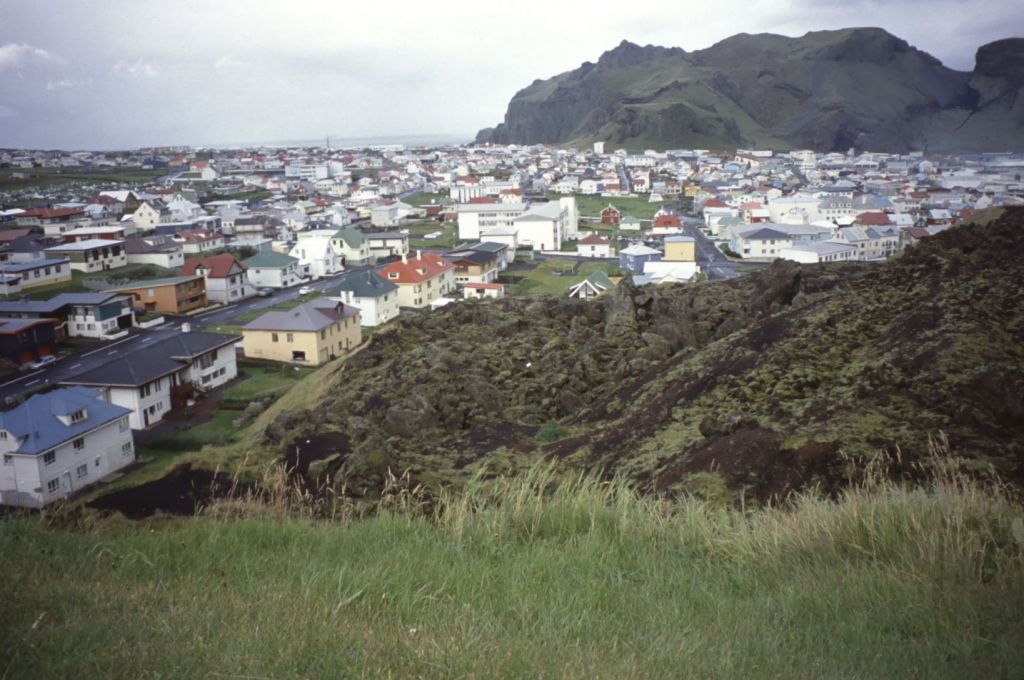
View of Volcan El Misti from Arequipa, Peru

Going back over my old Lonely Planet guidebooks, I am more and more impressed by my visit to Peru ten years ago. One of the places I loved most was the city of Arequipa, which I visited just to accustom my body to the altitudes I was to encounter at Colca Canyon, Puno, and Cuzco. Arequipa’s altitude was 7,660 feet (2,335 meters). Probably the highest altitude I reached was at Patopampas on the road to Chivay at Colca Canyon, which stood at 16,007 feet (4,879 meters).

It turns out that what was to have been primarily an exercise to avoid getting acute mountain sickness turned out to be a great destination.

Arequipa is surrounded by three volcanoes: El Misti, Chachani, and Pichu Pichu. Not surprisingly, the city has suffered major earthquakes that seem to go hand in hand with active volcanoes. Fortunately, the gods were not agitated when I was there late in 2014.

Of the city’s sights, I most enjoyed the monastery of Santa Catalina de Siena, which was itself city-sized. I spent a whole day from morning to late afternoon wandering through the monastery’s many streets, such as the one illustrated below:

Monastery of Santa Catalina in Arequipa

Running a close second and third are the Museo Sanctuarios Andinos, featuring the mummy of a 12-year-old girl sacrificed on Nevado Ampato around 1450 to stop the Volcan Sabancaya from erupting (it’s still erupting today) and the picturesque suburb of Yanahuara.

I would give my eye teeth to return. Maybe even more.

Joubert’s Notebooks

French Thinker Joseph Joubert (1754-1824)

To understand where we are today, I believe it is important to go back in time and read works written in the more distant past. In the middle of reading The Notebooks of Joseph Joubert: A Selection (New York Review Books, 2005), I am confronted by the philosophical fragments of a man who never published during his lifetime. He kept copious notes, however, which were published after his death. During his lifetime, he was best known as Napoleon’s inspector general of French universities.

Following are a number of his maxims which struck my eyes as I was reading his book.

It is not facts but rumors that cause emotions among the people. What is believed creates everything.

All truths are double or doubled, or they all have a front and a back.

What comes through war is given back through war. All spoils will be retaken, all plunder will be dispersed, All victors will be defeated and every city filled with prey will be sacked in its turn.

Clarity of mind is not given in all centuries.

When men are imbeciles, the one who is mad dominates the others.

The only good in man is his young feelings and his old thoughts.

Everything is double and is made up of a soul and a body.

You have searched in vain, you have found nothing but envelopes. Open a hundred, open a thousand, you will always be stopped before opening the last. You think you have touched the essence when you take off the outer skins. You take the homunculus for the animal. But it is much deeper…. In each drop is a drop, in each point another point.

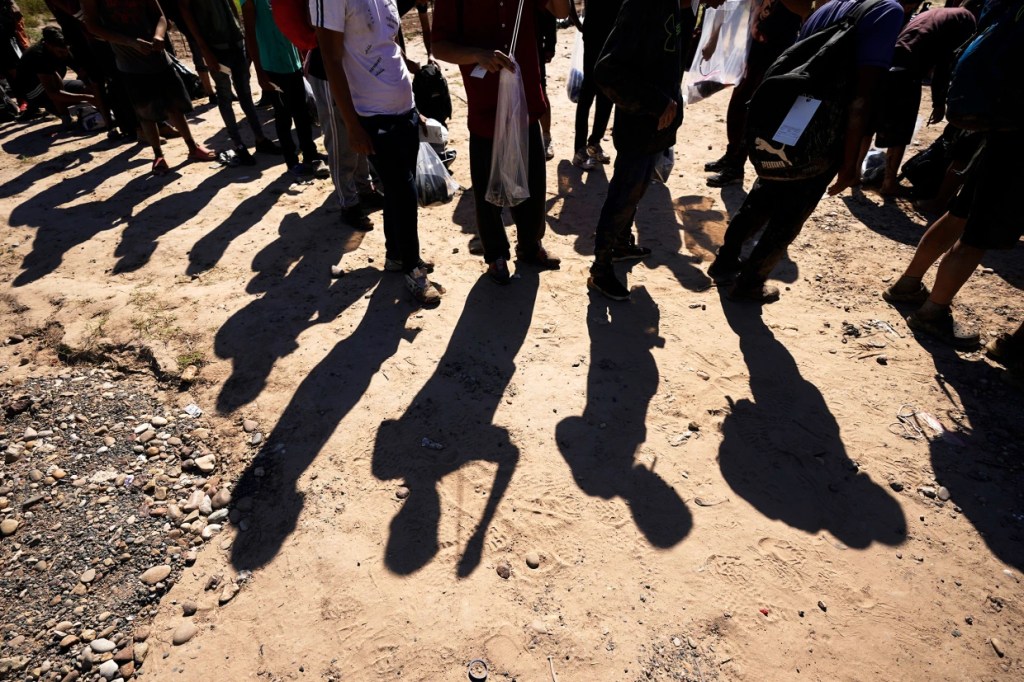
The Barbarians Are Coming! The Barbarians Are Coming!

There are two ways of looking at the Barbarian Invasions of the Roman Empire. For the first, we have Orientius, said to be a cleric from Gascony, in his Commonitorium:

Look at how death has swept through the entire world,
at how many peoples have been affected by the madness of war.
What use are thick forests or high and inaccessible mountains,
what use the raging torrents with violent whirlpools,
carefully located fortresses, cities protected by their walls,
positions defended by the sea, the squalor of hiding places,
the darkness of caves and the hovels among the rocks;
nothing has been of use in avoiding the barbarians hunting in a pack….
In the villages and the villas, in the fields and at the crossroads,
in all the hamlets, on the roads and in every other place,
death, suffering, massacres, fire-raising, and mourning:
the whole of Gaul was burning in a single blaze.

Then there is the view of Greek poet Constantine Cavafy in his wonderful poem:

Waiting for the Barbarians

What are we waiting for, assembled in the forum?

The barbarians are due here today.

Why isn’t anything going on in the senate?
Why are the senators sitting there without legislating?

Because the barbarians are coming today.
What’s the point of senators making laws now?
Once the barbarians are here, they’ll do the legislating.

Why did our emperor get up so early,
and why is he sitting enthroned at the city’s main gate,
in state, wearing the crown?

Because the barbarians are coming today
and the emperor’s waiting to receive their leader.
He’s even got a scroll to give him,
loaded with titles, with imposing names.

Why have our two consuls and praetors come out today
wearing their embroidered, their scarlet togas?
Why have they put on bracelets with so many amethysts,
rings sparkling with magnificent emeralds?
Why are they carrying elegant canes
beautifully worked in silver and gold?

Because the barbarians are coming today
and things like that dazzle the barbarians.

Why don’t our distinguished orators turn up as usual
to make their speeches, say what they have to say?

Because the barbarians are coming today
and they’re bored by rhetoric and public speaking.

Why this sudden bewilderment, this confusion?
(How serious people’s faces have become.)
Why are the streets and squares emptying so rapidly,
everyone going home lost in thought?

Because night has fallen and the barbarians haven’t come.
And some of our men just in from the border say
there are no barbarians any longer.

Now what’s going to happen to us without barbarians?
Those people were a kind of solution.

Now which attitude do we take if Donald Trump and his incel hoards should regain the Presidency of the United States?


With the Cutlers

They suddenly appear on Page 207 of Olga Tokarczuk’s House of Day, House of Night (1988), a strange sect known for sharp knives:

They spent their days singing psalms and making knives. They made blades better than anyone in the whole of Silesia and fitted them with carefully polished handles made of ash wood, which every human hand fell in love with instantly. They sold them once a year in early autumn when the apples were ripening on the trees. They held a sort of fair, which attracted people from all over the district; they each bought several knives, sometimes as many as a dozen, in order to sell them on at a profit. During these fairs people forgot that the Cutlers were of a different faith and believed in a different God, and that it would have been easy to produce evidence and drive them away. For who would make such good knives then?

Whenever they bore a child they mourned instead of rejoicing. Whenever someone died, they undressed him, laid his naked corpse in a hole in the ground and danced around the open grave.

About forty pages later appears this poem, called “The Cutlers’ Psalm”:

Futility on all the earth
blessed be barren wombs
holy be all sterility
sacred is decay, desirous is decline
wondrous the fruitlessness of winter
the empty shells of nuts
logs burnt to ashes that still keep the shape of the tree
seeds that fall on to stony ground
knives gone blunt
streams run dry
the beat that devours another’s offspring
the bird that feeds on another’s eggs
war that is always the start of peace
hunger that is the beginning of repletion
Sacred old age, daybreak of death,
time trapped in the body,
death sudden, unexpected.
death downtrodden like a path in the grass
To do, but have no results
to act, but stir nothing
to age, but change nothing
to set off, but never arrive
to speak, but not give voice

Whew!

Currer, Ellis, and Acton

The Brontë Sisters as Painted by Their Brother Patrick

When the Brontë sisters began publishing their novels in the early 19th century, they did not use their original names. They figured they would find greater acceptance if they used men’s names. Consequently, Charlotte published under the name Currer Bell; Emily, under the name Ellis Bell; and Anne, under the name Acton Bell.

For most of history, there have been precious few women writers whom we know by name. Among the ancient Greeks of the 6th Century BCE, there was Sappho of Lesbos. Then we have to skip forward to the Middle Ages to find Christine de Pizan. In the 17th and 18th centuries, there were a handful of names, including Aphra Behn, Mary Shelley, Jane Austen, Anne Radcliffe, Charlotte Lennox, and Charlotte Smith in England as well as Mme. de Lafayette and Mme. de Staël in France.

In the first thirty years of the Nobel Prize in Literature, there were only three women: Selma Lagerlöf, Grazia Deledda, and Sigrid Undset. More recently, the distribution of Nobels is more equitable. Partly, that is because good literature is becoming increasingly female. I am currently reading Polish author Olga Tokarczuk’s House of Day, House of Night. In the recent past, I have enjoyed the work of Wisława Szymborska (Poland), Svetlana Alexievich (Belarus), Annie Ernaux (France), and Toni Morrison (U.S.A.)—all winners of the Nobel Prize.

No doubt about it, the future of literature is looking ever more female.

Rambles, Dreams, and Shadows

Two Men Cruising Central Park

In last Thursday’s visit to the Getty Center, I concentrated on the prints of William Blake, but I also checked the photography exhibits, which are always changing and always interesting. I particularly enjoyed the “Rambles, Dreams, and Shadows” exhibit consisting mostly of cityscapes by Arthur Tress (born 1940).

Tress had a particular vision of a New York City shrouded in mystery. In the photo above, only one human figure is readily visible, until you notice the shadow of another in the upper right of the image.

Boy on Bike Crossing Williamsburg Bridge

I love this image of the cyclist on the long straight bridge with no other human beings in sight. There is a sort of last man on earth feeling about this image that appealed to me.

Boy in Tin Cone, Bronx

What the … ? Another mysterious image, this time of a boy wearing a metallic cone that gives him an otherworldly aspect, especially as the feet do not quite seem to match with the boy’s head.

Glimmers

The Archangel Raphael in the Style of the Cuzco School of Painting

Currently, I am reading Olga Tokarczuk’s House of Day, House of Night, an early (1988) novel by the 2018 winner of the Nobel Prize in Literature. I came across the following passage and thought I would like to share it with you:

Quite out of the blue a bizarre and compelling idea came into my head today: that we have ended up as human beings through forgetfulness, through lack of attention, and that in reality we are creatures participating in a vast, cosmic battle that has probably been going on since time immemorial, and which, for all we know, may never end. All we see of it are glimmers, in blood-red moons, in fires and gales, in frozen leaves that fall in October, in the jittery flight of a butterfly, in the irregular pulse of time that can lengthen a night into infinity or come to a violent stop each day at noon. I am actually an angel or demon sent into the turmoil of one life on a sort of mission, which is either carrying itself out without my help, or else I have totally forgotten about it. This forgetfulness is part of the war—it’s the other side’s weapon, and they have attacked me with it so that I’m wounded, invalided out of the game for a while. As a result, I don’t know how powerful or weak I am—I don’t know anything about myself because I can’t remember anything, and that’s why I don’t try to look for either weakness or power in myself. It’s an extraordinary feeling—to imagine that somewhere deep inside, you are someone completely different from the person you always thought you were. But it didn’t make me feel anxious, just relieved, finally free of a kind of weariness that used to permeate my life.

Riding the Error3 Bus

I had a strange dream last night. I was waiting for the bus to Siegmaringen. The name was clearly imprinted in my mind even though I don’t think I knew anything about the South German city. But then, that’s dream logic for you. That is to say, no logic.

A bus came by and stopped in front of me. The destination noted on the display above the front window of the bus said only “Error3.” I asked the driver whether it was headed for Siegmaringen. He nodded yes and I boarded. End of dream.

In many ways, that’s me all over. I wasn’t deterred by the “Error3” destination and forged ahead. Did I get there? Both the ride and my putative arrival in Siegmaringen were not part of the dream. So if you see me riding the Error3 bus, please don’t forget to wave.

In the Hospital Again

UCLA Santa Monica Medical Center

Ye gods, not again! On Sunday during the hour of the wolf (around 4 AM), my digestive system spewed waste with great force. While still in bed, I projectile vomited with such velocity that nothing within an eight foot radius was left unmarred by my effluvia. This was followed up what the doctors at UCLA Santa Monica Medical Center referred to in my discharge papers as “acute weakness.” It was more than weakness: I was too lethargic to get out of bed.

Unaffected was my brain function. Martine wanted to call an ambulance to take me to the hospital. I demurred. Then she called my brother in Palm Desert and got him into the act. At that point, I finally agreed. Martine cleaned me up as best she could. In no time at all, the Los Angeles Fire Department was there hoisting me up and strapping me in a device that took me down the apartment steps to the waiting ambulance that stood there with its lights flashing.

I asked to go to the UCLA Ronald Reagan Medical Center. Apparently, their emergency room was filled to capacity with the usual weekend accidents. Fortunately, there was an opening at the UCLA-owned Santa Monica Medical Center. If I were to go to a non-UCLA-affiliated emergency room, I would be poked, prodded, and tested for days for the simple reason that few if any hospitals could afford to keep an endocrinologist on hand at all hours. Probably not even Bellevue in New York or the Mayo Clinic in Rochester, Minnesota!

So, what happened? I am no longer possessed of a working pituitary gland in the center of my head (due to a benign tumor I had roughly between 1956 and 1966). No pituitary gland means no signal to my glands to produce hormones. So, no hormones at all—zilch. That means no thyroid, no testosterone, and—most important—no adrenaline.

Sometime in the early morning hours of Sunday, my body made a request for adrenaline due to something I ate. When it did not respond to that request, my body basically shut down. Fortunately, I was conscious the times I wasn’t snoozing.

And so what did they do at the hospital to make me better? Not a damned thing. Before the paramedics came, I asked Martine for a glass of water and five 10mg tabs of Hydrocortisone, which I was able to ingest. I was still weak for several hours, but that’s what made me feel able to get up and walk.

What the hospital staff did do was X-Ray me, start an IV, and take my vital signs. Fortunately, the hospital had access to previous hospital admissions which gave my medical history. When they finished poking and prodding me, they discharged me. Scram, Buddy, we need your space for other patients. So they called Martine, who was having back pains from having to clean the mess I made; and she grabbed my car keys and picked me up.

In the end, I wonder whether I should have gone to the hospital at all. I decided to mainly because Martine and my brother were bummed out by my condition. I’ll have to talk to my doctor about this when I see her.

Where Lions Roam

Self Portrait of William Blake

William Blake was not only a visionary artist, but also a visionary poet, whose works range from simple lyrical pieces to long, complicated prophetic books redolent of the Old Testament. For these latter, he invented his own mythology, with beings named Enitharmon, Los, Urizen, Albion, and such like.

The excerpt below is taken from my favorite Blake poem, “The Marriage of Heaven and Hell.” In it the character of Rintrah appears as a personification of the just wrath of a prophet.

THE ARGUMENT

Rintrah roars & shakes his fires in the burden’d air;
Hungry clouds swag on the deep.

Once meek, and in a perilous path,
The just man kept his course along
The vale of death.
Roses are planted where thorns grow,
And on the barren heath
Sing the honey bees.

Then the perilous path was planted,
And a river and a spring
On every cliff and tomb,
And on the bleached bones
Red clay brought forth;

Till the villain left the paths of ease,
To walk in perilous paths, and drive
The just man into barren climes.

Now the sneaking serpent walks
In mild humility,
And the just man rages in the wilds
Where lions roam.

Rintrah roars & shakes his fires in the burden’d air;
Hungry clouds swag on the deep.

Here is a link to an interesting video called The Otherworldly Art of William Blake: YouTube Video.