The Only Way to Survive in the Jungle

Having a Beer in Puerto Iguazu

Having a Beer in Puerto Iguazu

When I went to Iguazu Falls last month, it was the first time I had ever been in what I call a “monkey jungle.” There isn’t much jungle in Argentina, but the northeasterly states of Corrientes and Misiones readily qualify. Many of the trees have been cleared to make room for the Yerba Mate crop, of which most is consumed within Argentina itself (and sometimes in the United States by strange people like me).

Although I had Yerba Mate even for breakfast in the jungle—in the form of teabags, usually referred to as mate cocido—the drink which kept me going during the day was ice cold beer. In the above picture, I am enjoying a Quilmes, which is as popular down there as the various Anheuser-Busch productoids are here. You can see the edge of the pool at the Posada la Sorgente on Avenida Córdoba in Puerto Iguazu. In the late afternoon, I enjoyed having a cool one by the outdoor bar while reading my Kindle.

My overwhelming impression of the selva was that it was hot and humid, especially as it was getting ready to unleash a Biblical thunderstorm on the evening of the day the above picture was taken.
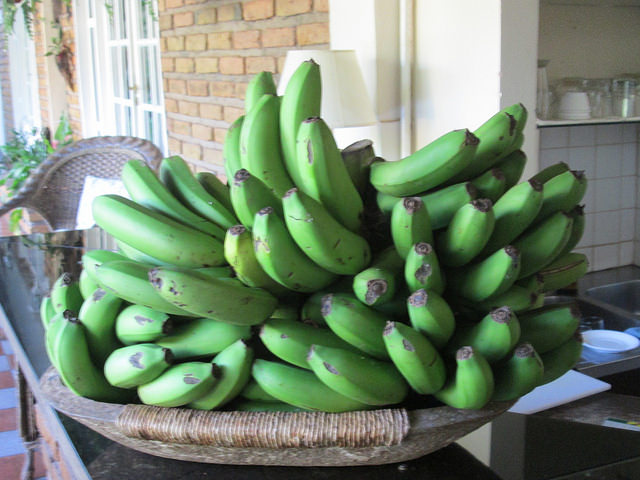
Bananas on the Bar at Posada la Sórgente

Bananas on the Bar at Posada la Sorgente

Here is another view of the bar, which had a handy basket of home-grown bananas at its edge.

I don’t know if I will ever find myself in the jungle again. For the Iguazu Falls, though, it was worth it. My greatest fear going there was the possibility of getting bitten by disease-carrying mosquitoes. Not too far north, in Brazil, the Zika fever (carried by the same Aedes aegypti mosquitoes that carry malaria, dengue, and chikungunya) is so prevalent that residents of the State of Pernambuco and surrounding areas are being urged to avoid getting pregnant. The danger? The children are in danger of being born with microcephaly.

Fortunately, not only was I not bitten: I did not even see any mosquitoes.
(Not) Strictly for the Birds

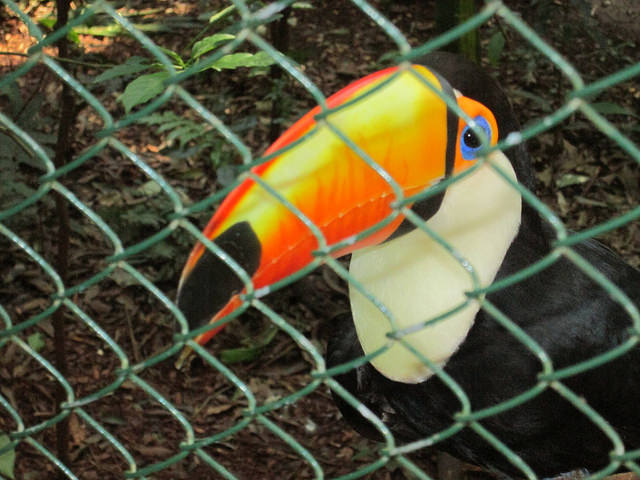
Toucan at Güiráoga

Toucan at Güiráoga

In the Guarani language, it means the House of Birds. Fortunately for the animals sheltered there, it’s not limited to birds.

I arrived in Puerto Iguazu by an overnight bus from Buenos Aires, so I decided not to go right away to the famous falls. Instead, I took a taxi to Güiráoga on the outskirts of town. There, I boarded a tractor-driven trailer and rode to the heart of the local jungle, where there were cages containing birds, monkeys, coatimundis, small mammals, and even a crocodile. Our guide was a young Italian naturalist, who led the tour in Spanish. (There is a tour in English, but I was there too late in the day for that.)

The purpose of Güiráoga is to rehabilitate injured animals. According to The Argentina Independent:

Sadder, human activity is what populates the rehabilitation centre; most of the injured animals are victims of poachers, automobiles, or wildlife trafficking. In a recent case, several wild birds were confiscated from the Ezeiza Airport in Buenos Aires. Those that were not found dead were transported back to Güirá Oga for rehabilitation.

Seeing the occupants in action at the park, however, helps you believe there is still good in the human species. Two vultures square off against each other, oblivious to their onlookers; several small birds flirt and chase one another around their cage; and all except one of the Capuchin monkeys cuddled and showed off for their viewers.

On the jungle trails in the Iguazu National Park, one can see several of the birds and animals, but not all. That’s why my toucan appears behind a chain link fence. I did see plenty of capuchin monkeys (called monos in Argentina) and coatimundis. Happily, I did not encounter any crocodiles or leopards on my walks.

The website (in Spanish) of Güiráoga is accessible by clicking here.

Falling in Love with a Ship

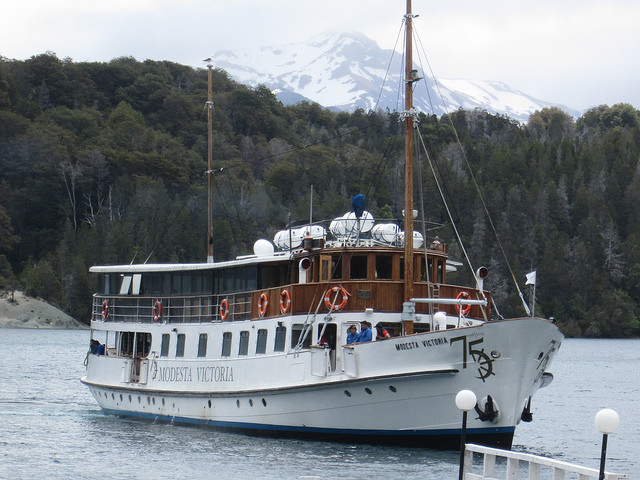
The Modesta Victoria on Lago Nahuel Huapi

The Modesta Victoria on Lago Nahuel Huapi

On November 15, I took a boat tour to Isla Victoria and Los Arrayanes National Park. In the process, I fell in love with a Dutch ship that was built in 1937, disassembled, shipped to Argentina, and re-assembled in 1938 on the shores of Lago Nahuel Huapi. (YouTube has a charming video depicting the original launch of the Modesta Victoria: It looks as if the whole population of San Carlos de Bariloche showed up to celebrate.)

It was the Modesta Victoria on which I rode across the lake. It was the same ship that carried Che Guevara, his friend Alberto Granado, and their Norton motorcycle across the lake during the trek that Guevara described in The Motorcycle Diaries. Other famous passengers included the Shah of Iran, his empress Farah Diba, and U.S. Presidents Dwight D. Eisenhower and Bill Clinton.

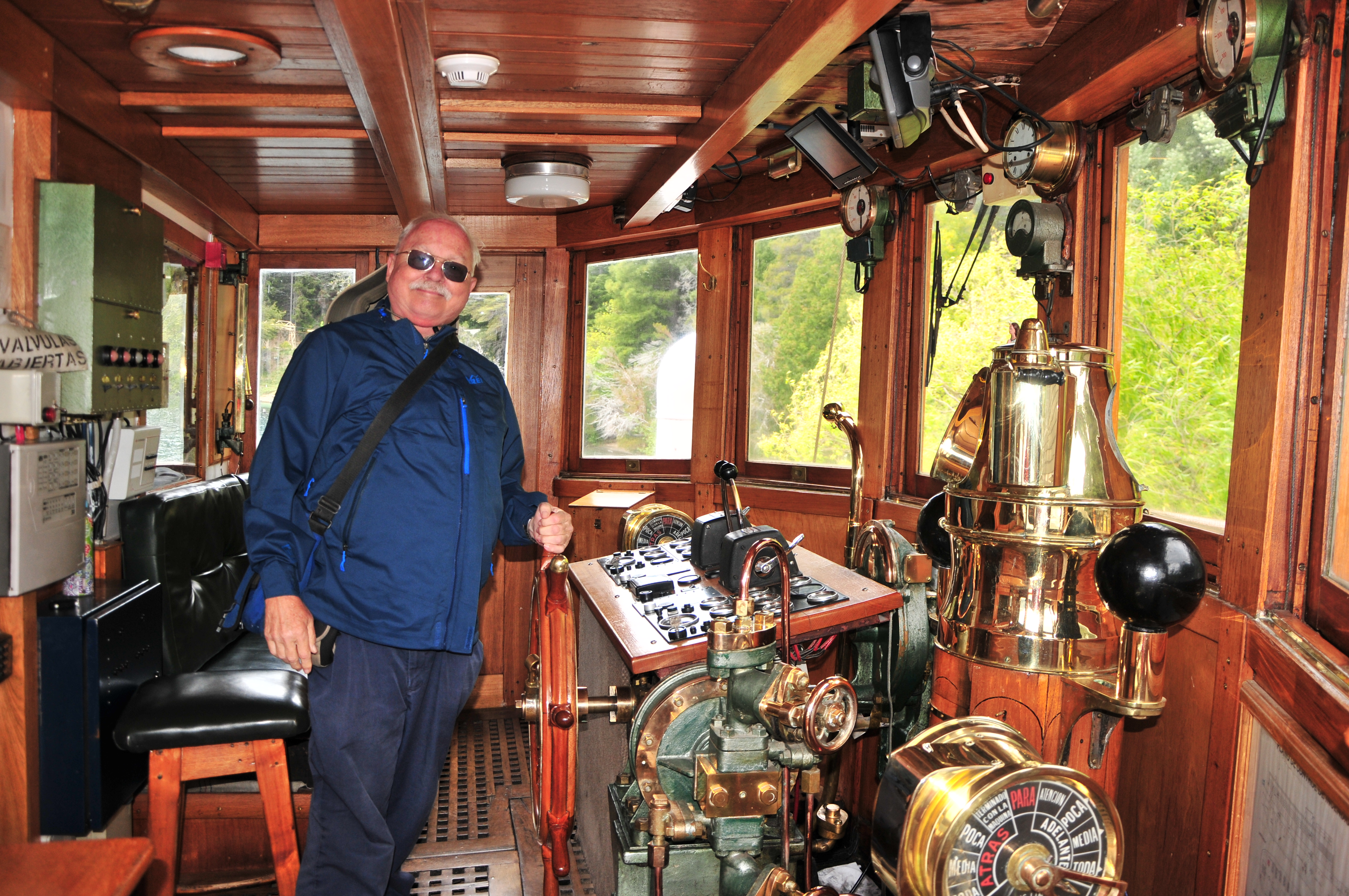
At the Helm of the Modesta Victoria

At the Helm of the Modesta Victoria

I have a love for old steamships, which began when I rode the old MV Lady Rose in Canada between Port Alberni and Bamfield. That was back in 2003. Today, the Lady Rose, which was built in the same year as the Modesta Victoria is being fitted out to serve as a restaurant in Tofino on Vancouver Island, which I suppose is marginally better than gracing a ship graveyard.

My hope is for the Modesta Victoria to keep sailing until I have a chance to take it again … some day.


Serendipity: The Ombú

Ombú Tree in Recoleta, Buenos Aires

Ombú Tree in Recoleta, Buenos Aires

I first grew curious about the Ombú trees of the Pampas when I read W. H. Hudson’s Tales of the Pampas. Following is the beginning of his short story entitled “The Ombú”:

IN ALL THIS DISTRICT, though you should go twenty leagues to this way and that, you will not find a tree as big as this ombú, standing solitary, where there is no house; therefore it is known to all as “the ombú,” as if but one existed; and the name of all this estate, which is now ownerless and ruined, is El Ombú. From one of the higher branches, if you can climb, you will see the lake of Chascomus, two thirds of a league away, from shore to shore, and the village on its banks. Even smaller things will you see on a clear day; perhaps a red line moving across the water—a flock of flamingos flying in their usual way. A great tree standing alone, with no house near it; only the old brick foundations of a house, so overgrown with grass and weeds that you have to look closely to find them. When I am out with my flock in the summer time, I often come here to sit in the shade. It is near the main road; travellers, droves of cattle, the diligence, and bullock-carts pass in sight. Sometimes, at noon, I find a traveller resting in the shade, and if he is not sleeping we talk and he tells me the news of that great world my eyes have never seen.

They say that sorrow and at last ruin comes upon the house on whose roof the shadow of the ombú tree falls; and on that house which now is not, the shadow of this tree came every summer day when the sun was low. They say, too, that those who sit much in the ombú shade become crazed. Perhaps, sir, the bone of my skull is thicker than in most men, since I have been accustomed to sit here all my life, and though now an old man I have not yet lost my reason. It is true that evil fortune came to the old house in the end; but into every door sorrow must enter—sorrow and death that comes to all men; and every house must fall at last.

Do you hear the mangangá, the carpenter bee, in the foliage over our heads? Look at him, like a ball of shining gold among the green leaves, suspended in one place, humming loudly! Ah, sefior, the years that are gone, the people that have lived and died, speak to me thus audibly when I am sitting here by myself. These are memories; but there are other things that come back to us from the past; I mean ghosts. Sometimes, at midnight, the whole tree, from its great roots to its topmost leaves, is seen from a distance shining like white fire. What is that fire, seen of so many, which does not scorch the leaves? And, sometimes, when a traveller lies down here to sleep the siesta, he hears sounds of footsteps coming and going, and noises of dogs and fowls, and of children shouting and laughing, and voices of people talking; but when he starts up and listens, the sounds grow faint, and seem at last to pass away into the tree with a low murmur as of wind among the leaves.

As a small boy, from the time when I was able, at the age of about six years, to climb on to a pony and ride, I knew this tree. It was then what it is now; five men with their arms stretched to their utmost length could hardly encircle it. And the house stood there, where you see a bed of nettles—a long, low house, built of bricks, when there were few brick houses in this district, with a thatched roof.

The ombú in the photograph stands in front of La Biela, an old café that Jorge Luis Borges and his friend and collaborator Adolfo Bioy Casares used to frequent. It is on Plaza Francia not far from the entrance to Recoleta Cemetery.

.

The Lakes Crossing

From Bariloche Over the Andes to Chile

From Bariloche Over the Andes to Chile

There are a number of border crossings between Argentina and Chile. One of the most picturesque is the so-called “Lakes Crossing,” known in Spanish as the CruceAndino. It takes almost eleven hours and consists of three boat rides and four bus rides. They are as follows:

  • BUS from San Carlos de Bariloche to Puerto Pañuelos on Lago Nahuel Huapi
  • CATAMARAN from Puerto Pañuelos to Puerto Blest
  • BUS from Puerto Blest to Puerto Alegre on Lago Frias
  • BOAT from Puerto Alegre to Puerto Frias, where you will officially exit from Argentina
  • BUS from Puerto Frias to Puerto Peulla on Lago Todos Santos, where you will officially enter Chile, and where you can stretch the trip to two days by staying in a hotel (I didn’t)
  • CATAMARAN from Puerto Peulla to Petrohué
  • BUS from Petrohué to Puerto Varas right past the Calbuco Volcano, which erupted three times this spring
Puerto Peulla on Chile’s Lago Todos Santos

Puerto Peulla on Chile’s Lago Todos Santos

I had thought that crossing the Andes here would involve altitude sickness, but it didn’t. I do not believe this route got much higher than 3,000-4,000 feet. Although while on Lago Frias, it seemed we were way up high, we weren’t. All in all, it was very comfortable and well organized, considering all the handoffs between buses and boats.

The only thing that was odd was that I never received a Chilean tourist card at Peulla, where I entered the country. When I left Chile from Santiago’s Benitez Airport, I had to go to another window so that the PDI (investigative police) generated one for me based on my passport stamps. In any case, it was worth the slight inconvenience.


Cruising the Paraná

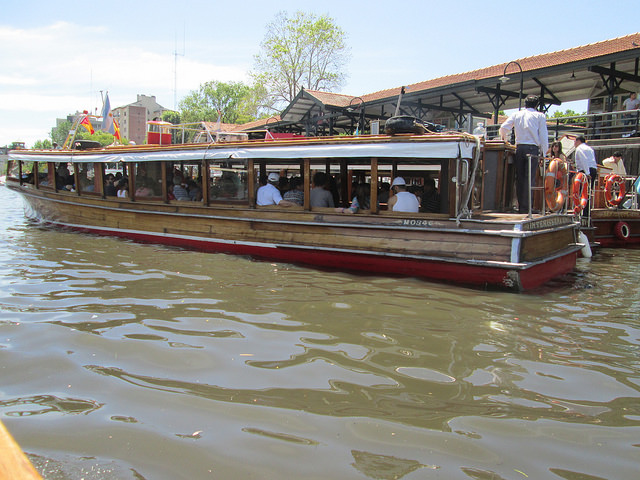
Cruising the Delta of the Paraná in a Launch

Cruising the Delta of the Paraná in a Launch

One of the fun getaways from Buenos Aires is the massive delta of the Paraná River, second only to the Amazon in South America. Rising at the confluence of the Paranaiba and Grande Rivers in Brazil, the Paraná flows south some 4,880 km until it becomes the Rio de la Plata near the Argentine capital. Headquarters for delta cruises is Tigre, about an hour out of Buenos Aires.

Last month, I boarded a launch in Tigre and took a one-hour cruise of several branches of the 60 km wide delta. There is an entire community that lives along the delta that is reachable only by boat. There are grocery boats, barber and beauty salon boats, and others that ply these waters servicing the population which likes the poky life at the edge of one of the world’s great waterways.

Drainage Basin of the Paraná

Drainage Basin of the Paraná

As you can see, the river drains portions of five South American countries: Brazil, Paraguay, Uruguay, Bolivia, and Argentina.The river is broad enough for container ships to go several hundred miles upstream past Rosario and Santa Fe.

One could get to Tigre by train, bus, or even boat. Don’t make the mistake of going by train on a weekend however, as it is standing room all the way from Retiro train station.


The Magical Forest

A Forest of Chilean Myrtles at Los Arrayanes National Park

A Forest of Chilean Myrtles at Los Arrayanes National Park

One of the sights I most wanted to see on my recent trip to Argentina and Chile was Los Arrayanes National Park on the Quetrihué Peninsula. We arrived there on a fantastic old boat (more about which in a future post) from Puerto Panuelos near San Carlos Bariloche.

There is a prevalent myth that Disney was inspired by the look of the Luma apiculata (Chilean Myrtle) trees for his cartoon feature Bambi (1942); but, alas, Disney did not visit Argentina until three years later. Still, it is possible that he knew of and was inspired by the forest before his visit.

These trees with their orange-colored bark grow only in the Patagonian Lakes District of Argentina and Chile between 33° and 45° South Latitude. They range from 33 to 49 feet (10 to 15 meters) tall.

Typically it is possible to take a tour to Los Arrayanes which also includes Isla Victoria on Lago Nahuel Huapi, where one can see Sequoias and Ponderosa Pines imported from California over a century ago.


Raging Waters

Waterfalls So Extensive They Create Their Own Climate

Waterfalls So Extensive They Create Their Own Climate

Probably the most spectacular destination on my recent trip to South America was Iguazu Falls. For a panoramic view of the falls, one would have to visit the Brazilian side and pay $160 as a “reciprocity fee,” without guaranteeing that I would get a visa in time. So I opted for the Argentinian side, where I could cozy up to a number of the cataracts, either from the top or bottom.

Iguazu is in the State of Misiones, which juts like a narrow finger into the jungles of Southern Brazil. And, just a few miles to the west is the border with Paraguay at Ciudad del Este.

In the past, I had avoided visiting the falls because I was afraid of contracting a mosquito-borne disease such as malaria, dengue, or chikungunya. Imagine my shock when I saw no mosquitoes near the falls: Apparently the waterfalls, which can range up to 9,500 feet wide depending on water volume, create their own climate of swirling mists.

Most of the water squeezes through at a place called the Garganta del Diablo, or “The Devil’s Throat.” Standing near where the water rushes down is an awe-inspiring (and very wet) experience. But it is eminently worth it!

I spent two days visiting the Iguazu National Park. Looking back, I would have to consider it the single most impressive place I visited this year in Argentina and Chile.

A City I Love

Buenos Aires

Buenos Aires, Plaza de Mayo

In front of Retiro Train Station, a serious attempt was made to pick my pockets at a time I was carrying several thousand dollars in cash. A couple came up behind me and squirted me with a mixture of steak sauce and mustard while “helpfully” attempting to clean me off with paper towels (which they just happened to have in their hands) and steering me to a nearby bathroom where their accomplices would finish the job. But I was on to that dodge, so I took a sharp right and stopped a cab.

While walking the streets, I had to be careful not to trip on the array of broken sidewalk tiles. (This particularly bothered Martine in 2011.)

Subways, trains, and buses are so crowded that it can take your breath away. One day I took a ride on Subte A to the end of the line at San Pedrito and back in hopes of riding the old subway cars, which supposedly are stuill in use. The cars were all new, and standing room only.

So why do I love Buenos Aires?

There is something about the city’s faded splendor that reminds one of Europe again and again. I think there was a conscious attempt to imitate Paris and Madrid back when Argentina was riding high as the main supplier of canned meat to both sides in the First World War. But then hard times came, but the splendor still shone through—not everywhere, but sometimes in surprising places. The Galeria Pacifico on Calle Florida is probably one of the most gorgeous indoor shopping centers anywhere.

There are dozens of old cafés, many dating back to the late 1800s—places where you can get a good meal, attentive service, and sit and read a book or newspaper without being rousted out. Places like La Biela in Recoleta, and La Puerto Rico and the Palacio Español in Monserrat. These places are usually crowded with older men, and I felt that I fit right in.

I don’t know how many more times I can walk the streets of this fabled old city, but I hope the gods allow me the chance to return at least once or twice.


Within a Stone’s Throw

Buenos Aires’s Recoleta Cemetery

Buenos Aires’s Recoleta Cemetery

As I have written on earlier occasions, Recoleta Cemetery is one of the major tourist attractions in Buenos Aires. I have visited it during my two previous trips to Argentina, in 2006 and 2011. And now, I will be staying in a hotel within sight of the tombs on Avenida Azcuénaga. It is possible that the blue-green building in the left background could be on Azcuénaga, but I’m not sure.

One of the nice things about staying in the Recoleta area is that it is full of classical old café/restaurants such as La Biela, El Sanjuanino, El Rincón, La Cocina, La Barra, and the Rodi-Bar—places that have been around for a hundred years or more and become national treasures.

On Saturdays, the Plaza Francia in front of the cemetery is the site of a craft fair  that features leather goods; items made with rhodochrosite, a magnesium carbonate mineral that is the national precious stone of Argentina; and yummy snacks. Nearby is La Biela, under the shade of a giant old ombú tree, where one can enjoy a cold Imperial beer and a light lunch.

I will be leaving a week from Tuesday, and as the time gets closer, I am looking forward to the trip more and more.