My Halloween Reading

At the end of September, I set myself a program for reading several appropriate ghoulish, ghastly, and horrifying titles in honor of my favorite holiday, Halloween. You can read about my intentions here.

Of the ten books I ended up reading last month, five were appropriate for the season:

  • Ann Radcliffe: The Italian, or the Confessional of the Black Penitents
  • Joyce Carol Oates: Cardiff, by the Sea
  • Thomas Ligotti: The Agonizing Resurrection of Victor Frankenstein and Other Gothic Tales
  • Edgar Allan Poe: The Portable Poe
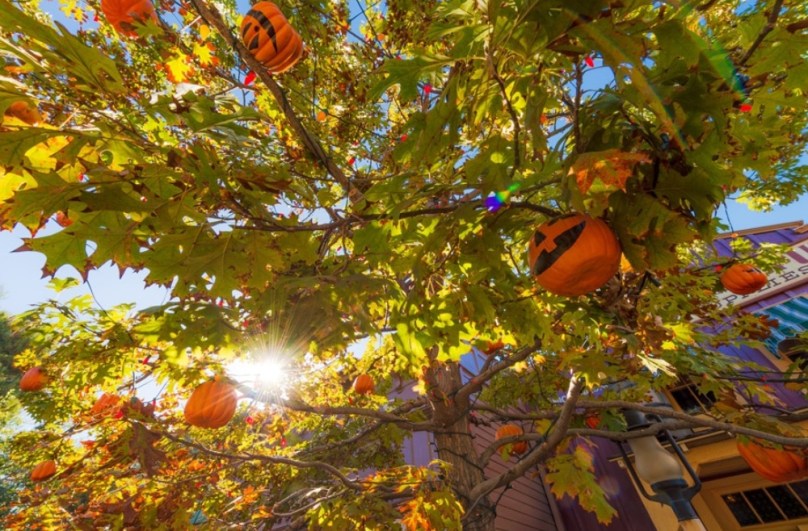
  • Ray Bradbury: The Halloween Tree

They were all pretty good. Not surprisingly, I thought the Poe was best, followed by the Bradbury. That was a surprise, as it was written for the juvenile market, but I enjoyed every minute of it. The Ann Radcliffe was a hoot, as the British tended to think that nothing was spookier than Catholicism, (Maybe it was that thing about the Holy Ghost.)

I liked the Ligotti book because it was a fun way to revisit all the high points of the genre. Cardiff, by the Sea wasn’t technically a Halloween novel, except for the fact that everything Joyce Carol Oates is a bit on the spooky side.

Preparing for Halloween

British Gothic Novelist Ann Radcliffe (1764-1823)

Usually, I spend much of the month of October each year reading gothic or horror fiction. I have already started reading Ann Radcliffe’s The Italian, or the Confessional of the Black Penitents (1797), after which she quietly stopped writing and spent the last twenty-six years of her life as a private person. I have fond memories of reading her novels The Romance of the Forest (1791) and The Mysteries of Udolpho (1794).

Also, I will inevitably read one of Joyce Carol Oates’s underrated gothic novels or collections of short fiction. Other possibles are Thomas Ligotti and Robert Aickman. And I will certainly re-read some of Edgar Allan Poe’s stories.

In November, I will write a post detailing with gothic/supernatural/horror titles I have read.

The Most Influential Books in My Life

I Read All These Books Multiple Times, Starting at Least Thirty Years Ago

The following is a re-post from ten years ago. I still feel the same way about all these titles.

These are not necessarily the greatest books I have ever read. They are, however, the ones that have most influenced me. Each of them, I have read multiple times, and I first read them all before 1985. I have presented them here in alphabetical order by author:

  1. Anonymous. Njals Saga. Why haven’t more Americans read this book? It tells of a time when Iceland was governed by clans, and justice was crude but effective. It’s one of two Icelandic sagas that have a museum dedicated to them. The Njals Saga museum is in Hvöllsvollur, and I have visited it twice. The other honors Egils Saga and is located in Borgarnes.
  2. Balzac, Honoré de. Old Goriot. How does a young man make his way through life? Balzac’s hero, Eugène de Rastignac, is one of the great heroes in fiction.
  3. Borges, Jorge Luis. Labyrinths. Borges has been one of my teachers, having turned me on to so many of the books, people, and places that have mattered in my life. I am re-reading it now for the fifth time.
  4. Chatwin, Bruce. In Patagonia. Maybe not every word that Chatwin writes is true, but even his fictions have lured me to the southern tip of Argentina twice, and soon, for the third time.
  5. Chesterton, G. K. The Man Who Was Thursday. Learn with Gabriel Syme how to see the lamppost from the light of the tree instead of vice versa. Here we are in the world of paradox.
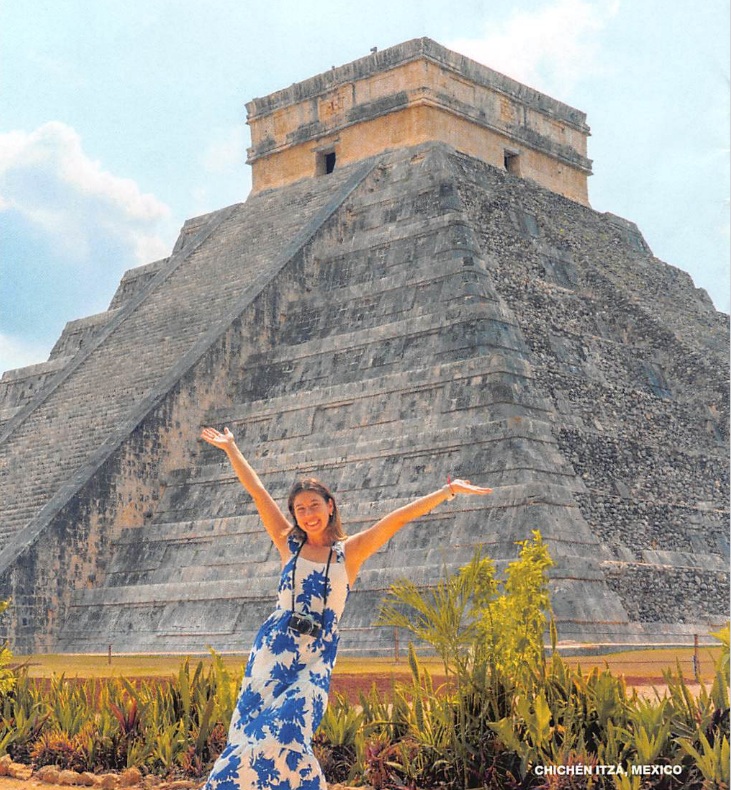
  6. García Marquez, Gabriel. One Hundred Years of Solitude. This is a book I bought at a souvenir stand at the ruins of Chichén Itzá in Yucatán. It showed me that life was magical.
  7. Highet, Gilbert. The Art of Teaching. Originally, I wanted to become a college professor. I never quite made it, but Highet made me wish I had. I first read this book while I was in high school.
  8. Orwell, George. Keep the Aspidistra Flying. Another high school read: How does one tread the fine line between genteel poverty and selling out?
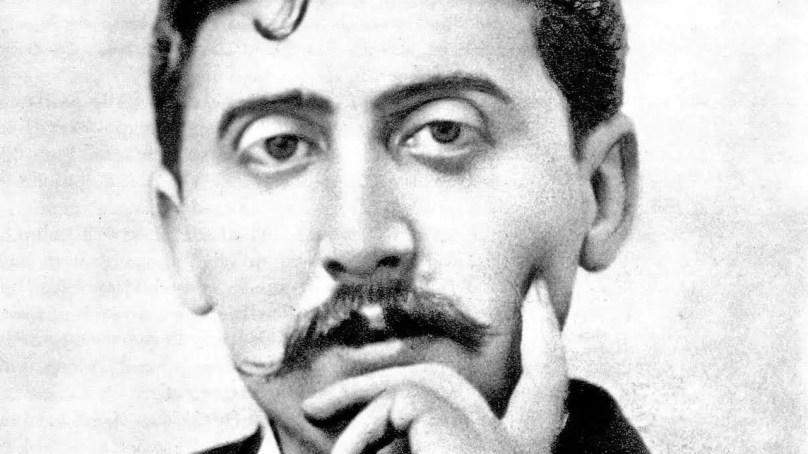
  9. Proust, Marcel. In Search of Lost Time. I am reading this now for the third time. I hope to live to read it several times more. Generally, it takes me a decade to re-read all seven novels in the series. When reading it, I am totally absorbed in the world of Marcel.
  10. Strunk, William and White, E. B. The Elements of Style. Strunk & White showed me that good writing is essentially simple and direct. Another classic from my teen years.

I could easily add more titles, but these titles keep swirling around in my head and influencing me.

Pain(e)sville

Writer Harlan Ellison (1934-2018)

He’s from the same part of the world from which I hail. Painesville, the county seat of Lake County, is some 30 miles northeast of Cleveland. He has been called a science fiction writer, a designation which he (rightfully) hates. It’s more speculative fiction, with an emphasis on the short story form.

The man from Painesville was known for being something of a pain. His obituary in the Los Angeles Times remarks:

Over the years, Ellison has been described as fiercely independent, vengeful, sardonic, opinionated, confrontational, foul-mouthed, petulant, infuriating, defiant and a general all-around nuisance—as well as engaging, gregarious, funny, fastidiously organized and generous to his friends.

By his own measure, he was “a hard pill to swallow.”

He is gone, with all his objectionable behavior, but his stories remain. And they are well worth reading. I suggest you try one of the following collections:

  • I have No Mouth and I Must Scream (1967)
  • The Beast That Shouted Love at the Heart of the World (1969)
  • Approaching Oblivion (1974)
  • Deathbird Stories (1975)
  • Shatterday (1980)

You might also want to try reading the sci-fi story collection he edited in 1967 entitled Dangerous Visions.

Although he will be remembered as much for being a prickly character as a brilliant writer, I think that over time the latter will replace the former in the estimation of readers.

Summer Is Icumen In

The Malibu Pier at Sunset

It’s not quite here yet, but it’s coming. Lhude sing cuccu … or whatever. Summer has its moments in Southern California. Mostly, it’s just hot.

This time of year, I like to read works by William Faulkner (this summer, I’ll tackle his Collected Short Stories) and travel books about Arabia and India (I’ve already begun Charles M. Daughty’s Travels in Arabia Deserta, Volume I). Then, too, I will read the Travis McGee novels of John D. MacDonald and some Icelandic detective stories.

I will drink ungodly amounts of iced tea. I know it’s a powerful diuretic, but it does moisten the palate. This summer, it will mostly be the Ceylon loose tea from Ahmad of London. After the autumn equinox, I’ll switch to Darjeeling (when I need a lift) or Baruti or Ghalami Assam.

When it gets too hot, we’ll have a picnic lunch at Chace Park in the Marina and revel in the cool sea breezes, which typically die within a few hundred feet of the shore.

I will sleep without covers at night, usually with the window open. I will have to listen to all the dysfunctional car alarms, the patron’s of the bar across the street, and the cursing and moaning of all the street people.

In the end, it’s doable. One thing I will not do is travel—unless I could afford a flight to Alaska or Patagonia. The desert will be blisteringly hot, and we are surrounded by hundreds of miles of desert.

Agenbite of Bookwit

I find myself rereading books more often, sometimes by design, but more often by accident. For instance, I am reading the L.A. Central Library’s copy of Lawrence Ferlinghetti’s Writing Across the Landscape: Travel Journals 1960-2010. As I started reading it yesterday, I noticed the same light pencil marks I used to mark passages. “A kindred spirit,” was the first thought that crossed my mind. Then, when I loaded Goodreads.Com, I noticed that I wrote a review of the book in 2023. The stray marks were, in fact, mine. A kindred spirit, indeed!

Here are the books that I have reread so far this year, with the ones I have accidentally reread marked with an asterisk:

  • Lawrence Durrell: Balthazar, Mountolive, and Clea (the last three volumes of The Alexandria Quartet)
  • Lope de Vega: Fuente Ovejuna
  • Tom Bissell: Chasing the Sea: Lost Among the Ghosts of Empire in Central Asia *
  • Joseph Wood Krutch: The Desert Year *
  • César Aira: The Famous Magician *
  • Clifford D Simak: A Choice of Gods *
  • Georges Simenon: Maigret and the Good People of Montparnasse
  • Carlos Castaneda: Tales of Power

The funny thing is that I have enjoyed the rereads as much as the first-time reads, even when they were accidental.

I keep a log of 99+% of the books I have read since 1972. When I choose a book to read, I don’t always check the three data files—one a PDF and the other two Excel spreadsheets—which log all several thousand books I have read in the interval. Sometimes, I notice when rereading a book that I have somehow changed in some small or large particular.

For instance, I used to be a big fan of Jules Verne, even some of his lesser-known works. But when I reread From Earth to the Moon and Round the Moon a few years ago, I was disappointed. Perhaps I’ll reread 20,000 Leagues Under the Sea—my favorite among his works—to see how it plays now.

Better Read Than Dead

I know it has been a week and a half since the tents for the 2025 Los Angeles Times Book Festival were folded up and stored until next year. But a few thoughts have been running through my mind that I wanted to air.

Admittedly, the Festival was a boon for people who love to read. I did not, however, feel that the tens of thousands of people who thronged the fair were necessarily book lovers. Probably there were more people there who wanted their offspring to become book lovers just so long as they themselves did not have to crack open a volume.

What made me feel this way? Perhaps I saw too many people thronging the booths that offered trashy genres such as romance, “cozy” mysteries, and dungeons & dragons type fantasy. The big local bookstores were well represented, but they were so crowded that I couldn’t get close to them. The only exception was Small World Books on the Venice Boardwalk: They were not super-crowded because they dealt mainly in poetry.

As in previous sears, I found the Small World Books Poetry Stage the most comfortable venue in the festival. There was a different poetry reading every twenty minutes, and many of them were top notch. Even some of the poets who weren’t that good were wonderful performers of their poems.

I attended both days of the festival. On the first day, I was appalled by the long lines and high prices at the high-toned food trucks scattered throughout the grounds, so I stepped outside the festival and patronized the Mexican and Central American food vendors by the campus gate. On the next day, I discovered the restaurants outside the grounds of the festival at the University Village, where Martine and I got a tasty lunch without having to wait an hour and were able to sit comfortably at one of the outside picnic tables.

12 Desert Rats

Saguaro Cacti in the Arizona Desert

As I prepare for our road trip to Tucson this next week, I have been doing a lot of reading in preparation. It struck me that there are a lot of great books about or set in deserts. Here are an even dozen recommendations organized alphabetically by author:

  1. Abbey, Edward. Desert Solitaire: A Season in the Wilderness. A classic of the growing environmental movement and a threnody for the beauties that have been lost.
  2. Anonymous, Arabian Nights (or A Thousand and One Nights). Great stories about Sinbad, Ali Baba, and others.
  3. Austin, Mary. The Land of Little Rain. The author’s experiences in the Owens Valley along the Eastern Edge of the Sierra Nevada Mountains.
  4. Banham, Reyner. Scenes in America Deserta. Delightful essays about travels in the California deserts.
  5. Bissell, Tom. Chasing the Sea. A visit to one of the most desolate places on Earth, namely what used to be the Aral Sea in Uzbekistan.
  6. Bowden, Charles. Desierto. Essays about the desert of Southern Arizona and the State of Sonora in Mexico.
  7. Herbert, Frank. Dune. A great. sci-fi tale of a desert planet caught in the middle between warring factions in a corrupt empire.
  8. Lawrence, T. E. (“Lawrence of Arabia”). The Seven Pillars of Wisdom. A British officer convinces Arabs to revolt against their Ottoman oppressors in World War I.
  9. McCarthy, Cormac. Blood Meridian, or the Evening Redness in the West. Violence on the desert frontier among white settlers and Indians.
  10. Powell, John Wesley. The Exploration of the Colorado River and Its Canyons. The first American to navigate the length of the Colorado River.
  11. Theroux, Paul. On the Plain of Snakes. Unforgettable scenes along the border with Mexico, with chapters on the deserts of the State of Oaxaca.
  12. Thesiger, Wilfred. Arabian Sands. The author’s journeys throughout the Arabian peninsula.

As I write these, I become acutely aware that there are more titles I should include. Perhaps, as I read more, I will re-visit the subject later.

Januarius in March

Arizona Writer Charles Bowden (1945-2014)

Typically, the only books I read during the month of January are by authors I have not before encountered. I call this my Januarius project. This last January, however, I was too ill to read more than two books—and that at the end of the month. So I decided to hold this year’s Januarius in March.

During this month, I read fifteen books by authors who were new to me:

  1. Lewis Grassic Gibbon, Sunset Song. This was the first (and most popular) volume of a trilogy entitled A Scots Quair. Hard times on a farm near Aberdeen before World War I.
  2. David R. Fideler, Breakfast with Seneca: A Stoic Guide to the Art of Living. Stoicism is one ancient philosophy applicable to modern times.
  3. Renata Adler, Speedboat. Consisting of seemingly unrelated scenes that manage somehow to hold together and be interesting.
  4. Sylvia Plath, The Bell Jar. A somewhat grim book featuring multiple suicide attempts.
  5. Fyodor Sologub, The Petty Demon. A 19th century Russian novel about an annoying school teacher in a country town.
  6. Martial, Epigrams. Amusing sardonic quips about life in Imperial Rome.
  7. Jean-Paul Clébert, Paris Vagabond. Paris seen from the eyes of a highly intelligent hobo.
  8. Edward Said, Orientalism. Intelligent critique of the whole concept of orientalism as being the result of colonialism.
  9. Demetrio Aguilera Malta, Seven Moons and Seven Serpents. Brazilian Magical Realism that allegorizes the whole South American experience.
  10. Jay Parini, Borges and Me: An Encounter. Imagine having to drive Jorge Luis Borges around the Scottish Highlands without ever having read any of his work.
  11. Ralph Waldo Emerson, Self-Reliance. It’s hard to believe that I’ve never before read any Emerson other than a couple of his poems.
  12. Charles Bowden, Desierto: Memories of the Future. The best book I read this month, about life in the Arizona and Sonora desert, the drug lords, mountain lions, and crooked developer/banker Charles Keating Jr.
  13. Andy Miller, The Year of Reading Dangerously: How Fifty Great Books (and Two Not-So-Great Ones) Saved My Life. The title says it all.
  14. Alexander Ostrovsky, The Storm. A 19th century Russian play in which the villain is a mother-in-law.
  15. Gao Yuan, Lure the Tiger Out oi the Mountains: The 36 Strategies of Ancient China. A somewhat lame attempt to show how ancient Chinese philosophy can improve your business acumen.

All in all, it was a good month with some writers I would like to revisit—particularly Charles Bowden. Next week, Martine and I are going to Tucson, Bowden’s home turf, where I plan to read some more of his work.

Quid hoc ad Iphycli boves?

Old School Card Showing Cattle Farming in the Roman Forum

Roughly translated, the title of today’s post is “What has this to do with the cattle of Iphyclus?” or, more loosely, “Let us return tom the subject at hand.”

I am currently reading Sir Walter Scott’s Kenilworth (1821). Scott is famous for starting his novels slowly. I have just read fifty pages of densely packed plotting as Edmund Tressilian gets lost fleeing Cumnor and his horse throws a shoe. He meets up with an old scholar named Erasmus Holiday who converses mostly in Latin and who is delighted to meet anyone with even an imperfect knowledge of the old Romish tongue.

What Tressilian wants, quite simply, is the directions to the nearest blacksmith so he can continue on his way, but Erasmus is not willing to let go of him that easily. Finally, after numerous quotes from Latin classics, he deputes Hobgoblin (aka Flibbertigibbet), the son of his washerwoman, to show him the way to Wayland Smith, the local farrier.

And here we are detained still more by the rumors of said farrier being a tool of the devil as a result of his former association with a local mountebank.

Eventually Tressilian gets to his destination accompanied by Smith, who is now his servant.

There was a time when I would have been upset at the slow development of the story in Kenilworth, but now I am delighted. This is definitely a slow read, requiring frequent consultation with the notes and (yes) a detailed glossary.

In my old age, I now appreciate Scott’s divergence from the subject at hand. He is so damnably erudite and enjoys sharing it with us. Will Tressilian ever rescue the lovely Amy Robsart from the clutches of the evil Richard Varney? Eventually, I’ll find out; but, in the meantime, whether or not the cattle of Iphyclus enter the fray, I will enjoy every minute of this long and painstaking read.