The Most Influential Books in My Life

I Read All These Books Multiple Times, Starting at Least Thirty Years Ago

I Read All These Books Multiple Times, Starting at Least Thirty Years Ago

These are not necessarily the greatest books I have ever read. They are, however, the ones that have most influenced me. Each of them, I have read multiple times, and I first read them all before 1985. I have presented them here in alphabetical order by author:

  1. Anonymous. Njals Saga. Why haven’t more Americans read this book? It tells of a time when Iceland was governed by clans, and justice was crude but effective. It’s one of two Icelandic sagas that have a museum dedicated to them. The Njals Saga museum is in Hvöllsvollur, and I have visited it twice. The other honors Egils Saga and is located in Borgarnes.
  2. Balzac, Honoré de. Old Goriot. How does a young man make his way through life? Balzac’s hero, Eugène de Rastignac, is one of the great heroes in fiction.
  3. Borges, Jorge Luis. Labyrinths. Borges has been one of my teachers, having turned me on to so many of the books, people, and places that have mattered in my life. I am re-reading it now for the fifth time.
  4. Chatwin, Bruce. In Patagonia. Maybe not every word that Chatwin writes is true, but even his fictions have lured me to the southern tip of Argentina twice, and soon, for the third time.
  5. Chesterton, G. K. The Man Who Was Thursday. Learn with Gabriel Syme how to see the lamppost from the light of the tree instead of vice versa. Here we are in the world of paradox.
  6. García Marquez, Gabriel. One Hundred Years of Solitude. This is a book I bought at a souvenir stand at the ruins of Chichén Itzá in Yucatán. It showed me that life was magical.
  7. Highet, Gilbert. The Art of Teaching. Originally, I wanted to become a college professor. I never quite made it, but Highet made me wish I had. I first read this book while I was in high school.
  8. Orwell, George. Keep the Aspidistra Flying. Another high school read: How does one tread the fine line between genteel poverty and selling out?
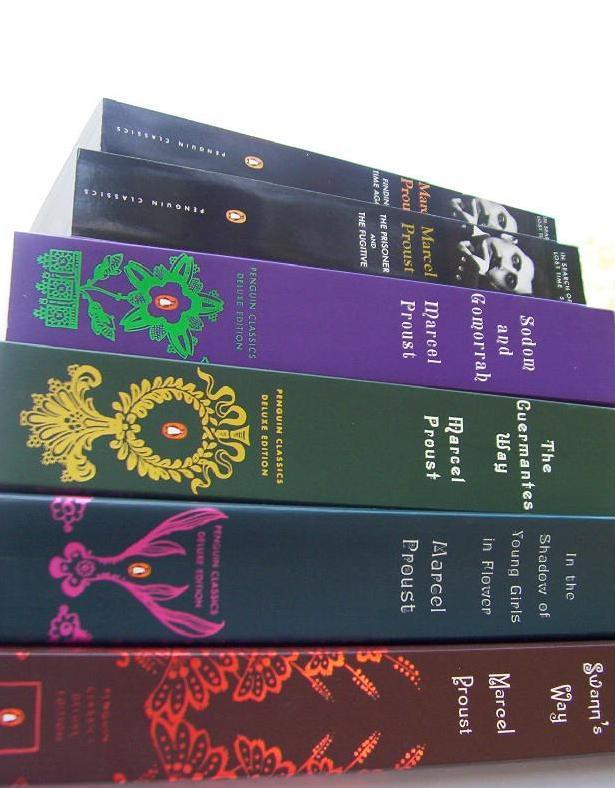
  9. Proust, Marcel. In Search of Lost Time. I am reading this now for the third time. I hope to live to read it several times more. Generally, it takes me a decade to re-read all seven novels in the series. When reading it, I am totally absorbed in the world of Marcel.
  10. Strunk, William and White, E. B. The Elements of Style. Strunk & White showed me that good writing is essentially simple and direct. Another classic from my teen years.

I could easily add more titles, but these titles keep swirling around in my head and influencing me.


In Search of the Deskable

My Adventures with E-Books

My Adventures with E-Books

About a third of the books I read are on one of my two Kindles—especially if I am traveling where a bag full of books would limit my range. Most of the time, the experience is pleasant, especially when the e-book I purchase is from a reputable publisher such as Penguin. Sometimes, however, you get an otherwise worthy book that is marred by the bane of e-publishing: namely, Optical Character Recognition, or OCR.

I have just finished reading C.S. Lewis’s superb autobiography, Surprised by Joy: The Shape of My Early Life. In between passages of great beauty, I would find sentences such as: “…but the real Deskable would have evaded one, the real Deske would have been left saying, ‘What is this to me?’”

Deskable? Deske?

The publisher of this e-book decided to forego human proofreading in favor of OCR software. Unfortunately, the software used rendered Desire as Deske and Desirable as Deskable.

At one point, I recognized the word “horkon” as the computer’s reading of “horizon.” The first person singular pronoun was frequently rendered by the decimal digit 1.

Fortunately, the work was good enough for me to persist to the end; but, many a time, usually when dealing with cheapster editions, I have given up in disgust.

James Bond and Me

James and I Go Way Back

James and I Go Way Back

I was a student at Dartmouth College when I first saw Sean Connery in Dr. No (1962). The film hit me right between the eyes, as if it had been fired at me from 007’s Beretta. Here was a guy with the ultimate cool: He was a bon vivant, handsome to women, and pitted against enemies who were the ultimate in evil. In Live and Let Die (1954), the second novel in the series after Casino Royale, Bond came up against the massive Mr. Big, a gargantuan Negro with not only pretensions to Voodoo (as Baron Samedi himself), but an operative of SMERSH, short for Смерть шпионам, “Death to Spies,” a Soviet counter-intelligence agency named by Joseph Stalin during World War Two.

The second part is dangled before us, but we don’t see any real Soviet spy business; and its role in the novel is negligible and could have omitted entirely. As with most of the Bond novels, it’s pretty easy to see what’s going to happen: The plot twists are well telegraphed. When 007 is preparing an underwater incursion on Mr. Big’s Jamaican hideaway and we are told that it would take 48 hours for the shark and barracuda repellent to arrive from the States, well we all know what is about to happen: Underwater feeding frenzy!

I must have read most of the Bond thrillers during my college years. It was candy for the mind and great adolescent wish-fulfillment. I guess that, into each life, some froth must fall.

The End of a Book

It Barely Lasted the 3 Days It Took to Read the Book

It Barely Lasted the Three Days It Took to Read the Book

It is always sad whenever I have to throw out a book, especially when I enjoyed reading it like this one. Over the years, I have red about two dozen or more Georges Simenon novels, and loved most of them. This old Signet paperback had glued signatures using cheap pulp paper. Even as I read it, it started shedding little triangles of paper from the cover and the interior. So now I’ll just throw it out before it ends up as a random pile of kipple on my bookshelf.

Whence comes this love of books? I think I got it from my mother. I have vivid memories of lying in my crib while she read stories to me. When she didn’t have enough time to stop in at the library, she made up her own story, usually about a fairy princess in a dark European forest. From the earliest age, I was hooked.

Now my apartment contains literally thousands of books. I love reading them. I even love handling them. Alas, Georges Simenon’s The Bells of Bicêtre has come to the end of the line. No more will someone want to pick it up and gently turn the pages. Requiescat in pace!

Tarnmoor’s ABCs: Russian Novels

What Country Produces the Best Literature?

What Country Produces the Best Literature?

All the blog posts in this series are based on Czeslaw Milosz’s book Milosz’s ABC’s. There, in the form of a brief and alphabetically-ordered personal encyclopedia, was the story of the life of a Nobel Prize winning poet, of the people, places, and things that meant the most to him.

My own ABCs consist of places I have loved (Iceland, Patagonia, Quebec), things I feared (Earthquakes), writers I have admired (Chesterton, Balzac, Proust, and Borges); locales associated with my past life (Cleveland and Dartmouth College), people who have influenced me (John F. Kennedy), foods I love (Olives), and things I love to do (Automobiles and Books). This blog entry is my own humble attempt to imitate a writer whom I have read on and off for thirty years without having sated my curiosity. Consequently, over the weeks to come, you will see a number of postings under the heading “Tarnmoor’s ABCs” that will attempt to do for my life what Milosz accomplished for his. To see my other entries under this category, hit the tag below marked “ABCs”. I don’t guarantee that I will use up all 26 letters of the alphabet, but I’ll do my best. Today the letter is “R” for Russian Novels.

I’ll come right out and say that, over the last two hundred years, Russia has produced the world’s best prose fiction. (They might well also have produced the greatest poetry, but I cannot judge as I do not know the language.) In addition to the 19th century titans—Dostoyevsky and Tolstoy—there are other greats whose work continues to amaze me. I am thinking of Ivan Turgenev, Nikolai Gogol, Ivan Goncharov, Nikolai Leskov, Alexander Pushkin, Anton Chekhov, and Mikhail Lermontov,

Despite the travails of the Communist Century, Russian novels continued to be the best in the world, what with authors like Maxim Gorky, Anatoly Rybakov, Victor Serge (even though he wrote in French), Vladimir Nabokov, Vassily Grossman, Victor Zamyatin, Boris and Arkady Strugatsky, Aleksander Solzhenitsyn, Andrey Gelasimov, Mikhail Bulgakov, Boris Pasternak, Andrey Platonov, Ivan Bunin, Varlam Shalamov, and Sergei Lukyanenko.

And these are just the ones I’ve read! KI suspect I could find another dozen if only I lived long enough.

The most difficult thing most people find about Russian novels is the names of the characters. Let’s take for example the name of one of the major characters in Dostoyevsky’s The Brothers Karamazov. Alexei Fyodorovich Karamazov is he youngest son of Fyodor Karamazov and bears his father’s first name in his patronymic (Fyodorovich). In addition to being called Alexei Fyodorovich, you are likely to see him called by one of his nicknames, which include Alyosha, Alyoshka, Alyoshenka, Alyoshechka, Alexeichik, Lyosha, and Lyoshenka—all depending on who is speaking. After a few decades, you get used to the nicknames. No longer do I ask myself, “Is Dostoyevsky introducing another character here?”

Also, Russian novels are likely to be l-o-n-g. That’s all right with me, because I usually get so wrapped up in the stories that I almost don’t notice it.

If you want to get started, I suggest you pick something more nearly contemporary, such as Sergeyyi Lukyanenko’s eerie Night Watch, with its vampires and witches. (The Russian movie based on it is also worth seeing.)

So, enjoy yourselves, and give my regards to Nevsky Prospekt!

Terrible Harmony

Thoughts Inspired by Garry Wills’s Great Book on Chesterton

Thoughts Inspired by Garry Wills’s Great Book on Chesterton

I can identify the exact moment I fell in love with G.K. Chesterton. Many years ago, as I read The Man Who Was Thursday for the first time, I came across this line by Gilbert Syme, the narrator: “Just at present you only see the tree by the light of the lamp. I wonder when you would ever see the lamp by the light of the tree.” It hit me like a bolt of lightning that here was a man that knew that all was one, and that everything affected everything else. Indeed, why not by the light of the tree?

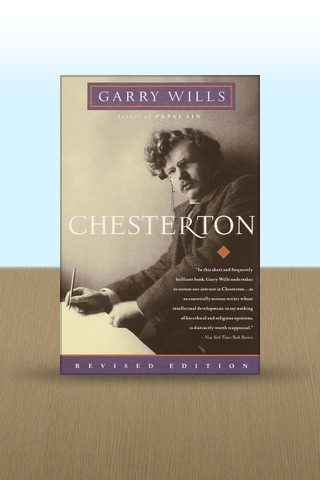
Decades later, I finally read Garry Wills’s first book, Chesterton. It is not only the best work about the author I have ever read, and perhaps one of the best works of literary criticism I have read for many a year, but it made me come to several realizations:

  1. Chesterton was not some sort of Jolly Green Giant: What peace he finally attained was hard won.
  2. As the First World War and the books he wrote at that time showed, he was a very indifferent political propagandist (see The Appetite of Tyranny and The Utopia of Usurers).
  3. When Chesterton finally converted to Catholicism in 1922, he became another type of propagandist—one for his faith—but considerably more effectively than in his political work.
  4. Perhaps Chesterton’s most interesting work came before the Great War.

The best thing about Chesterton is Wills’s detailed analysis of the early work, including the poems “The Wild Knight” and “The Ballad of the White Horse” and most particularly, my favorite GKC book, The Man Who Was Thursday.

In an essay on dreams in The Coloured Lands, Chesterton wrote one of the most cogent expressions of the complexity of his dance with joy and nightmare:

In this subconscious world, in short, existence betrays itself; it shows that it is full of spiritual forces which disguise themselves as lions and lamp-posts, which can as easily disguise themselves as butterflies and Babylonian temples…. Life dwells alone in our very heart of hearts, life is one and virgin and unconjured, and sometimes in the watches of the night speaks in its own terrible harmony.

I have only one minor quibble, and that is that Wills downplayed much of Chesterton’s fiction, which was almost always good, from his earliest Father Brown stories (which he covers) to such titles as The Club of Queer Trades, The Paradoxes of Mr. Pond, The Return of Don Quixote, and The Poet and the Lunatics. At the same time, what Wills does accomplish is to excellent that I cannot but see myself re-reading this excellent book, and maybe even searching for a hardbound copy for my burgeoning GKC collection.


“He Never Sallied from His Library”

Did Quixote Imagine It All?

Did Don Quixote Imagine It All?

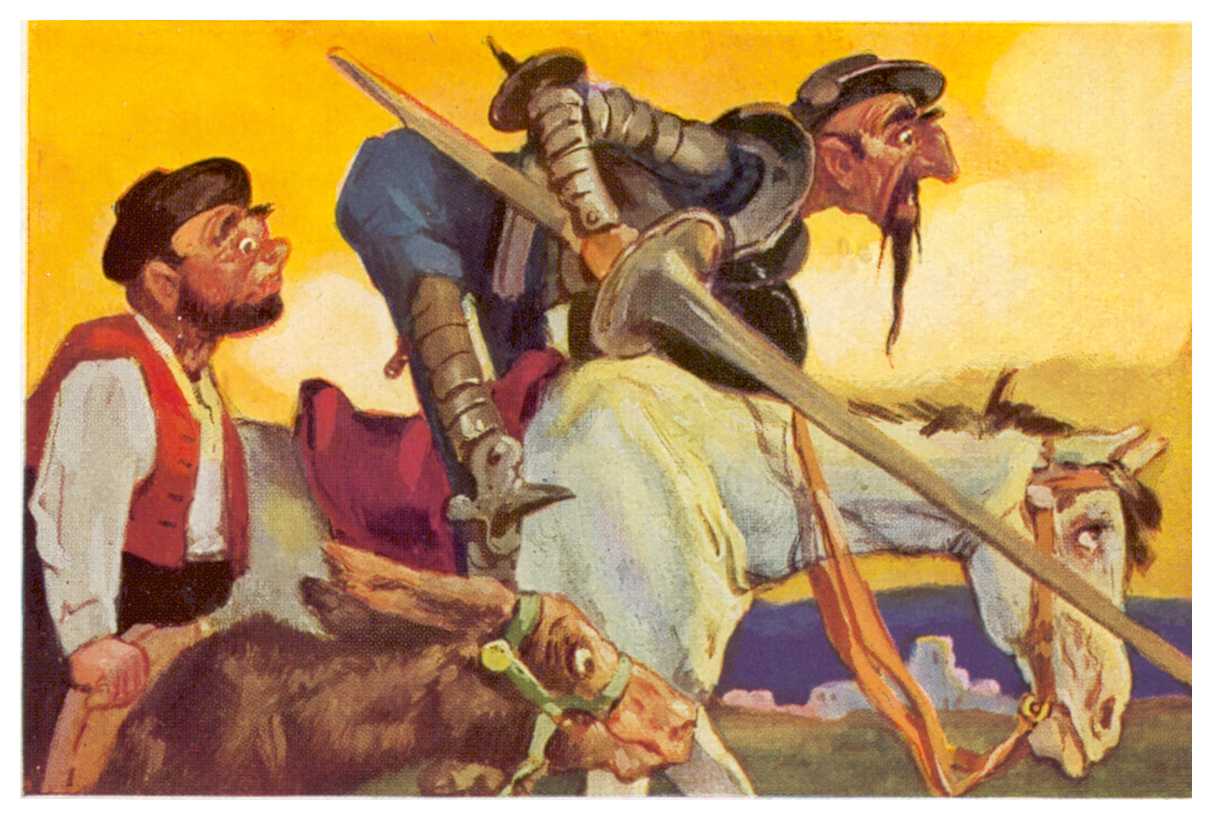
One reason I love this poem about the Knight of La Mancha is that its author, Jorge Luis Borges, was a bookworm like myself. Therefore, he could speculate as to whether the good Don dreamed all his adventures from the comfort of his own library.

Readers

Of that knight with the sallow, dry
Complexion and heroic bent, they guess
That, always on the verge of adventure,
He never sallied from his library.
The precise chronicle of his urges
And its tragic-comical reverses
Was dreamed by him, not by Cervantes,
It’s no more than a chronicle of dream.
Such my fate too. I know there’s something
Immortal and essential that I’ve buried
Somewhere in that library of the past
In which I read the history of the knight.
The slow leaves recall a child who gravely
Dreams vague things he cannot understand.

The translation is by A.S. Kline in this choice selection of Borges’s poetry on the Internet.

Life is different when you’re a reader. During my least favorite time of the year—tax season—I am lifted out of any temptation to depression by solving crimes with Chesterton’s Father Brown and Gaston Laroux with his mysterious Yellow Room; fighting the War of the Roses with Shakespeare’s Henry VI; becoming part of the mysterious search for Malory through a painterly landscape in Geoff Dyer’s The Search; and enjoying the world of books with Anatole France’s Sylvestre Bonnard.

After a day fighting with numbers, bits, and bytes, I vanish into my library and go tilting at my own windmills.

Cranking Up the Januarius

Janus: Looking Forward and Backward

Janus: Looking Forward and Backward

It all started with the new millennium. I saw that I was reading a lot of books but didn’t want to get stuck in a rut; so I started what I called my Januarius system. To explain it, let me refresh your memory from my post of January 26, 2014:

For many years now, I have had a habit during the month of January of reading only those books written by authors I have never read before. Here are some of the discoveries I have made in past years:

2001 – Kazuo Ishiguro, An Artist of the Floating World
2002 – Lieut Col F M Bailey, Mission to Tashkent
2003 – Orhan Pamuk, My Name Is Red
2004 – William Hazlitt, Essays
2005 – Michael Cunningham, The Hours
2006 – Victor Segalen, René Leys
2007 – Haruki Murakami, Kafka on the Shore
2008 – Simon Sebag Montefiore, In the Court of the Red Tsar
2009 – Mischa Glenny. The Balkans: Nationalism, War, and the Great Powers 1804-1999
2010 – Harper Lee, To Kill a Mockingbird (I didn’t want to be the only person in America who hadn’t read this book)
2011 – Fernando Pessoa, The Book of Disquiet
2012 – W G Sebald, Vertigo
2013 – Vasily Grossman, Life and Fate

In January 2014, the highlights were Tony Judt’s Postwar and Junot Diaz’s The Brief Wondrous Life of Oscar Wao. This month, I am reading Andrey Platonov’s Soul and Andrew Hodges’s Alan Turing: The Enigma. (I could tell already that Platonov is going to become one of my favorites.)

I have found that this practice introduces me to more world literature and more women writers. In the latter group, it led me to discover Lydia Davis, Shirley Hazzard, A. S. Byatt, Annie Ernaux, Anita Brookner, and Herta Müller to name just a few. Without being spurred to do it, I find I tend to neglect too many excellent women novelists, poets, and short story writers. I guess it’s those damned chromosomes.


My Years with Gabo

The Mayan Ruins at Chichén Itzá

The Mayan Ruins at Chichén Itzá

It was November 1975. For the first time in my life, I was outside the United States on my own. I always thought it was somehow significant that my first bid for freedom from those endless bad weather trips back and forth to Cleveland to see my parents was a two week vacation in Yucatán. When visiting the ruins at Chichén Itzá, I stayed at the old Hacienda Chichén, which contained the cottages used by earlier archaeologists. I was within walking distance of the ruins.

Back then, a road cut through the ruins. On one side was the Castillo and the structures best known to visitors; on the other, there was Old Chichén. By the side of the road, there was an open-air souvenir stand with thatched roof that sold the usual tourist junk. On the side, there was a book rack that happened to have a Penguin paperback edition of Gabriel García Márquez’s One Hundred Years of Solitude (1967). I had heard of the author before and was just beginning to wake up to that breakout generation of Latin American writers that included Borges, Cortázar, Vargas Llosa, and García Márquez. Here in front of me was a grey-covered Penguin (“This edition not for sale in the United States”) that looked like an interesting read.

How could I not read a book that opened this way:

Many years later, as he faced the firing squad, Colonel Aureliano Buendía was to remember that distant afternoon when his father took him to discover ice. At that time Macondo was a village of twenty adobe houses, built on the bank of a river of clear water that ran along a bed of polished stones, which were white and enormous, like prehistoric eggs. The world was so recent that many things lacked names, and in order to indicate them it was necessary to point.

That was my first acquaintance with the Colombian writer whose work was to become a lifelong pursuit with me. Ever since, I have rationed the books I read by him so that I didn’t run out too soon. Yesterday, I re-read Chronicle of a Death Foretold, which I last read thirty years ago in a magazine that had an illustration by Fernando Botero. (I forget which magazine it was.)

Since my first acquaintance with Colonel Buendía in 1975, I have gone on to read:

  • Leaf Storm (1955)
  • No One Writes to the Colonel (1961)
  • In Evil Hour (1962)
  • The Story of a Shipwrecked Sailor (1970)
  • The Incredible and Sad Tale of Innocent Erendira and Her Heartless Grandmother (1978)
  • Chronicle of a Death Foretold (1981)
  • Love in the Time of Cholera (1985)
  • The General in His Labyrinth (1989)

Then, too, there were numerous short stories, which I will re-read in as many years as are left to me. Although we lost García Márquez in April of this year, his work will live forever.


Beat

It All Started as Friendship...

It All Started as a Friendship…

The so-called beat generation actually started as a bunch of friends who liked to get together to talk, drink, smoke marijuana, and—perhaps—even have some casual sex along the way. The only difference between Jack Kerouac, Allen Ginsberg, John Clellon Holmes, and millions of other groups of rambunctious youngsters was that some of them had talent.

Last month, I read Kerouac’s Big Sur; and I am now reading John Clellon Holmes’s Go. The original beats would probably think of me as some sort of stick-in-the-mud, but I admire their all-out pursuit of freedom, even when it leads—as it did for many of them—to disorder and early sorrow. In Big Sur, Kerouac turns to drink the way that most people turn to inhaling oxygen. In Go, the action is frenetic and endless, especially once Hart Kennedy [Neal Cassady] joins them:

Ben’s connection had not showed; the sweet cologne fragrance of benzedrine about him and the discoloration of his lips suggested that there may have been no marijuana connection at all, but somehow that did not matter. Continuance was what concerned them, and where to go next. After a number of improbable ideas (places that would not be open, people who would not be up), they settled on a friend of Ben’s, who lived on One Hundred and Twenty-third Street and Amsterdam Avenue, who would “surely have liquor.” Although at another moment this would have seemed unlikely to them all, now they believed it with bland innocence as though all discord in the universe had been resolved by their harmony, which, in any case, did not depend on such details.

Below is a photo of Jack Kerouac with Allen Ginsberg, who was probably the most talented writer of the lot:

Allen Ginsberg and Jack Kerouac

Allen Ginsberg and Jack Kerouac

In the months to come, I plan to read more works by this unique “band of brothers” who had an outsize influence on the middle of the Twentieth Century, even if, as the movies and lurid paperbacks above show, it was mostly misinterpreted.