Christmas 2021 was going to see Los Angeles minus two of her muses. We just lost Joan Didion (above) to Parkinson’s disease; and six days ago, we lost Eve Babitz (photo below) to Huntington’s disease. Didion and Babitz were, to my mind, the leading writers about life in Southern California over the last half century or so.
I remember when I was first introduced to Didion by my friend Stephanie Hanna, who recommended back around 1970 that I read her great collection of essays entitled Slouching Toward Bethlehem. Since then, I have read at least eight other volumes of her fiction and nonfiction.
Eve Babitz was a more recent discovery, thanks mainly to the New York Review of Books (NYRB), which brought out most of her work in the last few years. I consider Eve’s Hollywood and Slow Days, Fast Company to be among the best works written about life in Southern California.
Joan Didion died in her 80s, and Eve Babitz at the age of 78. That makes me feel vulnerable, as I am a male who is about to reach his 77th year next month. In many ways, my acceptance of women as a source of outstanding literature about the local scene is due to these two powerful figures.
Now, as I look around me, who is there to take their places? No one that I can recognize at this point. I am just going to have to start looking….
There is a tendency, especially among the young, to view the past as irrelevant. After all, the ancient Greeks did not have smartphones; Shakespeare and his contemporaries did not have video games; and 18th century gentlemen wore powdered wigs, took snuff, and made a big show of their calves. What can we possibly learn from them?
Part of the problem is the way we teach history in our schools. The denizens of past times are not allowed to speak for themselves. If they did, we would find that they were not so very different from us in what mattered: The differences are mostly superficial.
There is a wonderful website called Laudator Temporis Acti (Praiser of Time Past) in which we can find startling glimpses into the great minds of the past. Here, for instance, is Horace in one of his satires:
Seize the path, comrade, believe me. Since all terrestrial creatures
are fated to mortality, and since there is no
escape from death for either great or small, then, good friend,
while it is permitted, live happily among pleasant surroundings;
and live ever mindful of how brief is your span.
And here is Plutarch discussing the Spartans:
When one of the elderly men said to him in his old age, inasmuch as he saw the good old customs falling into desuetude, and other mischievous practices creeping in, that for this reason everything was getting to be topsy-turvy in Sparta, Agis said humorously, “Things are then but following a logical course if that is what is happening; for when I was a boy, I used to hear from my father that everything was topsy-turvy among them; and my father said that, when he was a boy, his father had said this to him; so nobody ought to be surprised if conditions later are worse than those earlier, but rather to wonder if they grow better or remain approximately the same.”
Lately, I have enjoyed reading the journals of James Boswell, son of the Laird of Auchinleck and author the great biography of his contemporary, Dr. Samuel Johnson. As a young man in his twenties, he carouses his way through London while sucking up to the nobility to get a commission in the King’s guards. Then he goes to Holland to study law and falls in love with a beautiful young heiress named Belle de Zuylen. Like many a millennial, he is frequently depressed and uncertain about how to proceed.
Belle de Zuylen
Then there is that master of wisecracks, Lucian of Samosata (circa 125-180), who scoffs at the gods and in every way looks as if he were about to launch into a Saturday Night Live skit:
They see nothing indecent in sexual intercourse, whether heterosexual or homosexual, and indulge in it quite openly, in full view of everyone. The only exception was Socrates, who was always swearing that his relations with young men were purely Platonic, but nobody believed him for a moment, and Hyacinthus and Narcissus gave first-hand evidence to the contrary.
When I go searching into the minds of men and women who lived in the past, I am constantly realizing that they are my contemporaries in every way except for accidentals that don’t much matter.
If the term is unfamiliar to you, you can substitute the word boredom for it. When I first came to Southern California st the age of twenty-one, I was frequently bored. For one thing, I didn’t drive until a couple decades later. I didn’t even have a television set. I certainly didn’t have a smart phone, as they were not invented yet—for which I am eternally grateful.
If the coronavirus quarantine were to happen in the late 1960s, I would have been in deep trouble. I would have been all alone and sunk deep into acedia, not to mention depression. As it turned out, in 2020 I had a three-part solution to the quarantine:
Do a ton of reading, say something around 15-16 books a month.
View a lot of classic films, mostly on Turner Classic Movies (TCM).
Expand my cooking skills, including more complicated Hungarian dishes.
As a result, the last two years have not been a waste for me. My only regret was that, since the quarantine was global, I could not travel without some risk.
For me, travel is an opportunity for sustained research, including books about my destination and some exposure to the films and music. Not to worry, I am reading at least two travel books a month for when the world opens up to safe travel.
He is probably most famous for his ghost stories. His Carmilla (1872) was a Lesbian vampire tale that inspired Bram Stoker’s Dracula and was turned into a Roger Vadim film called Blood and Roses (1960). His stories were an unusual mixture of horror, mystery, and historical fiction. After putting it off for decades, I am finally reading his Uncle Silas: A Tale of Bartram-Haugh (1864) and am enjoying immensely.
The title of this post comes from John Keats’s “Ode on a Grecian Urn”:
Thou still unravish'd bride of quietness,
       Thou foster-child of silence and slow time,
Sylvan historian, who canst thus express
       A flowery tale more sweetly than our rhyme:
What leaf-fring'd legend haunts about thy shape
       Of deities or mortals, or of both,
               In Tempe or the dales of Arcady?
       What men or gods are these? What maidens loth?
What mad pursuit? What struggle to escape?
               What pipes and timbrels? What wild ecstasy?
There is something eminently satisfying about reading a long nineteenth century novel. It calls for reserves of patience, but rewards with insights similar to those of the Grecian urn about which Keats writes. That is particularly true of novels from the British Isles, where the prose at times approaches the realm of poetry:
See how a sleepy child will put off the inevitable departure for bed. The little creature’s eyes blink and stare, and it needs constant jogging to prevent his nodding off into the slumber which nature craves. His waking is a pain; he is quite worn out, and peevish, and stupid, and yet he implores a respite, and deprecates repose, and vows he is not sleepy, even to the moment when his mother takes him in her arms, and carries him, in a sweet slumber, to the nursery. So it is with us old children of earth and the great sleep of death, and nature our kind mother. Just so reluctantly we part with consciousness, the picture is, even to the last, so interesting; the bird in the hand, though sick and moulting, so inestimably better than all the brilliant tenants of the bush. We sit up, yawning, and blinking, and stupid, the whole scene swimming before us, and the stories and music humming off into the sound of distant winds and waters. It is not time yet; we are not fatigued; we are good for another hour still, and so protesting against bed, we falter and drop into the dreamless sleep which nature assigns to fatigue and satiety.
I am presently 70% of the way through Uncle Silas and look forward to finishing the book tomorrow, come hell or high water. If you are interested in exploring LeFanu’s work, the following editions were issued by Dover Publications and may still be found from used book dealers (I recommend http://www.abebooks.com):
Best Ghost Stories of J. S. LeFanu
Green Tea and Other Ghost Stories
Ghost Stories and Mysteries
Wylder’s Hand
Uncle Silas: A Tale of Bartram-Haugh
The Wyvern Mystery
It is my opinion that LeFanu is a sadly neglected writer who, over time, will come into his own.
Many people are unaware of the fact that some of the best English literature of the last hundred years or so comes from India. The subcontinent has some 22 officially recognized languages and dialects spoken within its borders. Most people know about Hindi, but what about Assamese, Bengali, Bodo, Dogri, Gujarati, Kannada, Kashmiri, Konkani, Maithili, Malayalam, Marathi, Meitel, Nepali, Odia, Punjabi, Sanskrit, Santali, Sindhi, Tamil, Telugu, and Urdu? Actually, what binds all the various peoples of India together is, believe it or not, the English language, a holdover from British colonial days.
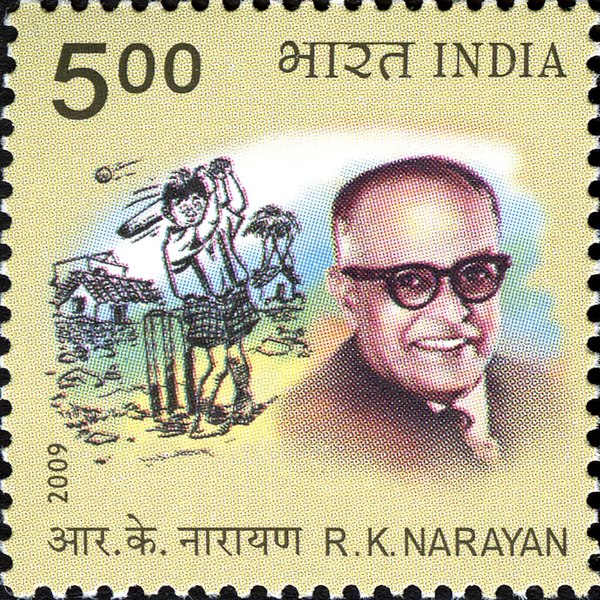
In this post, I will mention two writers whom I have read over the years with great pleasure. First, there is Rasipuram Krishnaswami Iyer Narayanaswami, better known as R K Narayan (1906-2001).
Narayan was brought to the attention of the English-speaking world by none other than Graham Greene. Like William Faulkner with his Yoknapatawpha County, Narayan created a fictional town in Tamil Nadhu called Malgudi and wrote numerous novels and short stories about the people who live there. My favorites among his novels are Swami and Friends (1935), The Financial Expert (1952), The Guide (1958), The Man-Eater of Malgudi (1961), and The Vendor of Sweets (1967).
Another excellent Indian writer writing in English is Anita Desai (born 1937), who currently teaches at MIT in Cambridge, Massachusetts.
Several times, Desai has been shortlisted for the Booker Prize. Among my favorites of her novels are Clear Light of Day (1980), Baumgartner’s Bombay (1988), Fasting Feasting (1999), and The Artist of Disappearance (2011).
There are others I can name, but I have not read as many works by them as I have from Narayan and Desai. If you are interested in the many worlds of India, I heartily recommend that you give them a try.
Typically, it takes me a while to really get warmed up to what I consider a great author. For Bohumil Hrabal, I read a couple of short story collections (Mr Kafka and Other Tales from the Time of the Cult and Dancing Lessons for the Advanced in Age) before I read two novels that blew me away: I Served the King of England and now The Little Town Where Time Stood Still.
Now I myself am ¼ Czech, though I never met my Czech grandfather; so I am very comfortable with the world portrayed by Eastern European fiction. In The Little Town Where Time Stood Still, there is a long scene about butchering pork that recalls my childhood in a Hungarian neighborhood in Cleveland. The scene is almost a threnody to the rich Czech and Hungarian pork-based cuisines.
In fact, the book is a lament for Eastern European small-town life which was largely destroyed by Communism. For this, Hrabal suffered years of censorship. It was only with the Velvet Revolution that brought Jaroslav Hašek into power that he really came into his own.
I cannot read his books without emotion: As a cultural Hungarian, I find tears forming in my eyes when Hrabal reminds me of my own origins or such things as the worship of Emperor Franz Joseph I (or Ferenc Jozsef, as we called him in Magyar).
In the months to come, I plan to read as much of Hrabal as I can find in English translation. Although I am part Czech, I cannot speak the language.
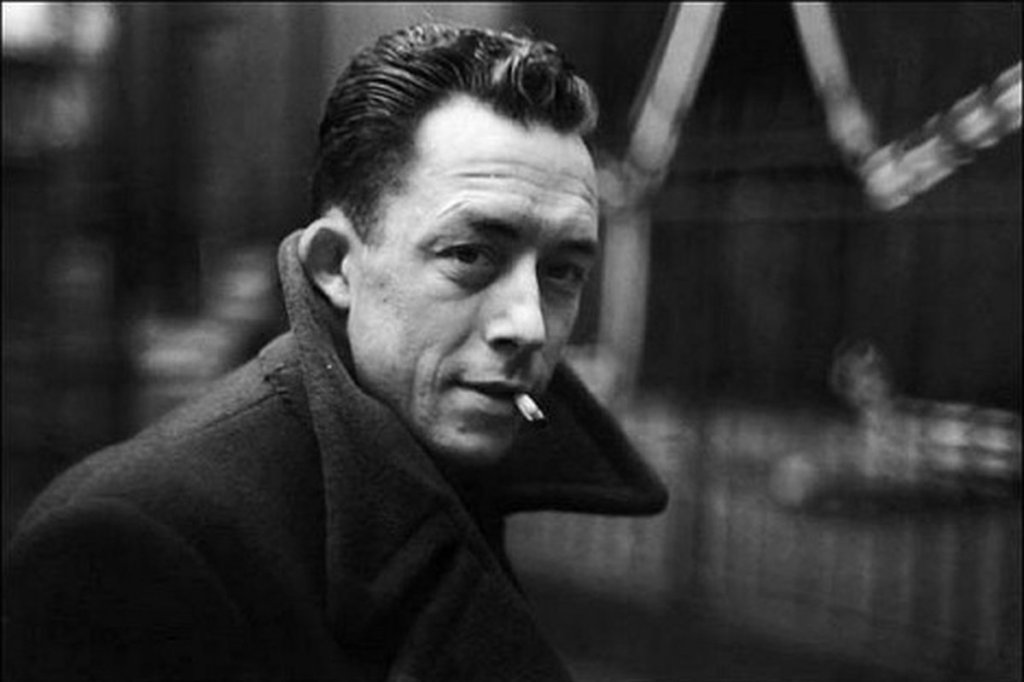
French Existentialist Writer Albert Camus (1913-1960)
Generally speaking, I have the devil’s own time trying to understand what philosophers write. The absolute worst are the German philosophers like Hegel, Heidegger, and Kant. I have difficulty even reading excerpted quotations from these writers—let alone whole paragraphs or chapters!
I have come to the conclusion that to enjoy reading most philosophers one has to be a gamer where language is concerned.
Fortunately, there are exceptions, particularly among the so-called Existentialist philosophers such as Nietzsche, Kierkegaard, Camus and (on occasion) Sartre. I am currently reading Camus’s Notebooks 1951-1959 where I find surprising, gemlike ideas expressed such as the following:
The history of mankind is the history of the myths with which it covers up reality. For two centuries, the disappearance of traditional myths has shook history as death has become without hope. And yet there is no human reality if in the end there is no acceptance of death without hope. It is the acceptance of this limit, without blind resignation, in the tension of all one’s being that coincides with balance.
I await with patience a catastrophe that is slow in coming.
According to Melville, the remora, a fish of the South Seas, swims poorly. That is why their only chance to move forward consists of attaching themselves to the back of a big fish. Then they plunge a kind of tube into the stomach of a shark, where they suck up their nourishment, and propagate without doing anything, living off the hunting and efforts of the beast. These are the Parisian mores.
Give money, or lose it. Never make it fructify, nor seek it, nor crave it.
In love, hold on to what is.
Lope de Vega, five or six times a widower. Today people die less often. The result is that we no longer need to preserve in ourselves a force of rejuvenating love, but, on the contrary, we need to extinguish it in order to elicit another force of infinite adaptation.
Criticism is to the creator what the merchant is to the producer. Thus, the commercial age sees an asphyxiating multiplication of commentators, intermediaries, between the producer and the public. Thus, it is not that we are backing creators today, it is that there are too many commentators who drown the exquisite and elusive fish in their muddy waters.
Ooh, that last one, I think, is aimed at me.
Shortly after great historical crises, one finds oneself as dissatisfied and sick as on the morning following a night of excess. But there is no aspirin for the historical hangover.
Do not curse the West. For me, I cursed it at the time of its splendor. But today, while it succumbs under the weight of its faults and its long past glory, I will not add to its weight…. Do not envy those of the East, the sacrifice of intelligence and of heart to the gods of history. History has no gods, and intelligence, enlightened b7y the heart, is the only god, under a thousand forms, who has ever been saluted in this world.
I think what makes Camus a philosopher for our time is twofold:
He was born and raised in Algeria.
His experience with the French Resistance during World War Two made him avoid the obscurantism of more supine intellectuals.
I have seldom been so impressed by an American novel—especially a recent one—as I was by Cormac McCarthy’s The Crossing. The young hero, Billy Parham, crosses back and forth three times between New Mexico and Old Mexico. Finding his parents killed and robbed of their livestock, he is not at home either in the United States or the mountains of Mexico.
McCarthy writes with an Old Testament intensity of the kindness and evil that Billy finds across the Rio Grande. At one point, he writes:
When the flames came up her eyes burned out there like gatelamps to another world. A world burning on the shore of an unknowable void. A world construed out of blood and blood’s alcahest and blood in its core and in its integument because it was that nothing save blood had power to resonate against that void which threatened hourly to destroy it.
After finding his family slain and dispersed, Billy manages to locate his younger brother, Boyd, and returns with him to Mexico looking for the horses stolen from his father. Boyd manages to impress the campesinos they meet, wins the nickname El Guërito, and is described by the author:
He looked fourteen going on some age that never was. He looked as if he’d been sitting there and God made the trees and rocks around him. He looked like his own reincarnation and then his own again. Above all else he looked to be filled with a terrible sadness. As if he harbored news of some horrendous loss that no one else had heard of yet. Some vast tragedy of the way the world was.
Author Cormac McCarthy
I have been impressed by McCarthy’s work before, when I read Blood Meridian, or The Evening Redness in the West (1985) and All the Pretty Horses (1992). So far, I have read the first two novels of McCarthy’s Border Trilogy, which consists of All the Pretty Horses, The Crossing (1994), and Cities of the Plain (1998). After reading the next novel in the trilogy, I will backtrack and read his first four novels, which are set in the South. Then I will move on to No Country for Old Men (2005) and The Road (2006).
One little note: I would not recommend that you read The Crossing unless you know some Spanish. Much of the dialog set in Mexico is in untranslated Spanish. I was able to get by pretty well, though I had my Cassell’s Spanish Dictionary at my side. But if you can tolerate the language factor, I think you will be mightily impressed by McCarthy’s work.
A Great Writer Who Manages to Look Like an Average Person
I have now reach three books by Svetlana Alexievich and regarded all of them as superb:
Secondhand Time: The Last of the Soviets (2014), about the lives of average Russians after the fall of Communism
Voices from Chernobyl: The Oral History of a Nuclear Disaster (1997)
Zinky Boys: Soviet Voices from the Afghanistan War (1991)
Reading each of those books was a profound experience. Very rarely do I ever re-read works of nonfiction, but I can conceive of myself re-reading all three of these books. Why? Because all of them struck me as being definitive, while all three of them represented multiple points of view. In her own words:
I’ve been searching for a literary method that would allow the closest possible approximation to real life. Reality has always attracted me like a magnet, it tortured and hypnotized me, I wanted to capture it on paper. So I immediately appropriated this genre of actual human voices and confessions, witness evidences and documents. This is how I hear and see the world – as a chorus of individual voices and a collage of everyday details. This is how my eye and ear function. In this way all my mental and emotional potential is realized to the full. In this way I can be simultaneously a writer, reporter, sociologist, psychologist and preacher.
There is something about Russian history that elicits both admiration and dismay:
If you look back at the whole of our history, both Soviet and post-Soviet, it is a huge common grave and a blood bath – an eternal dialogue of the executioners and the victims. The accursed Russian questions: what is to be done and who is to blame. The revolution, the gulags, the Second World War, the Soviet-Afghan war hidden from the people, the downfall of the great empire, the downfall of the giant socialist land, the land-utopia, and now a challenge of cosmic dimensions – Chernobyl. This is a challenge for all the living things on earth. Such is our history. And this is the theme of my books, this is my path, my circles of hell, from man to man.
I look forward to visiting more of these circles of hell in Svetlana Alexievich’s company. There are two more of her books available in English that I have not read: one about the role of women in the Great Patriotic War of 1941-1945, and another on the role of children in the same conflict.
Her work has been translated into 45 languages and published in 47 countries.
In Northern Chinese cities, such as Beijing, hutongs are usually narrow alleys formed by adjoining sineyuan, or traditional courtyard residences, squeezed together. Over the last few years, I have enjoyed reading contemporary Chinese literature, which gives me an altogether different view of the Chinese people than I get from contemplating the actions of the Xi Jinping government.
I thought I would list here a few of the best Chinese novels of the latter half of the 20th Century:
Geo Xingjian’s Soul Mountain, probably the best Chinese novel I have read, winner of the 2000 Nobel Prize
Mo Yan’s Shifu, You’ll Do Anything for a Laugh, a collection of novellas
Ma Jian’s Red Dust, a novel that is also a fascinating travel guide as the hero escapes Beijing to discover his country
Ge Fei’s The Invisibility Cloak, a delightful comic novella
Su Tong’s Rice, the most serious book of the bunch with its villainous main character
After reading these books, I have a strong feeling for the essential humanity of the Chinese people. I would have no trouble interacting with them—except for the simple matter of the language barrier.












 Tarnmoor
You must be logged in to post a comment.