The Vast Armies of the Benighted

A Scene from the Merchant Ivory Production of A Room with a View (1986)

I have never ceased to marvel how some homosexual authors as Marcel Proust were so brilliant at translating their knowledge of relationships into a more “acceptable” heterosexual context. This is also true of E. M. Forster, whose A Room with a View I have recently read. The following is taken from Chapter Seventeen of that novel:

It did not do to think, nor, for the matter of that, to feel. She gave up trying to understand herself, and joined the vast armies of the benighted, who follow neither the heart nor the brain, and march to their destiny by catch-words. The armies are full of pleasant and pious folk. But they have yielded to the only enemy that matters—the enemy within. They have sinned against passion and truth, and vain will be their strife after virtue. As the years pass, they are censured. Their pleasantry and their piety show cracks, their wit becomes cynicism, their unselfishness hypocrisy; they feel and produce discomfort wherever they go. They have sinned against Eros and against Pallas Athene, and not by any heavenly intervention, but by the ordinary course of nature, those allied deities will be avenged.

The Good, the Bad, and the Ugly

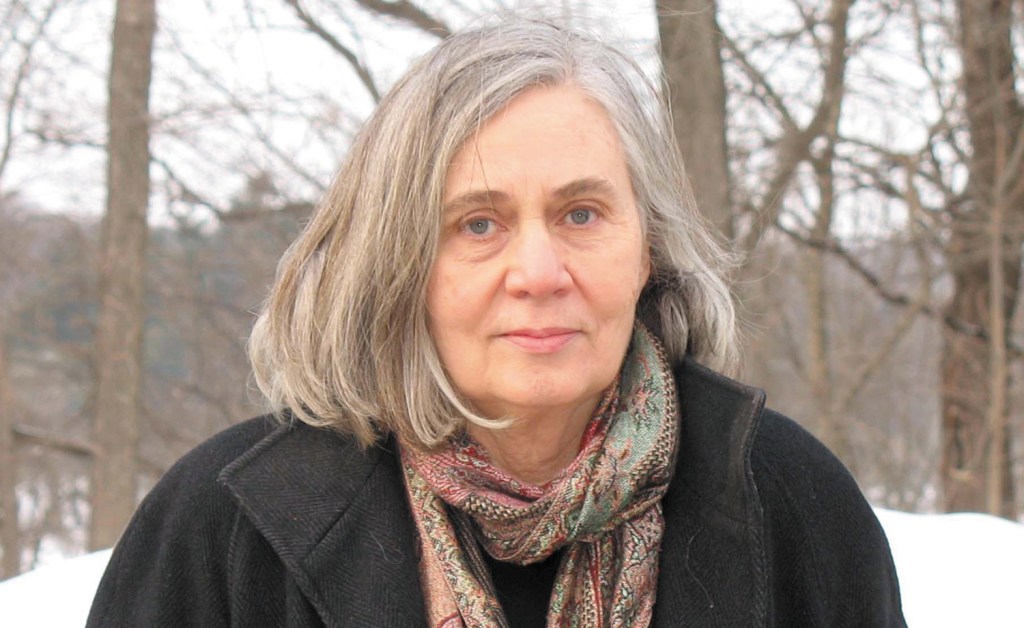
Kate Harris and Melissa Yule Atop India’s Nun-Kun Massif

I was a good boy during the month of January: I read all of the books I had planned to read during this year’s Januarius Project and then some. Here is the final list, in the order I read them with a short evaluation for each:

  • George Washington Cable, The Grandissimes. A pleasant surprise. ****
  • Ivy Compton-Burnett, Bullivant and the Lambs. Abandoned. Couldn’t abide it. *
  • Fredrik Backman, A Man Called Öve. Delightful Swedish novel. ****
  • Georges Lefebvre, The Coming of the French Revolution. Scholarly and interesting. ****
  • Trygve Gulbranssen, Beyond Sing the Woods. Interesting Norwegian tale. ****
  • Robert Goolrick, A Reliable Wife. Married life in Wisconsin in the 1800s. ****
  • Anne Brontë, Agnes Grey. Children are not always nice. ****
  • Kate Harris, Lands of Lost Borders: A Silk Road Journey. Great travel book. ****
  • Ragnar Jónasson, Nightblind. Icelandic police procedural. ***
  • Su Tong, Rice. A nasty character in 1930s China. ****
  • E R Eddison, The Worm Ourobouros. A fantasy novel that I abandoned, too wormy. *
  • Dzongsar Jamyang Khyentse, What Makes You NOT a Buddhist. A great intro. ****
  • Rachel Kushner, The Flamethrowers. The 1970s in New York and Italy. *****
  • Olga Grushin, The Dream Life of Sukhanov. Life is tough as the USSR comes unglued. *****
  • Ma Jian, Red Dust. A dissident travels around China in the 1980s. Great. *****

Chinese Dissident Ma Jian

That’s 15 books in all, not including F E Sillanpää’s Meek Heritage, which I finished on the last day of December 2020 ****.

With the exception of the two turkeys I abandoned (by Eddison and Compton-Burnett), I would have to say that this year’s Januarius Project was a smashing success. So successful, in fact, that I am planning a similar project for March, namely: reading only women authors. More about this as the month progresses.

Women Writers

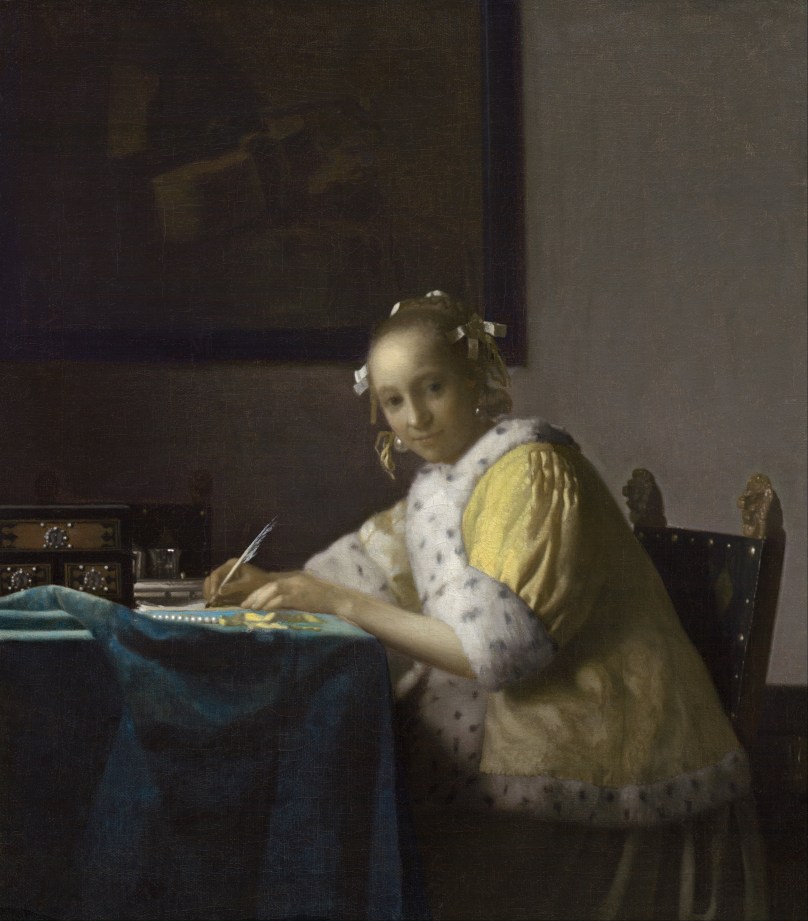
Vermeer’s Portrait of a Lady Writing

With a title like “Women Writers,” one might expect some heavy duty mansplaining about how women don’t really understand what life is about. Well, you won’t find it here. Even though, in the past, I have complained about fiction written by women being too “relationshippy,” I am beginning to appreciate the vision of the better women writers. Oh, there are plenty of distaff hacks, but I’m not talking about them here.

I have over the last few months read several novels written by women that managed to rock my world. They include:

  • Olga Grushin, The Dream Life of Sukhanov
  • Rachel Kushner, The Flamethrowers
  • Anne Bronte, Agnes Grey
  • Virginia Woolf, Orlando
  • Marie NDiaye, La Cheffe and My Heart Hemmed In
  • Tara Westover, Educated

Consequently, what I have decided to do is devote the entire month of March to reading about a dozen books by women authors, half by authors I have never read before, the other half by old favorites such as Ursula K. Le Guin, Joyce Carol Oates, Charlotte Bronte, and Patricia Highsmith. I haven’t decided which books yet, but there’s time to put the list together and let you know.

Currently, I am working my way through Olga Grushin’s The Dream Life of Sukhanov, a novel written in English by a Russian writer about a Soviet art magazine editor in the mid-1980s whose life comes unglued because of all the changes that are taking place just before the collapse of the Communist Party. At one point, the main character, Anatoly Pavlovich Sukhanov, muses to himself: “No, never again would he dare to accept any certainty with that bovine sense of simply receiving his due….”

Similarly, I plan to reject that similar “bovine sense” of underestimating women writers as a matter of course.

Knocking the Knobel

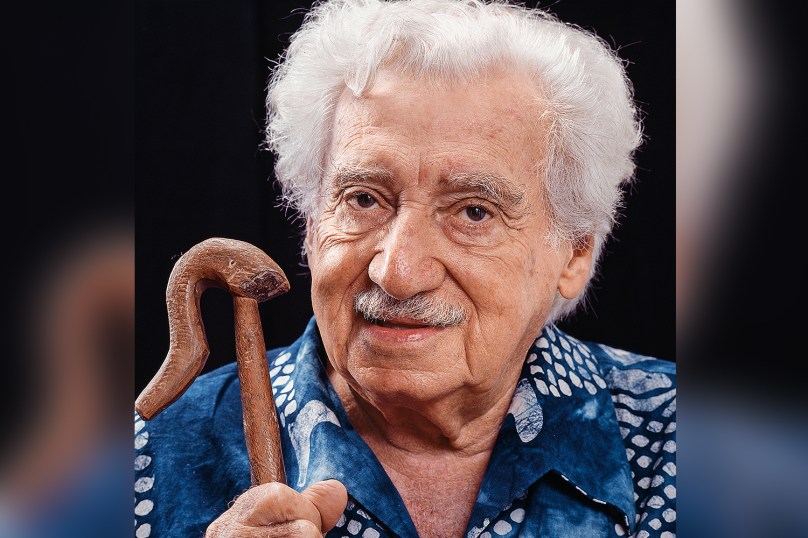
Brazilian Novelist Jorge Amado (1912-2001)

The following is a repeat of a post I wrote five years ago, in January 2016. I have since read Meek Heritage by Finnish writer Frans Eemil Sillanpää and consider that he deserved his prize.

I don’t have too much good to say about the Swedish Academy, which decides who will receive the Nobel Prize for Literature. If you look at the list of its recipients, it would not take too much effort to produce a list of as great as or even greater literary figures who have not received the laureate. Let me take a stab at it:

  • Kobo Abe (Japan), Woman in the Dunes
  • Chinua Achebe (Nigeria), Things Fall Apart
  • Ryunosuke Akutagawa (Japan), Rashomon
  • Jorge Amado (Brazil), Gabriela: Clove and Cinnamon
  • W. H. Auden (UK), Poetry
  • Georges Bernanos (France), Mouchette
  • Jorge Luis Borges (Argentina), Ficciones
  • Joseph Conrad (UK/Poland), Nostromo
  • Richard Flanagan (Australia), The Narrow Road to the Deep North
  • Graham Greene (UK), The Heart of the Matter
  • Vassili Grossman (Russia), Life and Fate
  • Henry James (US/UK), The Ambassadors
  • James Joyce (Ireland), Ulysses
  • Yashar Kemal (Turkey), Memed, My Hawk
  • Gyula Krúdy (Hungary), The Red Post Coach
  • Stanislaw Lem (Poland), Solaris
  • Osip Mandelstam (Russia), Poetry
  • Vladimir Nabokov (US/Russia), Lolita
  • Fernando Pessoa (Portugal), The Book of Disquiet
  • Marcel Proust (France), In Search of Lost Time
  • Arkady and Boris Strugatsky (Russia), Roadside Picnic
  • Italo Svevo (Slovenia), Confessions of Zeno
  • Leo Tolstoy (Russia), Novels and Stories
  • Mark Twain (US), Novels and Stories
  • Evelyn Waugh (UK), Brideshead Revisited
  • Virginia Woolf (UK), Mrs Dalloway

As you can see, I have not overloaded the list with the names of American authors, in the interests of being fair. If I wanted to, I can add names like Philip Roth, Ursula K. Le Guin, Joyce Carol Oates, Philip K. Dick, Cormac McCarthy, James Baldwin, Ralph Ellison, and a few others.

These can replace such figures as the following, whose reputations have not kept up with the times: Bjornsterne Bjornson, José Echegaray, Giosue Carducci, Rudolf Christoph Eucken, Paul von Heyse, Verner von Heidenstam, Karl Adolph Gjellerup, Henrik Pontopiddan, Carl Spitteler, Jacinto Benavente, Grazia Deledda, Erik Axel Karlfeldt, Pearl S. Buck, Frans Eemil Sillanpaa [SIC], Johannes Vilhelm Jensen, Earl Russell, and a few dozen others—mostly Scandinavian nonentities which at one time were highly thought of by a couple dozen mouldy Swedish academics. (Please forgive me for being lax about the diacritical marks in the above names.)

Reinstating Januarius

The Month of January Is Named After the Two-Faced Roman God Janus

Except for the last two years, when I took January vacations to Guatemala and Yucatán respectively, I used to confine my reading for that month to authors I had not read before. Since my reading during trips is almost entirely on my Amazon Kindle, and I don’t like to experiment so much when I am away from my library, my vacation reading includes many familiar names.

Starting on New Years Day, I will once again return to what I call my Januarius Project, which is to familiarize myself with new authors so that my reading doesn’t become too rooted in the familiar. Among the books I have planned for next month are:

  • Franz Eemil Sillanpää’s Meek Heritage (Finland)
  • Fredrik Backman’s A Man Called Ove (Sweden)
  • Trygve Gulbrandsen’s Beyond Sing the Woods (Norway)
  • Ragnar Jónasson’s Nightblind (Iceland)
  • George Washington Cable’s The Grandissimes (USA)
  • Georges Lefebvre’s The Coming of the French Revolution (France)
  • Ivy Compton-Burnett’s Bullivant and the Lambs (England)
  • Compton Mackenzie’s Whisky Galore (Scotland), which was made into one of my favorite comic films
  • Anne Brontë’s Agnes Grey (England)

Frans Eemil Sillanpää (1888-1964)

I don’t know if I’ll complete all those books, but I will try. By the way, if you’ve noticed a preponderance of Scandinavian authors, that’s deliberate. I’ve read a lot of Icelandic literature, but very little from mainland Scandinavia.

We Americans tend, I think, to not stray far from American and English literature. And I have some friends who refuse to read a book that has been translated from another language—whereas roughly half of my reading is in translation.

14 Diamonds in the Rough

Marie NDiaye, Franco-Senegalese Writer and Playwright

In this year of the quarantine, I have found particular solace in reading writers that most people have never heard of before—and some that were new to me as well. The list is alphabetical by author, followed by the name of the book(s) I read in 2020:

  • Algren, Nelson (1909-1981). The Man with the Golden Arm. This novelist had a years-long relationship with Simone de Beauvoir, who is also on this list.
  • Bakewell, Sarah. At the Existentialist Café: Freedom, Being, and Apricot Cocktails. A wonderful nonfiction book primarily about the French and German Existentialist philosophers from Husserl to Sartre.
  • Beauvoir, Simone de (1908-1986). The Mandarins. A powerful novel about the French postwar existentialists.
  • Collins, Wilkie (1824-1889). No Name and A Rogue’s Life. Not as well known as Dickens, but I think a better writer. His best novel is The Woman in White.
  • Dourado, Autran (1926-2012). Pattern for a Tapestry. This Brazilian writer from Minas Gerais is a real find.
  • Hrabal, Bohumil (1914-1997). I Served the King of England. I wonder why this great Czech novelist never won the Nobel Prize. Consistently great.
  • Marra, Anthony. A Constellation of Vital Phenomena. The youngest writer (only 36) on the list, but shows promise of great things to come.
  • Modiano, Patrick. Dora Bruder. Winner of the 2014 Nobel Prize in Literature. He is one of my favorite living novelists.
  • NDiaye, Marie. The Cheffe and My Heart Hemmed In. Winner of the Prix Goncourt in France. Clearly deserves the Nobel as well.
  • Neruda, Jan (1834-1891). Prague Tales. The Czech writer whose last name Pablo Neruda hijacked for himself.
  • Portis, Charles (1933-2020). Gringos. I really admire this Arkansas novelist’s work. Best known for True Grit, which is also worth reading.
  • Stasiuk, Andrzej. Fado. Hurry up and translate more of this great Polish writer’s work!
  • Westover, Tara. Educated. A nonfiction autobiographical book about growing up in an Idaho survivalist household.
  • Wright, Austin Tappan (1883-1931). Islandia. A novel in a genre by itself: A realistic fantasy novel set in a nonexistent Southern Hemisphere country.

As you can see, this list skips around the world and across two centuries.

How to Survive the ’Rona

Kind of Looks Like Mines Intended to Explode on Contact with Ships

Since March 15, I have maintained strict quarantine—with a sole exception. Late in October, I visited my brother in the Coachella Valley. Although I have maintained telephone contact with my friends, I have not seen any of them for many months.

So how does one survive the dreaded ’Rona?

Very simple: Take yourself out of circulation. To the maximum extent possible, restrict your contact with friends and family to the telephone, e-mail, and—if you are so inclined—letters.

Let’s face it: There will be many more deaths and illnesses before this thing mutates or dies off.

This is a great time to see all the great movies you’ve missed (on TV and your computer), and to read great books. It’s also a good time to learn how to cook for yourself. Food that is delivered to your home is usually tepid at best.

Wear a mask when there is any chance of talking to someone in person, whether a neighbor or a grocery cashier. If you feel that the requirement to wear a mask is an infringement on your liberty, be ready to kill off your friends, acquaintances, family, and possibly yourself. Because there is a very real possibility that you might wind up a mass murderer through sheer idiocy.

And, if you see Jacob Marley’s face on your door knocker, run like hell!

Women Walking Away

They Walk Away From Me, So To Hell With ’Em

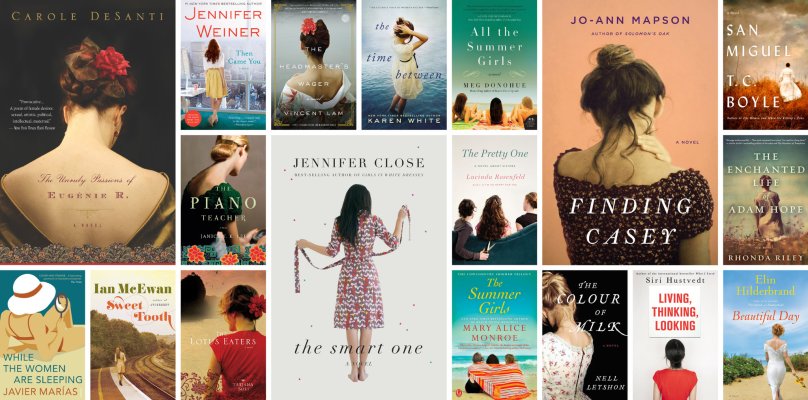
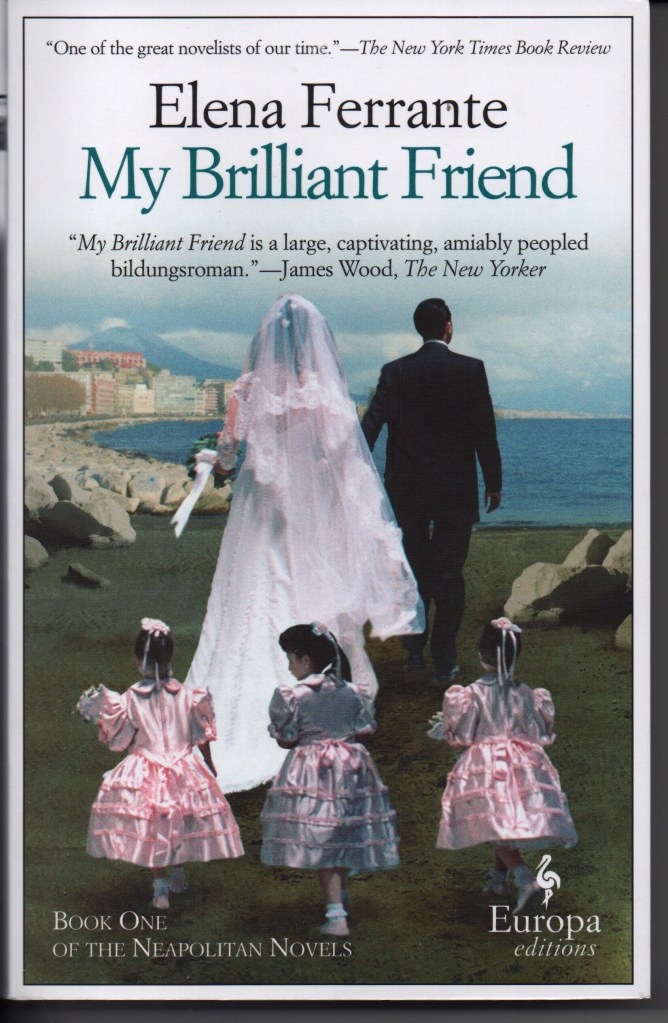
Today I stopped in at Barnes & Noble at The Grove (adjacent to the original L.A. Farmers Market at 3rd and Fairfax). I never cease to be amazed at the lack of variety in the cover designs of paperbacks meant for the women’s market. Here are the basic elements:

  • Women walking away with their faces infrequently shown
  • Extra points for wearing fashions of bygone days
  • Or: Back mostly bare

The above photograph shows a montage of women’s titles circa 2013. Now, seven years later, it’s still the same.

This monotony does perform a useful function for me: With rare exceptions, I wouldn’t select one of those “women walking away” books. I would expect to find that their contents are mostly what I call excessively “relationshippy,” and mostly from a parochial feminine perspective.

No offense meant, but most fiction targeted primarily at female readers is not my cup of tea.

One exception:

Omigosh! Four Women Walking Away—and One Guy!

Elena Ferranate’s My Brilliant Friend was an excellent novel about a girlhood in Naples, Italy. Eventually, I’ll tackle the sequels in the trilogy.

Alexandria on the Pacific

The Port of Alexandria As It Is Today

Every once in a while, I re-read a book that has meant a lot to me in the past, in the hopes of somehow rediscovering myself as I was when I first encountered it. Around 1967-1968, I first delved into Lawrence Durrell’s Justine, the first volume of his Alexandria Quartet.

I had just reached the age of puberty in my early twenties thanks to regular injections of depo-testosterone. In September 1966, I had a pituitary tumor (chromophobe adenoma) removed by slicing through my forehead and hinging my brain upward. As a result, I was a strange sort of late-blooming virgin who was mightily puzzled by and preoccupied with sex.

The Edition I Read

Imagine me as I lie in the sand on Santa Monica Beach by lifeguard station 12 reading the following:

Five races, five languages, a dozen creeds: five fleets turning through their greasy reflections behind the harbour bar. But there are more than five sexes and only demotic Greek seems to distinguish among them. The sexual provender which lies to hand is staggering in its variety and profusion. You would never mistake it for a happy place. The symbolic lovers of the free Hellenic world are replaced here by something different, something subtly androgynous, inverted upon itself. The Orient cannot rejoice in the sweet anarchy of the body—for it has outstripped the body. I remember Nessim once saying—I think he was quoting—that Alexandria was the great winepress of love, those who emerged from it were the sick men, the solitaries, the prophets—I mean all who have been deeply wounded in their sex.

So there I was on the hot sands of Santa Monica, surrounded by women in bikinis, indulged in morose delectation.

Actually, Justine is pretty good, though it is quite arch at times. I am no longer the same unhappy young man on the beach. I read all four volumes of the Alexandria Quartet that one summer, and I loved it—however disturbing I found it.

A Long Flight to … Where?

This may sound strange to you, but I am surviving the rigors of self-quarantine because I am good at lying to myself.

The Coronavirus Quarantine Is Sort of Like Jet Lag

I have on occasion taken some longish flights to Europe and South America. The ones to Europe are particularly problematical because I arrive early in the morning after a night that has lasted for only a few hours. I know that if I drop into bed upon check-in at my hotel, I will awake while it is still light; and I won’t be able to go to sleep until the next morning.

So what do I do?

  • First of all, I pretend to myself during the flight that I am somehow outside of time, and that during the flight, time has no meaning.
  • Most important, I set my watch to the time zone of my destination. Nobody else I know does this: They insist on holding on to the time zone of their city of origin.
  • When I arrive, I stay awake until it is a reasonable bedtime in my destination.

When I went to Iceland, for example, I arrived in June—when the sun doesn’t set until the wee hours of the morning. I ate extra meals, went on a walking tour of Reykjavík, and finally collapsed in bed while the sun was still up around midnight. I woke up refreshed at an acceptable time the next morning.

So what does all this have to do with the coronavirus? Fortunately, Martine and I are retired, so I could pretend that this whole period of the outbreak is like a long flight to nowhere.

A Nook of My Library Circa 2002

I have in my apartment several thousand books as well as hundreds of films on DVD. With my subscription to Spectrum Cable, I have access to hundreds of films for no additional cost using their On Demand service. Plus: As a member of Amazon Prime, I have access to thousands of other films.

So on my “flight” to nowhere during this seemingly endless quarantine, I am reading 12-18 books a month as well as seeing 25 or more feature films a month. (And in between reading and film viewing, I do all the cooking and go out for walks.)

I realize I would be in a radically different situation if I had to worry about a job, but fortunately I don’t. I have to worry that that madman in the White House may decide to cancel Social Security or destroy the value of the American dollar, but other than that I am not dependent on the workplace—though I am affected when restaurants are shuttered, museums and libraries closed, and so on.

There is an 1884 novel by a French writer named Joris-Karl Huysmans called Against Nature (in French À Rebours) about a dilettante names Jean des Esseintes who, instead of actually going on a vacation, does an armchair traveler “staycation” and is happy about it. The epigraph to the novel is a quote from the 14th century Flemish mystic Jan van Ruysbroeck:

“I must rejoice beyond the bounds of time…though the world may shudder at my joy, and in its coarseness know not what I mean.”