Repeat Performances

I Frequently Re-Read Books That Have Impressed Me

This year I have re-read ten books since the start of 2019, such as Joseph Conrad’s Lord Jim. It has been eleven years since I have read any Conrad, back when I had finally finished Under Western Eyes, which I had started back in college. The main reason I ever re-read a book is to see whether I have somehow changed in the intervening years. Very occasionally, I forget that I have read a particular work in the past and go through it a second time, not realizing my mistake until I check my reading log. Below is a list of 2019 re-reads:

  • Joseph Conrad: Lord Jim
  • Laurence Sterne: The Life and Opinions of Tristram Shandy, Gentleman
  • Sean O’Casey: Juno and the Paycock
  • Virginia Woolf: Monday or Tuesday, Eight Stories. I re-read this one by accident.
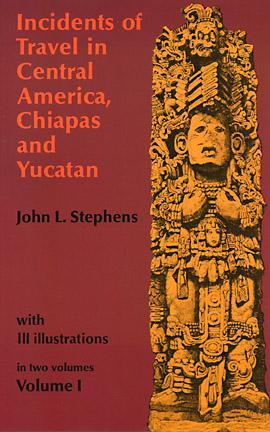
  • John Lloyd Stephens: Incidents of Travel in Central America, Chiapas and Yucatán and Incidents of Travel in Yucatán. I will probably re-read a number of other books about Mexico in the next few months, most of which I have not touched for over 30 years.
  • William Shakespeare: Hamlet. Multiple re-reads.
  • G. K. Chesterton: Robert Louis Stevenson and The Poet and the Lunatics. I frequently re-read Chesterton for sheer enjoyment.
  • J. E. Neale: Queen Elizabeth I

A Joy to Read Any Number of Times

As my Yucatán vacation draws close, I will probably re-read Fanny Calderón de la Barca’s Life in Mexico; Charles Macomb Flandrau’s Viva Mexico!; and Malcolm Lowry’s Under the Volcano and a few other books.


Cogitus Interruptus

Sir Joshua Reynolds’s Portrait of Laurence Sterne

He was a Yorkshire Anglican clergyman who just happened to write one of the five greatest novels ever written, Laurence Sterne (1713-1768) gave us The Life and Opinions of Tristram Shandy, Gentlemen (1759-1761), a book that can be read and re-read with pleasure over an entire lifetime. It was in the mid 1960s that I first encountered it in Chauncey C. Loomis’s class on “The Eighteenth Century English Novel.” Loomis was my favorite professor of English, which happened to be my major at Dartmouth. I am still re-living that class and re-reading the books that he assigned. That makes his class one of the best I ever took.

Tristram Shandy revolves around four plot points that would seem to be pretty thin. All the plot points involve either interruptions or “abridgments” of various sorts:

  1. Just as Mr Shandy and his wife are approaching orgasm, the latter asks her husband if he has rewound their clock.
  2. When Tristram is being born, the forceps of Dr Slop, who presides at the birth, crush the little lad’s nose.
  3. As a result of a miscommunication with one of the servants, the new baby is christened Tristram instead of Trismegistus.
  4. Tristram is accidentally circumcised when a window crashes down upon his foreskin.

How these four main plot points are stretched out over some five hundred pages of warmth and hilarity is a major miracle. The plot is positively Ptolemaic, with little epicycles and interruptions that create hilarious interludes.

It has always amazed me that it is the young Tristram Shandy who is narrating the novel. Yet he is not born until midway through the book, after we have been exposed to numerous incidents which the young Shandy could not have experienced as he was still in utero.

I can see myself coming back to Tristram Shandy again and again, paging at random to the beginning of a sequence, and reveling in it again … and again.

Serendipity: The Marbled Page

The Notorious Marbled Page in the Middle of Tristram Shandy

One of the oddest novels ever published is Laurence Sterne’s The Life and Opinions of Tristram Shandy, Gentleman (1759-1761). I first encountered it in college in a class on the 18th Century English Novel. I fell in love with its eccentric charms when I was scarce nineteen years old. Upon re-reading it, I love it all the more. The novel seems to start several times in its nine books, and there is a marbled page (see above) several hundred pages in. I have a whole lot more to say about this book in a future post. Below is the first paragraph of the book:

I wish either my father or my mother, or indeed both of them, as they were in duty both equally bound to it, had minded what they were about when they begot me; had they duly consider’d how much depended upon what they were then doing;—that not only the production of a rational Being was concerned in it, but that possibly the happy formation and temperature of his body, perhaps his genius and the very cast of his mind;—and, for aught they knew to the contrary, even the fortunes of his whole house might take their turn from the humours and dispositions which were then uppermost;—Had they duly weighed and considered all this, and proceeded accordingly,—I am verily persuaded I should have made a quite different figure in the world, from that in which the reader is likely to see me.—Believe me, good folks, this is not so inconsiderable a thing as many of you may think it;—you have all, I dare say, heard of the animal spirits, as how they are transfused from father to son, &c. &c.—and a great deal to that purpose:—Well, you may take my word, that nine parts in ten of a man’s sense or his nonsense, his successes and miscarriages in this world depend upon their motions and activity, and the different tracks and trains you put them into, so that when they are once set a-going, whether right or wrong, ’tis not a half-penny matter,—away they go cluttering like hey-go mad; and by treading the same steps over and over again, they presently make a road of it, as plain and as smooth as a garden-walk, which, when they are once used to, the Devil himself sometimes shall not be able to drive them off it.


Four Travel Classics About Mexico

Fanny Calderón de la Barca’s Life in Mexico (1843)

There are four books written by foreigners over a hundred year period about their encounters with Mexico. They are all beautifully written classics of the travel genre. I present them below by order of publication.

Life in Mexico (1843)

Frances Erskine Inglis was a Scotswoman, herself of noble birth, who married the first Spanish ambassador to Mexico and became the 1st Marquise of Calderón de la Barca. She traveled extensively throughout the Republic and became enamored of the people and their culture. Even now her book is a delight to read and a major influence on writers who followed.

Charles Macomb Flandrau’s Viva Mexico! (1908)

Viva Mexico! (1908)

Next is a book of essays by an American author and essayist named Charles Macomb Flandrau. After a visit to a Mexican coffee plantation run by his brother William, Flandrau wrote Viva Mexico! about Mexico under the rule of dictator Porfirio Díaz who ruled for most of the years between 1876 and 1911. (He is famous for the following quote: “Poor Mexico! So far from God and so close to the United States!) Flandrau’s book is still quite readable today.

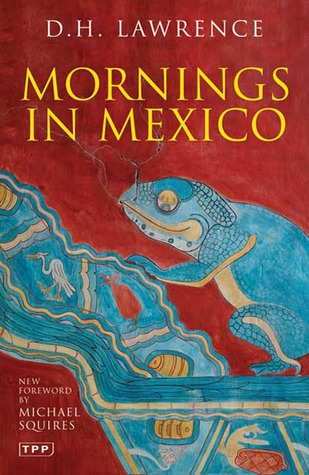
D. H. Lawrence’s Mornings in Mexico (1927)

Mornings in Mexico (1927)

British novelist D. H. Lawrence has a mixed record when it comes to Mexico. His travel essays in Mornings in Mexico are among his best nonfiction, while his bloated novel The Plumed Serpent, written the previous year, is one of his worst works, showing no understanding of Mexican Indio culture.

Sybille Bedford’s A Visit to Don Otavio (1953)

A Visit to Don Otavio: A Mexican Journey (1953)

Finally, there is German/British writer Sybille Bedford’s account of a year spent in Mexico, mostly around Lake Chapala, just south of Guadalajara. The Don Otavio of the title is a charming Criollo host who makes the stay of Sybille and her companion at their lakeside estate an idyl. Whenever Sybille attempts to travel to most other destinations (including Acapulco, Mazatlan, Puebla, Mexico City, and Oaxaca), she runs into difficulties. Don Otavio’s estate is like a refuge in a country where travel (at least in the 1940s) was problematical at best.

Interestingly, Bedford is aware of and discusses the other three books mentioned above.


Blood on the Bayou

Mystery Writer James Lee Burke

I have been reading occasional mystery novels by James Lee Burke over the years. Having just finished the first novel in the Dave Robicheaux series—Neon Rain (1987)—I now know why I like him so much.

Dave Robicheaux is the hero of most of Burke’s novels. After a traumatic stint in Vietnam, he joins the New Orleans Police Department. He has had a problem with alcoholism and a history with Twelve-Step programs, as well as a distrust of authority. At one point in Neon Rain, he says:

Like many others, I learned a great lesson in Vietnam: Never trust authority. But because I had come to feel that that authority should always be treated as suspect and self-serving.

His pictures of the Southern Louisiana landscape sometimes wax on the poetic:

Clouds of fog swirled off the bayou through the flooded woods as I banged over an old board road that had been cut through the swamp by an oil company. The dead cypresses were wet and black in the gray light, and green lichen grew where the waterline touched the swollen bases of the trunks. The fog was so thick and white in the trees that I could barely see thirty feet ahead of the car. A rotted plank snapped under my wheel and hanged off the oil pan. In the early morning stillness the sound made the herons and egrets rise in a sudden flapping of wings toward the pink light above the treetops. Then to one side of the road, in a scoured-out clearing in the trees, I saw a shack built of Montgomery Ward brick and clapboard, elevated from the muddy ground by cinder blocks and cypress stumps, with a Toyota jeep parked in front.

And:

Somewhere down inside him, he knew that his fear of death by water had always been a foolish one. Death was a rodent that ate its way inch by inch through your entrails, chewed at your liver and stomach, severed tendon from organ, until finally, when you were alone in the dark, it sat gorged and sleek next to your head, its eyes resting, its wet muzzle like a kiss, a promise whispered in the ear.

There is a great deal of violence in the plot as Robicheaux fights his police force and various Federal agencies at the same time as he tracks down a set of murderous thugs, one by one.


A Bookworm’s Day

The Westfield Culver City Mall

Today was a day devoted to books. This morning, I took a box of 20 trade paperbacks to the Los Angeles Public Library in Mar Vista as a donation. They are about to have a large book sale in a couple of weeks, and I thought these books would probably sell. After I dropped them off, I sat in one of their comfy chairs and finished reading The Best American Travel Writing 2013, edited by Elizabeth Gilbert. Travel literature is one of my favorite book categories, accounting for much of my reading during the summer months. (As well as being an actual traveler, I am also an armchair traveler.) On my way out, a picked up a free library discard copy of Fodor’s Brazil (2016).

The reason? I am toying with the idea of flying to the State of Bahia, to Salvador and Ilheus, and reading Jorge Amado’s novels which are set there.

Next, I drove to the Westfield Culver City mall, where I ate a light vegetarian lunch at the Vietnamese restaurant in their top floor food court. Afterwards, I bought some milk chocolate clusters with walnuts, peanuts, pecans, and almonds. I spent a couple of hours looking at the Fodor Brazil guide before heading home.

Max von Sydow and Liv Ullmann Arrive on the Island in Hour of the Wolf

By the time I got back, Martine was gone for a doctor’s appointment, so I watched Ingmar Bergman’s Hour of the Wolf (1968), the closest the Swedish director ever came to a gothic horror film, starring Max von Sydow and Liv Ullmann staying on an island of vampires.

After preparing dinner, consisting of Hungarian fasirt with buttered corn on the cob. Afterwords, I started reading Valentin Kataev’s 1927 novel Embezzlers. All in all, not a bad day.


No More Library of Alexandria

Scenes from My Library Circa 2002

I’m showing you this 17-year-old picture of my library because now it’s much worse. The center of the room has large piles of books and boxes full of more books. Was I trying to build my own Library of Alexandria? Apparently. I used to love going to bookstores and buying lots of books, supplemented by the books I bought from Amazon, eBay, and the Advanced Book Exchange (ABE). I used to spend upwards of several hundred dollars a month picking up titles which I thought that, some day, I would sit down and read.

It’s not that I don’t read that much. According to my records, I still devour some 150 books a year. Look me up on Goodreads.Com, and you will find my reviews of all the books I read. It’s just that, now that I’m retired and on a fixed income, and now that bookstores have almost ceased to exist, I read more library books. And I also read many of the books I have downloaded on Kindle, which cost a whole lot less than new paperbacks.

So for the last year or so, I have been donating hundreds of books to libraries—most specifically the Mar Vista Branch of the Los Angeles Public Library—and in some case selling or trading books to the few booksellers still in the business. Each week, I donate an average of two boxes of books to the library. I will continue until my total book collection shrinks by some two to three thousand books.

That still leaves me with plenty of books. Being an insatiable bookworm, I will never lack for something to read.


The Zombie Apocalypse Comes to Coronel Pringles

The Zombie Apocalypse Pays a Visit to South America

Who or why or what is Coronel Pringles? Actually, it’s a medium-sized town of no particular distinction in the Province of Buenos Aires, not too far north of Bahía Blanca. It is perhaps best known not only as the birthplace of Argentinian novelist César Aira, but the scene of several of his stories. One of these stories is Dinner (or Cena in Spanish), first published in 2006.

The story starts slowly enough with a penniless bachelor in his sixties who has moved back in with his mother. Together, they visit an unnamed friend of the unnamed narrator and view some of his collections. When they return home, the mother expresses dissatisfaction with the evening; and the son turns on the television … only to learn that the dead of Coronel Pringles are rising from their graves and attacking the living:

This was as improbable as an adolescent fantasy. It was, however, true. The guard who sounded the alarm first heard some rustling sounds that kept getting louder and spreading across the graveyard. He came out of the lodge to take a look and hadn’t even made it across the tiled courtyard to where the first lane of cypeses ended when, in addition to the worrisome rustlings, he began to hear the loud banging of stone and metal, which seconds later spread and combined into a deafening roar that reverberated near and far, from the first wing of the wall of niches to the rows of graves extending for more than a mile.

The Area Around Coronel Pringles

At first the newly risen dead show a lack of coordination, but they begin to pick up speed. “No two were the same, except in how horrible they were, in the conventional way corpses are horrible: shards of greenish skin, bearded skulls, remnants of eyes shining in bony sockets, sullied shrouds.”

What do these undead do? They go for the brains of the living (as expected), but what interests them most are the endorphins contained therein, which they suck out with ghoulish glee. Is there nothing that can stop these delinquent ancestors from decimating all of Coronel Pringles? Well, yes, there is, but you’ll have to read this short (101 pages) but delightful book for yourself to find out. Be prepared for a completely surprising dénouement in Part III.


My Favorite Founding Father

Thomas Jefferson (1743-1826)

My favorite founding father is also the most problematical, namely: Thomas Jefferson. We know him as the Third President of the United States. What was even more interesting was how he saw himself, based on the epitaph he had composed for himself:

HERE WAS BURIED THOMAS JEFFERSON, AUTHOR OF THE DECLARATION OF AMERICAN INDEPENDENCE, OF THE STATUTE OF VIRGINIA FOR RELIGIOUS FREEDOM, AND FATHER OF THE UNIVERSITY OF VIRGINIA.

Note that he doesn’t make any mention of the four years he served as Vice President to John Adams, let alone the two terms as President. The Statute of Virginia for Religious Freedom is interesting, because it removes its author from consideration by religious fundamentalists as a kindred spirit. Jefferson was a Deist, not really a practicing Christian in the religious sense.

And the University of Virginia? The Charlottesville campus was indeed Jefferson’s creation, in terms of its architecture, administration policy, and faculty staffing.

Why did Jefferson not consider his presidency one of this chief accomplishments? For one thing, he was basically a shy person who did not like the whole give and take 0of politics. During the eight years of his Presidency, he gave only two speeches, and they were written by him for his two inaugurations. Not a good speaker, he was, however, a wizard writer, and his Declaration of Independence was indeed a work that will live forever. (Until Trump decides to repeal it.)

I have just finished reading Joseph J. Ellis’s American Sphinx: The Character of Thomas Jefferson (New York: Alfred A Knopf, 2001). A winner of the National Book Award, Ellis’s book examines Jefferson’s tendency to balance contradictory ideas on such issues as slavery (he was against it, yet he owned slaves without emancipating them), states’ rights, the Federal Government, and the Supreme Court.


The Book Collector

Me in My Library in Palmier Times

Ever since I was very young, I wanted to live surrounded by books. And I did, spending hundreds of dollars a month on books—hardbounds, paperbacks, even e-books. There is a tendency for accumulations to get out of hand. I have known collectors who lived in fear of being crushed under their film collections, movie poster collections, book collections. Collections can grow so out of bounds that they become a kind of illness, related to hoarding. When Martine and I moved from room to room, we had to take prescribed paths, because the floor was piled high with books. It was frequently a bone of contention between us.

Beginning late last year, I started donating books to the Mar Vista Branch of the Los Angeles Public Library. In a twelve-month period, I have given well over a thousand books to the library. Some will be sold by the library at one of their bimonthly sales, some will be sold for a dollar a book at the branch, some (the cheaper ones) will just be given away. Who knows? Perhaps some of them might even be incorporated into he library’s own collection. A lot of them are great titles in prime condition.

If you look at the books behind me in this picture, I would have to say that about 30-40% are no longer in my possession. Twice a week, a put together a box of books for donation, with Martine’s eager cooperation.

Now that I am living on a fixed income, I buy relatively few books, and then only if I intend to read them in the near future. Today, for example, I purchased a nice harbound copy of Paul Theroux’s Sir Vidia’s Shadow, about the author’s decades-long friendship with V. S. Naipaul.

Do I read as much as ever? Of course I do—perhaps even more so. It’s just that I no longer feel I have to own all the books I love. I just have to read them.