“Man Hands On Misery to Man”

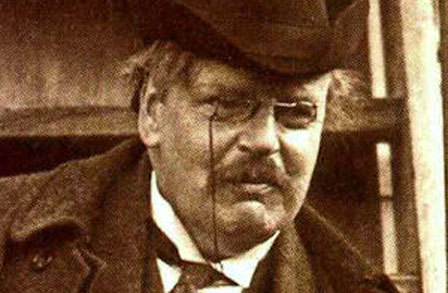
British Poet Philip Larkin (1922-1986)

It is appropriate to post this poem after learning of the death of Rob Reiner and his wife at the hands of their son Nicholas. You might say it’s about the flip side of a happy family:

This Be the Verse

They fuck you up, your mum and dad.   
    They may not mean to, but they do.
They fill you with the faults they had
    And add some extra, just for you.

But they were fucked up in their turn
    By fools in old-style hats and coats,   
Who half the time were soppy-stern
    And half at one another’s throats.

Man hands on misery to man.
    It deepens like a coastal shelf.
Get out as early as you can,
    And don’t have any kids yourself.

Summer Vacation

The following paragraphs come from the beginning of Chapter Eight in John D. MacDonald’s The Crossroads. In it, he satirizes the typical 1950s summer family vacation.

During the first twenty-two days of July the Crossroads Corporation experienced the normal seasonal change in the character of the business. Summer vacationers clogged the roads. The young families stopped at the restaurants and gas stations and motels. The young husbands, with fourteen days, or twenty-one days of freedom, spent it abrading their souls against the shimmer and stink of fast traffic, counting every night the thinning stack of traveler’s checks. The young wives put on pretty summer skirts and blouses in the morning, and by ten o’clock were stained, wilted, wrinkled and rump-sprung, the victims of the attrition of summer heat, sticky hands and road fumes. They called their husbands darling with iron emphasis. Small, weary, wind-burned children whined and threw up. The young families visited dear friends they had not seen in three years, and found nothing to say to them. They visited the showplaces of the nation, made the proper dutiful sounds of appreciation and found them a litter of gum wrappers, bored guides, and ill-mannered children of the other young families. They careened down the endless stone rivers between the bright thickets of billboards. Virginia Beach was where Junie thumped Russell on the head with a rock. Three stitches. The Suwanee River was where the trunk compartment lock jammed. The Grand Canyon was where Baby broke Mummie’s glasses. Franconia Notch was where Tiffin got into the poison ivy.

Tires burst. Speedometer cables squeaked and died. Pebbles chipped windshields. Pets escaped. (You were the one hadda bring that goddam dog in the first place.) Fan belts snapped. Ten billion pieces of Kleenex tumbled along the dusty shoulders.

Road Trip

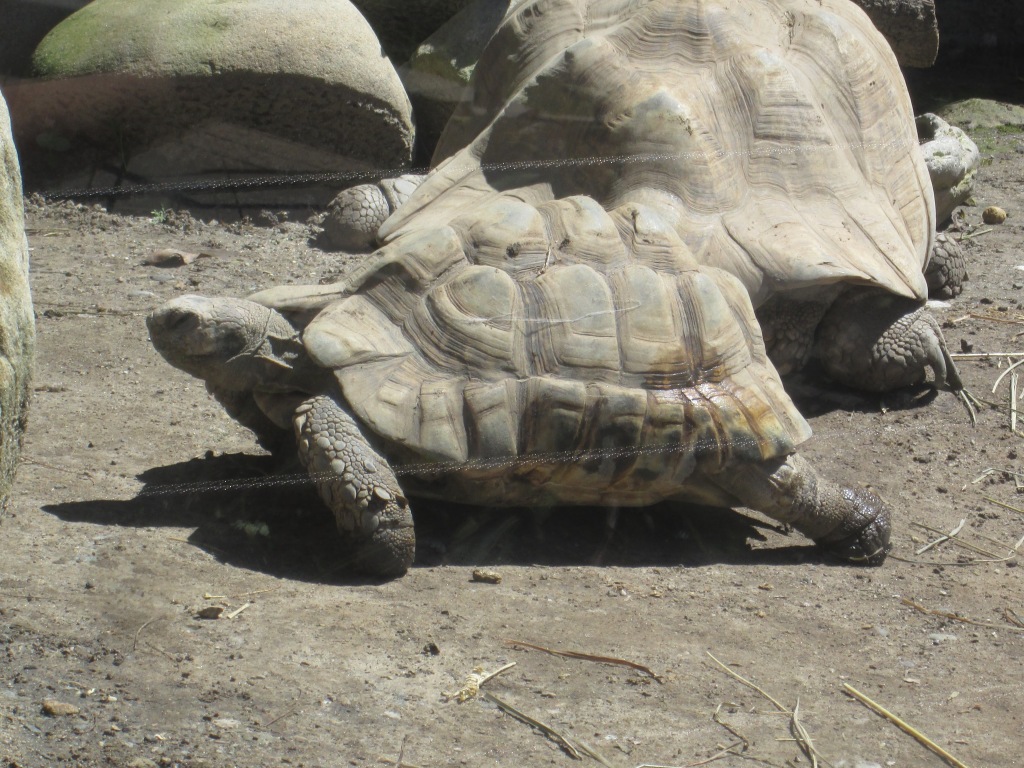
Tortoise at the Santa Barbara Zoo

Because of all the rain we’ve been having, Martine and I haven’t gone on any road trips lately. Today, we drove to Santa Barbara, had a great seafood lunch, and went to the Santa Barbara Zoo. Unlike the Los Angeles Zoo, there are usually fewer than 10,000 visitors present; and consequently there is about 76% less chance of having an infant stroller destroy your ankles.

Mind you, there were many small children in attendance. But that is to be expected at any zoo. It’s one of the few places one can take one’s small progeny and allow them to act like kids without inflicting too much damage to the animals and other visitors.

We’ve been visiting the Santa Barbara Zoo for upwards of twenty years, so we were saddened to hear that the two Asian elephants, Sujatha and Little Mac, died in 2019; and the zoo is not planning to replace them. Instead, their large compound is now an Australian “walkabout.”

On the way back, we took the pleasant and very rural California 126 to avoid the usual traffic jam around Oxnard and Ventura. We stopped at Francisco’s Fruit Stand in Fillmore to buy some honey, strawberries, and mandarins. I was shocked to find that taking 126 and I-405 in Santa Clarita takes no more time and eats up no more miles than taking either the Pacific Coast Highway to U.S. 101 or taking U.S. 101 all the way.

Unfortunately, Martine was in considerable pain from a pinched nerve in the back that has been bothering her for several years and getting progressively worse. Unless she finds a way of ameliorating her condition, we may not be able to go on many more trips together.

Apparently Not a Parent

Somebody Else’s Life

I found out in the most brutal way possible. I was in the endocrinologist’s clinic. The doctor mentioned in an aside, “You know, of course, that you’re sterile?” At that point in my life, I was appalled. Of course I wanted to raise a family, with perhaps two offspring. But it was apparently not to be. I had one major adjustment surviving brain surgery a couple years earlier, but now I had another major adjustment in the offing. No kids. No normal family life.

Upon hearing this several acquaintances (they could never really be my friends) would pipe in with, “You can always adopt!” If I adopted a child, it would be mine only by an act of will stretching decades into the future … to care for someone who, biologically, had nothing in common with me. Okay, so I am not Mother Teresa. I make no claims to sainthood.

I made the adjustment. The women I went out with just assumed that I was telling an untruth when I told them I was sterile, so I went along with it until I went to my doctor who tested me and certified that, yes, indeed, I was shooting only blanks.

Now, in my seventies, I look back on my life and am happy that I did not have to raise any children. My one long-term relationship has been with Martine, a woman who did not ever want to have children. I don’t think I would have been a good father, and as Francis Bacon wrote, “He that hath wife and children hath given hostages to fortune; for they are impediments to great enterprises, either of virtue or mischief.”

Not that I have ever had any great enterprises….

Vlad’s Girls

Vladimir Putin’s Daughters: Mariya Putina and Katerina Tikhonova

Although it is well known that Vladimir Putin is divorced and seeing a gymnast named Alina Kabaeva, he has had two daughters by his ex-wife Lyudmila, a former airline stewardess. The girls were born in 1985 and 1986 respectively and are now in their thirties.

Both girls went to school under assumed names and were carefully shielded from the spotlight. Because both are wealthy, after the invasion of Ukraine, they were sanctioned by the U.S. and its allies. It is suspected that Putin has showered the girls with large amounts of rubles, making them suspect as oligarchs in their own right.

You can read up on them and see pictures at this highly entertaining website.

Two Generations

Me with My Niece’s Oldest Son, Ollie

While many of my family members cavorted in the pool at a rental house in Indio, I sat reading James Boswell’s Boswell in Holland, 1763-1764. I had had a vicious siege of blepharitis that lasted for the better part of a year, so I was not about to subject my eyes to pool chemicals.

As I was eating my sister-in-law’s excellent orzo salad with olives, orange bell peppers, and feta cheese, my niece Hilary’s son Oliver came and sat down next to me. He had matured considerably since the time when, while rough-housing, he kicked me in the head. (Fortunately he was barefoot at the time.) Since that time, I have resolved never to rough-house with children. I could get hurt. Or worse, I can turn into my father and deliver an angry swat.

When my brother proposed I look after three children while their parents went elsewhere, I answered “No effing way!” Some people are not meant to be parents: I am one of that number. But then he knew, and he was only jesting with me.

Acton Bell

The Three Brontë Sisters from Left to Right: Anne, Emily, and Charlotte

No family anywhere had three such eminent novelists, though they wrote at a time when women novelists were looked down upon. Consequently, they published under the names of Acton Bell (Anne), Ellis Bell (Emily), and Currer Bell (Charlotte).

I have read and enjoyed the work of the two elder sisters, but until this week I had never read anything by Anne Brontë. I was delighted to find that she was as competent a writer as her sisters and perhaps a bit more modern in her outlook. Her novel Agnes Grey tells the story of a young governess dealing with the spoiled children of the well-to-do.

When one of her former charges (Rosalie) denigrates her eminent husband in front of a footman, she shows Agnes exactly what she thinks of servants:

Oh, no matter! I never care about the footmen; they’re mere automatons: it’s nothing to them what their superiors say or do; they won’t dare to repeat it; and as to what they think—if they presume to think at all—of course, nobody cares for that. It would be a pretty thing indeed, it we were to be tongue-tied by our servants!

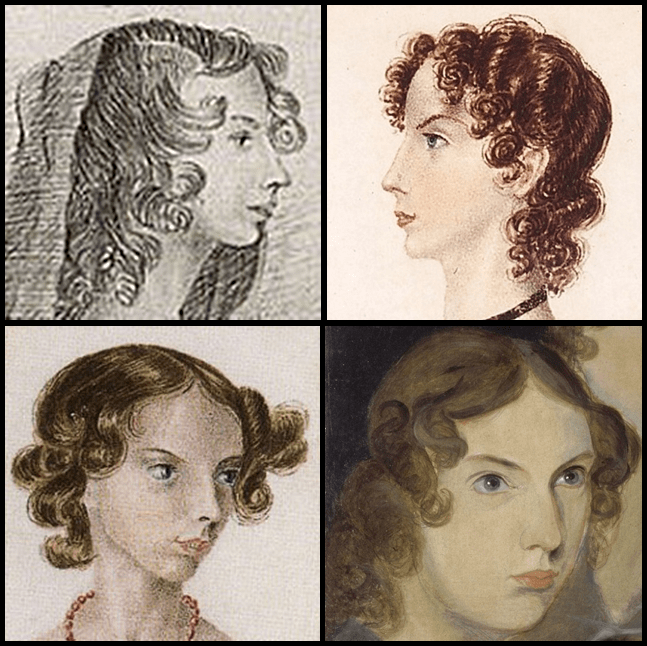
Four Images of Anne Brontë Drawn by Her Brother Branwell

Rosalie is nothing, however, compared to the little monsters of her first experience as a governess:

My task of instruction and surveillance, instead of becoming easier as my charges and I got better accustomed to each other, became more arduous as their characters unfolded. The name of governess, I soon found, was a mere mockery as applied to me: my pupils had no more notion of obedience than a wild, unbroken colt. The habitual fear of their father’s peevish temper, and the dread of the punishments he was wont to inflict when irritated, kept them generally within bounds in his immediate presence. The girls, too, had some fear of their mother’s anger; and the boy might occasionally be bribed to do as she bid him by the hope of reward; but I had no rewards to offer; and as for punishments, I was given to understand, the parents reserved that privilege to themselves; and yet they expected me to keep my pupils in order. Other children might be guided by the fear of anger and the desire of approbation; but neither the one nor the other had any effect upon these.

This is quite different from the angelic Victorian children depicted in most novels, especially in those of Charles Dickens. So I was quite pleased to see that the youngest Brontë has some sand in her, and she was an excellent writer to boot—as good as her older siblings.

Childless

I Was Fated Never to Be a Parent

So much of my life has been affected by a brain tumor that I had roughly between the ages of ten and twenty-one. Because the tumor—a chromophobe adenoma—controlled my sex hormones, I was potent, but quite sterile. I did not discover until some ten years ago that it was theoretically possible for me to have children’ but by then I was sixty-five years old, and I was in a relationship with Martine, who did not want to bear children for reasons of her own. (In fact, she made me get tested to verify that I could not impregnate her.) So I just resolved to accept my childlessness without complaint.

My friends and acquaintances would always use the same four-word phrase, telling me, “You could always adopt.” I have friends who have done this, but it is not always an easy road. My answer to this suggestion sometimes turned people off: “I don’t want to be responsible for other people’s mistakes.” When I said that to one cute co-worker named Alexis, she hung up on me in exasperation.

I know that raising a child is a long term commitment; but I also know myself, that I would not necessarily be willing to make the sacrifice if the child were not of my blood. If that makes me a bad person, then I must reluctantly admit that I am a terrible person. Better that, sometimes, than making my life and that of my partner possibly a living hell. Sure, the reward can be great, but I have seen cases where it wasn’t.

There was another factor: At times I have a savage temper like my father did. Since I was childless for so many years, I am sometimes not patient with the behavior of children who misbehave. I suspect I might behave as my father did—by swatting the child. In these times, that is considered child abuse.


Why No Children?

Southern California Schoolgirls

Yesterday, as I was sitting in an armchair in the literature department of the L.A. Central Library when a group of Mexican school children—all holding hands—trooped by with their teacher. For a moment, I had a good feeling about the future. Los Angeles has thousands of attractive school children of all races, ethnicities, and creeds. That is one of the things that makes me love my town. As Kurt Vonnegut wrote in Cat’s Cradle:

Nice, nice, very nice
So many people in the same device.

So then why do I have no children? It all goes back to my childhood during which, for a period of ten years, I had a pituitary brain tumor without knowing it. When I graduated from college in 1966, I looked like an eleven-year-old, as my growth hormone, along with all my other hormones, was not functioning. As you may recall, the pituitary gland, which lies midway between the ears and under the brain, is the master gland. All my other glands were fine, except that they were not given any orders from the pituitary to produce any hormones, so they didn’t, at all.

It was not until I was well into my sixties that my endocrinologist said, “You know, you can now have children if you want.” I had lived my entire adult life with the sure knowledge that I could not have children, and I live with my girlfriend, who most certainly does not want to bear or raise children. For some forty plus years, that worked out fine for me. Dr. Sladek’s offhand comment just reminded me how old I was.

Please allow me to cringe as the following five words make their appearance: “But you can always adopt!” I have never been interested in adopting, though some of my friends have gone in for this with mostly good results. What I wanted, though, were children that were my true biological descendants. At times, I have been abrupt with people who suggested this, answering them, “I am not interested in raising other people’s mistakes.”

That is an awful thing to say, I know. But I feel that adoption was never for me.

So do I not like kids? Far from it. I have accustomed myself to thinking of myself as the last of my line. Those were just the cards I was dealt in this life.


Messing with Mother Nature

Chinese Mass Wedding

Chinese Mass Wedding

China is worried. The all-powerful Communist Party has messed with Mother Nature once too often. For many years, they banned having more than one child per family. That led, not surprisingly, to an excess of male newborns over female newborns. (Accidents sometimes happened to infant girls, when it was boys who were desired.)

Although the Party has eased up on its child restrictions, there are two serious consequences:

  1. The number of marriages is dropping, possibly because many young men cannot find a sufficient number of marriage-age women to wed. I also remember reading stories about suicides of male factory workers because they had no hope of being able to raise a family.
  2. A disconcerting 500,000 elderly have wandered off—most of them suffering from dementia—partly because there are not enough children to bear the burden of their support.

China has been in this type of situation before. One of the decrees during the Great Leap Forward period (1958-1962) was that the “Four Pests” were to be eradicated. The pests in question were rats, flies, mosquitoes, and sparrows. One effect of killing massive numbers of sparrows was that the ecological balance was upset as crops were eaten by insects that were kept under control by the birds.

Maybe having too much power over men and animals is dangerous in the long run.