Vanitas Vanitatum

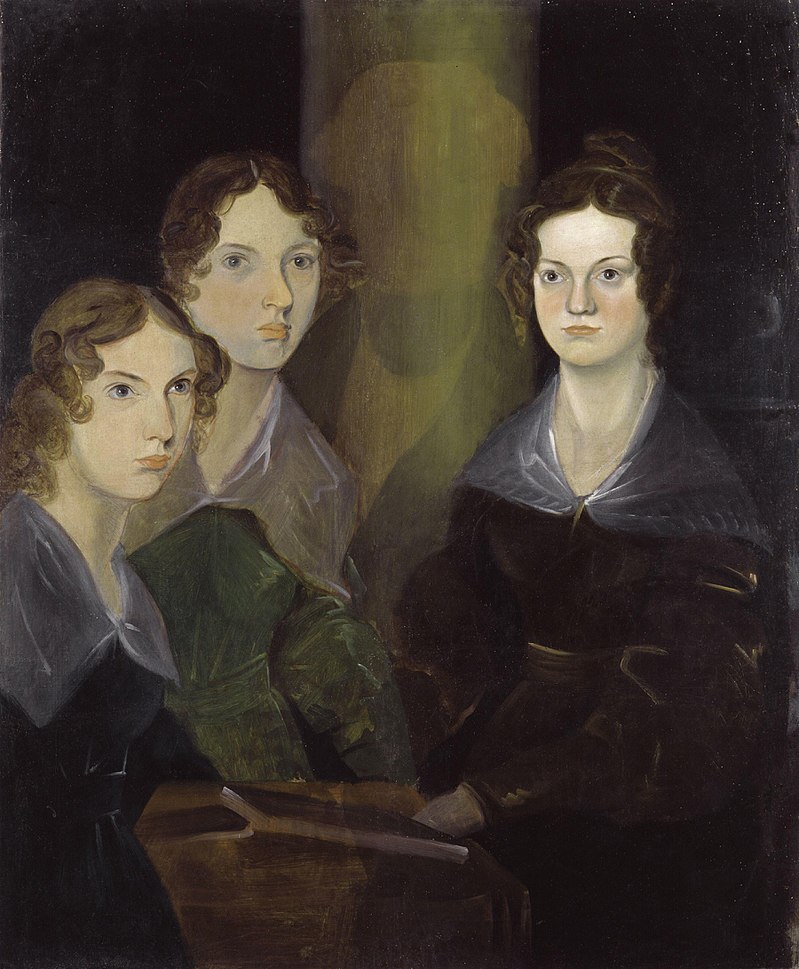
The Brontë Sisters as Painted by Their Brother Branwell

The painter wiped his own image out of his painting of his more famous sisters. The sister on the left is Anne, who signed her two novels under the pseudonym of Acton Bell. Those two novels were Agnes Grey (1847) and The Tenant of Wildfell Hall (1848). She was an early feminist who dealt in her two novels with the issues of parenthood and relationships respectively. Unfortunately, she died young, at the age of 29.

Here is one of her poems, which illustrates the intensity of feelings which pervades her work. The title is from Ecclesiastes 1:2: “Vanity of vanities, all is vanity.”

Vanitas Vanitatum, Omnia Vanitas

In all we do, and hear, and see,
Is restless Toil and Vanity.
While yet the rolling earth abides,
Men come and go like ocean tides;

And ere one generation dies,
Another in its place shall rise;
THAT, sinking soon into the grave,
Others succeed, like wave on wave;

And as they rise, they pass away.
The sun arises every day,
And hastening onward to the West,
He nightly sinks, but not to rest:

Returning to the eastern skies,
Again to light us, he must rise.
And still the restless wind comes forth,
Now blowing keenly from the North;

Now from the South, the East, the West,
For ever changing, ne’er at rest.
The fountains, gushing from the hills,
Supply the ever-running rills;

The thirsty rivers drink their store,
And bear it rolling to the shore,
But still the ocean craves for more.
’Tis endless labour everywhere!
Sound cannot satisfy the ear,

Light cannot fill the craving eye,
Nor riches half our wants supply,
Pleasure but doubles future pain,
And joy brings sorrow in her train;

Laughter is mad, and reckless mirth–
What does she in this weary earth?
Should Wealth, or Fame, our Life employ,
Death comes, our labour to destroy;

To snatch the untasted cup away,
For which we toiled so many a day.
What, then, remains for wretched man?
To use life’s comforts while he can,

Enjoy the blessings Heaven bestows,
Assist his friends, forgive his foes;
Trust God, and keep His statutes still,
Upright and firm, through good and ill;

Thankful for all that God has given,
Fixing his firmest hopes on Heaven;
Knowing that earthly joys decay,
But hoping through the darkest day.
Life

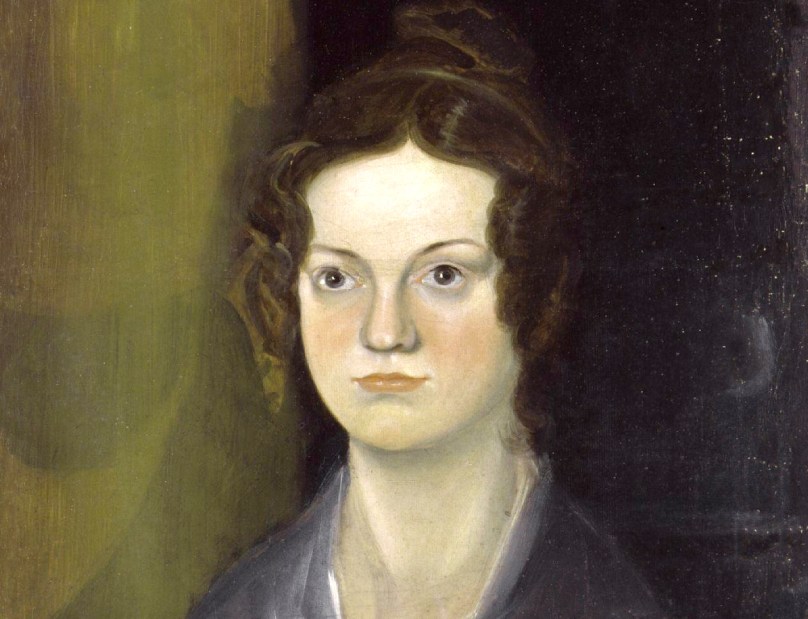
Charlotte Brontë as Painted by Her Brother Branwell

I am currently reading (and enjoying) The Tenant of Wildfell Hall by Anne Brontë. I thought I would present a poem by Anne’s sister Charlotte (1816-1855), author of Jane Eyre, Villette, and Shirley.

Life

Life, believe, is not a dream
So dark as sages say;
Oft a little morning rain
Foretells a pleasant day.
Sometimes there are clouds of gloom,
But these are transient all;
If the shower will make the roses bloom,
O why lament its fall?
Rapidly, merrily,
Life’s sunny hours flit by,
Gratefully, cheerily,
Enjoy them as they fly!
What though Death at times steps in
And calls our Best away?
What though sorrow seems to win,
O’er hope, a heavy sway?
Yet hope again elastic springs,
Unconquered, though she fell;
Still buoyant are her golden wings,
Still strong to bear us well.
Manfully, fearlessly,
The day of trial bear,
For gloriously, victoriously,
Can courage quell despair!

Although Emily was probably the best poet in the family, I’ve always admired Charlotte.

Acton Bell

The Three Brontë Sisters from Left to Right: Anne, Emily, and Charlotte

No family anywhere had three such eminent novelists, though they wrote at a time when women novelists were looked down upon. Consequently, they published under the names of Acton Bell (Anne), Ellis Bell (Emily), and Currer Bell (Charlotte).

I have read and enjoyed the work of the two elder sisters, but until this week I had never read anything by Anne Brontë. I was delighted to find that she was as competent a writer as her sisters and perhaps a bit more modern in her outlook. Her novel Agnes Grey tells the story of a young governess dealing with the spoiled children of the well-to-do.

When one of her former charges (Rosalie) denigrates her eminent husband in front of a footman, she shows Agnes exactly what she thinks of servants:

Oh, no matter! I never care about the footmen; they’re mere automatons: it’s nothing to them what their superiors say or do; they won’t dare to repeat it; and as to what they think—if they presume to think at all—of course, nobody cares for that. It would be a pretty thing indeed, it we were to be tongue-tied by our servants!

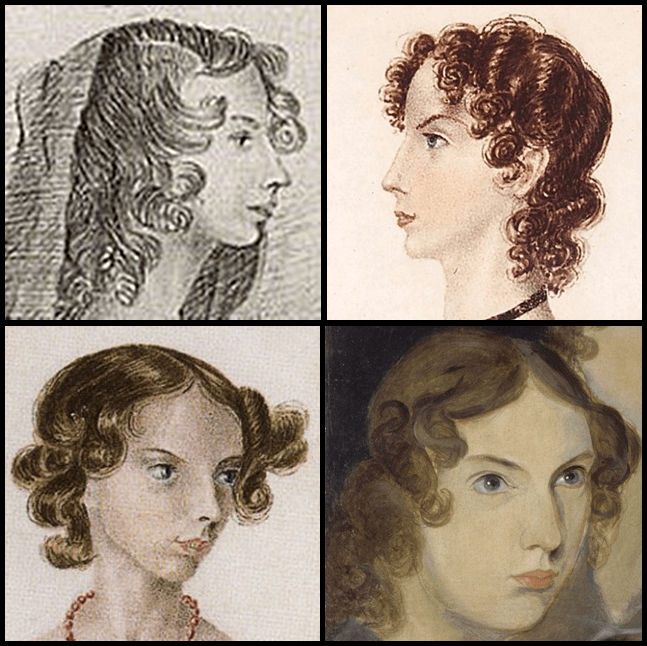
Four Images of Anne Brontë Drawn by Her Brother Branwell

Rosalie is nothing, however, compared to the little monsters of her first experience as a governess:

My task of instruction and surveillance, instead of becoming easier as my charges and I got better accustomed to each other, became more arduous as their characters unfolded. The name of governess, I soon found, was a mere mockery as applied to me: my pupils had no more notion of obedience than a wild, unbroken colt. The habitual fear of their father’s peevish temper, and the dread of the punishments he was wont to inflict when irritated, kept them generally within bounds in his immediate presence. The girls, too, had some fear of their mother’s anger; and the boy might occasionally be bribed to do as she bid him by the hope of reward; but I had no rewards to offer; and as for punishments, I was given to understand, the parents reserved that privilege to themselves; and yet they expected me to keep my pupils in order. Other children might be guided by the fear of anger and the desire of approbation; but neither the one nor the other had any effect upon these.

This is quite different from the angelic Victorian children depicted in most novels, especially in those of Charles Dickens. So I was quite pleased to see that the youngest Brontë has some sand in her, and she was an excellent writer to boot—as good as her older siblings.