Of Two Minds About Christmas

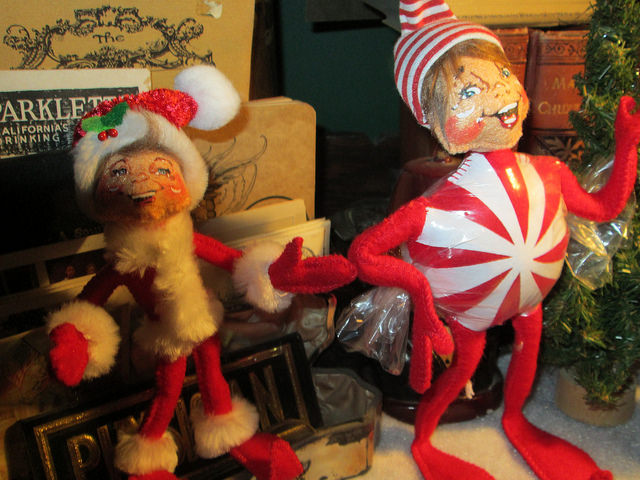
Christmas Display at L.A.’s Grier-Musser Museum

It is very easy to regard Christmas as both a time of happiness and a major pain in the ass—all at one and the same time. Below are some excerpts from the letters of Victorian novelist Wilkie Collins (1824-1889):

  • “This awful Christmas time! I am using up my cheque-book – and am in daily expectation of fresh demands on it.” to Charles Ward, December 1860-62 (I 286).
  • “at this festive season when the Plague of Plum pudding extends its ravages from end to end of the land, and lays the national digestion prostrate at the feet of Christmas…I had planned to give up eating and drinking until the return of Spring …”  to Miss Frith, 27 December 1870 (II 226).
  • “…are the filthy ‘Christmas festivities’ still an insurmountable obstacle to any proceeding that is not directly connected with the filling of fat bellies, and the exchange of vapid good wishes?” to William Tindell, 29 December 1874 (III 60; B&C II 387).
  • “…there are all sorts of impediments – literary and personal – which keep me in England at the most hateful of all English seasons (to me), the season of Cant and Christmas…But for Christmas-time, I should have read it long ago. I have returned to heaps of unanswered letters, bills, payments to pensioners, stupid and hideous Christmas cards, visits to pay – and every other social nuisance that gets in the way of a rational enjoyment of life…There is no news. Everybody is eating and drinking and exchanging conventional compliments of the season. You are well out of it” to Nina Lehmann, 28 December 1877 (III 180; B&C II 409-410).
  • “I suppose the dreadful Christmas literature is absorbing Mr Kelly’s printers.” to A P Watt 5 November 1883 (III 434).
  • “There is every temptation to die. We have not seen the sun for three weeks, in London – the plague of Christmas Cards is on the increase…Oh, what a miserable world to live in!” to Sebastian Schlesinger, 29 December 1883 (III 452; B&C II 463-465).
  • “Your kind and liberal letter reaches me , at the season devoted to prodigious eating and drinking, universal congratulating and holiday-making, and voluminous appearance of tradesmen’s Christmas bills. ‘Business’ is at a standstill, this year, until Monday next” to Perry Mason & Co, 26 December 1884 (IV 74). 
  • “But there is surely a chance of a change for the better, after the horrors of Christmas are over” To Emily Wynne, 19th December 1885 (IV 139).
  • “The horrid Christmas Day is over -. Let me forget it – and heartily wish you a happy New Year.” to A P Watt, 28 December 1885 (IV 140).
  • “It is a relief to hear that you have got over Christmas Day, and that you have energy enough to confront (I don’t say to eat) that dreadful composition called plum pudding.” to Emily Wynne, 28 December 1885 (IV 141).
  • “I have just discovered a letter of mine dated the 1st of this month – and thanking you for your kind new year’s gifts – huddled away, God knows how, among a mass of Christmas and New years’ cards in my ‘Answered Letters’ basket.” to A P Watt, 5 January 1887 (IV 222).

Despite these feelings Wilkie did keep Christmas. On 18 December 1854 he invited his friend Edward Pigott to his home in Hanover Terrace.

“Don’t talk about having no home to go to – you know you are at home here. Come and eat your Christmas dinner with us – you will find your knife, fork, plate and chair all ready for you. Time six o’clock…Mind you come on Christmas Day.” (I 110; B&C I 129).

I owe the above selections to the Wilkie at Christmas website, which also contains much useful information about this author, whose work I like more the more I read him.

Reinventing Thanksgiving

This Is Not What My Thanksgiving Will Look Like

In a way, the coronavirus seems to wreak the most damage on people who are intent on going on with their lives the way they were before. The big danger points come around the major holidays, when people risk everything for the appearance of normalcy.

But what if, like me, you don’t really give a hang about the holidays? No, I’m not a Jehovah’s Witness: I just don’t like the idea of holiday-induced stress. Whenever I think of Christmas and Thanksgiving, in particular, I think of a custom among certain Indian tribes of the Pacific Northwest of “an opulent ceremonial feast at which possessions are given away or destroyed to display wealth or enhance prestige.”

Plus I don’t really like turkey. For the most part it is a dry bird that has to be well-greased before imbibing. For my Thanksgiving, Martine and I will have a more simple feast (though, in her heart of hearts, I know Martine would prefer the turkey): A good beef stew accompanied by a bottle of Egri Bikavér, or Bull’s Blood of Eger, a pleasant Hungarian red wine.

Knowing how much I prefer to avoid poultry, Martine can understand that it wouldn’t help to have me cook something I don’t like—and I do all the cooking in the household.

We will probably do something similar for Christmas. Why not? We are not afraid of offending the Yuletide Police.

Looking Back at Christmas

The Grier Musser Museum in Los Angeles

The Pico-Union District of Los Angeles is a tough neighborhood with heavy concentrations of Central American immigrants. Yet there on Bonnie Brae Street lies the Grier Musser Museum with its huge collection of antiques and seasonally related memorabilia. During the key holidays of Halloween and Christmas, there are fascinating exhibits of decorations, music boxes, pop-up books, greeting cards, postcards, and other popular culture highlighting the present and past.

Although Martine and I have visited only during those periods, there are also special exhibits for Valentines Day, Chinese New Years, and Independence Day.

Susan Tejada with Christmas Elf

On Saturday, we spent several hours viewing the Christmas exhibits and chatting with Susan and Rey Tejada, the owners (and inhabitants) of the museum. Christmas is now safely in the past, but it was nice to see the constantly growing exhibits that Susan has collected. They represent what we all want the holidays to be like, far from the mayhem in the parking lots and department stores in mega-malls which it has become. Visiting the Grier Musser Museum gives you a picture of what we all want Christmas to be like. It’s actually a nice feeling.


Another Xmas Under the Belt

Wishing You a Glorious Etcetera Etcetera

I have seen a lot of Christmases. Like birthdays, they don’t seem to as magical when one is older. I celebrated Christmas Eve by spending five hours putting together a tasty beef stew, served with a crusty artisanal baguette and a bottle of Egri Bikavér (“Bull’s Blood of Eger”) Hungarian red wine. It was the best stew I ever made. I remember sometimes cooking myself a stew (accompanied with red wine) back when I was in my twenties and alone for the holidays. So it is a tradition of sorts for me.

Like my brother—though nowhere as good as him at it—I find cooking to be one of my favorite creative outlets. So I will translate this into a Christmas wish for those of you who come across this post:

May you and your loved ones find joy in what you do and with whom you share it, in the coming year and always.

What may or may not have happened in Bethlehem some two thousand plus years ago has cast a long shadow. I take from it some useful lessons, but not the whole package. I am content with that.


“The Dread Xmas”

Some Things About Xmas Drive Me Up the Wall

And I use the word Xmas advisedly. I like many of the traditions associated with the Christmas holiday, mostly because of happy memories from my own childhood. What to me as a young boy was radiant and hopeful, however, has become for the adult me just another hurdle. For decades now, I have referred to the holiday as “The Dread Xmas”—and I make a point of pronouncing it as Ekksmas. Here is a partial list of my beefs about this time of year:

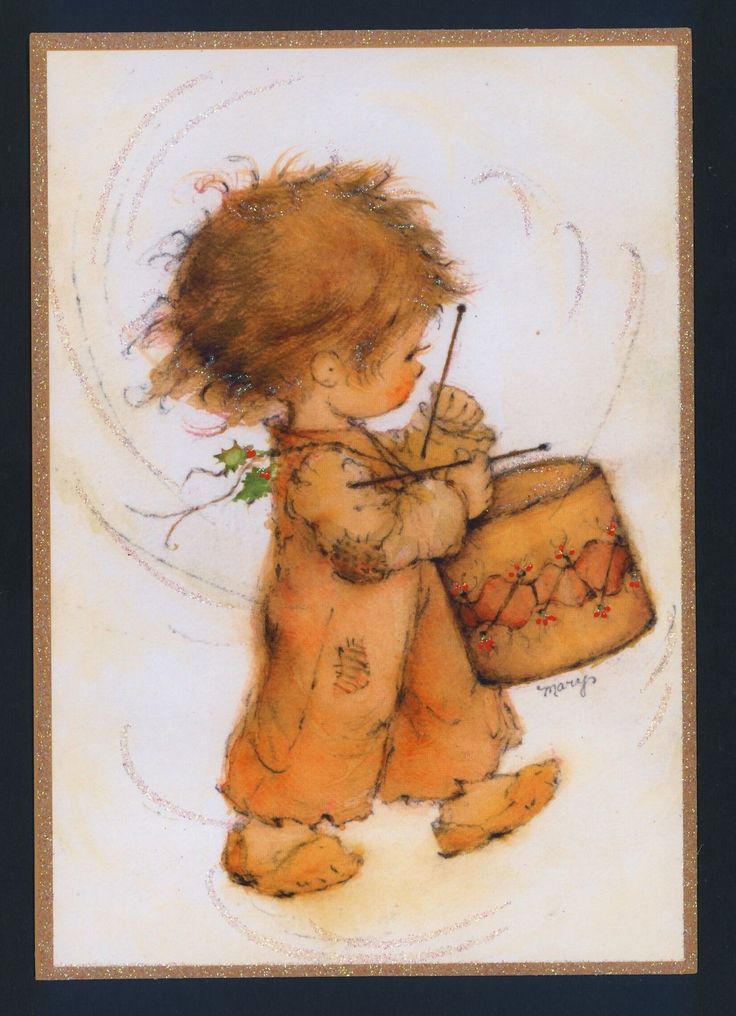
The Little Drummer Boy

There was no little drummer boy in the manger. The shepherds around Bethlehem would not have countenanced using a sheepskin to beat upon with a pair of sticks. And the song itself is sappy, sirupy, and soggily sentimental. Let us just leave this one out henceforth. To me, it is far worse than the “Baby It’s Cold Outside” song that is so lately controversial.

The Holiday “Spirit”

Let’s face it: This is a time of year when people are driven to perform endless errands—and in the worst possible spirit. In so doing, they clog the highways and especially the shopping center parking lots. Even with Amazon.Com and other Internet alternatives, you are likely to have some sour feelings about the holiday if you venture out of doors and onto the highway.

Charity Is Not Just for the Holidays

And yet, there is a positive onslaught of charitable requests from November until the end of the year. Giving some poor person a Thanksgiving or Christmas dinner is a nice idea, but people are hungry and needy all year round. Every year at this time, I get at least a hundred requests this time of year. I suppose the timing has more to do with people trying to up their tax exemptions before the New Years, but it does get a bit old.

Holiday Guilt

As a newly retired person, I am now on a fixed income and frequently making raids on my IRA savings. There is no way that I can give Christmas gifts the way I used to, and I feel terrible about it. I have to make a special effort to tell my friends that I can’t be quite so generous as previously.

On the Other Hand

There are also some things about Christmas that I love: The old traditional songs, the classic movies such as the Alastair Sim version of Dickens’s A Christmas Carol, getting together with friends, and trying to make small things into mini-celebrations. At its best, Christmas is about love; at its worst, about mere driven spiritless compulsion.


Christmas in Palenque

The Town of Palenque, Chiapas, Near the Ruins

The year was 1979. My brother Dan and I were traveling in Southern Mexico, roughly following the route Graham Greene had taken in his book The Lawless Roads (1939), when he was doing research for his novel The Power and the Glory (1940).  It was Christmas, and we were in the little town of Palenque, just a few miles from the Mayan ruins of the same name.

Dan liked hanging out in the cafés along the zócalo, because that part of Chiapas was a major coffee-growing area, and Dan is a coffee aficionado the way I am a tea aficionado. You have to understand that Dan was wearing slip-on loafers. While we were munching away, we were approached at our table by a shoeshine boy. Dan slipped his shoe off and handed his foot to the boy, which foot was clad in bright red wool socks. The whole restaurant erupted in laughter, including the shoeshine boy.

Mexico has some wonderful Christmas customs, especially the posadas. Between December 16 and 24, children travel around singing carols. We always donated to them.

Christmas Posadas Singers


Favorite Films: A Christmas Carol (1951)

This Version Is Sometimes Called Scrooge

This Version Is Sometimes Called Scrooge

My favorite version of Charles Dickens’s classic is the 1951 A Christmas Carol starring the great Alastair Sim as Scrooge. It’s longer than and more faithful to the original than the 1938 version starring Reginald Owen as the humbugging miser. Plus it has the music for the old song “Barbara Allen” running through it at various points as the love theme.

In addition, there are several negligible musical versions and a not-bad TV version starring Patrick Stewart which isn’t played often.

There are many Christmas movies that purport to be classics. Some of them I love, starting with A Christmas Story (1983), which reminds me of my upbringing in Cleveland. Then there are The Miracle on 34th Street (1947), The Bishop’s Wife (1947), and Christmas in Connecticut (1945)—all of which have their moments.

Whatever you choose to watch, I hope you enjoy it. And I hope this Christmas holiday will be a memorable one for you—and for all the right reasons.

A Hopeful Holiday

Christmas Decorations from the Grier-Musser Museum

Christmas Decorations from the Grier-Musser Museum

Here I sit with my fingers crossed, afraid to check the news and seeing what our new elected Fuehrer has to astonish and dismay the world. I could really work myself into a state about this turkey, but I have decided to concentrate this Christmas on the people I love. There is nothing I can do to buck the Electoral College majority for the Cheetoh-headed moron, so I will leave him to the scorn of history. (That will not prevent me from opposing him in a more substantial way if the opportunity arises.)

What is Christmas really all about? I think the operative word is “love.” According to John 3:16 in the King James Bible, “For God so loved the world, that he gave his only begotten Son, that whosoever believeth in him should not perish, but have everlasting life.” Christian doctrine says it was all an act of forgiveness to cancel out the “original sin” of Adam and Eve for eating the fruit of the forbidden tree of knowledge. God the Son incarnated as a human being and died a horrible death by crucifixion just so we’d all stand a chance. In this light, Christmas is a feast of divine love.

But not everyone believes this, and I myself tend to cherry-pick Christianity, adopting what I like and brushing the rest aside. I like the idea of giving gifts to the people who mean the most to me; and I like using this time of year to cement my closest relationships, whether with Martine, my family, or my closest friends.

Unfortunately, Christmas has been weighted down with a whole lot of paraphernalia. There are stores open twenty-four hours a day for last-minute shopping. (My shopping is all done—and I would never visit a retail store at this time of year because of the crowds.) I have no twinkling lights about my apartment: I don’t even have a Christmas tree or a wreath on the door. I don’t wear any ugly Christmas sweaters. Unlike most male Americans, I don’t watch any bowl games—or, in fact, any sports at all. Instead, I look forward to a nice Christmas dinner and an exchange of gifts with my oldest friends. Martine and I will watch the 1951 Alastair Sim version of The Christmas Carol, and maybe even A Christmas Story (1983) if I can. And I will read one of Charles Dickens’s lesser-known holiday works, such as “The Chimes” or “The Cricket on the Hearth.”

Use the real meaning of Christmas to become stronger in your emotions. Perhaps what the 2016 election really means is for us to look after ourselves, because most assuredly no one will look after us.