Giving Life to a Period in History

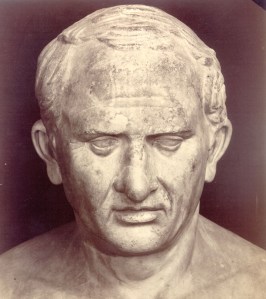
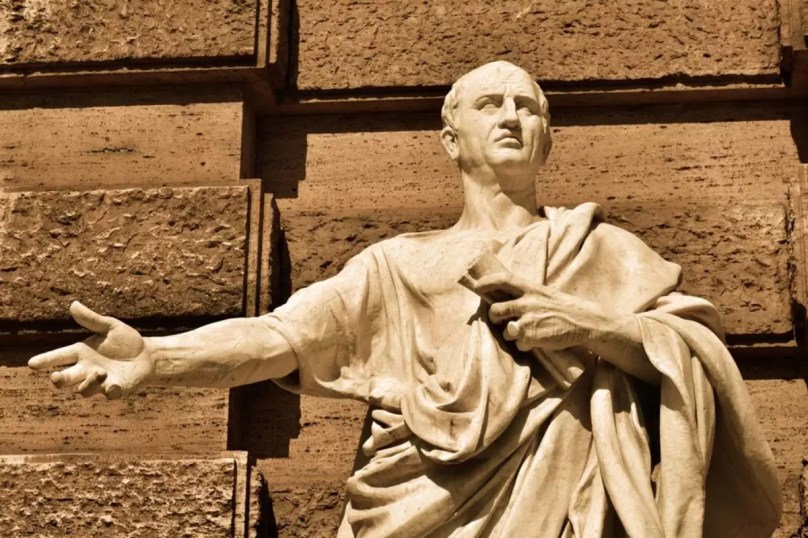
Roman Senator Marcus Tullius Cicero (100-43 BCE)

How many letters and journals have come down to us from Ancient Egypt or Classical Greece or Biblical Palestine? None. Consequently, our view of their respective civilizations is an incomplete one. For the last years of the Roman Republic, however, we have a voluminous orator, letter writer, and philosopher who was very much at the center of the action.

Marcus Tullius Cicero was one of the most powerful members of the Roman Senate. From him, we have political orations, speeches for the prosecution or defense of murder trials, essays on the gods and growing old (among other subjects), and letters to friends and political associates. In particular, his letters to his friend Atticus give us a picture of his times such as we do not have from any other ancient civilization.

What is more, his works are eminently readable today. In fact, his oration attacking Mark Antony was so effective that the Roman general promptly sent out an assassin to shut him up permanently.

I have just finished viewing the HBO/BBC co-produced mini-series called Rome (2005-2007) which covered the last days of the Roman Republic. The twenty-two episodes include incidents in the life of Julius Caesar, Augustus Caesar, Mark Antony, Pompey the Great, Brutus, Cassius, Cleopatra, and Cicero.
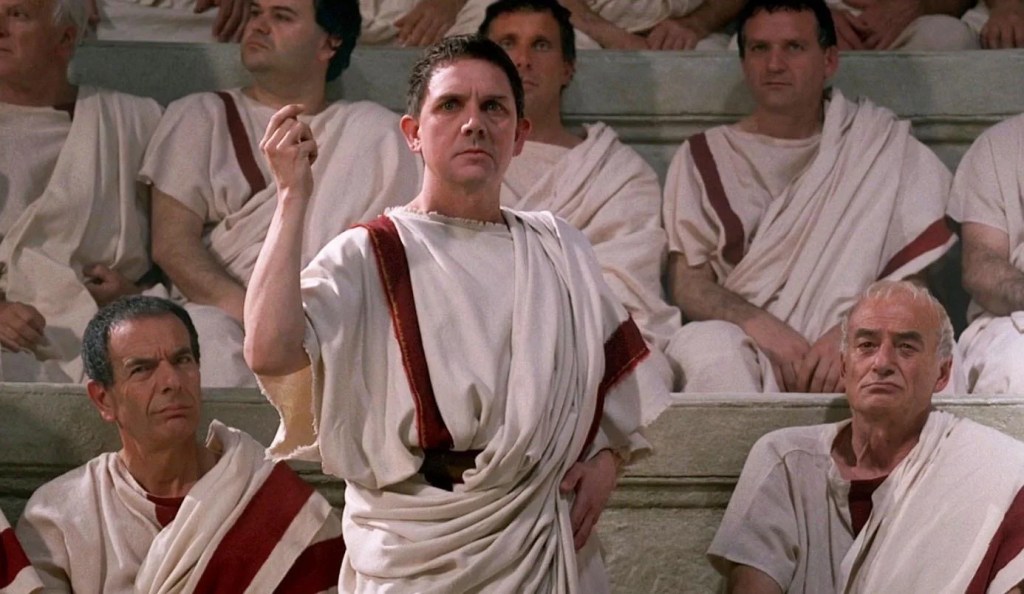
David Bamber as Cicero in the HBO/BBC Mini-Series Rome

Both the mini-series and Cicero’s own writings portray the senator as a deeply divided individual. He was a follower of Gnaeus Pompey and was with him when he lost to Julius Caesar at Pharsalus. Then he sided with Brutus, Cassius, and the other slayers of Julius Caesar and was with them at the Battle of Philippi. That did not sit well with Antony and Octavian (later renamed Augustus), who agreed to his demise.

Even more than two thousand years later, we can see clearly that Cicero was a follower of the old, traditional senate and of Cato the Younger, who committed suicide after Philippi. In 63 BCE, he led the overthrow of the conspiracy of Lucius Sergius Catiline, having several of the participants executed without trial. Ever after, he was disappointed that the people did not express sufficient gratitude. It was clearly a case of, “Yes, but what have you done for us lately?”

I strongly urge you to read some of the excellent Penguin translations of Cicero’s work and, if you have time, view the Rome mini-series, which is still available on HBO.

A Brief Tenure

Statue of Julius Caesar as a God

I have just finished reading Adrian Keith Goldsworthy’s biography, Caesar: Life of a Colossus. While not pertaining directly to the subject of his biography, Goldsworthy includes an amusing anecdote about a consul who dies on his last day in office and the consul-for-a-day who succeeds him:

When Fabius Maximus went to watch a play and was announced as consul, the audience is said to have yelled out, “He is no consul!” He died on the morning of his last day in office. Caesar received the news while presiding over a meeting of the Tribal Assembly, which was going to elect quaestors for the next year. Instead, he had the people reconvene as the Comitia Centuriata and vote for a new consul. Just after midday another of his legates from Gaul was chosen, Caius Caninius Rebilus, whose spell as consul therefore lasted no more than a few hours. A few days later Cicero joked that ‘in the consulship of Caninius nobody ate lunch. However, nothing bad occurred while he was consul—for his vigilance was so incredible that throughout his entire consulship he never went to sleep.’ At the time he is supposed to have urged everyone to rush and congratulate Caninius before his office expired.

The Nature of the Soul

Cicero

Cicero

It’s impossible to locate an earthly origin of souls. There’s nothing mixed or compounded in souls, they’re not earth or made of earth. They’re not even moist or airy or fiery. There’s nothing in these elements that accounts for the power of memory, mind or thought, that recalls the past, foresees the future or comprehends the present. These faculties are divine; you won’t find a way for them to get to man except from god. The natural power of the soul is therefore unique, distinct from the usual and familiar elements. Whatever it is that thinks, knows, lives and grows must be heavenly, divine, and therefore eternal. And god, who is recognized by us, can only be recognized by a mind that is free and unencumbered, distinct from any mortal compound, sensing all and setting all in motion, itself endowed with eternal movement. The human mind consists of the same element, the same nature.—Marcus Tullius Cicero, Consolation

“The Divine Felicity of His Style”

Marcus Tullius Cicero

Marcus Tullius Cicero

When I was a boy, I was fonder of Seneca than of Cicero, and till I was twenty years old could not bear to spend any time in reading him; while all the other writers of antiquity generally pleased me. Whether my judgment be improved by age, I know not; but am certain, that Cicero never pleased me so much when I was fond of those juvenile studies as he does now when I am grown old; not only for the divine felicity of his style, but the sanctity of his heart and morals: in short, he has inspired my soul, and made me feel myself a better man. I make no scruple, therefore, to exhort our youth to spend their hours in reading and getting his books by heart, rather than in the vexatious squabbles and peevish controversies with which the world abounds. For my own part, though I am now in the decline of life, yet as soon as I have finished what I have in hand, I shall think it no reproach to me to seek a reconciliation with my Cicero, and renew an old acquaintance with him, which for many years has been unhappily intermitted.—Erasmus, Letter #499 to Johannes Ulattenus