
Bumpf

Giving a Boost to the Classics

According to the Oxford dictionaries, bumpf is defined as “written information, especially advertisements, official documents, forms, etc., that seem boring or unnecessary.” That certainly seems to be the case in Amazon Kindle’s store, where one can find the following “titles”:

  • Casino Girl: A Totally Addictive Crime Thriller
  • The Good Husband: A Totally Gripping and Heart-Pounding Thriller Novel for 2024
  • The Orphan’s Homecoming: Experience the Heart-Wrenching Tale of Love and Loss in 20924 with This Gripping … [the rest is missing]
  • A Guilty Secret: The New Twisty, Gripping Psychological Thriller About Friendship and Lies from the … [the rest is missing]

It seems that some of these titles just needed a little help. I think that Jeff Bezos could probably make more money by applying the same principle to literary classics:

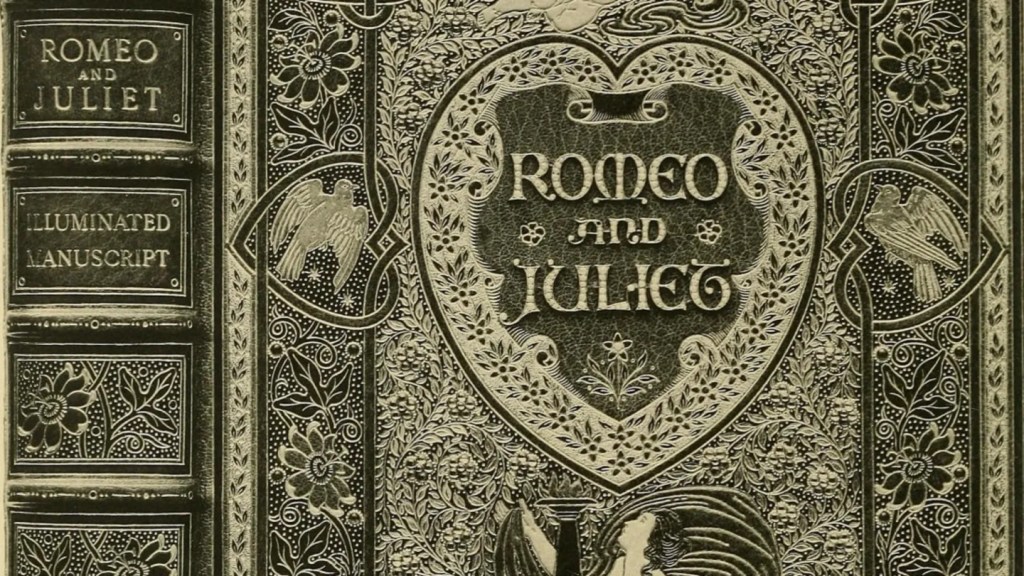
  • Romeo & Juliet: Hot Twisty Teenage Love Capped by a Double Suicide
  • Finnegan’s Wake: A Commodious Vicus of Forbidden Love and Obscure Wordplay
  • Pride & Prejudice: She Gave Herself to Her Lover and Somehow Maintained Her Purity
  • Don Quixote: Why Was Dulcinea Shunted Off to the Sidelines?
  • Moby Dick: The White Whale Took a Big Bite Out of His … [the rest is missing]

Let’s face it: People would read more if what we learned from Madison Avenue were put to good use.
TBR

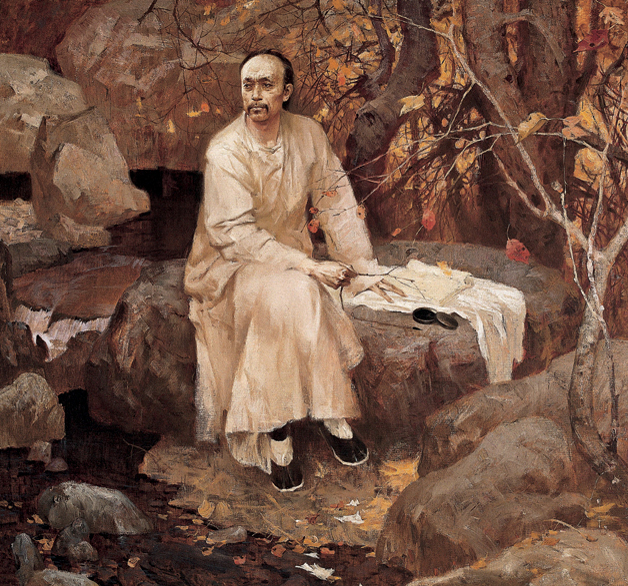
Chinese Author Cao Xueqin (1715-1763)

TBR is a real bookworm’s term: It’s an acronym for To Be Read. We all have our TBR piles. Here is a look at mine, consisting mostly of Asian classics (some of which are multi-volume) and various Medieval and Ancient Greek and Roman classics. Here are some 22 classics which I will attempt, in my own desultory fashion, to read while I am able:

  • Anonymous, The Mahabharata (India)
  • Giovanni Boccaccio, The Decameron (Italy)
  • Hermann Broch, The Sleepwalkers (Austria)
  • Cao Xueqin, The Dream of the Red Chamber (aka The Story of the Stone) (China)
  • Geoffrey Chaucer, The Canterbury Tales (England)
  • Fyodor Dostoyevsky, A Raw Youth (aka The Adolescent) (Russia)
  • Ralph Ellison, The Invisible Man (USA)
  • William Faulkner, A Fable (USA)
  • Gunter Grass, The Tin Drum (Germany)
  • João Guimarães Rosa, The Devil to Pay in the Backlands (Brazil)
  • Henry James, The Bostonians (USA)
  • Kalidasa, The Shakuntala (India)
  • Yasunari Kawabata, The Sound of the Mountain (Japan)
  • Lucretius, On the Nature of Things (Ancient Rome)
  • Michel Eyquem de Montaigne, Complete Essays (France)
  • Shikibu Murasaki, The Tale of Genji (Japan)
  • Robert Musil, The Man Without Qualities (Germany)
  • Ovid, Metamorphoses (Ancient Rome)
  • Plato, The Republic (Ancient Greece)
  • Alexander Pushkin, Eugene Onegin (Russia)
  • Salman Rushdie, Midnight’s Children (India)
  • Valmiki, Ramayana (India)

Some of the above works are major; others are relatively minor. The Faulkner and Dostoyevsky, for instance, are there only because they are the only novels by the two authors I have not read. I have already picked up a copy of Henry James’s The Bostonians to read next month.


At the Greek Tailor’s

It’s Greek to Them

It’s Greek to Them

It’s a stupid little joke, but it highlights an important lack in our education. I saw it as a cartoon in a magazine when I was a child. I understood it at once, but only because I had a good classical education.

A man wearing a toga walks into a Greek tailor shop:

Tailor: Euripides? (“You rip these?”)
Customer: Eumenides! (“You mend these!”)

Euripides was, of course, a great Greek tragedian (ca. 480-406 B.C.), author of Medea and eighteen other surviving plays.

But who was or were the Eumenides? Eumenides was the name of a play by Aeschylus in the Oresteia trilogy, which also consisted of Agamemnon and The Libation Bearers.

Another name for the Eumenides is the Erinyes, probably better known as the Furies, Greek goddesses of vengeance, mostly invoked by the gods when someone has sworn a false oath. I believe the Eumenides gave George W. Bush a hard time over “weapons of mass destruction” in Iraq, from which he is still suffering.

By the time I was in high school, I had read Edith Hamilton’s The Greek Way and The Echo of Greece, as well as a number of the Greek tragedies, so I was fairly conversant with classical literature. Now virtually no one reads the works of ancient Greece and Rome, let alone books about them. But that’s where it all began.

If you don’t know your origins, you won’t know where you’re headed.