“A Great Earthquake”

In his novel Dombey and Son (1848), Charles Dickens had a striking passage about the effect that railroad construction was having on parts of London. I remember this passage vividly from when I first read the book decades ago.

The first shock of a great earthquake had, just at that period, rent the whole neighbourhood to its centre. Traces of its course were visible on every side. Houses were knocked down; streets broken through and stopped; deep pits and trenches dug in the ground; enormous heaps of earth and clay thrown up; buildings that were undermined and shaking, propped by great beams of wood. Here, a chaos of carts, overthrown and jumbled together, lay topsy-turvy at the bottom of a steep unnatural hill; there, confused treasures of iron soaked and rusted in something that had accidentally become a pond. Everywhere were bridges that led nowhere; thoroughfares that were wholly impassable; Babel towers of chimneys, wanting half their height; temporary wooden houses and enclosures, in the most unlikely situations; carcases of ragged tenements, and fragments of unfinished walls and arches, and piles of scaffolding, and wildernesses of bricks, and giant forms of cranes, and tripods straddling above nothing. There were a hundred thousand shapes and substances of incompleteness, wildly mingled out of their places, upside down, burrowing in the earth, aspiring in the air, mouldering in the water, and unintelligible as any dream. Hot springs and fiery eruptions, the usual attendants upon earthquakes, lent their contributions of confusion to the scene. Boiling water hissed and heaved within dilapidated walls; whence, also, the glare and roar of flames came issuing forth; and mounds of ashes blocked up rights of way, and wholly changed the law and custom of the neighbourhood.

In short, the yet unfinished and unopened Railroad was in progress; and, from the very core of all this dire disorder, trailed smoothly away, upon its mighty course of civilisation and improvement.

But as yet, the neighbourhood was shy to own the Railroad. One or two bold speculators had projected streets; and one had built a little, but had stopped among the mud and ashes to consider farther of it. A bran-new Tavern, redolent of fresh mortar and size, and fronting nothing at all, had taken for its sign The Railway Arms; but that might be rash enterprise—and then it hoped to sell drink to the workmen. So, the Excavators’ House of Call had sprung up from a beer-shop; and the old-established Ham and Beef Shop had become the Railway Eating House, with a roast leg of pork daily, through interested motives of a similar immediate and popular description. Lodging-house keepers were favourable in like manner; and for the like reasons were not to be trusted. The general belief was very slow. There were frowzy fields, and cow-houses, and dunghills, and dustheaps, and ditches, and gardens, and summer-houses, and carpet-beating grounds, at the very door of the Railway. Little tumuli of oyster shells in the oyster season, and of lobster shells in the lobster season, and of broken crockery and faded cabbage leaves in all seasons, encroached upon its high places. Posts, and rails, and old cautions to trespassers, and backs of mean houses, and patches of wretched vegetation, stared it out of countenance. Nothing was the better for it, or thought of being so. If the miserable waste ground lying near it could have laughed, it would have laughed it to scorn, like many of the miserable neighbours.

Construction/Destruction

Why Is There So Much Construction Going On in L.A.?

What with the plague raging in the streets, I continue to be surprised how much commercial and residential construction is going on. It is as if, when the coronavirus finally goes away (if it ever really goes away), there will be people to fill those new offices, apartments, and condominiums for whatever top dollar figure the owners intend to charge. There will be talk of the city insisting on affordable units, but we all know that no one wants to build affordable units. My fearless prediction is that there will be a large number of vacancies and —given that the homeless population is growing by leaps and bounds—there will be a big problem with squatters.

Mayor Gil Garcetti of Los Angeles is being either naive, or is selling out to real-estate interests—a time-honored Southern California practice. In West Los Angeles, I see scores of new buildings going up, side by side with scores of old buildings that have been red-tagged and scheduled for the wrecking ball, and, in the meantime, occupied by bums.

Another interesting point: I do not see any corresponding effort to accommodate the increased traffic flow that will result if the new building space is occupied. My feeling is that the mayor feels that the construction of the Expo Light Rail Line will solve all problems. I don’t mind taking public transportation, but I am very clearly in the minority. Most people I know think that terrible things happen on those trains. Even Martine is hesitant to ride them. Me, I have no problems.

Also, Garcetti thinks that the thousands of homeless will be delighted with the housing the city will supposedly furnish for them (by reconverting old motels, hotels, etc.). But most of the homeless are not interested in following any rules such as not drinking, taking drugs, or smearing shit all over the walls.

Interesting times lie ahead.


Garcetti-Ville

Los Angeles Mayor Gil Garcetti

Although Los Angeles Mayor Gil Garcetti is a Democrat, I see him as something of a failure. I take issue with him on two counts:

  • He is one of those weepy progressives who are unable to deal with the burgeoning population of the homeless because he doesn’t know how to talk about it. “Let’s build housing for the poor homeless” is no answer when most of the homeless are unable or unwilling to follow rules because it violates their independence.
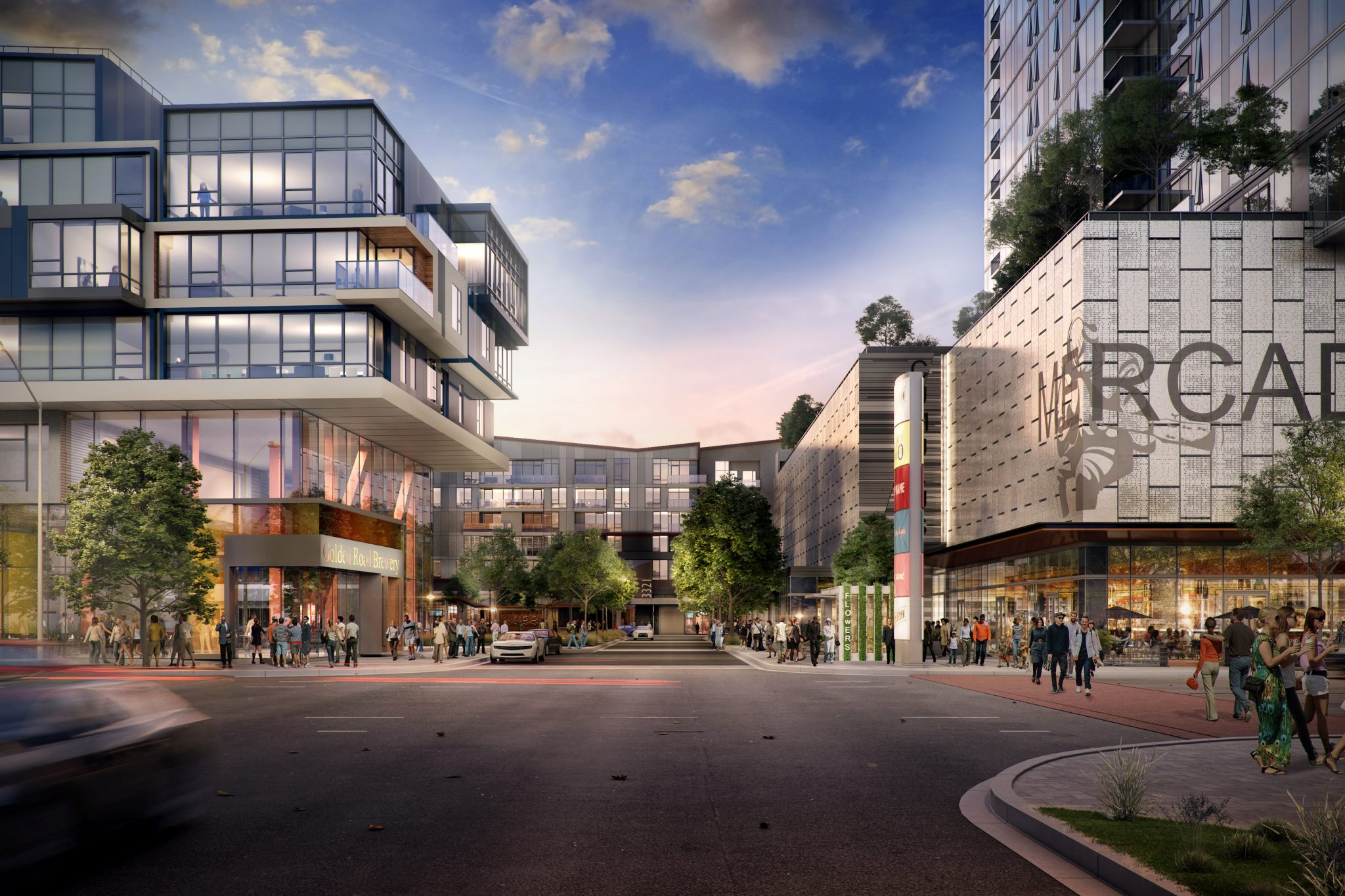
  • He is a tool of the real estate interests as he embarks on a spree of building high-rise housing along the light rail lines. You can be sure that very few of those units will be reserved for the homeless.

Artist’s Rendering of High Rise Housing Project

In the end, the streets of L.A. will continue to be littered with homeless encampments and the streets will be clogged with increased automobile traffic that no one seems to be planning for. And no, most of the people who will live in these high-rise Garcetti-Villes will probably not be interested in taking public transportation to work or entertainment.

Politicians like to make common cause with real estate developers because of the myth that tax revenue will thereby increase. Far from it: The city will be stuck with older apartment structures that will be vacated to move into these new high-rent districts, turning them into largely vacant slums, while the streets will be choked with cars.

Of course, I like the new light rail lines and the subways. But then, I am not a typical Angeleno.

Construction Fever

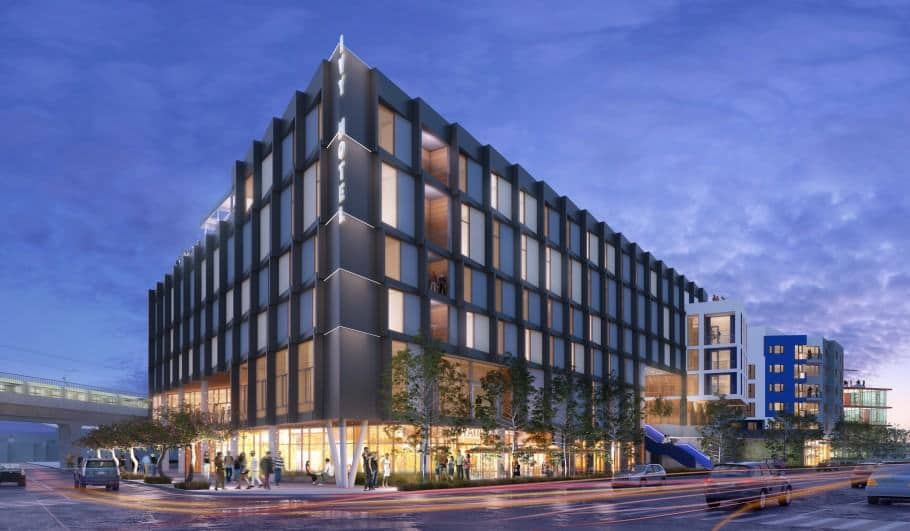
The Proposed Ivy Station Complex in Culver City

In the context of Los Angeles history, real estate is the unforgivable “sin against the Holy Ghost.” For decades, local politicians have regaled us with promises. When elected, they changed their tune and essentially gave in to the wild schemes of real estate developers. As I traveled along the Expo Line this afternoon, I passed dozens of large high-rise construction projects.

Theoretically, these projects are based on the principle of increasing the tax base. Unfortunately, the move-ins into the new buildings will leave in their wake an untenable number of vacancies. It’s not as if the new tenants will be new businesses and people who have just moved into the Los Angeles area. In the end, all that will happen will be a combination of untenably high rents and older buildings that are now vacant. And what about the effect on vehicular traffic?

One reason for the huge population of homeless in Southern California is the high price of rental real estate. If it weren’t for rent control, I would be hard put to remain in the Golden State.