The Four Oaks Puzzle

This puzzle is from the Futility Closet website. According to the description:

One other notable problem from Sam Loyd’s Cyclopedia of 5000 Puzzles: A father left to his four sons this square field, with the instruction that they divide it into four pieces, each of the same shape and size, so that each piece of land contained one of the trees. How did they manage it?

Curious about the solution? Just click here.

Improbable Rhymes

No doubt you’ve heard of those one-of-a-kind words in English that just won’t rhyme with any other words. Well, it seems that the Futility Closet has punked three of those unrhymable words: month, orange, and oblige. Let’s have a look-see at Willard R. Espy’s poem on the subject:

Procrustes

It is unth-
inkable to find
A rhyme for month
Except this special kind.

The four eng-
ineers
Wore orange
Brassieres.

Love’s lost its glow?
No need to lie; j-
ust tell me “go!”
And I’ll oblige.

In the meantime, I’ll go searching for those four engineers wearing orange brassieres.

Remaking the World

The following post is from The Futility Closet website:

In 2000, University of Maine geological scientist Roger LeB. Hooke estimated that human beings now move more earth than any other geomorphic agent, 6 metric tons of earth and rock per capita each year (31 tonnes in the United States!), for a global total of about 35 billion tonnes.

For comparison, ancient Egypt moved 625 kg per capita per year, Easter Island 260 kg, and the Mayan city of Copán 665 kg. Rome, at its zenith, including the roads, moved 3.85 tonnes of earth per person each year. Hooke estimates that the earth we’ve moved in the last 5,000 years could build a mountain range 4,000 meters high, 40 km wide, and 100 km long. And if the current rates of increase persist (mostly due to technology and population growth), that mountain range could double in length by 2100.

“One may well ask how long such rates of increase can be sustained, and whether it will be rational behavior or catastrophe that brings them to an end.”

(Roger LeB. Hooke, “On the History of Humans as Geomorphic Agents,” Geology 28:9 [September 2000], 843-846.)

Winnie and the Vocative Table

Sir Winston Brings Up a Good Point!

Sir Winston Brings Up a Good Point!

Because at this point in tax season, I am approaching brain death, I will be posting quoted material of interest from other websites. The following anecdote is from The Futility Closet:

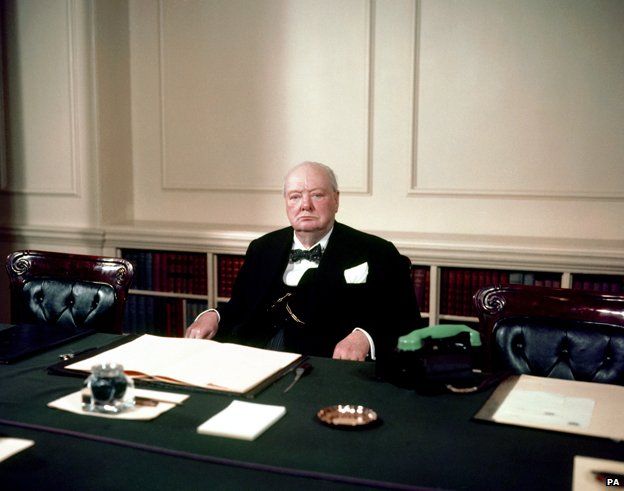
A schoolmaster gave a Latin grammar to the 10-year-old Winston Churchill and directed him to learn a series of words.

Churchill found it an “absolute rigmarole” but memorized the list and reeled it off when asked.

‘But,’ I repeated, ‘what does it mean?’

Mensa means a table,’ he answered.

‘Then why does mensa also mean O table,’ I enquired, ‘and what does O table mean?’

Mensa, O table, is the vocative case,’ he replied.

‘But why O table?’ I persisted in genuine curiosity.

‘O table,–you would use that in addressing a table, in invoking a table.’ And then seeing he was not carrying me with him, ‘You would use it in speaking to a table.’

‘But I never do!’ I blurted out in honest amazement.

“Such was my introduction,” he later wrote, “to the classics from which, I have been told, many of our cleverest men have derived so much solace and profit.”

The Man With The Shredded Ear


Speaking of Raymond Chandler

Speaking of Raymond Chandler

While I was scanning the Futility Closet website (it’s on my link list to the left), I found the following alternative titles that Raymond Chandler had listed for possible future works:

The Man with the Shredded Ear
All Guns Are Loaded
The Man Who Loved the Rain
The Corpse Came in Person
The Porter Rose at Dawn
We All Liked Al
Too Late for Smiling
They Only Murdered Him Once
The Diary of a Loud Check Suit
Stop Screaming — It’s Me
Return from Ruin
Between Two Liars
The Lady with the Truck
They Still Come Honest
My Best to the Bride
Law Is Where You Buy It
Deceased When Last Seen
The Black-Eyed Blonde

In addition, there was this delightful little excerpt:

In a 1954 letter to Hamish Hamilton, he invented a “neglected author” named Aaron Klopstein who “committed suicide at the age of 33 in Greenwich Village by shooting himself with an Amazonian blow gun, having published two novels entitled Once More the Cicatrice and The Sea Gull Has No Friends, two volumes of poetry, The Hydraulic Face Lift and Cat Hairs in the Custard, one book of short stories called Twenty Inches of Monkey, and a book of critical essays entitled Shakespeare in Baby Talk.”

How does one shoot oneself with an Amazonian blow gun? I thought those were fairly long. Maybe he got his own toes, or set up some sort of fancy ricochet.


Ghost Duds

If They’re Spirits, Why Do Ghosts Wear Clothes?

If They’re Spirits, Why Do Ghosts Wear Clothes? (If Not Shoes)

I don’t often do this, but the subject whetted my appetite. The following comes verbatim from a November 24, 2013 posting on Futility Closet. Do visitors from the spirit realms have an innate sense of modesty? Do they not want to arouse our lubricity or disgust? Or do they not want to leave their clothing in—of all places—the Futility Closet? Come to think of it, the one ghost I saw—that of my Great Grandmother Lydia—was fully clothed in her normal everyday wear. Anyhow here goes:

Why do ghosts wear clothes? If a ghost is the spirit of a living creature, how can it carry its inanimate garments into the afterlife?

“How do you account for the ghosts’ clothes — are they ghosts, too?” asked the Saturday Review in 1856. “What an idea, indeed! All the socks that never came home from the wash, all the boots and shoes which we left behind us worn out at watering-places, all the old hats which we gave to crossing-sweepers … What a notion of heaven — an illimitable old clothes-shop, peopled by bores, and not a little infested with knaves!”

In 1906 psychic researcher Andrew Lang argued that, far from confusing the notion of an afterlife, ghosts’ clothing might even help to corroborate its existence. “A pretty instance occurs, I think, in a biography of Warren Hastings. The anecdote, as I remember it, avers that at a meeting of the Council of the East India Company in Calcutta one of the members (I think several shared the experience) saw his own father, wearing a hat of a peculiar shape, hitherto strange to the observers. In due time came a ship from London bearing news of the father’s death, and a large and well-selected assortment of the new hat fashionable in England. It was the hat worn by the paternal appearance! If the circumstances are recorded in the minutes of the proceedings of the Council, which I have not consulted, then the hat of that spook becomes important as evidence.”

Even if we grant that a dead person can convey his most personal belongings into the afterlife, how are we to account for phantom ships, coaches, and railway trains? In his 1879 book The Spirit World, American spiritualist Eugene Crowell decided that, rather than being the spirits of “dead” earthly conveyances, these are constructed in the afterlife by the ghosts of mariners and railwaymen who want to ply their trades again. Spectral ships “glide over the waves without sinking,” Crowell explained, “and earthly winds propel them at rates of speed which our ships cannot attain.” If that’s true, then perhaps some ghostly tailor is simply manufacturing clothes for the naked spirits of the newly dead. Decent of him.

A Philosophical Conundrum

It’s Called “The Ship of Theseus”

It’s Called “The Ship of Theseus”

I got this puzzle from The Futility Closet, which I have decided to add to my links:

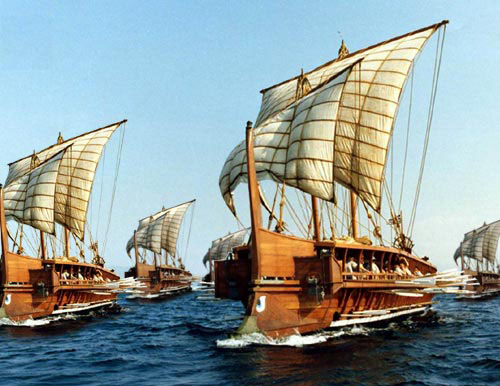
Suppose we have a complete wooden ship, and one day we replace one of its wooden planks with an aluminum one. Most people would agree that the ship survives this operation; that is to say, its identity remains unchanged. But suppose that we then replace a second plank, and then a third, until our wooden ship is made entirely of aluminum. Is this the same ship that we started with? If not, when did it change?

Thomas Hobbes adds a wrinkle: Suppose that, as we did all this refurbishing, someone had gathered up all the discarded wooden planks and used them to assemble a second ship. What are we to make of this? “This, without doubt, had also been the same numerical ship with that which was at the beginning; and so there would have been two ships numerically the same, which is absurd.”

And philosopher Roderick Chisholm adds another: “Let us suppose that the captain of the original ship had solemnly taken the vow that, if his ship were ever to go down, he would go down with it. What, now, if the two ships collide at sea and he sees them start to sink together? Where does his duty lie — with the aluminum ship or with the reassembled wooden ship?”


Europe by the Threes

I Guess It Just Worked Out That Way ...

I Guess It Just Worked Out That Way …

When Peter III became Czar of All he Russias for a brief while in 1762, George III —who apparently was at that time in full possession of his faculties—made note of the fact that the rulers of Europe were:

  • George III, King of England
  • Charles III, King of Spain
  • Augustus III, King of Poland
  • Frederick III, Duke of Saxe-Gotha
  • Frederick III, King of Prussia
  • Charles Emanuel III, King of Sardinia
  • Mustapha III, Emperor of the Ottomans
  • Peter III, Czar of Russia
  • Francis III, Duke of Modena

Germany did not exist at that time as a single nation state, nor did Italy. But for so many of the monarchs at one time to be the third of their various names was unprecedented in history. (Of course, it didn’t last because Peter III was assassinated, probably at the behest of Catherine the Great, his wife, after six months as Czar.)

This interesting fact comes from one of my favorite sites, The Futility Closet.