Garifuna Guatemala

Wait a Minute. Are We in Jamaica?

There are odd little corners of Guatemala where the normal culture does not prevail. I am thinking specifically of Livingston, Guatemala, where the majority population is still Maya, but where there is a significant black population.

After the British won the Seven Years’ War and took control of the Lesser Antilles. They sorted through the population of the island of St .Vincent: The inhabitants who were darker were banished by the victors to Roatán off the coast of Honduras. The inhabitants who were more Indian or Carib in appearance were allowed to stay. Over time, the banished blacks spread throughout the Caribbean coasts of Belize, Guatemala, Honduras, and Nicaragua. Currently, no roads lead to Livingston: Access is only by boat or shank’s mare.

The so-called Garifuna spoke an Arawakan language with elements of French, English, and Spanish.

Philip Flores, a Local Garifuna Guide

From Rio Dulce, I took an ASOCOLMORAN launch toward the river mouth and through the area known as El Golfete to the Caribbean port of Livingston. There I met with Philip Flores, a guide and local leader of the Garifuna population, and had an interesting conversation with him—in English. Philip had been to the U.S. and Europe and was well-versed not only in the ways of his community, but of the world at large.

We started out by sparring over how much each of us knew. Most tourists don’t know much about the places they visit. On the other hand, I usually read a pile of books about my chosen destinations, so I am not the usual tabula rasa. In the end, I found that much of what he had to say was interesting, so I had no problem in just listening. In the end, I gave him some money to be used for his work with local children.

If you should find yourself in Livingston, I suspect that Philip will be there to meet your boat.


Tuk-Tuk? Nyuk-Nyuk!

An India Import: Auto Rickshaws, or Tuk-Tuks, from Bajaj Auto of Pune, the World Leader

If one travels to smaller towns in Central America, one is likely to travel around town in an auto-rickshaw, called a tuk-tuk from the sound of its engine. Above are two tuk-tuks parked near the public dock in San Juan la Laguna, on the shores of the Lago de Atitlán. In towns where taxicabs exist, they generally are more competitive, costing 5 or 10 quetzales instead of 20 or 30 quetzales (or more). As of today, the quetzal is worth 12.7 cents based on OANDA Corporation’s currency converter.

Riding a tuk-tuk is sort of fun, if you relish the experience of being puréed in a blender. Given the cobblestoned streets and the quick sideways maneuvers to avoid oncoming automotive traffic, you are likely to be tossed about a bit. And if you look closely, you won’t see anything that resembles a seat belt. You just have to hold on for dear life.

In Guatemala and Honduras, I have seen tuk-tuks with a driver and up to four passengers, three sitting in the back and one perched precariously next to the driver. But then, the Maya are not a large people. You can probably fit two American adults, max, in one of these three-wheeled wonders.

Tuk-Tuk Traffic in Panajachel

At first, I was afraid of trying to ride a tuk-tuk, until I found myself stranded at the eastern edge of Antigua. I was footsore from walking too many miles on rough cobblestones and narrow, dicey sidewalks, and I didn’t see any taxes passing by the Santo Domingo Museum, but a tuk-tuk stopped for me; and I was happy to take a load off my feet.

Back from Guatemala

At Santiago Atitlán with Volcan San Pedro in the Background

Last night, after an agonizing ninety minutes going through customs after a number of jumbo jets had disgorged over a thousand Chinese, I finally returned home. We wasted no time in going to sleep, as I was still on central time. The last day of my vacation was twenty-six hours long.

All in all, the trip was a success. I went everywhere I planned to go using a variety of transportation, including airplanes, tourist shuttles, tuk-tuks (more about these later), fast motorboats, buses, taxis, and at one point a hired car. My itinerary was as follows:

  • Los Angeles
  • Guatemala City
  • Antigua
  • Panajachel
  • Santiago Atitlán
  • Chichicastenango
  • Antigua again
  • Copán, Honduras
  • Rio Dulce
  • Flores/Santa Elena
  • El Remate
  • Guatemala City
  • Los Angeles

The toughest part, as I suspected in advance, was going between Copán and Rio Dulce. That’s where I hired a driver through a Honduran travel agency to drive me to Rio Dulce with a two-hour stopover at the ruins of Quirigua, which was on the way.

In the weeks to come, I will describe the vacation in some detail, as well as including a number of historical, cultural, and other observations as they come to mind.


Vacation Time

Where I Spend My First Five Nights

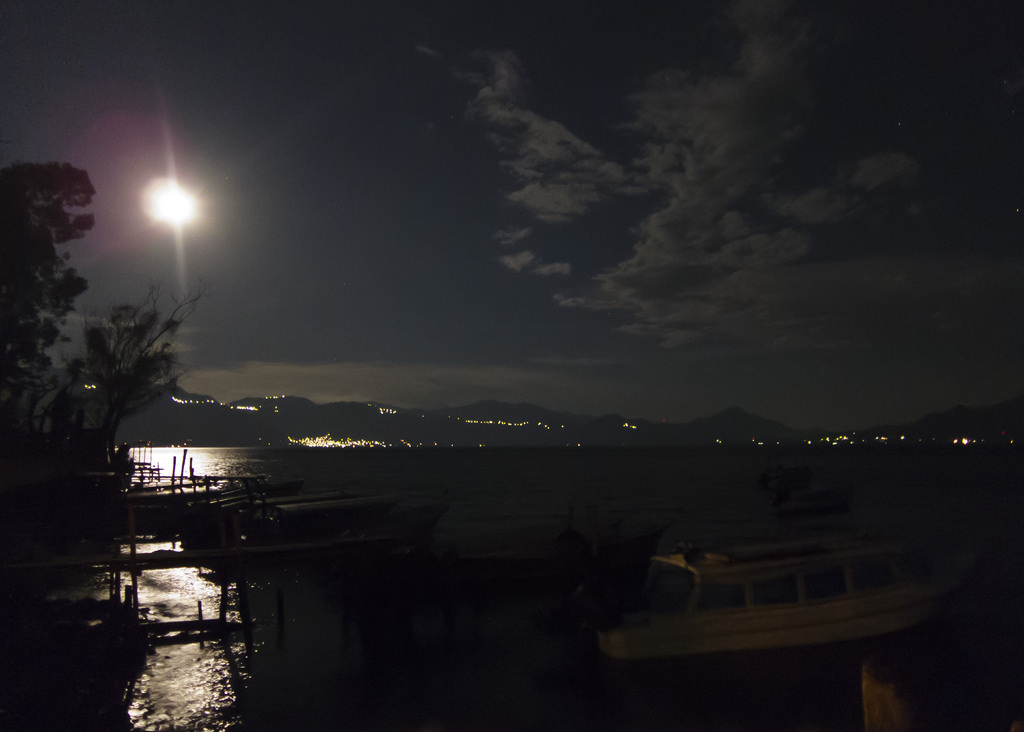
Tomorrow morning, I leave for Guatemala. I have a late morning flight which gets me to Guatemala City at 5:10 PM Central. At the La Aurora International Airport, I will try to convert dollars to quetzales (probably at felonious rates) and use some of the quetzales to get to me Antigua via shuttle bus. I will be spending my first five nights. My hotel is just past the Arco de Santa Catalina in the photo above, taking the first left. The volcano (Agua) is one of three surrounding the city.

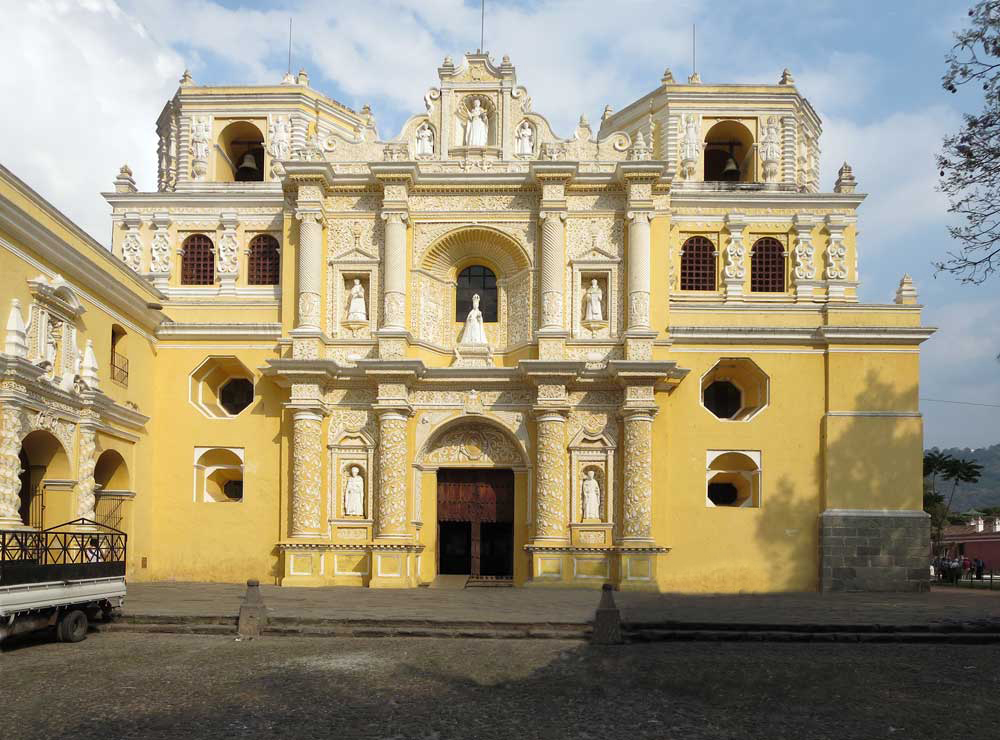
For about 200 years, Santiago served as the third capital of Spanish Guatemala, moving to the present capital after a devastating earthquake in the 18th century. To this day, many of the old Spanish churches exist only as façades backed up by ruins. Even some of the church ruins are spectacular (see below).

La Merced Church in Antigua

If this trip turns out to be like my South America vacations, I will enjoy looking at the old Spanish churches almost as much as the ancient ruins. I was surprised, especially in Peru, where the churches were actually more interesting than the Inca ruins. It was not unusual for me to attend Mass, sometimes twice in one day, just so I could spend more time gaping at the religious artwork.

I may post once or twice during my trip—minus photographs, because I will be using computers that will not allow me to load data—though my next regular post will be at the end of the month. Wish me luck!


Hondurans Invade American Space

Honduran Invader Armed to the Teeth

Even as thousands of Hondurans are making a bid to upset the American government, I am planning to invade Honduras. On Friday, I went to the Bretton Woods Foreign Currency Exchange in Brentwood and bought $140 worth of Honduran lempiras. (That’s not a food: It’s what their currency is called.) I checked to see f they had any Guatemalan quetzales, but they were dead out. I’ll just hope to get those at La Aurora International Airport in Guatemala City.

My Honduran destination is only a few miles shy of the Guatemalan border: The Maya ruins at Copán. It will be the first Maya archeological site for my upcoming trip. The others are Quirigua and Tikal, both in the Petén region of Guatemala.

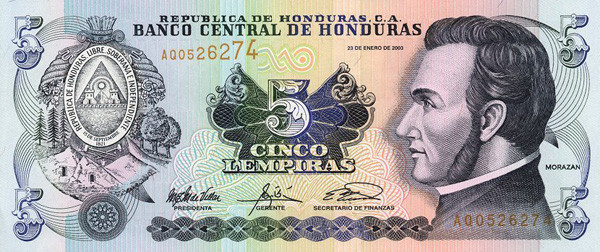
Five Lempira Note

The Five Lempira note illustrated above has a portrait of Francisco Morazán, the only figure in Honduran history I have ever heard of before. He figures in John Lloyd Stephens’s Incidents of Travel in Central America, Chiapas, and Yucatán as the generalissimo of the Central American Republic, which existed briefly before splitting up into its component parts.

I hope the Hondurans manage to find some place in the world of the Norte after they succeed in overthrowing the Trumpf Dictatorship.


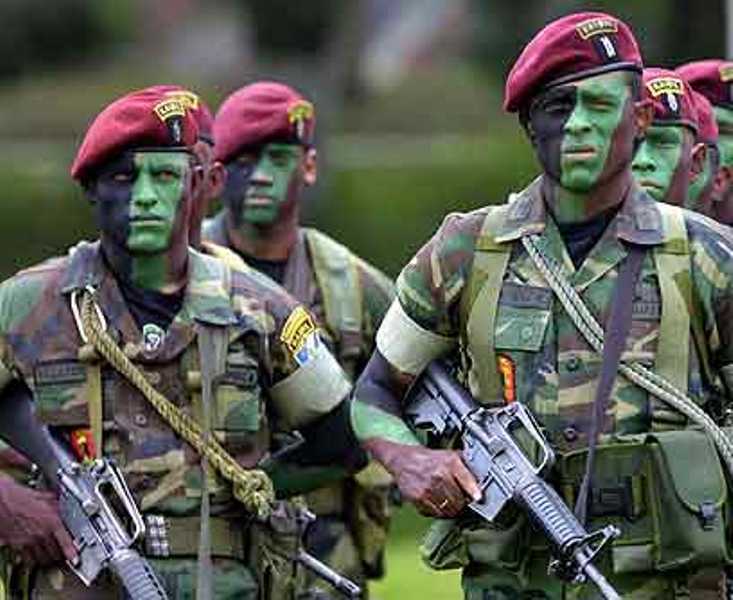
Kaibiles

Guatemalan Army Elite Kaibil Troops

Usually translated as “Tigers,” the kaibiles are elite counterinsurgency troops of the Guatemalan army. According to Ronald Wright’s Time Among the Maya: Travels in Belize, Guatemala, and Mexico, the Mayan word actually implies a “double” or something of double the normal strength. Wright describes meeting a kaibil detachment as he enters Guatemala from Belize:

The pole across the road is lifted, and we are waved through, between a wooden watchtower and a sandbagged machine-gun nest. Not far beyond the tower there’s a billboard with a naive painting pf a Guatemalan soldier in camouflage fatigues. The soldier is shouting, “If I advance, follow me; if I delay, hurry me; if I retreat, kill me!” An inscription below him boasts: ¡AQUI SE FORJAN LOS MEJORES COMBATIENTES DE AMERICA!—HERE ARE FORGED THE BEST FIGHTERS IN AMERICA! I have just begun to wonder whether this is intended for Belizean visitors or rebellious citizens when I see the back of the sign, which direcs its message to those coming from the Guatemalan interior. It shows a gorilla head in the King Kong tradition, or maybe Planet of the Apes. Maniacal eyes burn ferociously, the gaping mouth is dripping with blood and armed with sharp fangs; and lest anyone fail to get the pun … the creature wears a Che Guevara cap. Above it is the single word ¡ATREVETE!—roughly, MAKE MY DAY.

Wright goes on to describe kaibil hazing rituals which include cannibalism and drinking human blood.

His book, which was originally written in 1989, is (fortunately) now a little dated. Most of the depredations on the Maya population by the Guatemalan army have ceased since a peace that was signed in 1996. Still, when I go to Guatemala in January, I plan to steer clear of the army. Many of the army posts Wright describes no longer exist. I hope.


The Thunder Horse

What Happened When Cortés Left a Horse Behind at Tayasal

In 1525, Hernan Cortés visited Tayasal in Guatemala—where some 172 years later, the last Mayan were conquered by the Spanish—he left behind a horse that became, for a while, a god in the Maya pantheon. Here is how Robert J. Sharer tells it in The Ancient Maya: Sixth Edition:

[In 1618, Fathers Bartolomé de Fuensalida and Juan de Orbita] were shown a large idol in the form of a horse, called Tizimin Chak, the “yhunder horse.” When Cortés had visited Tayasal in 1525 he had left behind a lame horse with the Kan Ek’ of that day, promising to return for it himself or to send for it. After Cortés’s departure, the Itza treated the horse as a god, offering it fowl, other meats, and flowers, but the horse soon died. The Itza later made a stone idol of the horse. When Father Orbita saw this image, the idolatry so enraged him that he smashed the image to bits. The Itza, outraged at this sacrilege, tried to kill the missionaries, but Father Fuensalida seized the occasion to preach a sermon of such eloquence that the tumult subsided and the missionaries’ lives were spared.

On the island of Flores in Lago de Petén, the site once occupied by Tayasal, there is today a stone statue of a horse commemorating the poor thunder horse.


Handsome Devil

Pedro de Alvarado (1485-1541), One of the Cruelest of Cortés’s Lieutenants

Even his enemies were impressed with him. The Indians of New Spain (Mexico and Guatemala) called him, in Nahuatl, “Toniatuh,” meaning “sun.” In Robert J. Sharer and Loa P. Traxler’s scholarly study, The Ancient Maya: Sixth Edition describes the depredations wrought by this cruelest of conquistadores:

[Fray Bartolomé] Las Casas goes on to itemize the atrocities committed by Alvarado during the conquest of what became known as Guatemala. There is no reason to reject Las Casas’s account, for Alvarado’s own letters, which provide the best history of the conquest of Guatemala, allude to the terror tactics he employed against the defenseless populace.

About his campaign in the Valley of Quetzaltenango, Alvarado writes:

We commenced to crush them and scattered them in all directions and followed them in pursuit for two leagues and a half until all of them were routed and nobody was left in front of us. Later we returned against them, and our friends [the Mexican allies] and the infantry made the greatest destruction in the world at a river. We surrounded a bare mountain where they had taken refuge, and pursued them to the top, and took all that had gone up there. That day we killed and imprisoned many people, many of whom were captains and chiefs and people of importance.

One of the victims was Tecun Uman, a K’iche commander, now considered a hero to the Maya people, and after whom a city bordering Mexico has been named.

Monument to Tecun Uman, One of Alvarado’s Victims

There was no way the Maya could withstand the force of firearms, horses (which the Maya had never before encountered), and the ruthless military intelligence of Pedro de Alvarado.

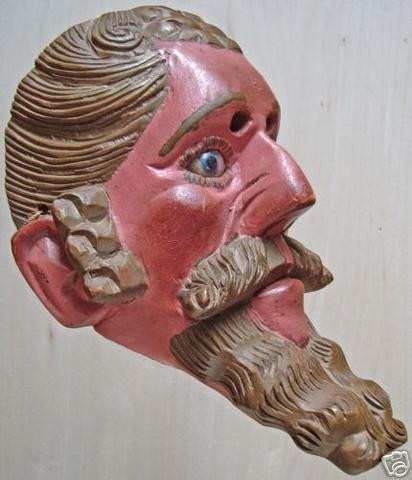
Below is a mask of Alvarado used in Highland Maya processions and ceremonies in Guatemala to commemorate the losses sustained by the Maya:

Guatemalan Dance Mask of Pedro de Alvarado Used in Maya Ceremonies


I Finally Commit

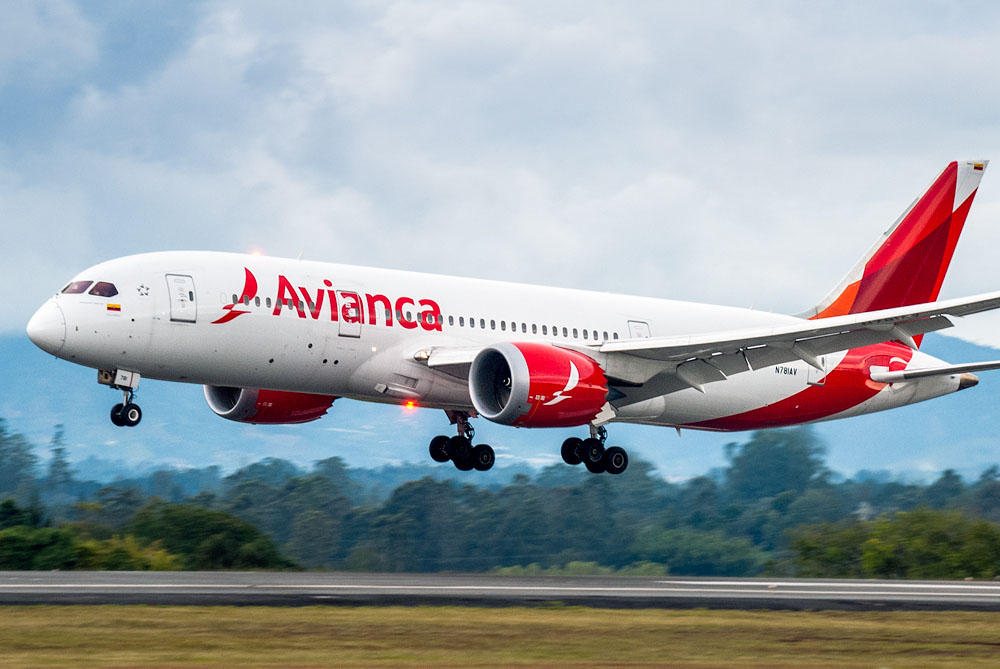
The Airline I Will Be Taking on My Vacation

I have been talking long enough about my upcoming trip to Guatemala, but I finally took steps to reserve my flight to Guatemala City and back and reserve accommodations for the first part of my trip in the highlands. These include the Antigua and Santiago Atitlán. Within the next few days, I will also reserve single-night stays in Panajachel and Chichicastenango.

The second part of the trip—to visit the Mayan ruins of Tikal, Copan, and Quirigua—will remain fluid because of lingering transportation concerns. Right now, the plans for the second half of the trip appear to be a bit complicated:

  • Take a shuttle bus from Antigua or Guatemala City to Copan, just over the border into Honduras
  • Take “chicken buses” from Copan to Rio Dulce in Guatemala via El Florido and Chiquimula
  • Hire a car and driver to take to from Rio Dulce to Quirigua and back
  • Take a first-class bus from Rio Dulce to Flores and then to El Remate
  • Take a minibus from El Remate to Tikal
  • Return via bus to Flores
  • Fly back to Guatemala City, or take a 12-hour first class bus back if I haven’t burned up too many days by the above

My airline of choice for this trip is Colombian-based Avianca. If you are not familiar with the airline, it is the oldest commercial carrier in the Western Hemisphere—older than any of the U.S. carriers with their money-grubbing extra fees. The plane may have Taca or Lacsa livery, because Avianca purchased these two Central American airlines a few years back. The only airline in the world that is older is KLM in the Netherlands.

I’ve mentioned this before, I think, but I am prejudiced against U.S. carriers. The last time I flew to South America, I had to take American to São Paolo, Brazil. I ordered a cup of hot tea. They gave me coffee instead. I spit it out (being the coffee-hater that I am) and complained bitterly to the stewardess, who insisted it was tea. Until she tasted it. Oh! So sorry! (And so typical.) On Avianca, they know the difference between coffee and tea.

A Nostalgia for Evil Empires?

Ruins at Mayapan in Yucatán

You can see the prejudice even in the naming of the archeological periods of Maya civilization. There is Preclassic, Classic, and Postclassic. The Classic Period ended around AD 800, while the English were struggling with Viking invaders, and while Charlemagne ruled in France. The Classic period was when most of  the big pyramids and temples were built—some 700 years before Cortés and the Spanish decided to muscle in on the action.

When we travel in Yucatán or the jungles of Petén, what we marvel at are the Classic ruins of places like Tikal, Copan, Calakmul, Uxmal, and Chichen Itza. In our simple way of admiring the wrong things. The Classic period was great for the divine kings who wasted their subjects in massive construction projects and endless wars.

After the Classic period, the Maya actually improved their lot: In place of pharaonic dictates to abject slaves and massive tragedies when one of their divine kings bit the dust, the new emphasis was on trade and multiple sources of power. Of course, there were no more huge pyramids, but the Maya could spend more time on agriculture, trade, and a slightly less domineering religion.

When the Grijalvas and Alvarados began attacking the Maya, the Maya resisted. The Aztecs lasted only a couple of years under the onslaught of the Conquistadores, whereas the Maya held out until 1697, some 175 years after the Aztecs fell. Today, there are about a million speakers of Nahuatl, which was the language of the Aztecs. The Maya today number about six million in Mexico, Belize, Guatemala, Honduras, and El Salvador—and they speak some 28 dialects of the Mayan language! While the Aztecs went down in flames, the Maya survived in greater strength despite multiple attempts to curtail their numbers and their power.