I Finally Commit

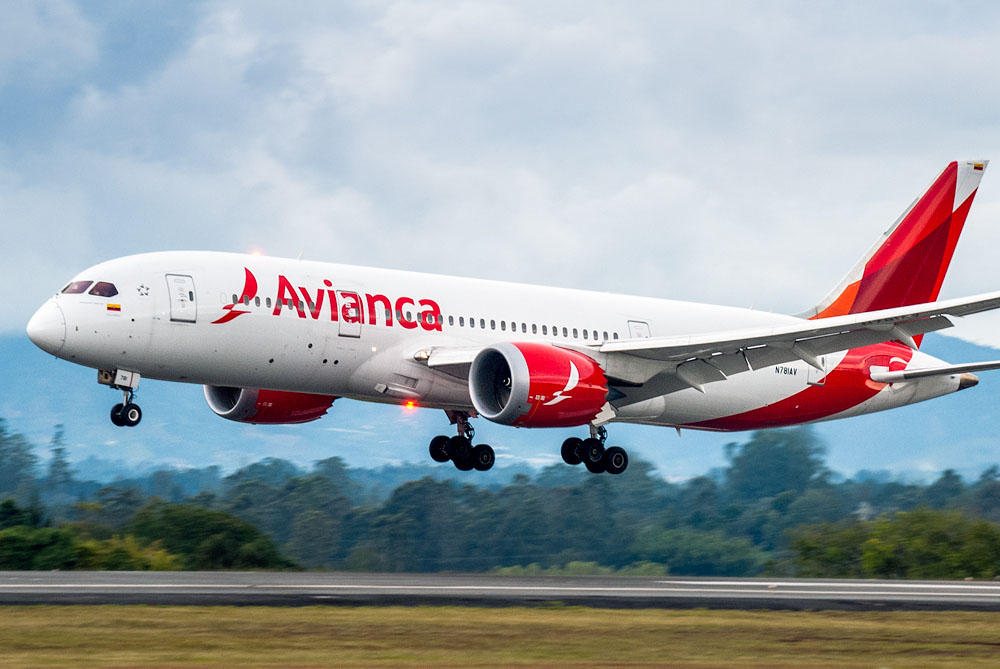
The Airline I Will Be Taking on My Vacation

I have been talking long enough about my upcoming trip to Guatemala, but I finally took steps to reserve my flight to Guatemala City and back and reserve accommodations for the first part of my trip in the highlands. These include the Antigua and Santiago Atitlán. Within the next few days, I will also reserve single-night stays in Panajachel and Chichicastenango.

The second part of the trip—to visit the Mayan ruins of Tikal, Copan, and Quirigua—will remain fluid because of lingering transportation concerns. Right now, the plans for the second half of the trip appear to be a bit complicated:

  • Take a shuttle bus from Antigua or Guatemala City to Copan, just over the border into Honduras
  • Take “chicken buses” from Copan to Rio Dulce in Guatemala via El Florido and Chiquimula
  • Hire a car and driver to take to from Rio Dulce to Quirigua and back
  • Take a first-class bus from Rio Dulce to Flores and then to El Remate
  • Take a minibus from El Remate to Tikal
  • Return via bus to Flores
  • Fly back to Guatemala City, or take a 12-hour first class bus back if I haven’t burned up too many days by the above

My airline of choice for this trip is Colombian-based Avianca. If you are not familiar with the airline, it is the oldest commercial carrier in the Western Hemisphere—older than any of the U.S. carriers with their money-grubbing extra fees. The plane may have Taca or Lacsa livery, because Avianca purchased these two Central American airlines a few years back. The only airline in the world that is older is KLM in the Netherlands.

I’ve mentioned this before, I think, but I am prejudiced against U.S. carriers. The last time I flew to South America, I had to take American to São Paolo, Brazil. I ordered a cup of hot tea. They gave me coffee instead. I spit it out (being the coffee-hater that I am) and complained bitterly to the stewardess, who insisted it was tea. Until she tasted it. Oh! So sorry! (And so typical.) On Avianca, they know the difference between coffee and tea.

A Nostalgia for Evil Empires?

Ruins at Mayapan in Yucatán

You can see the prejudice even in the naming of the archeological periods of Maya civilization. There is Preclassic, Classic, and Postclassic. The Classic Period ended around AD 800, while the English were struggling with Viking invaders, and while Charlemagne ruled in France. The Classic period was when most of  the big pyramids and temples were built—some 700 years before Cortés and the Spanish decided to muscle in on the action.

When we travel in Yucatán or the jungles of Petén, what we marvel at are the Classic ruins of places like Tikal, Copan, Calakmul, Uxmal, and Chichen Itza. In our simple way of admiring the wrong things. The Classic period was great for the divine kings who wasted their subjects in massive construction projects and endless wars.

After the Classic period, the Maya actually improved their lot: In place of pharaonic dictates to abject slaves and massive tragedies when one of their divine kings bit the dust, the new emphasis was on trade and multiple sources of power. Of course, there were no more huge pyramids, but the Maya could spend more time on agriculture, trade, and a slightly less domineering religion.

When the Grijalvas and Alvarados began attacking the Maya, the Maya resisted. The Aztecs lasted only a couple of years under the onslaught of the Conquistadores, whereas the Maya held out until 1697, some 175 years after the Aztecs fell. Today, there are about a million speakers of Nahuatl, which was the language of the Aztecs. The Maya today number about six million in Mexico, Belize, Guatemala, Honduras, and El Salvador—and they speak some 28 dialects of the Mayan language! While the Aztecs went down in flames, the Maya survived in greater strength despite multiple attempts to curtail their numbers and their power.


Tikal

Temple 1 at Tikal in the Petén Region of Guatemala

I had always wanted to visit Tikal. In the 1980s, when I visited Yucatán several times, I wanted to swing south through Belize to the ruinsat Tikal. Unfortunately, a murderous religious madman named Efraín Ríos Montt was in charge at the time; and the State Department was recommending that American tourists stay well away from the massacres and disappearances that were plaguing Guatemala at the time.

Tikal is huge, 575 square kilometers (222 square miles) in area. It almost defined the Classic Period of Mayan archeology, from approximately 200 AD to 800 AD at its height. The area in which it is located is a monkey jungle, pure and simple. With my hared of mosquitoes, I am thinking of spending three nights in nearby El Remate, where the hotels have electricity 24 hours a day, and not just sometimes. If there is air conditioning, or at the very least a functioning ceiling fan, one can escape being bitten to death and coming home with Zika or Malaria or Dengue, to name just a few baddies.

The Shores of Lago de Petén at El Remate

Although Guatemala is not a large country by North American standards, the road from Guatemala City to El Remate takes twelve hours or more on good roads. One has to go all the way to the Atlantic Coast before cutting north. There is a little matter of some high mountains preventing a direct route. If I took the mountain route, it would take at least twenty hours and several buses. I am actually thinking of flying from Guatemala City to Flores, which is within a few miles of El Remate. (I could stay in Flores, for that matter, but if I wanted to spend two days at the ruins, I want to be a bit closer to Tikal.)

There are sunrise and sunset tours at Tikal, but I don’t want to lose sleep just so I can gamble on a perfect sunrise or sunset. I’m willing to take pot luck.


Serendipity: Paul Theroux in Guatemala

The Rail Line Between Tecun Uman and Guatemala City

I have read Paul Theroux’s The Old Patagonian Express: By Train Through the Americas several times. It got me interested in visiting South and Central America in the first place; and I keep tryi9ng to relive the experience of reading it the first time. Back in the 1970s, there was still passenger rail service in Guatemala. Now there are only railroad museums with rusting locomotives. The following is the author’s take on recent Guatemalan history—which is still largely true.

I had a political reverie on that train [the one between Tecun Uman and Guatemala City]. It was this: the government held elections, encouraged people to vote, and appeared to be democratic. The army appeared to be impartial, the newspapers disinterested. And it remained a peasant society, basically underfed and unfree. It must perplex any peasant to be told he is living in a free country, when the facts of life contradict this. It might be that this does not perplex him; he has every reason to believe, in accordance with the evidence, that democracy is feudal, a bureaucracy run by crooks and trigger-happy vigilantes. When one sees a government of the Guatemalan sort professing such high-mindedness in its social aims and producing such mediocre results, one cannot be surprised if the peasant concludes that communism might be an improvement. It was a Latin American sickness: inferior government gave democracy an evil name and left people with no option but to seek an alternative.


Pre-Columbian Writing

Detail from the Dresden Codex

At the time the Spanish landed in he New World, there was only one Pre-Columbian culture that had a written alphabet, and that was the Maya. Now I have heard that in earlier centuries, the Zapotecs and Mixtecs of Northern Mexico had a written alphabet, but stopped using it after a certain point. Curiously, the Aztecs and Inca did not have their own alphabet, however advanced they may have been in other respects.

Right now, the only instances we have of writing in Mayan are glyphs at various Maya ruins and four surviving codices that escaped the religious zeal of the Spanish missionaries in destroying what they perceived to be heretical. And since the subject matter related to Maya religion, it was heretical insofar as Christianity was concerned.

The most famous destroyer of Mayan codices was Diego de Landa, the Franciscan Bishop of Yucatán in the 16th century. In a famed book burning conducted in 1562, de Landa had 27 codices burned at Mani. He described the Maya as being disconsolate at the destruction of so much of their culture at one time. Curiously, it was the same de Landa who wrote the Relación de Las Cosas de Yucatán, which preserved an astonishing amount of the culture and language, such that it is still studied by Maya scholars. It is still available in a Dover Publications paperback.

Do you see the dots and dashes in the above detail from the Dresden Codex just above the four seated figures? They are, in order, the numbers 16, 4, 9, 13, zero (yes, the Maya had discovered zero), 5, 12, 2, and 1. As you can probably surmise from this, the dashes represented the number five or a multiple of fives; and a dot, a one or multiple of ones up to four. It was a vigesimal system, meaning to the base 20 rather than base 10 like ours. Very likely, the numbers in the illustration represent a “long count” calendar date fixing a particular event in time. You can read more about Maya mathematics here.

The other interesting thing about the Mayan alphabet is that some symbols were hieroglyphic and stood for an entire word and others phonetic, standing for syllables. This confused scholars for years.

At the time I started visiting the Maya world, only the calendrical symbols had been decoded (mostly thanks to the selfsame good/bad Diego de Landa). In the last forty years, we have discovered that the Maya have a history. We have learned names of rulers and translated descriptions of events commemorated by Maya rulers.


Why I’m Stuck on the Maya

Maya Girls

My first real trip outside the borders of the United States was to Yucatán in November 1975. I was so entranced with what I saw that I kept coming back to Maya Mexico for years, until 1992. During that time, I also wanted to go to Guatemala, but a civil war between the Maya and the Ladinos (Mestizos) was raging until 1996; and Guatemala was on the State Department’s “Level 4: Do Not Travel” list until just recently. Even now, the State Department as the whole country classified under a blanket “Level 3: Reconsider travel to Guatemala due to crime” warning.

Why is it that I am so fascinated by the Maya that I would risk flouting President Trumpf’s State Department?

For one thing, the Maya are incredible survivors. The Aztecs were ground down by Cortez within two years. In Peru, it took forty years before resistance was smashed by Pizarro and his successors. And the Maya? That took a full 180 years before the last Maya kingdom (at Tayasal in Guatemala) was leveled.

Today, there are 1.5 million speakers of Nahuatl, the language of the Aztecs. There are some 6 million speakers of the 26-odd Mayan languages and dialects. Of course, the Incan Quechua language has even more speakers: some 8.5 to 11 million speakers in several South American countries.

In recent years, there have been several disturbances in the Maya area:

  • In Mexico, there was a Maya war against the Ladinos in Yucatán that lasted from 1847 to 1901 and a Zapatista revolt in Chiapas that flared briefly in 1994.
  • In Guatemala, there was a violent civil war against the Ladinos from 1960 to 1996. It is estimated that tens of thousands of Maya were massacred by the army.
  • In El Salvador, there was a civil war from 1979 to 1981. (Only some of the indigenous peoples involved in that one were Maya.)

The Maya are still there, occupying large parts of Mexico (Yucatán, Chiapas, Tabasco, Campeche, and Quintana Roo); Belize; Guatemala; and parts of Honduras and El Salvador. It is no small achievement for them to have survived so much persecution for upwards of 500 years.

That is what interests me.


Quiriguá

Zoomorph at Quiriguá

Now that Martine has returned for the time being, I can turn my attention to other things, like that dream of Guatemala that is taking shape in my mind. One of the Maya ruins that I hope to visit is Quiriguá, which is nestled close to the border with Honduras. As the crow flies, it is not far from the even more spectacular ruins at Copán just over the line into Honduras.

In the 1840s, John Lloyd Stephens and his artist Frederick Catherwood paid visits to Copán, Quiriguá, and Palenque. Below is one of the many stelae at Quiriguá as drawn by Catherwood:

Stela at Quiriguá

Quiriguá is actually a small ruin that can be seen within a couple of hours. The trick is getting there in the first place. As I have mentioned in an earlier post, I have been informed that some shuttles that go to Copán also pay a visit to Quiriguá as part of the return trip to Guatemala City or Antigua. But as I look at the map of Guatemala, I see that the road network is nowhere near the routing of flying crows. It would probably add a couple of hours to the return trip. So I remain skeptical until I can get some information from someone on the ground in Guatemala.

Portrait of a Sucker

Scene in the Crafts Market, Otavalo, Ecuador

There is nothing quite like the crafts market of a Latin American city like Chichicastenano, Guatemala; Otavalo, Ecuador; or Cusco, Peru. One wonders down narrow ways awash with color and aglitter with native ingenuity. There are times when I felt bad for not buying far more handicrafts than I could reasonably be expected to carry—especially the textiles. What I do buy is usually small enough to fit into the single bag with which I travel.

I remember the first time I felt this way. I was in San Cristóbal de las Casas in Chiapas, Mexico. It was December 1979, and I was fascinated by the Highland Maya textiles. It was then that a little Chamula girl, no older than eight or nine, sold me a little doll in native costume that she had made herself (or so she said). As she was describing it in her Highland Mayan dialect of which I knew not a single word, and stroking it as if it were something rare and magical, my heart melted and I bought the doll. I still have it on one of my bookshelves, resting against the Latin American literature section.

At some point, I’ll take a picture of it so that you can all see what I sucker I am. I suppose it is better than being heartless.

San Pedro La Laguna

San Pedro La Laguna on the Shore of Lago de Atitlán

When I visit Lago de Atitlán in Guatemala, I plan to stay at San Pedro La Laguna rather than Santiago Atitlán. There is more to see and do in San Pedro, and I can always take a lancha (covered motorboat) across an inlet of the lake to Santiago Atitlán. It would make a nice day trip from San Pedro. While there, I can visit the Maya god Maximón and make an offering to him for a safe trip, and I could visit the weaving cooperative.

Why San Pedro? It seems there are more places to stay. The town has something of a reputation as a party town for backpackers—and that aspect of the town is one I wish to avoid at all cost. When I travel, I like to sit down and read my Kindle—not listen to an international crowd of juveniles who have had too much aguardiente to drink. In fact, I generally prefer to avoid places where backpackers congregate. I guess this is all part of the “will you rotten kids get off my lawn” aspect of aging.


In Dubious Terrain

Volcanic Steam Vents Near Þingvellir Iceland

It is almost five years since I last set foot in Iceland. Curiously, most of the vacations I have had since then have been in earthquake and volcanic zones. It is almost as if being in highly dubious terrain has become a metaphor for my life. All those Icelandic steam vents, all those fumaroles—they are a handy symbol for the curve balls that life can throw at you. I am reminded of John Bunyan’s Pilgrim’s Progress, in which Pilgrim must walk a straight and narrow path from the City of Destruction to the Celestial City, which is Heaven.

My first memory of Iceland, going back to my first visit in 2001, was of all the steam vents on the Reykjanes Peninsula between Keflavík Airport and Reykjavík. Then, too, there were those fields of geysers where one had to stay on the path if one didn’t want to fall through the crust and end up boiled to death within seconds.

The Volcano Sabancaya in Eruption Near Arequipa, Peru

In my seventy-third year on this earth, I find I must walk on the straight and narrow path lest I fall by the wayside. Living with Martine was a pleasant distraction—one I would gladly suffer again—but on my own, there are more things that can happen to me. I am determined to take good care of myself, insomuch as that is possible.

As you read these little squibs of mine, I should not be surprised if you could tell that something is wrong before I can inform you of the details.

In the meantime, I continue to plan for my vacation later this year in Guatemala, another land of earthquakes and volcanoes.