Beliefs—Rigid and Lite

Yes, He Certainly Looks Rigid

What is C-3PO doing in this blog? I put his picture here because the actor who played the robot in all the Star Wars films was named Anthony Daniels, but he is not to be confused with the writer Anthony Daniels. I guess the confusion was so much for the latter that he now goes by the name Theodore Dalrymple.

By now, I have read quite a few books about Guatemala, my next trip destination, and he is the first writer who checked his beliefs at the door. At first glance, I thought his sympathies lay with the hounds, in this case the dictators/army generals who were responsible for some two hundred thousand deaths in the period of the Civil War, roughly 1960-1996. But then I saw that he was giving equal ink to both sides of the war and making cogent arguments that showed he was a good listener. He spent several days in Nicaragua talking to Sandinistas and Sandinista sympathizers. As both a travel writer and a physician, he even spent a couple weeks serving as a doctor on an isolated coffee finca that could be reached only by airplane.

At one point in Sweet Waist of America: Journeys Around Guatemala, Daniels (or Dalrymple) writes:

In fact, Guatemala is not a country for those who want the world to be neatly divisible into good and evil. Perhaps such countries do not exist. But to restore my confidence in my ability to recognize evil when I encountered it, I sought an interview with General Benedicto Lucas García. I had tried to contact his brother, General Romeo Lucas García [the worst of the recent Guatemalan dictators], but he was never at home….

He also interviewed General Efrain Ríos Montt, who was one of the worst recent rulers and who is now an evangelical preacher. Naturally, he did not fess up to having authorized any massacres.

Around this time, I started getting interested in Daniels/Dalrymple. On Wikipedia, there was an interesting summary of the recurring themes in his writing. These include:

  • The cause of much contemporary misery in Western countries – criminality,domestic violence, drug addiction, aggressive youths, hooliganism, broken families – is the nihilistic, decadent and/or self-destructive behaviour of people who do not know how to live. Both the smoothing over of this behaviour, and the medicalisation of the problems that emerge as a corollary of this behaviour, are forms of indifference. Someone has to tell those people, patiently and with understanding for the particulars of the case, that they have to live differently.
  • Poverty does not explain aggressive, criminal and self-destructive behaviour. In an African slum you will find among the very poor, living in dreadful circumstances, dignity and decency in abundance, which are painfully lacking in an average English suburb, although its inhabitants are much wealthier.
  • An attitude characterised by gratefulness and having obligations towards others has been replaced – with awful consequences – by an awareness of “rights” and a sense of entitlement, without responsibilities. This leads to resentment as the rights become violated by parents, authorities, bureaucracies and others in general.
  • One of the things that make Islam attractive to young westernised Muslim men is the opportunity it gives them to dominate women.
  • Technocratic or bureaucratic solutions to the problems of mankind produce disasters in cases where the nature of man is the root cause of those problems.
  • It is a myth, when going “cold turkey” from an opiate such as heroin, that the withdrawal symptoms are virtually unbearable; they are in fact hardly worse than flu. [Remember, Daniels is a physician.]

Anthony Daniels/Theodore Dalrymple

  • Criminality is much more often the cause of drug addiction than its consequence.
  • Sentimentality, which is becoming entrenched in British society, is “the progenitor, the godparent, the midwife of brutality.”
  • High culture and refined aesthetic tastes are worth defending, and despite the protestations of non-judgmentalists who say all expression is equal, they are superior to popular culture.
  • The ideology of the Welfare State is used to diminish personal responsibility. Erosion of personal responsibility makes people dependent on institutions and favours the existence of a threatening and vulnerable underclass.
  • Moral relativism can easily be a trick of an egotistical mind to silence the voice of conscience.
  • Multiculturalism and cultural relativism are at odds with common sense. [I don’t altogether agree with this one.]
  • The decline of civilised behaviour – self-restraint, modesty, zeal, humility, irony, detachment – ruins social and personal life.
  • The root cause of our contemporary cultural poverty is intellectual dishonesty. First, the intellectuals (more specifically, left-wing ones) have destroyed the foundation of culture, and second, they refuse to acknowledge it by resorting to the caves of political correctness.

Now this is a largely conservative set of beliefs that do not coincide with mine, but I like the man’s even-handedness, especially in his Guatemala book. The man makes me think, and it helps me to understand in some way the Trumpf revolution of 2016.


Miguel Ángel Asturias

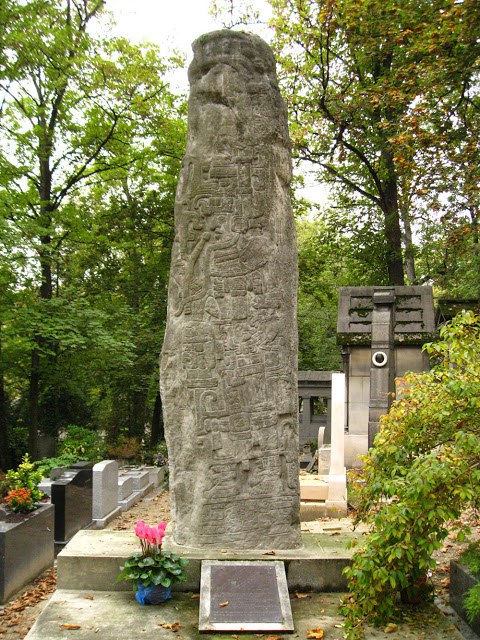
Grave of Miguel Ángel Asturias at Père Lachaise Cemetery in Paris

It was almost twenty years ago that Martine and I were wandering through Paris’s gigantic Père Lachaise cemetery in the 20th Arrondissement. There were a number of surprises, one of which was the grave of Miguel Ángel Asturias, who died in 1974. Rising above a bronze funerary plaque is a Maya stela similar to the ones found at the ruins of Quiriguá in his native country. To this day, he is Central America’s lone winner of the Nobel Prize for Literature, which was awarded to him in 1967.

I have been interested in visiting Guatemala for many years. During the time I was most available to go, Guatemala was in the middle of fighting an armed insurrection by a mostly Maya peasantry who were tired of being forced off their land, enslaved, or massacred. Between 1960 and 1966, some 200,000 Guatemalans died fighting, mostly Maya campesinos. I have just finished re-reading Asturias’s first major novel, El Señor Presidente, set during the presidency of Manuel Estrada Cabrera, who ruled from 1898 to 1920. I have been a big Asturias fan since 1975.

Miguel Ángel Asturias

Now that I am pretty much decided on Guatemala as my next vacation destination, I will add at least two or three more Asturias novels to the ones I have already read. To date, I have finished:

  • El Señor Presidente (1946), his most famous novel
  • Men of Maize (1949)
  • Strong Wind (1950), the first volume of the United Fruit Company trilogy
  • Mulata (1963)

I plan to finish the other two volumes in the trilogy—The Green Pope (1954) and The Eyes of the Interred (1960)—both of which were translated by Gregory Rabassa, one of my favorite translators from the Spanish.

Although Asturias is so identified with the Maya, it is interesting to note that he comes from a well-to-do Creole family that could trace its origins back to 1660.

Antigua Guatemala

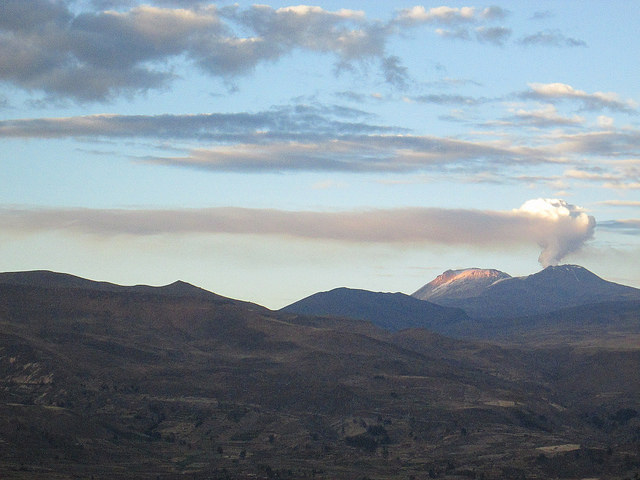
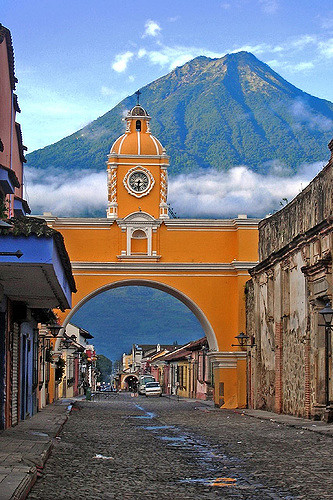
Arco de Santa Catalina and Agua Volcano in Background

If asked what is the capital of Guatemala, it is best to turn your answer into another question: At what point in history? Today, Guatemala City is the capital of Guatemala. In 1524, Pedro de Alvarado founded the Ciudad de Santiago de los Caballeros de Goathemalon [sic], near the present town of Iximche. After a Kaqchikel Maya uprising in 1527, the capital was moved to Ciudad Vieja and retained the same name as the original. In 1541, that city was destroyed by a gigantic mudflow from the Volcano de Agua (illustrated above). Two years later, the capital was moved five miles to the Panchoy Valley to the present city of Antigua Guatemala.

In the 18th century, earthquakes and volcanic eruptions caused one final move, to the capital’s present location. That does not mean that the city of Antigua Guatemala, despite all the ruined churches, is not one of the most popular tourist destinations in the country. In fact, when I go to Guatemala for my vacation, I will take a shuttle directly from the airport to Antigua, about 45 minutes away.

Guatemala City has a reputation of being a big, ugly city with a couple of good museums, but otherwise devoid of major tourist attractions. So, I will base myself in Antigua.

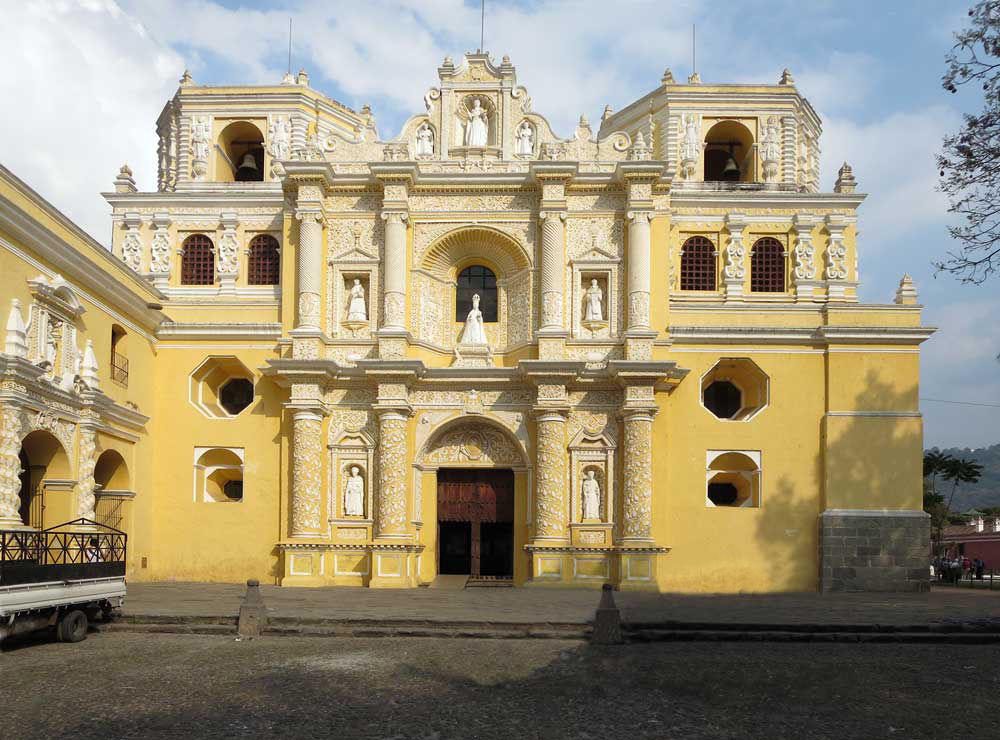
Intact Façade of Nuestra Señora de Merced, Otherwise in Ruins

With Antigua serving as a kind of tourist ghetto, there are a multitude of private shuttles to major tourist destinations—all originating in Antigua. One can treat the town as if it were the capital except for one thing: The airport is in Guatemala City. As Guate, as it is called, is the largest city in Central America, I think it would be more restful to base myself in a well-connected town with a population of only about 50,000.


Maximón

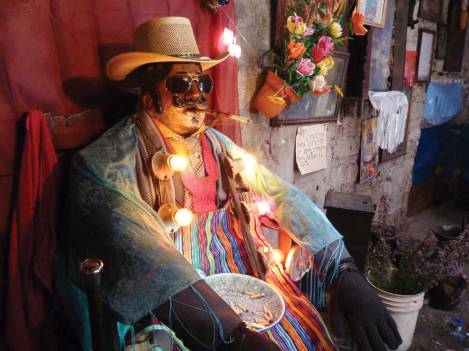
Votive Figure of Maximón in Santiago Atitlán

I laugh when ignorant people wonder what happened to the Maya. They are still around, and still occupying the parts of Mexico (Chiapas and Yucatán), Guatemala, Belize, and Honduras that constituted the original Maya homeland at its height. There are millions of Maya around. They speak some thirty different major dialects of the Mayan language, most of which are not understandable to Maya speaking other dialects.

When Cortés arrived in 1519, he made short work of the Aztecs. Moctezuma and his people were conquered within a few years. (Their language, Nahuatl, still exists.) It took a considerable while longer for all the Maya polities to fall. The last one, Tayasal, located on the Lago de Petén near present-day Flores in Guatemala, fell in 1695.

But the Maya are still Maya. They managed to survive with their culture not quite intact, yet robust enough to survive under new circumstances, namely Spanish conquest. There are still isolated Maya villages where non-Maya are not welcome. In others, there are strange new Maya gods, such as Maximón (mah-shi-MOAN) whose image appears above.  When I visit Santiago Atitlán, I plan to visit him and offer a gift, typically a bottle of aguardiente, cigars, or a pack of cigarettes.

This Maximón is a sort of evil god, midway between the underworld (Xibalba) and the heavens. The Tzutujil-speaking Maya, who inhabit the area, pay homage to him, particularly during Holy Week. According to Peter Canby in his The Heart of the Sky: Travels Among the Maya:

In Santiago Atitlán, Maximón is the god of destructive nature, of floods, earthquakes, and storms. A traveler and walker, he is associated with snakebites, is the inflicter of madness, and is worshiped at the mouths of caves. [Anthropologist] Michael Coe associates Maam (Maximón) with the Yucatec god Pauhatun, also known as God N, one of the most powerful underworld gods. In fact, Pauhatun is the quadripartite god taking part in a hallucinogenic enema-ritual depicted on the funerary vase in Michael Coe’s Lords of the Underworld…. It was strange, therefore, to see atitecos [Maya residents of Santiago Atitlán] treating Maximón with such tender reverence, but I knew that this merely reflected the different concepts of evil held by ourselves and the Maya.

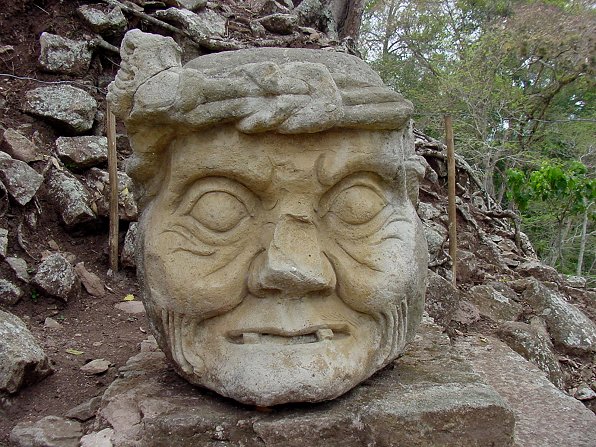
Figure of Pauhatun from the Ruins at Copán

To us, evil is something absolute, something to be resisted at all costs. To the Maya, evil is the principle of death and decay in nature and therefore an integral part of life. Gods like Maximón are terrifying, but they’re also part of the earth’s fertility. [Archeologist J Eric S] Thompson notes that “there is a widespread Maya belief that darkness and the underworld are evil, but as [the underworld] reaches up to immediately below the surface of the earth, it also produces crops.”

Among the attributes worshiped in Maximón are those of Judas Iscariot and Pedro de Alvarado, cruelest of conquistadores. I cannot help but think that there is something in the Maya conception of evil that has led them to survive as a culture—if not 100% intact, then at least substantially intact. Compare that with America’s vision of itself as “a city on a hill” acting as a beacon for all peoples, while we slaughter our own children with military automatic weapons.


Serendipity: Where Did The Maya Go?

Our Picture of the Ancient Maya, But Is It the Only One?

I can still remember the historical pundits of the 1950s and 1960s, with their cockamamie claims that the Egyptians came to the New World and built the pyramids for the Maya, because, naturally, they were too primitive to learn how to pile one stone on top of another. I can hear their voice-overs in dozens of spurious documentaries (imagine Lowell Thomas’s voice): “What happened to these people? Where did they disappear to?”

One answer comes from Christopher Shaw, in his uneven but occasionally brilliant book Sacred Monkey River: A Canoe Trip with the Gods:

If a golden age existed, it included—along with art and writing, highly developed religious and political systems, artificers and scribes, ritual torture and human sacrifice—cayucos [canoes] floating in waterlily beds, canals thick with protein-rich fish, and the finite cosmos reflected in the waters. If it “fell,” as mny scenarios insist it did, the region became crowded and degraded at the denouement of the classical era. Drought came and apocalyptic wars ensued. In their aftermath, people forgot the old ways and connected them to the past. With the cities reeling, merchant nobles from the coast—putun—imposed themselves and took power. Some of them, in their bourgeois, sentimental fashion, tried to maintain the trappings of grandeur. But the thread had been cut. In the great pyramid temples of the centralized state, the gods fell silent, though not in the houses of the campesinos.

The putun—simultaneously “barbarian” intruders and “merchant warriors,” to [archeologists] Linda Schele and David Freidel—apparently tried to keep alive the connections to tradition, dynasty, and place that lay at the root of the classic peple’s success. But the collective consciousness had moved on. The people “turned their backs on the kings to pursue a less complicated way of living,” as Schele and Freidel put it. hey turned to the forest. In the words of the Popol Vuh, the retreated “under the vines under the trees.”

Tomorrow I will return to this subject with a slightly different point of view.

Serendipity: The Lacandon Apocalypse

The Late Chan K’in Viejo, Lacandonian Chief and Elder, in 1933

I have just begun reading Christopher Shaw’s excellent Sacred Monkey River: A Canoe Trip with the Gods, a book about the river waterways used by the ancient Mayans for trading. The Lacandonians are a very traditional Mayan group that live along the Usumacinta River that forms part of the border between Mexico and Guatemala. In 1992, I saw a Lacandonian selling bows and arrows in front of the Casa del Balam Hotel in Merida, Yucatán. The following passage in Shaw’s book caught my eye:

Kayum, one of Chan K’in’s sons, a painter of naïve but arresting jungle scenes with one-man shows from Barcelona to Seattle to his credit, looked up from his ax work and gently scolded Victor [Perera, author of The Last Lords of Palenque] that he must let go of the world. It is creaking and groaning like an old man, he said. Everything prefigured the imminence of xu’tan, he said, the Lacandon apocalypse. The proper attitude of a hach winik [Lacandonian, “real person”] was to welcome it and the new era of creation it anticipated. He spoke with the deep calm and conviction of a believer. Victor never forgot it, though he never accepted it either, Kayum’s willingness to watch and welcome while a thousand generations of accumulated beauty and uncatalogued nonhuman life got traded for the shortest of gains, or in many cases no gains at all.

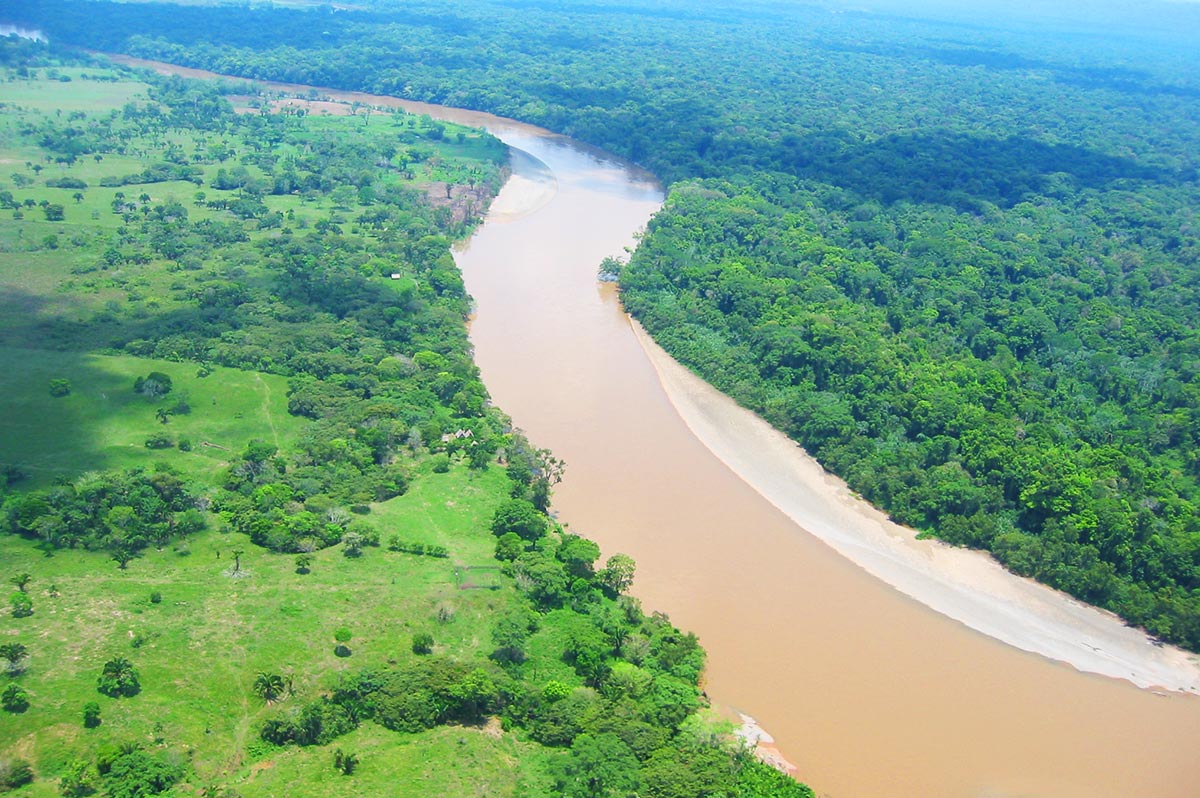
The Usumacinta River Near Piedras Negras


Los Encuentros

Highland Guatemala Town

I picked up a book from the library today by a Fulbright Scholar named Stephen Connely Benz entitled Guatemalan Journey and found the following poem entitled “Los Encuentros” in the front matter. I hope you like it as much as I did:

The phrase book tells me I’m at a crossroads,
I should expect encounters
in the vellum margins of this highway
where buses cough black clouds
and hanging men cry out destinations
I cannot find on the map.
I’ve heard rumors of what lies
ahead, the incidents hidden in hairpin
turns, dire straits for those who seek
passage through gullies, ravines, lava valleys.
The topography of this country,
an explorer said, is like a crumpled page:
palimpsest mountains, parchment plains,
hieroglyphic highlands awaiting interpretation.
Lexicographers take notes on each twisting
nuance in the road, turns of phrase promise
arrival or departure, movement along this text
I’m traveling. I read ahead
through the codex of curves
And straightaways to the congested towns
where babblers hail strangers
in unrelated vocables.
I study the morphemes in a parrot’s squawk,
signals sent up in volcano smoke,
stories revealed in aboriginal textile.
I skim long vistas of calligraphied macadam,
an endless panorama of road signs encoding
a traveler’s tale, a new message
But the phrase book’s no help now,
it all translates the same—
I’m at a crossroads,
expecting encounters, still waiting.

The book itself seems like an excellent introduction to Guatemala. I wonder if he wrote anything else.


Not a Fair Exchange

Malaria Mosquito

The New World gave the European conquerors many gifts, including potatoes, tomatoes, chocolate, tobacco, corn, vanilla, chili peppers, bell peppers, pumpkins, avocados, peanuts, cashews, pecans, quinine, wild rice, quinine, squash, and many types of beans. They were richly rewarded with such European gifts as measles, smallpox, and malaria. The mortality rate in Mexico alone was in the millions in the 16th century alone.

Most people do not realize that the malaria mosquito was a stowaway on ships that brought slaves from Africa. Mayan records make no reference to malaria, and many jungle areas in Guatemala, Honduras, and Mexico were inhabited which over the last several hundred years have been abandoned. The Petén region of Guatemala has hundreds of Mayan archeological sites, and more are being discovered each year. Where Mayan cities used to be connected by sacbés, or ceremonial roads, today they are connected by shoulder-deep mud.  Much of the Yucatán Peninsula is now sparsely populated thanks to the devastation wrought by the malaria mosquito.

According to the Institut de Recherche pour le Développement in France:

A large international study recently published in the PNAS by scientists from the UMR Migevec and their partners has shown that P[lasmodium] falciparum crossed the ocean on slave ships which crossed the Atlantic between the 16th and the 19th century, some 500 to 200 years ago. The research team has indeed just demonstrated that the parasite which is now found in America has African origins.

Through a global international scientific collaboration, biologists have collected several hundred samples of infected human blood from 17 countries representing the parasite’s entire distribution area. It is one of the largest sets of P. falciparum genetic data ever collected. The analysis of genetic material extracted from those samples has taught the scientists several things. First of all, the American pathogen is genetically distant from its Asian cousin, thus precluding an Asian origin. It is, however, close to the African parasite.

The IRD further concludes that the culprit were slaves who were brought into the Spanish and Portuguese colonies, partly, ironically, because blacks were more resistant to malaria.

When I go to Guatemala and Honduras later this year, I will spend part of the time in malarial jungles, which means I will be taking chloroquine and traveling with a mosquito net to place over my bed.

I hate mosquitoes, but I would dearly love to see the Mayan ruins, which are now in areas that are sparsely developed. The city of Tikal once had a population of 300,000 during Europe’s Dark Ages. Today, the entire Petén Department has a population under 700,000, mostly around La Libertad, San Luis, and Sayaxché.

A Great Travel Resource

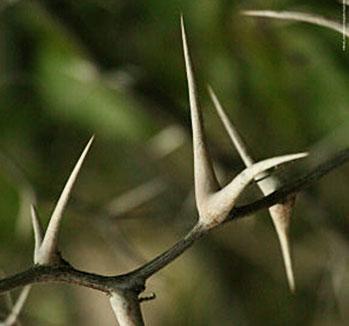
In Australia, Travelers Posted Notes on the Thorns

A few years ago, I was an active member of Bootsnall.Com, which had great postings on travel to every corner of the Earth. Of late, Bootsnall has yielded pride of place to Lonely Planet’s Thorn Tree (though I have hopes they’ll make a comeback). According to Lonely Planet:

Lonely Planet’s travel forum (Thorn Tree) has been a leading online destination for travel enthusiasts and thrill seekers since 1996. It was created as a place for travelers to exchange travel advice, hints, hacks, and tips in order to help them get to the heart of a destination.

Thorn Tree is by travelers, for travelers, and covers every place on the planet including places we don’t have guidebooks for (yet). More than 2 million members have joined the community since its inception and have engaged in conversation with others, while making countless connections, over the past 20+ years.

To get there, click here.

You may recall that, a few days ago, I wrote a post entitled “You Can’t Get There from Here … Not Easily, Anyhow.” I was researching how to visit the Mayan ruins of Tikal, Copán, and Quiriguá, which are not too far from one another as the crow flies—but, alas, I have to take the roads, not crows, to get there. I checked out Thorn Tree, and found out how to get to Copán and Quiriguá easily enough . (Tikal will have to be a separate trip.) This is what the poster wrote:

If you are coming back to Antigua, there are tourist shuttles that stop by Quirigua, another Maya site with the largest stelae in the Maya world. It is small compared to Copan, but if you are already in the area, it is worth the stop. There are no shuttles that stop there on the way to Copan, only on the return.

Thank you, CraigAdkins! I found a number of helpful posts. If you are interested in solving any knotty travel problems, I suggest you give the Thorn Tree a look. And check out Bootsnall.Com as well.

Serendipity: The Name of God

Lithograph by Frederick Catherwood of the Mayan Ruins at Copán, Honduras

It is with the greatest pleasure that I am re-reading a book I first read in June 1975 in preparation for the first of my travels, to the Yucatán Peninsula in Mexico. The book was Incidents of Travel in Central America, Chiapas and Yucatán by John Lloyd Stephens. The book was published in 1841 in two volumes with illustrations by Frederick Catherwood, who accompanied Stephens on his journeys. At one point, Stephens and Catherwood visit a school in Zacapa in Guatemala, where they set about making a usable dictionary of Mayan Indian words. As Stephens recounts:

We were rather at a loss what to do with ourselves, but in the afternoon our host called in an Indian for the purpose of enabling us to make a vocabulary of Indian words. The first question I asked him was the name of God, to which he answered, Santissima Trinidad. Through our host I explained to him that I did not wish the Spanish, but the Indian name, and he answered as before, Santissima Trinidad or Dios. I shaped my question in a variety of ways, but could get no other answer. He was a tribe called Chinaute, and the inference was, either that they had never known any Great Spirit who governed and directed the universe, or that they had undergone such an entire change in matters of religion, that they had lost their own appellation for the Deity.

The two volumes are still in print from Dover Publications.