My Halloween Reading

At the end of September, I set myself a program for reading several appropriate ghoulish, ghastly, and horrifying titles in honor of my favorite holiday, Halloween. You can read about my intentions here.

Of the ten books I ended up reading last month, five were appropriate for the season:

  • Ann Radcliffe: The Italian, or the Confessional of the Black Penitents
  • Joyce Carol Oates: Cardiff, by the Sea
  • Thomas Ligotti: The Agonizing Resurrection of Victor Frankenstein and Other Gothic Tales
  • Edgar Allan Poe: The Portable Poe
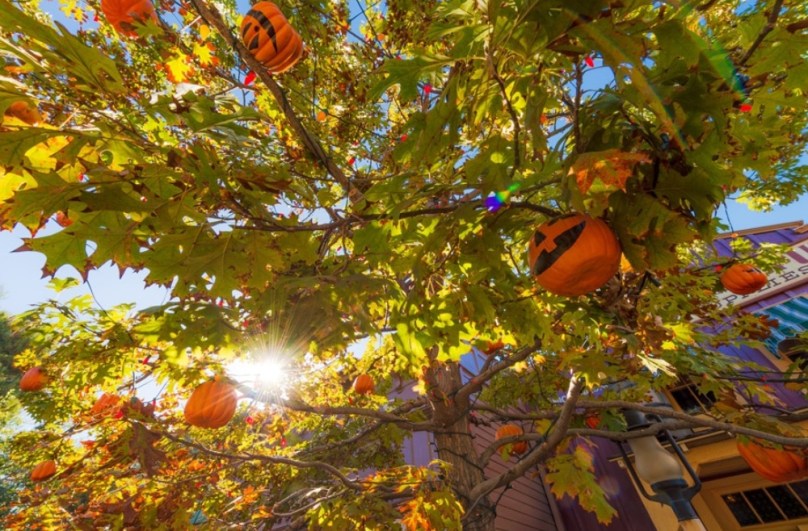
  • Ray Bradbury: The Halloween Tree

They were all pretty good. Not surprisingly, I thought the Poe was best, followed by the Bradbury. That was a surprise, as it was written for the juvenile market, but I enjoyed every minute of it. The Ann Radcliffe was a hoot, as the British tended to think that nothing was spookier than Catholicism, (Maybe it was that thing about the Holy Ghost.)

I liked the Ligotti book because it was a fun way to revisit all the high points of the genre. Cardiff, by the Sea wasn’t technically a Halloween novel, except for the fact that everything Joyce Carol Oates is a bit on the spooky side.

The Borgo Pass at Midnight

I have always loved the beginning of Tod Browning’s Dracula (1931). It shows Renfield (Dwight Frye) arriving at a Transylvanian village late in the evening at Walpurgis Night, when witches and evil spirits hold sway. Everybody is bemoaning that fact in Hungarian. As a Hungarian-American,I always had a fondness for that scene—rather than for the, I thought, less interesting events in England in the vicinity of Carfax Abbey.

Today I saw bits and pieces of the two original Universal horror classics—Dracula and Frankenstein (both 1931)—on Turner Classic Movies (TCM). There altogether too many large rooms in which too many people, many of them in formal evening attire, confronted one another. I was much happier with James Whale’s The Bride of Frankenstein (1935), which was a much better film than Whale’s original Frankenstein.

I suppose that, in the deepest days of the Great Depression, people had a yearning for actors with British accents dressed in tuxedos. I’ve always thought it was a bit silly.

Still, there were those scenes in which Renfield is working his way to Castle Dracula. They are forever etched in my mind.

Samhainophilia

The Winner: Most Popular and Guilt-Free Holiday

There is a such a word as samhainophobia, which means hatred of Halloween. By applying the principal of parallelism, there must be such a word as samhainophilia, meaning love of Halloween. According to Wikipedia:

Samhain is a Gaelic festival on 1 November marking the end of the harvest season and beginning of winter or the “darker half” of the year. It is also the Irish and Scottish Gaelic name for November. Celebrations begin on the evening of 31 October, since the Celtic day began and ended at sunset. This is about halfway between the autumnal equinox and winter solstice. It is one of the four Gaelic seasonal festivals along with Imbolc, Bealtaine, and Lughnasa.

We don’t celebrate Imbolc, Bealtaine, or Lughnasa very much any more; but Samhain, or Halloween, is continue to grow more and more popular. Think about it: There isn’t any guilt associated with buying a few bucks worth of candy and giving it to kids. On the other hand, you have to cook up a huge complicated feast for Thanksgiving and pretend to be nice to all your most objectionable relatives.

And don’t even get me started about Christrmas! You have to kill a tree, decorate it with expensive ornaments, buy expensive gifts for everybody, and do all the same stuff required for Thanksgiving, except maybe you don’t have to serve turkey at your holiday feast.

Then there are all those other holidays: You have to set off an explosive on Independence Day, blowing off a finger or limb. You have to get drunk and endanger your marriage at a New Years office party. And so on and so on.

Heck, I’ll take the candy any day.

The above photo was taken at Los Angeles’s Grier Musser Museum of Victoriana. Martine and I spent a pleasant afternoon visiting the museum owners, Susan and Rey Tejada, who live on the premises. They have an impressive collection of holiday-related books, animated displays, and figurines. I spent over an hour looking at 3-D First World War images on a stereopticon. They also have a great collection of pop-up books of every description.

Preparing for Halloween

British Gothic Novelist Ann Radcliffe (1764-1823)

Usually, I spend much of the month of October each year reading gothic or horror fiction. I have already started reading Ann Radcliffe’s The Italian, or the Confessional of the Black Penitents (1797), after which she quietly stopped writing and spent the last twenty-six years of her life as a private person. I have fond memories of reading her novels The Romance of the Forest (1791) and The Mysteries of Udolpho (1794).

Also, I will inevitably read one of Joyce Carol Oates’s underrated gothic novels or collections of short fiction. Other possibles are Thomas Ligotti and Robert Aickman. And I will certainly re-read some of Edgar Allan Poe’s stories.

In November, I will write a post detailing with gothic/supernatural/horror titles I have read.

Halloween vs Christmas

Display at the Grier Musser Museum

At first, Martine and I liked visiting the Grier Musser Museum because of the of the interesting holiday related displays. We still like the displays, but in the meantime, we have become friends with the owners, Rey and Susan Tejada. Re-visiting the museum and chatting with the Tejadas has become part of the fun surrounding holidays.

Speaking of holidays, it is becoming ever clearer to me that celebrating Halloween is becoming more of a thing, and that celebrating Christmas is becoming less of a thing. Perhaps because it is so associated with guilt trips: so many things that have to be done, some many unrealized goals that remain unrealized, so much expenditure of cash and effort.

Halloween, on the other hand, is cheaper and more fun. And it is not tinged with guilt. It involves pretending that you’re a ghastly monster (no difficulty for most people), attending fun events, and eating a ton of candy.

So even if we don’t get any trick-or-treaters this year (they don’t like climbing stairs), Martine and I feel good about Halloween. Martine got her annual pumpkin pie from Marie Callender’s, we stockpiled candy in case some trick-or-treaters do ascend the stairs, and I’ve read some good scary books this month.

Of course, coming up is my least favorite holiday. I really dislike Thanksgiving. And I’m not overly fond of the traditional food items associated with it.

Halloween Reading

Monster Brains Logo Created by Tom Cochien

For over a decade, I have tackled one or two works of horror literature during the month of October. In the past, most of these were collections of horror stories in the excellent collections put out by Dover Publications, but I am coming to the end of these; so I am branching out a bit.

This month, I have read two collections: Amelia B. Edwards¹s The Phantom Coach and Other Stories and Thomas Ligotti’s Noctuary. Ms Edwards (1831-1892) was not only an excellent teller of tales, but also a world traveler, journalist, and—to add a touch of the weird—an early Egyptologist of some note. I have downloaded her book A Thousand Miles Up the Nile from Amazon Kindle to read sometime next year.

Thomas Ligotti, on the other hand, is a contemporary, born in 1953. I had previously read two of his collections—Songs of a Dead Dreamer and Grimscribe: His Lives and Works—and found them satisfyingly eldritch in every way. The same could be said of Noctuary, which I loved. In fact yesterday’s post on this blog site was a short short story entitled “One May Be Dreaming” from Noctuary in its entirety. Click on the link to check it out.

And, Happy Halloween!

Welcome to HallowThanksMas

Display at the Grier Musser Museum (2015)

It didn’t used to be this way, but now Halloween is now a portal to a ten week holiday season that includes Halloween, the Day of the Dead (All Souls Day), Thanksgiving, Christmas, New Years Day, Martine’s birthday, and my birthday. Fortunately, I don’t take it as seriously as most people do; and I even try to enjoy bits and pieces of it.

In past years, I spent much of October reading horror stories and watching horror films. This year, I’ve not been feeling well, thanks to a hideous attack of bronchitis and asthma. Fortunately, I am feeling better now. And the only horror stories I’ve read were in a collection by Robert Aickman entitled The Wine Dark Sea. I particularly recommend the short story of the same name that opens the collection.

Tomorrow I get my Covid and flu shots, to be followed in two weeks by a vaccination for RSV. I know that the whole issue of vaccinations has become politicized, but I just don’t feel like dying of negligence.

Anyhow, I wish you well during he upcoming HallowThanksMas season. Just don’t let it weigh you down.

The End of HalloThankMas

Our End of Year Holiday Ordeal Is Now Over!

From the beginning of October to the end of the Tournament of Roses Parade is one unending holiday, which I call HallowThanksMas, but others shorten (not by much) to HalloThankMas. It’s supposed to be a time of family closeness, warmth, and happiness—but isn’t, not by a long shot.

This is why I love the whole idea of Festivus—a holiday for the rest of us—as introduced by the Seinfeld show in 1997. It consists of the following:

  • A vertical, unadorned aluminum pole
  • A Festivus dinner, during which there is an “airing of grievances”
  • In response to pushback from the diners, there are “feats of strength,” during which the whiners are wrestled to the ground
  • “Festivus Miracles” are easily explained coincidences

I actually like Halloween, though I never attend Halloween parties, nor would any of my friends be so unwise as to invite me to one. But Thanksgiving and Christmas could and probably should be replaced by something like Festivus. It’s cheaper, does not involve the consumption of dry birds, does not involve greeting cards or gifts, and airs out all the hidden aggressions behind the holidays.

Think about it.

Among the Dead

Day of the Dead Participants

This is kind of a coda to yesterday’s post entitled “Dia de los Muertos.” Many of the attendees at the Day of the Dead Festival in Canoga park wore nifty costumes and frequently had very professional face painting jobs. There was a booth at the festival where most of the work was probably done.

As much as Martine felt intimidated by the size of the crowd, I wound up enjoying the artistry of the costumes and makeup, and the obvious sincerity of the ofrendas (the little altars to a family’s dead).

A Gathering of Skeletons

I will probably have to go by myself, but I wouldn’t mind traveling to other Day of the Dead observances next year. As much as I like Halloween, I also admire the Mexicans’ celebratory confrontation of their own future demise.

Family Life in America

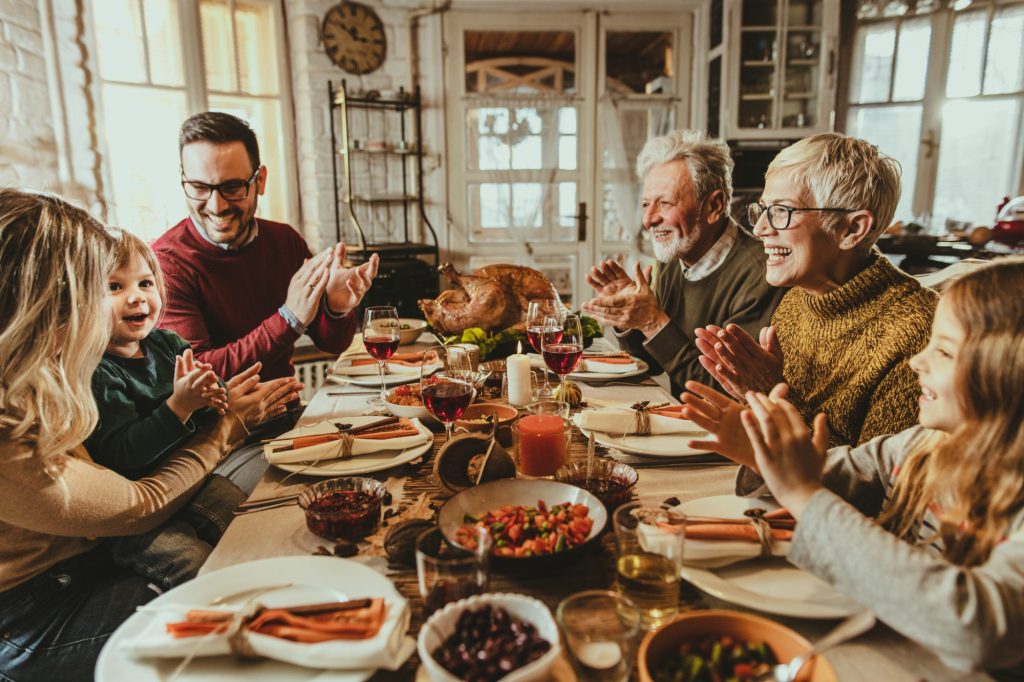
What’s wrong with this picture? Well, first of all, it’s a big family dinner with all the trimmings in which all the participants are openly delighted with one another. And they’re actually listening to one another. Where’s the strange uncle wearing the red MAGA hat? Where are the scowling teenagers? On the plus side, there isn’t any food on the plates yet, though there’s a big turkey at the far end of the table waiting to be carved. So perhaps there’s still time for the expression of discontent.

Martine and I both agreed that we liked Halloween better than Thanksgiving or Christmas. There was no need for any pretense of a closely-knit family. One just pretends to be someone else and pigs out on candy. Americans don’t do family well. We talk about it a lot, but most families at best have the appearance of an armed truce.

Read J. D. Vance’s Hillbilly Elegy or Tara Westover’s Educated to get an accurate picture of family life in America. Oh, I’m not saying that the disaffection is universal, just that it’s dismayingly prevalent.

It wasn’t that way for my own family: but, being Hungarians, we did not care that much for American holiday traditions. Except my brother and I really got into the Halloween sugar rush. We never had turkey for dinner in Cleveland, as both my father and I did not like it very much, and I still don’t. We usually had Christmas dinner with my aunt and uncle in Novelty, Ohio, but it was usually as much Hungarian as it was American. Come to think of it, back then we enjoyed the holidays without feeling in any way obliged to grin and bear it.

We now usually go out for Thanksgiving with friends. But over the last several years, Martine and I celebrate Christmas with home-cooked beef stew served with a Hungarian red wine, preferably Egri Bikavér (Bull’s Blood of Eger).