
“Keep an Even Mind”

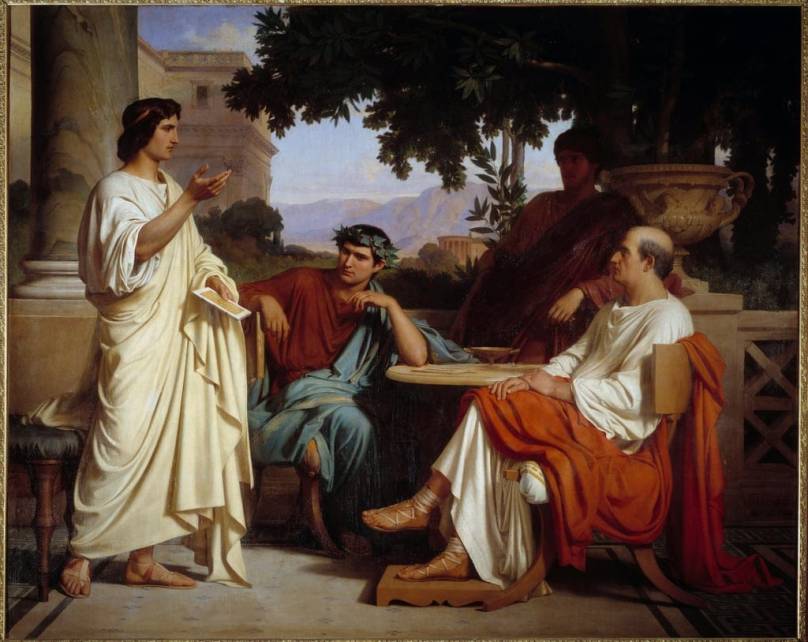
Horace and Virgil with Maecenas

Sometimes I think that philosophy has not progressed substantially since the days of the ancient Greeks and Romans. Here is an excerpt from Horace’s Epistles. Orcus is a god of the underworld, and Charon the boatman who ferries souls across the River Styx.

Book 2 Epistle 3: One Ending

When things are troublesome, always remember,
keep an even mind, and in prosperity
be careful of too much happiness:
since my Dellius, you’re destined to die,

whether you live a life that’s always sad,
or reclining, privately, on distant lawns,
in one long holiday, take delight
in drinking your vintage Falernian.

Why do tall pines, and white poplars, love to merge
their branches in the hospitable shadows?
Why do the rushing waters labour
to hurry along down the winding rivers?

Tell them to bring us the wine, and the perfume,
and all-too-brief petals of lovely roses,
while the world, and the years, and the dark
threads of the three fatal sisters allow.

You’ll leave behind all those meadows you purchased,
your house, your estate, yellow Tiber washes,
you’ll leave them behind, your heir will own
those towering riches you’ve piled so high.

Whether you’re rich, of old Inachus’s line,
or live beneath the sky, a pauper, blessed with
humble birth, it makes no difference:
you’ll be pitiless Orcus’s victim.

We’re all being driven to a single end,
all our lots are tossed in the urn, and, sooner
or later, they’ll emerge, and seat us
in Charon’s boat for eternal exile.
Seize the Day

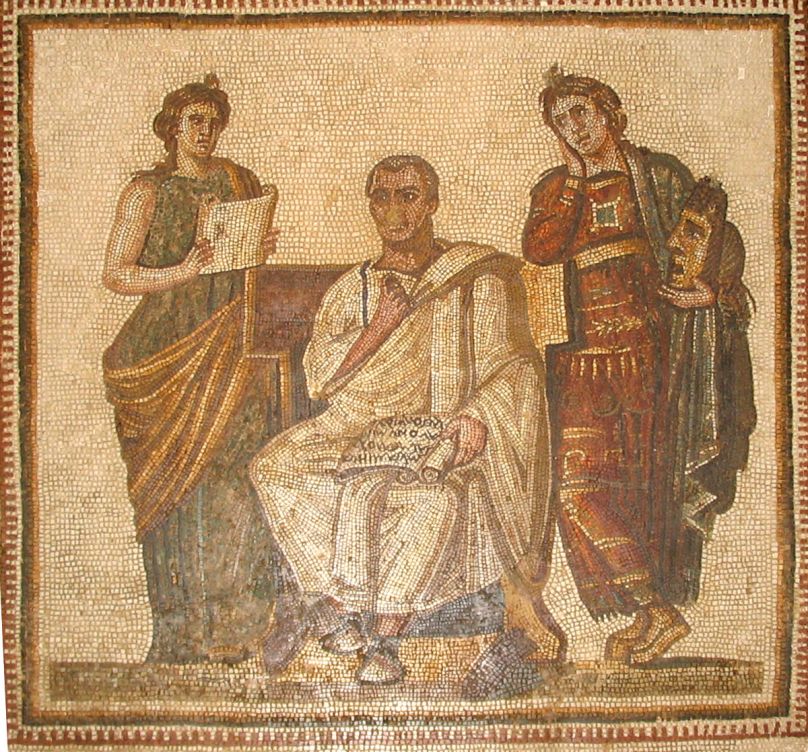
Roman Poet and Muses

Princeton University Press has come out with an interesting series of books under the general heading Ancient Wisdom for Modern Readers. A few months ago, I read the volume on Epictetus. Just now, I have finished the one on Horace’s poetry, entitled How To Be Content: An Ancient Poet’s Guide for an Age of Excess.

Sadly, I have not tried yet in any sustained way to tackle the Odes, Epodes, Epistles, and Satires, what with their reams of footnotes and textual controversies. This volume, on the other hand, makes it easier to understand what Horace is about:

May I have what I have now, less even,
      and may I live for myself
 What remains of my days, if the gods
      grant any remainder:
 May I have a good supply of books and
      corn planted for the year,
 And never hang and float in waiting for
      an uncertain hour.

And:

To be daunted by nothing is the one and
      only thing,
 Numicius, that can make and keep you
      happy.

It is a sobering thought that we have created such complicated lives for ourselves, whereas more than two thousand years ago, there were certain extraordinary poets and philosophers whose advice is as current as today’s news. It was Horace, after all, who advised us all to carpe diem (seize the day).

Horace was as philosophical in dealing with the end of days:

Order wine and perfume and the too-brief
 Flower of the rose to be brought,
 While circumstances, time of life
 And the dark threads of the three sisters
      allow it.

The three sisters, of course, are the Three Fates of ancient mythology: Clotho, who spins the thread of life; Lachesis, who measures the thread of life; and Atropos, who cuts the thread of life.