I felt like posting a Hungarian poem in today’s blog. I know that the English translation is only a pale reflection of the original Magyar. Note, however, that the translation is from George Szirtes, whose name is a guarantee of quality when it comes to turning Hungarian into English. The poem is by Szabolcs Várady, whose unpronounceable name reproaches all of us well-meaning Yankees. It is called:
Quatrain
I stand in a hole between Will Be and Was waiting for things to change but nothing does The dust will mount forever. Rain? Unlikely. Thunder perhaps. But not here, not precisely.
For the last couple of days, we have been experiencing a dry Santa Ana offshore wind. It’s like the sirocco in the Mediterranean: When it blows, everyone is uncomfortable. Perhaps the best description of the Santa Ana comes in a story by Raymond Chandler called “Red Wind”:
There was a desert wind blowing that night. It was one of those hot dry Santa Anas that come down through the mountain passes and curl your hair and make your nerves jump and your skin itch. On nights like that every booze party ends in a fight. Meek little wives feel the edge of the carving knife and study their husbands’ necks. Anything can happen. You can even get a full glass of beer at a cocktail lounge.
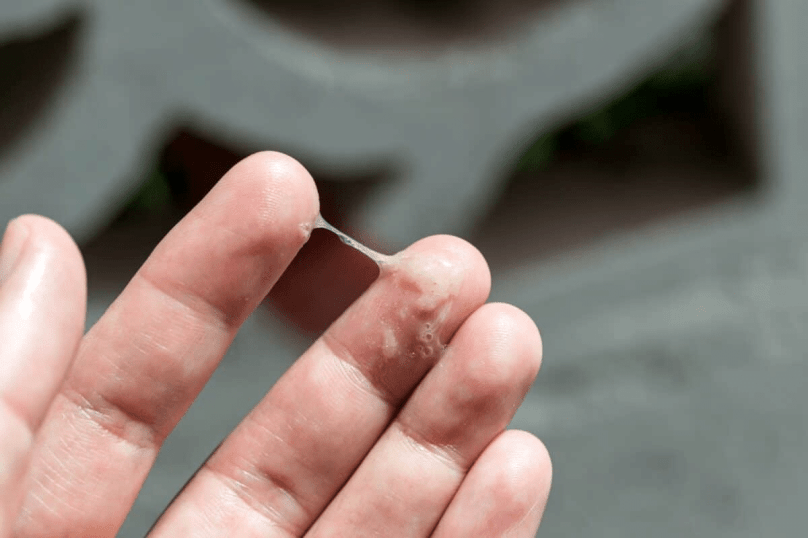
In my case, my life turns to outputting mucus, wither through sneezing or extensive nose blowing. My handkerchiefs turn soaking wet in minutes, though they can dry quickly if there is a pause in the snot generation.
By the looks of tomorrow’s weather forecast, tomorrow will not be a good day for me, as there will be only 15% humidity and wind blowing at sixteen miles per hour. It will be a good day to sit around with a pile of clean handkerchiefs and read a good book. (Paper towels tend to irritate my skin.)
A note about the Hungarian term that is the title of this blog. According to Google’s AI summary of the work taknyos:
“Taknyos” is a Hungarian adjective meaning “snotty,” “snivelly,” or having a runny nose, derived from the noun takony (snot). It is commonly used to describe children with cold symptoms, or colloquially as an insult for a young, inexperienced person.
Literal Meaning: Snotty, covered in nasal mucus.
Colloquial Usage: Can be used to refer to a brat or a young, snot-nosed kid.
Related Term:Takony (noun) = snot/mucus.
Since I was allergic all my life, the words “takony” and “taknyos” were pretty liberally applied to me by my family and Hungarian friends. I’ve never been able to shake the implication.
To understand this cynical poem by Endre Ady (1877-1919), you should first read my post entitled “A Legacy of Losers,” posted last week. The word “Magyar” means “Hungarian” in the Hungarian language.
The Magyar Messiahs
More bitter is our weeping, different the griefs that try us. A thousand times Messiahs are the Magyar Messiahs. A thousand times they perish, unblest their crucifixion, for vain was their affliction, oh, vain was their affliction.
I am currently reading Miklós Vámos’s The Book of Fathers (2000), in Hungarian: Apák Könve. In the notes at the end of the novel, I found this anecdote, which I couldn’t help but share with you. It summarizes more than half a millennium of Hungarian history.
One well-known fact is that Hungary and the Hungarians have lost every important war and revolution since the time of the Renaissance king Matthias Corvinus. He occupied Vienna and became Prince of Austria. He died in 1490. Since then, the nation and its heroes can be found only on the losing side.
A famous, if hoary, joke is instructive.
A Hungarian enters a small shop in New York and wants to buy a hat. But he doesn’t have enough dollars on him, so he asks if he could pay in forints, the Hungarian currency.
“I’ve never seen any forints,” the owner of the shop says. “Show me some.”
“Who’s this guy here?” asks the owner.
“This is Sándor Petöfi, the brightest star of Hungarian poetry. He lived in the nineteenth century. He was one of the March Youth who launched the 1848-49 War of Independence. He was killed in the Battle of Segesvár when the war was crushed by the Austrians and the Russians.”
“Oh my God, what an awful story … And who is this guy on the twenty forint bill?”
“This is György Dózsa, who led in peasant uprising in the sixteenth century. It was crushed and he was executed—actually, he was burned on a throne of fire—”
“OK, OK. And who is that on the fifty?”
“That’s Ferenc Rákóczi II, leader of another war of independence, crushed by the Habsburgs. He was forced to spend his life in exile in Turkey.”
“I should have guessed. And on the one hundred?”
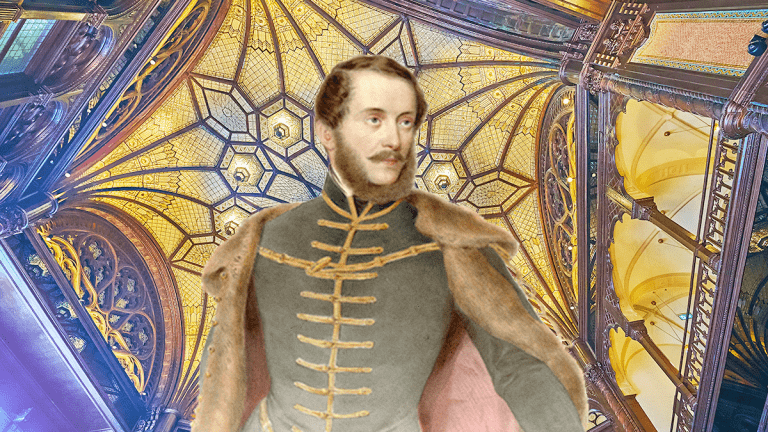
“That’s Lajos Kossuth, leader of the 1848-49 War of Independence, you know. After it was crushed, he had to flee—”
The owner stops him again. “OK, you poor man, just go—you can have the hat for free.”
(Note: these banknotes are no longer in circulation, owing to the ravages of inflation.)
Several days ago, Martine expressed some interest in going to a Walmart … because, well, she hadn’t seen the inside of a megastore for several years. With some reluctance, I drove her to the giant Walmart in Panorama City, at the corner of Roscoe and Van Nuys. Originally, I intended to drop her off and go to a huge bookstore nearby. But then I asked myself, “Do I really need to buy more books?”
That was my mistake. For almost two hours I wandered around the store looking at all the merchandise. In the menswear department, I didn’t see any pants under 30 inches in the inseam. I looked at the shirts: They had flimsy pockets that would dump my reading glasses on the ground every time I bent over.
I guess that for some people seeing so much merchandise and so many services in one place was exhilarating. For me, it was profoundly depressing.
It brought to mind the Atlantic Mills megastore in Bedford, Ohio to which my parents took me. I remember we bought a clunky Recordak tape recorder there. Then there was the huge Fedco Store on La Cienega whose late night pharmacy I had to visit after a visit to the emergency ward for urethral strictures.
I was delighted when I got Martine to agree to leave after purchasing a box of cheap light bulbs. From there, we drove to Otto’s Hungarian Import Store and Deli in Burbank to buy some gyulai kolbasz sausage. We ate lunch nearby at Lancer’s on Victory near Magnolia. It’s one of those 1950s style coffee shops that managed to make it to the 21st century.
Stamp Honoring Hungarian Poet Radnóti Miklós (1909-1944)
The title of this post is the Magyar (Hungarian) word for “Roots.” Radnóti was a Jewish-Hungarian poet who was conscripted into forced labor by the Nazis and marched to the point of exhaustion. The poem below was found in his pocket when his body was exhumed from a mass grave.
Roots
Strength courses in the root; It drinks the rain, it lives together with the soil, And its dream is white as snow.
From beneath the soil to above the soil it bursts; The root crawls, cunning, Its arms like ropes.
On the root’s arms, worms sleep; On the root’s legs, worms sit; The world grows worm-ridden.
Yet the root lives on below; The world does not concern it — Only the branch does, full of leaves.
Marveling at the branch, it feeds it constantly; To it it sends its savors, Its sweet, celestial savors.
Now I too am a root; I too now live among worms; It is there that poetry is made.
I was once a flower; now I have become a root, With the heavy dark soil above me; My fate now ended, A saw wails above my head.
Below is the first stanza of the poem in Hungarian, just to give you an idea of the severe compression possible in the Magyar language:
Gyökér
A gyökérben erő surran, esőt iszik, földdel él és az álma hófehér.
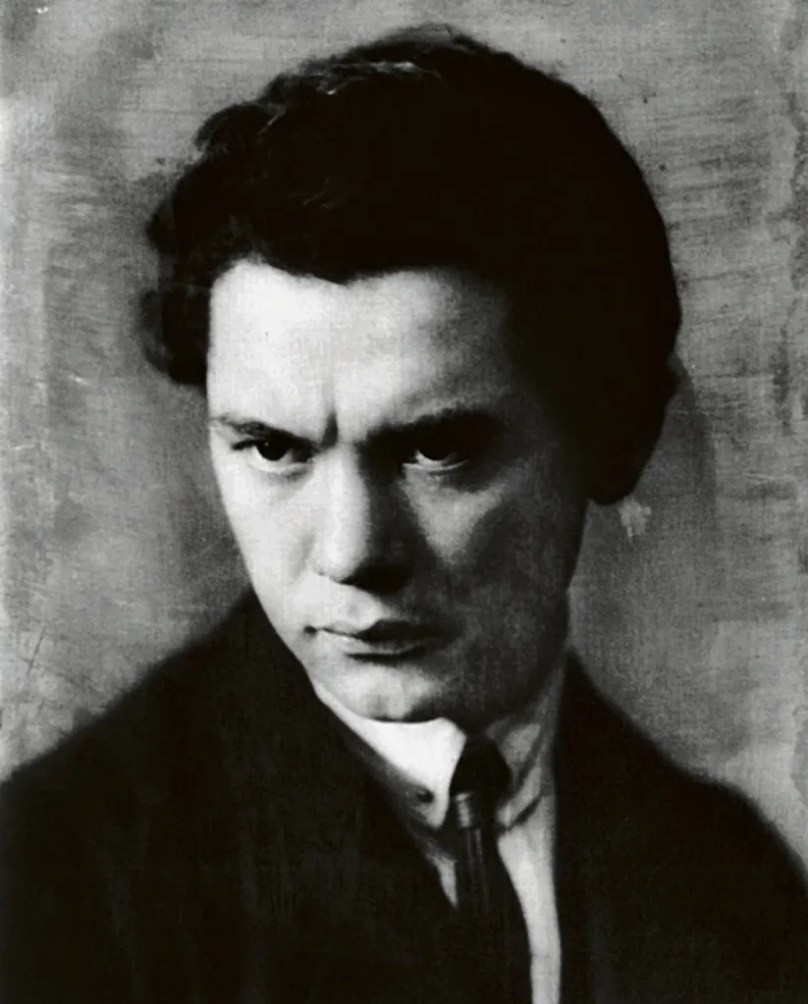
The last few days I have been suffering from a summer cold. I know it’s not summer yet, but the temperature has been hot. During that time, I was reading a manically humorous detective novel written in the 1940s and finally quit as I was two-thirds of the way through. What I picked up next was a collection of 40 disturbing poems by a Hungarian poet who committed suicide by throwing himself under a train in 1937.
It’s not that I’m addicted to gloominess, but I am after all a Hungarian myself. So it must be something in the blood. Here is the title poem from the collection I read:
Perched on Nothing’s Branch
I finally arrive at the sand’s wet edge, look around, shrug
that I am where I am, looking at the end. A silver ax strokes summer leaves. Playfully.
I am perched solidly on nothing’s branch. The small body shivers to receive heaven.
Iron-colored.
Cool shiny dynamos revolve in the quiet revolution of stars. Words barely spark from clenched teeth.
The past tumbles stonelike through space, blue time floating off without a sound. A blade flashes, my hair—
My mustache is a full caterpillar droopong down my numb mouth, my heart aches, words are cold. There’s no one out here to hear—
Around the beginning of May, I look forward to the Grace Hungarian Reformed Church’s Annual Hungarian Family Festival. It’s also one of Martine’s favorite events because of the food, the entertainment, and the friendliness of the people in attendance.
I don’t get too many opportunities to participate in any event as a Hungarian. I still remember much of the language, and the Hungarian parishioners seem to understand my somewhat ungrammatical Magyar. The pronunciation is okay, but my vocabulary has gaps you could drive a regiment of Hussars through.
Martine loves stuffed cabbage, and the church does a fair job cooking it up. But most noteworthy are the baked goods (Sütemények), particularly the Hungarian cheesecake (crémes) that tends to sell out in microseconds after being brought out out from the church kitchen.
Also wonderful is the folk dancing by the Karpátok Hungarian Folk Ensemble, which is celebrating its 60th anniversary in Los Angeles. When the Covid-19 lockdown hit, the last public event we attended was a Karpátok concert. We are happy that they are as active as ever and are considering a program of events featuring their music and dancing.
As I get older, I am increasingly unwilling to interact with strangers. Chatting with people I do not know is just something I would rather not do any more. I don’t even like sharing an elevator. The absolute worst is having to interact with American tourists when I am traveling abroad.
And yet I remember helping a group of French tourists in Iceland get guesthouse accommodation in Höfn, Iceland, when they couldn’t find any locals who understood them.
The difference was they didn’t have any expectations of help, whereas many or most American travelers, on the contrary, would. It is at that point that I reply to their question(s) very politely in my off rural Hungarian dialect from the 1930s. I could be telling them in Hungarian to get stuffed, but I actually try to answer them politely in my native language.
There is always the danger that the person accosting me knows the Magyar language. That actually happened to me once in Vancouver’s Chinatown, when the beggar asking for spare change recognized what I was saying and answered me back in Hungarian. I immediately melted and gave him a five dollar bill. He actually invited me for coffee, but I was on my way to a movie screening and didn’t want to be late. Else I would have obliged him.
I am not that way, of course, with my friends and acquaintances. Or even with waiters or cashiers. It’s just that I have a phobia of dealing with demands placed on me by strangers. That even includes the unsmiling visage that I characteristically assume—all to avoid having to deal with the public at large.
Things were starting to get serious. I was running out of Hungarian paprika, and my supplier of füstölt kolbász (smoked Hungarian sausage) had gone out of business months ago. Normally, I am not a big fan of what I call Eurochow, but in the case of Hungarian cuisine I make an exception.
On Saturday, Martine and I drove out to Burbank, where, in the middle of a residential block, sits Otto’s Hungarian Import Store and Deli. We used to go there more frequently, but lately Martine has been reluctant to go on long drives due to a pinched nerve in her back.
Fortunately, Otto’s had some good kolbász and big jars of Szegedi and Kalocsai sweet Hungarian paprika. And since Martine had been such a good sport about coming along, I got her some dobos torte and dios baigli.








 Tarnmoor
You must be logged in to post a comment.