Japangeles

Get Your Fried Squid Legs Here!

Get Your Fried Squid Legs Here!

What I like most about Los Angeles is its rich texture of ethnicities, from the Mexicans of “East Los” to the Salvadoreños of Pico-Union to the Armenians of Glendale to the Japanese of Little Tokyo to the Russians of West Hollywood and the Koreans of Koreatown—I could go on for another four or five lines before running out of options—Los Angeles is a veritable crossroads, especially from countries bordering the Pacific.

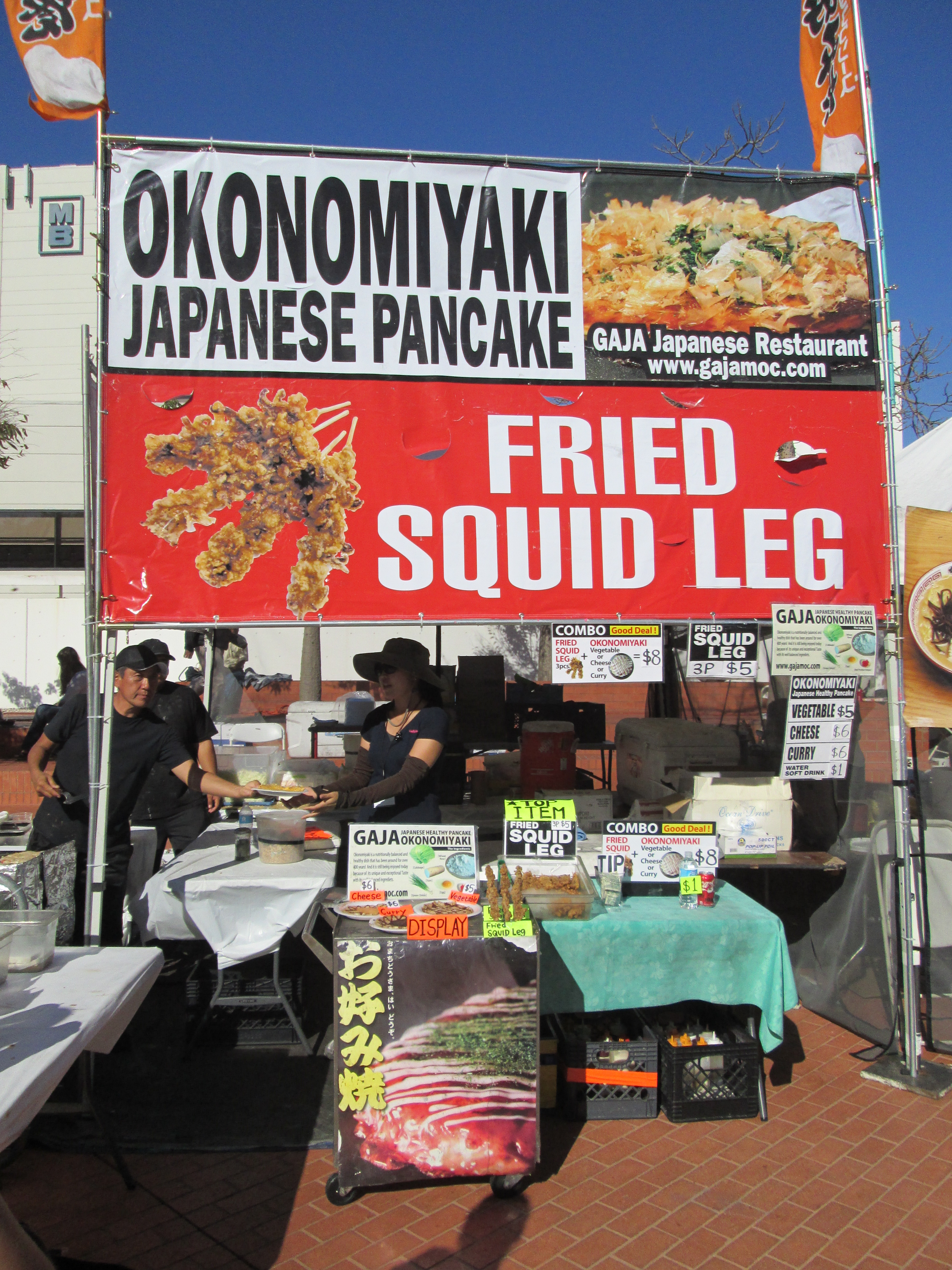
Yesterday and today saw the first annual Japan Fair held in Little Tokyo. There was a full program of entertainment, most notably a seventeen-year-old boy who played the shamisen with the sophistication and maturity of a master. There were numerous interesting snacks, including several types of pancake dishes, which are apparently very popular in Japan.

We took the bus downtown as it cost much less than finding a good parking spot—especially as there was a sold-out Hello Kitty exhibition and convention a scant two blocks away. I did not want to mix it up with any of those Hello Kitty thugs: They are the worst!

Shamisen Player

Shamisen Player


K-Rails and Steel Plates

Prepare for a Bumpy Ride

Prepare for a Bumpy Ride

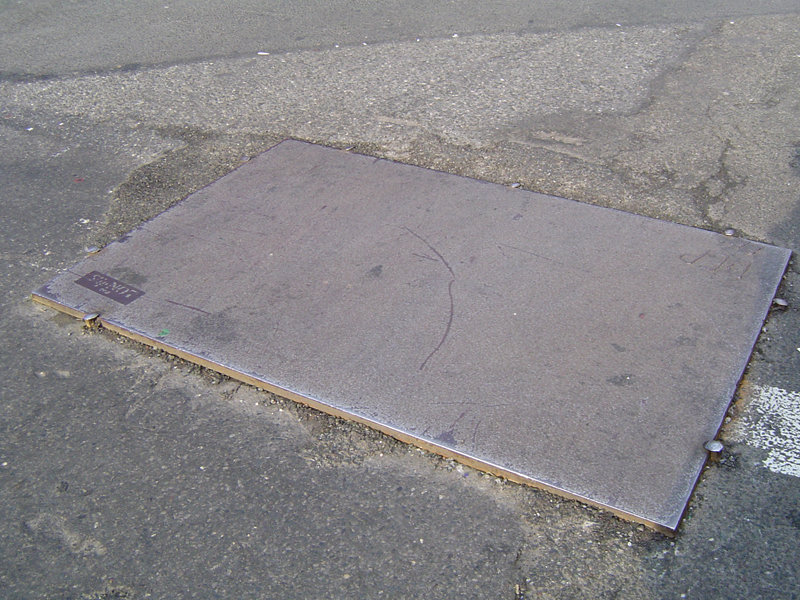
One of the problems with California’s apocalyptic drought of 2014 is that virtually every street is under construction—without fear of rain.Today, Martine and I visited the Grier-Musser Museum near downtown. On the way home, we must have run over two hundred steel plates on Wilshire Boulevard, Beverly Drive, Fairfax Boulevard, and Santa Monica Boulevard. These were accompanied by perhaps a mile or two of K-Rails (known in the East as Jersey Barriers).

K-Rails a.k.a. Jersey Barriers a.k.a. Concrete Barriers

K-Rails a.k.a. Jersey Barriers a.k.a. Concrete Barriers

Now that California is beginning to recover from the Great Recession of 2008, driving the streets of Los Angeles is like going back to the early days of motor cars, with the roads being in a constant state of disrepair.

El Pueblo de Los Angeles

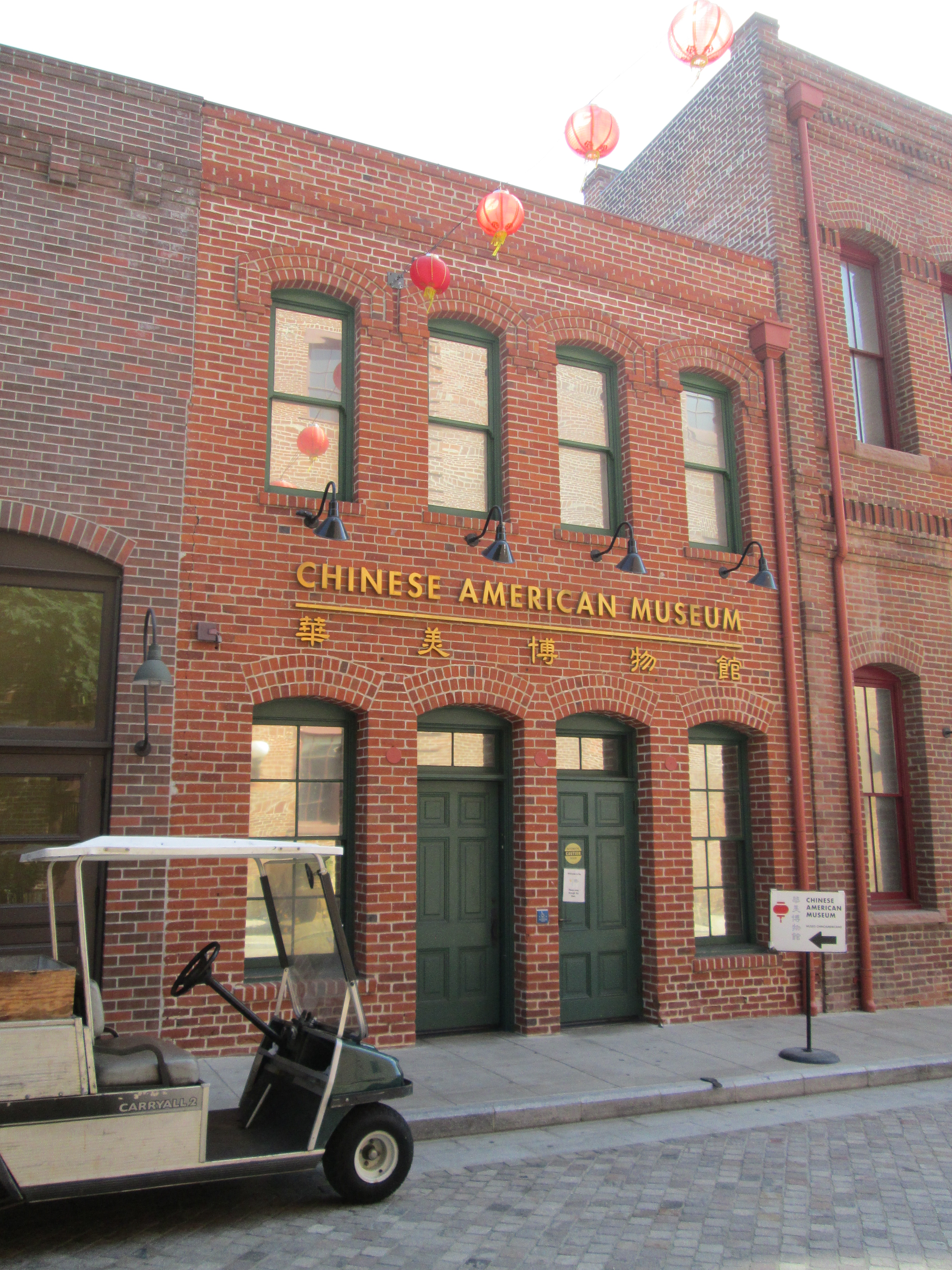
The Chinese American Museum on North Los Angeles Street

The Chinese American Museum on North Los Angeles Street

The City of Los Angeles got its start in a large block bordered on the north by Cesar E. Chavez Ave, on the east by Alameda Street, on the south by Arcadia Street, and on the west by North Main Street. The area is variously referred to as the Plaza de Los Angeles, Olvera Street, and sometimes as El Pueblo de Los Angeles. It is in this block that two of the city’s ethnic populations are commemorated, the Mexicans on Olvera Street, and the Chinese at the Chinese American Museum.

Martine hasn’t feeling too well lately, so I proposed we take a slightly low-energy visit to the Chinese American Museum. We started by eating at Las Anitas on Olvera Street, where Martine had a plain Pollo a la Plancha and a corn tortilla, while I had Chile Rellenos and Jamaica (a tasty hibiscus flower drink, pronounced hah-MYE-kah).

Then we strolled around the museum, which told of the Chinese struggle to find acceptance in a racist America. In addition to exclusionary laws forbidding more of them to immigrate, there were laws on the books forbidding them to own property or to marry with other races. This was rather difficult, as in 1852 there were 20,000 Chinese immigrants, of which only 17 were women.

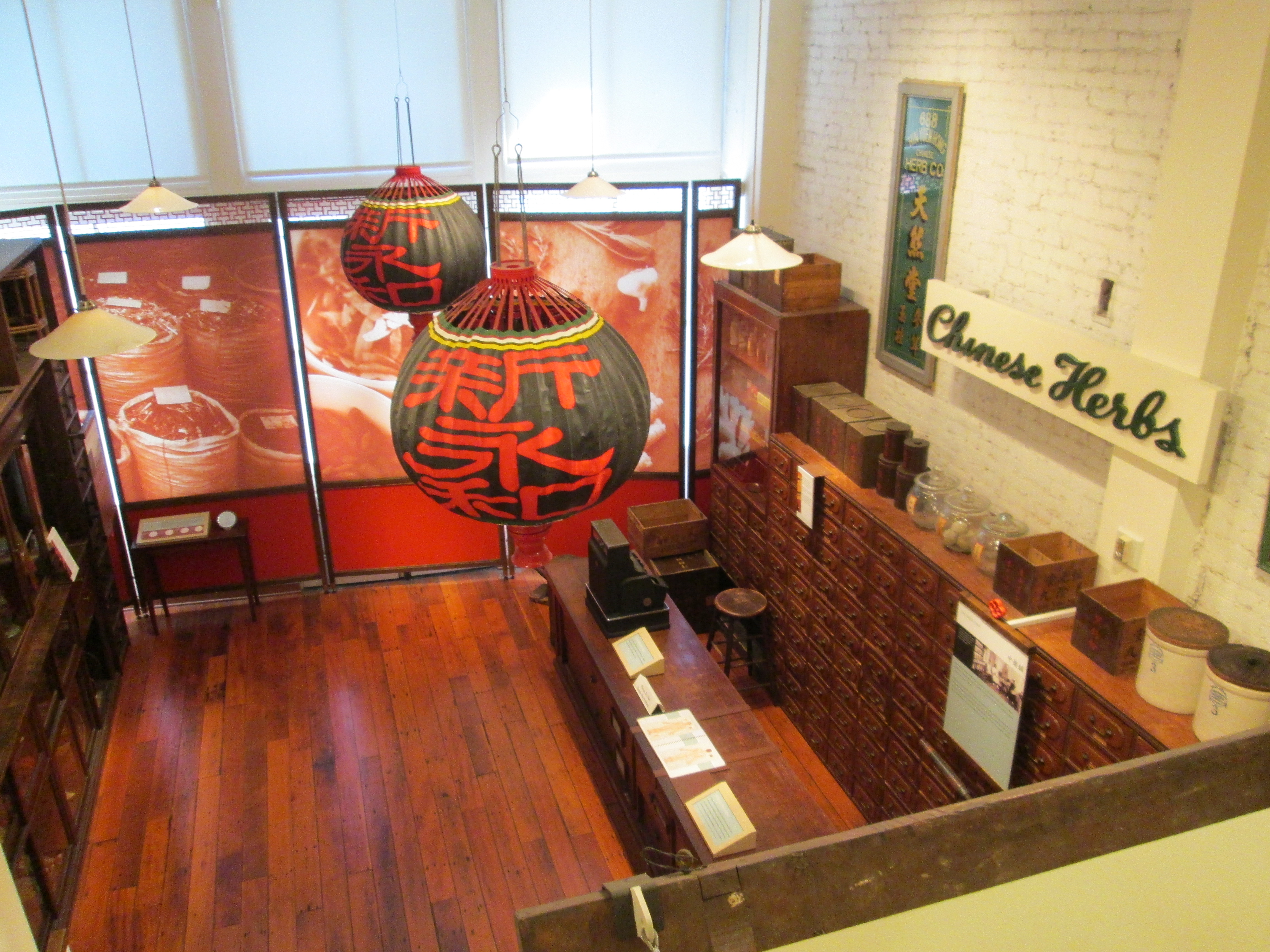
Below is a photo of the replica of the Sun Wing Wo General Store and Herb Shop within the museum:

Sun Wing Wo General Store and Herb Shop

Sun Wing Wo General Store and Herb Shop


After visiting the museum, we also had time to see the 1884 Plaza Firehouse (the oldest in L.A.) and Union Station, where I arrived on the El Capitan from Chicago at the end of December 1966 to begin my sojourn in this city.

Tarnmoor’s ABCs: Los Angeles

Venice Beach 2002

Venice Beach 2002

I was so very impressed by Czeslaw Milosz’s book Milosz’s ABC’s. There, in the form of a brief and alphabetically-ordered personal encyclopedia, was the story of the life of a Nobel Prize winning poet, of the people, places, and things that meant the most to him. Because his origins were so far away (Lithuania and Poland) and so long ago (1920s and 1930s), there were relatively few entries that resonated personally with me. Except it was sad to see so many fascinating people who, unknown today, died during the war under unknown circumstances.

My own ABCs consist of places I have loved (Iceland), things I feared (Earthquakes), writers I have admired (Chesterton, Balzac, and Borges); things associated with my past life (Cleveland and Dartmouth College), people who have influenced me (John F. Kennedy), and things I love to do (Automobiles and Books). This blog entry is my own humble attempt to imitate a writer whom I have read on and off for thirty years without having sated my curiosity. Consequently, over the months to come, you will see a number of postings under the heading “Tarnmoor’s ABCs” that will attempt to do for my life what Milosz accomplished for his. To see my other entries under this category, hit the tag below marked “ABCs”. I don’t guarantee that I will use up all 26 letters of the alphabet, but I’ll do my best. Today, we’re at the letter “L,” for Los Angeles, where I have lived for almost half a century..

Los Angeles is a difficult place to get to know. It took me at least five years before I even had a grudging acceptance of the city. Now I feel that I love it, for all its strange ways. I do not love the earthquakes, the hot weather, the gigantic brush fires that fill my lungs with ash, the self-entitled young professionals in their expensive sports cars, the decaying infrastructure, the Santa Ana Winds that make the skin peel off around my fingernails, or the long distances involved in going just about anywhere. And yet, there is a quality of the light that suffuses this place, especially early and late in the day. I also like the blend of cultures, mostly Latino and Asian, that make this a cosmopolitan metropolis.

This is a city that has its own literature. Here, for instance, is Raymond Chandler in his story “Red Wind”:

There was a desert wind blowing that night. It was one of those hot dry Santa Anas that come down through the mountain passes and curl your hair and make your nerves jump and your skin itch. On nights like that every booze party ends in a fight. Meek little wives feel the edge of the carving knife and study their husbands’ necks. Anything can happen. You can even get a full glass of beer at a cocktail lounge.

Mostly because of the outside influence of Hollywood in its glory days, many great writers passes this way and left their mark: Aldous Huxley, Bertolt Brecht, Thomas Mann, William Faulkner, Scott Fitzgerald, Nathanael West, John Fante, Evelyn Waugh, Ray Bradbury, and Joan Didion—just to name a few. If you like that sort of thing (I do not), there has also been a lot of modern art and architecture produced.

You may have heard that California is in a historic drought and has received precious little rain for the last three years. When I go to Lima, Peru, later this summer, I will be in another Pacific coast city where it almost never rains. I suspect it will remind me of L.A., except for the very different cultural context.

Would I ever move from Los Angeles? Possibly. Around the time I retire, I will no doubt come to the realization that I can no longer afford to live here. When that happens, it will be a difficult time for me. But then, nothing is forever.


Through the Streets of Los Angeles

Endeavour Makes Its Way Through 12 Miles of L.A. Traffic

Los Angeles is not a city that has a great sense of community. It is spread out in all four directions, encompassing mountain ranges and flood plains, dense urban concentrations with deserts whose only inhabitants are Joshua Trees. Yet in October, it came together for the most unaccountable of reasons: The space shuttle Endeavour was going to take two to three days to gingerly make its way through twelve miles of L.A. streets beginning at LAX Airport and ending at the California Science Center in Exposition Park.

At first, the impact was negative. Several hundred trees along the route were going to have to be cut down so as not to damage the huge wingspan of the shuttle as it passed by. The City Fathers promised to plant two or more trees for every one that was cut down, but it still left a bad taste in the mouths of many Angelenos.

But that all changed with the majestic progress of the shuttle through the streets. Crowds gathered and cheered while teams of engineers maneuvered the gigantic space vessel past a minefield of trees, wires, buildings, and other potential dangers.

It didn’t all come home to me until I saw a video in stop motion of the Endeavour making its way through Los Angeles and being met with a cheering throng both day and night. The video, on Astronomy Picture of the Day, is well worth watching. Among other things, it showed me a picture of a city celebrating the era of space exploration as one, something that doesn’t happen very often in this sun-drenched clime.