To South America … Again

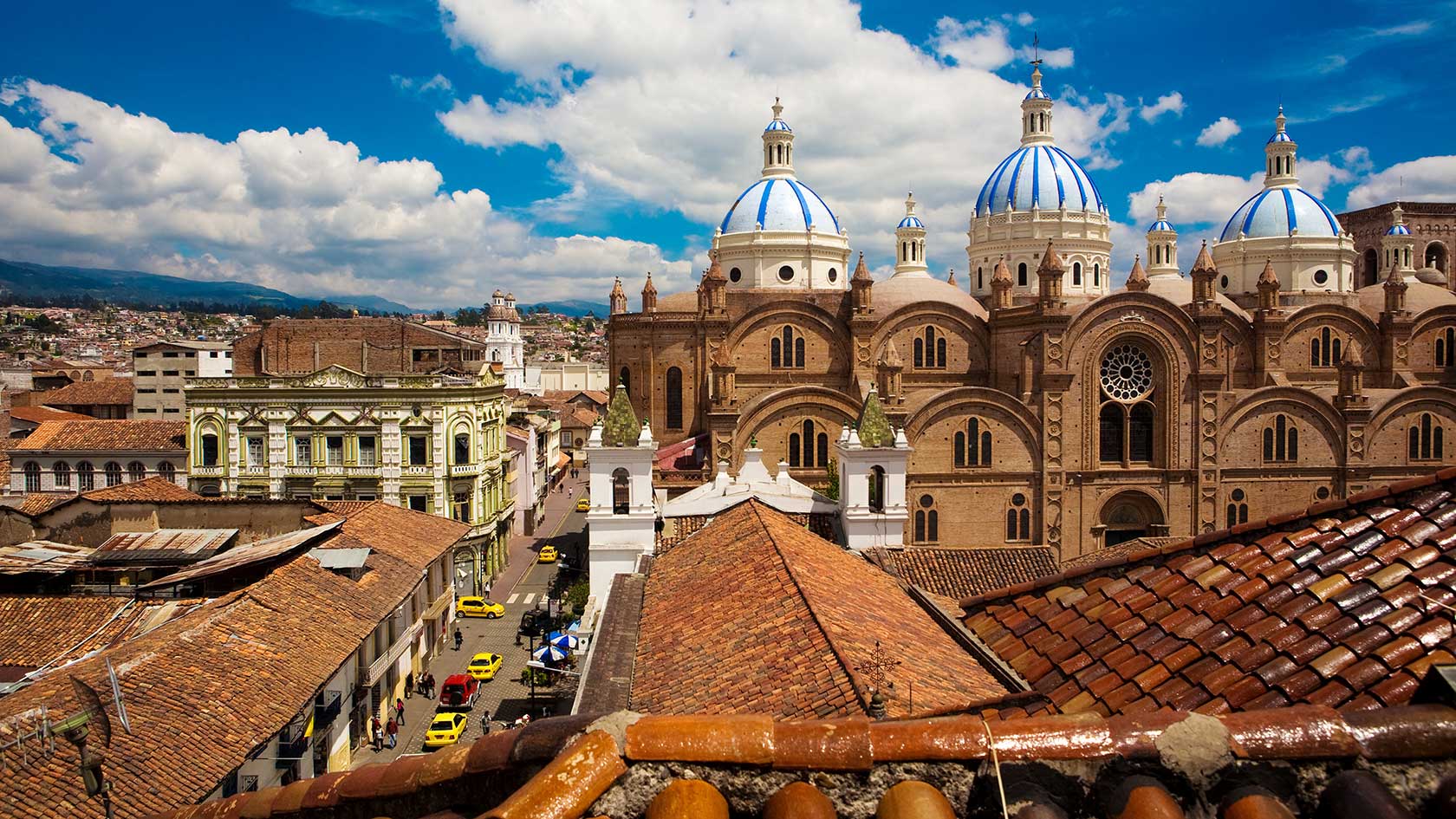
View of Quito’s Old Town

View of Quito’s Old Town

Once again, Martine does not want to travel with me. Her continuing problems with back pain when sleeping in soft beds and almost continuous irritable bowel syndrome makes her want to stay close to home. This year, I will go to Ecuador, especially to the Andes region.

The good news is that I will not be traveling alone: My brother Dan expressed interest in joining me. The last time we traveled together was in 1979, when we did the circuit Mexico City-Villahermosa-Palenque-San Cristobal de las Casas-Oaxaca-Mexico City. It was the same circuit described by Graham Greene in his book The Lawless Roads (1939). We traveled by air to Villahermosa (not a high point in any sense of the term) and by bus the rest of the way back to Mexico D.F.

Dan and I are, I think, good traveling companions. He’s not very interested in ruins (there aren’t that many in Ecuador), and he is very interested in native crafts (as am I). He has already been to Guayaquil and the Galapagos and said that travel to the latter was much too regimented. I was hoping he didn’t want to go there again because (1) when we’re going is the wrong time of the year (October/November) and (2) Zika.

At this point I’ll tell you a couple of anecdotes about traveling with my brother. We were in Palenque at the time of the Christmas Posadas, and Dan loved the coffee served in the area—it was grown locally. When we were in a café one evening, a shoeshine boy came up to us and asked if we wanted a shine. Dad slipped his foot out of his sandals and set it on the stand. The trouble is: As far as anyone could see, he was wearing only bright red socks. All the locals burst out laughing. No matter, I was wearing leather boots and gave him my business.

Another Palenque incident fortunately turned out the right way. Dan ducked out frequently in the evening to satisfy his coffee cravings while I remained behind reading a book. I heard a commotion in the street, and Dan came up shortly after. Apparently, a police informer tried to sell him “magic mushrooms” (psilocybin), and Dan guessed his intent at once. No sale.

There are some other stories from that trip that I’ll write about some other time.

Traveling by Mexican Rules

Benito Juarez Airport in Mexico City

Benito Juarez Airport in Mexico City

It all started in 1979. My brother and I were booked on a flight to Villahermosa, Mexico, one of the less enchanting cities of that great land. Suddenly, our flight disappeared off the departure screens, followed by a garbled PA announcement in Spanish. Dan and I looked at each other, and right then and there, we developed the notion of traveling by Mexican Rules.

Consequently, we hunkered down in our seats and waited for new developments. We disbelieved all announcements until we heard one (that was actually clear) that said our “canceled” flight was boarding at Gate 72. We hurried over to the gate and, sure enough, the flight was boarding; and its destination was the unlovely swamp city of Villahermosa. Within two hours, we were landed.

(It turned out that was only the beginning of our problems: We had to find a room in a city where all hotel rooms were block-booked by the Pemex oil monopoly employees. But that’s another story.)

The point I am trying to make is that one has to make allowance for mass confusion, not only when traveling, but even at home. A week ago, we had a freak rainstorm that forced the evacuation of the high rise in which I work. Until I received authoritative word from the building management, I heard no end of estimates of how long it would be before we could return to our offices. They ranged from one hour to two or three hours to half a day. In the end, the building was shut down for the day until the fire department and the Department of Water & Power was sure the transformer in the parking garage would not be flooded.

So when I am in Argentina and Chile in November, I will still be traveling by Mexican Rules. It’s the only way to fly.


The Real Story

Chapo Guzman

Chapo Guzman

By now, you’ve all heard about the mile-long tunnel that drug cartel jefe Chapo Guzman used to escape from Altiplano Federal Prison in Mexico. Well, I’ve done a bit more research and have the actual sad tale for you with all its gory details.

I suppose when one has a weak government and a strong criminal class, one can expect spectacular prison escapes such as that of Señor Guzman—and spectacular it was!

Not only was the tunnel high enough that “Shorty” (that’s what El Chapo means) would walk out without bending over, but it was air-conditioned and had a chauffeured golf cart at the ready to evacuate the prisoner, who was wearing a tuxedo. At quarter mile intervals, there were mariachi bands to welcome Guzman to freedom, as well as ladies offering fresh tortillas de maiz with selected toppings for tacos, such as Beluga caviar and truffles. Aged Gran Patrón Platinum Tequila was available to quench his thirst.

Prison guards who had collaborated in the escape—in effect, all of them—were given new cars with glove compartments filled with crack cocaine.

Contrast that with the New York State prisoners who met a bad end within the last week or two. They just weren’t rich enough to “grease” their way out of stir.


Mexican Bus Ride

Model of an ADO Bus With 1980s Logo

Model of an ADO Bus With 1980s Logo

It was in the 1970s and 1980s that I first fell in love with Latin America. Unfortunately, at that time, many of the countries that I wished to visit such as Guatemala, Chile, Argentina, Peru, and Uruguay were ruled by dictators and—in the case of Peru—marked by a violent Maoist insurgency (the Sendero Luminoso). But Mexico was okay at the time. Now there are parts of Mexico I would fear to visit because of violent narcotraficante gangs. And Central and South America are generally safer.

I remember traveling thousands of miles by bus—all on buses built in Mexico by such companies as Masa, Sultana, and Dina. I remember one Cristóbal Colón bus between Mazatlán and Durango that crossed the Sierra Madre Occidental and forded several (then) unbridged rivers on roads that would have left a GM bus in pieces.

In central Mexico, I fell in love with the Flecha Amarilla (Yellow Arrow) line of clean second class buses one could board within minutes to destinations such as Guanajuato, San Miguel Allende, Querétaro, Pátzcuaro, and Mexico City. Along the Gulf, there were the buses of ADO (Autobuses de Oriente) that went clear to Yucatán. Only in Yucatán itself were the intercity buses broken-down wrecks, especially the ones operated by Union de Camioneros de Yucatán. (This may no longer be the case, but it was when I traveled there.)

All through my travels, I kept thinking of a Luis Buñuel film entitled (in the U.S.) Mexican Bus Ride (1952), although the original title is Subida al Cielo (“Ascent to Heaven”). Most of the story takes place during a long bus ride from a coastal fishing village over the mountains to the interior. During the film, there is a death, a birth, a seduction—in other words, just about all of life. It is probably one of Buñuel’s best films, and certainly his best production made in Mexico.


Tarnmoor’s ABCs: Yucatán

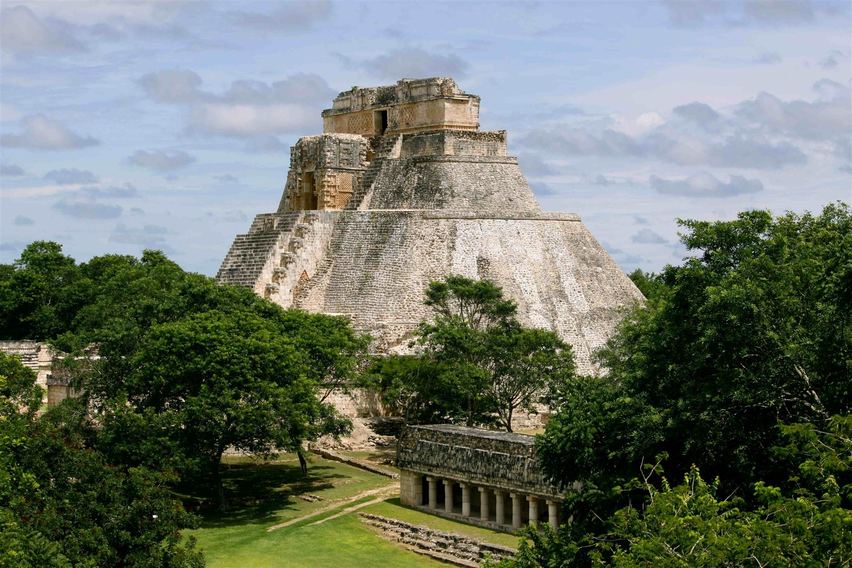
Temple of the Dwarf at Uxmal

Temple of the Dwarf at Uxmal

All the blog posts in this series are based on Czeslaw Milosz’s book Milosz’s ABC’s. There, in the form of a brief and alphabetically-ordered personal encyclopedia, was the story of the life of a Nobel Prize winning poet, of the people, places, and things that meant the most to him.

My own ABCs consist of places I have loved (Iceland, Patagonia, Quebec, Scotland), things I feared (Earthquakes), writers I have admired (Chesterton, Balzac, Proust, Borges, and Shakespeare); locales associated with my past life (Cleveland, Dartmouth College, and UCLA), people who have influenced me (John F. Kennedy), foods I love (Olives and Tea), and things I love to do (Automobiles and Books). This blog entry is my own humble attempt to imitate a writer whom I have read on and off for thirty years without having sated my curiosity. Consequently, in the next couple of weeks, you will see one remaining posting under the heading “Tarnmoor’s ABCs.” To see my other entries under this category, hit the tag below marked “ABCs”. We are approaching the end of the alphabet today with “Y” for “Yucatán.”

It was the start of my travels: November 1975. Before then, all my traveling was at the behest of my parents or schools. That year, I suddenly decided I wanted to see Mayan ruins—on my own. My parents were appalled. They were sure I would be captured by bandidos, roasted and eaten. It didn’t turn out that way: I had the time of my life. Over a period of two and a half weeks, I saw the ruins at Dzibilchaltún, Uxmal, Chichén Itzá, Kabah, Acanceh, and Mayapan. I went to a Mexican tourist agency called Turistica Yucateca and arranged, in Spanish, for tour guides. (When did I ever learn Spanish? I just winged it and have been winging it ever since.)

From the moment I landed at Manuel Crescencio Rejón Airport in Merida, I was in a world of wonders. It was a warm evening, and I saw shops open to the street and people sitting outside drinking beer and sodas and chatting with their friends and neighbors. I had great food at places like the Restaurant Express on Calle 60 and Alberto’s Continental Patio and Los Tulipanes. I stayed at fascinating hotels, including the crumbling old Gran Hotel, which dated back to the late 1800s when Yucatán was the hemp (rope fiber, not marijuana) capital of the world.

I was hooked. So hooked that, ever since, I insisted on people saying just Yucatán, not “the” Yucatán. I knew. I was there. And not once, but many times.I would no more say “the” Yucatán than I would say “the” California or “the” Poughkeepsie.

I loved the tropical ambiance of Merida and the surrounding country. And people were friendly, probably more friendly then than they are now.

So that’s when I caught in travel bug. The next year, I went to England, Scotland, and Wales. Then on to Hungary and Czechoslovakia. But during the 1980s, at several points I returned to Mexico and Yucatán, sometimes for a month at a time. I rode the rickety old buses, held babies for overwrought young mothers, snacked on strange foods, and felt myself growing as a person, and perhaps as a citizen of the world.


Sliced Off at the Knees

The Weather Stops at El Border

The Weather Stops at El Border?

On many counts (almost too numerous to mention) the news is a partial and usually misleading travesty. Take the weather, as represented by this morning’s precipitation map off the Weather Channel’s weather.com. We are approaching the time of year when our weather comes not from the west or north, but from Mexico.

Even as I write this, Hurricane Bianca is threatening the State of Baja California Sur. What does that mean for Southern California? It means that we get the northern edge of whatever monsoonal weather is hitting Northwest Mexico. Stray clouds, winds, and precipitation do occasionally sneak across the fence at the border and make their way to El Ciudad de Los Angeles.

So what use is it to us when we get a weather report that ignores everything south of the line? No, the earth does not change color at that point, and the weather does move around by laws that do not respect national boundaries.

Over the next few weeks, we expect humid weather with possible light showers—not sufficient to rain on our parade or affect the drought in any significant way. But it nonetheless is a factor we should not ignore.

New Year Surprise

Cabo San Lucas from Medano Beach

Cabo San Lucas from Medano Beach

Next week, Martine and I will be flying down to Mexico’s Cabo San Lucas for a few days on sun and relaxation—before tax season begins in grim earnest. Around Thanksgiving, I found a good combined airfare/hotel rate from Tripadvisor that will save us several hundred dollars while giving us four nights in a beachfront suite at the Playa Grande hotel.

Neither of us have been to Mexico since 1992, and that was to Yucatán, where Martine encountered the predacious Caribbean mosquito. This time, we are going to visit the Southern tip of Baja California, which is all mountains and deserts swept clean by Westerly winds.

It appears that Martine’s traveling muscular aches are less of a problem which she is exposed to sun, of which there is plenty at the Capes. I will get a little sunshine myself, as well as reading even more books.

During that time, I may or may not post to this blog depending on the availability of computer resources as well as free time.


My Years with Gabo

The Mayan Ruins at Chichén Itzá

The Mayan Ruins at Chichén Itzá

It was November 1975. For the first time in my life, I was outside the United States on my own. I always thought it was somehow significant that my first bid for freedom from those endless bad weather trips back and forth to Cleveland to see my parents was a two week vacation in Yucatán. When visiting the ruins at Chichén Itzá, I stayed at the old Hacienda Chichén, which contained the cottages used by earlier archaeologists. I was within walking distance of the ruins.

Back then, a road cut through the ruins. On one side was the Castillo and the structures best known to visitors; on the other, there was Old Chichén. By the side of the road, there was an open-air souvenir stand with thatched roof that sold the usual tourist junk. On the side, there was a book rack that happened to have a Penguin paperback edition of Gabriel García Márquez’s One Hundred Years of Solitude (1967). I had heard of the author before and was just beginning to wake up to that breakout generation of Latin American writers that included Borges, Cortázar, Vargas Llosa, and García Márquez. Here in front of me was a grey-covered Penguin (“This edition not for sale in the United States”) that looked like an interesting read.

How could I not read a book that opened this way:

Many years later, as he faced the firing squad, Colonel Aureliano Buendía was to remember that distant afternoon when his father took him to discover ice. At that time Macondo was a village of twenty adobe houses, built on the bank of a river of clear water that ran along a bed of polished stones, which were white and enormous, like prehistoric eggs. The world was so recent that many things lacked names, and in order to indicate them it was necessary to point.

That was my first acquaintance with the Colombian writer whose work was to become a lifelong pursuit with me. Ever since, I have rationed the books I read by him so that I didn’t run out too soon. Yesterday, I re-read Chronicle of a Death Foretold, which I last read thirty years ago in a magazine that had an illustration by Fernando Botero. (I forget which magazine it was.)

Since my first acquaintance with Colonel Buendía in 1975, I have gone on to read:

  • Leaf Storm (1955)
  • No One Writes to the Colonel (1961)
  • In Evil Hour (1962)
  • The Story of a Shipwrecked Sailor (1970)
  • The Incredible and Sad Tale of Innocent Erendira and Her Heartless Grandmother (1978)
  • Chronicle of a Death Foretold (1981)
  • Love in the Time of Cholera (1985)
  • The General in His Labyrinth (1989)

Then, too, there were numerous short stories, which I will re-read in as many years as are left to me. Although we lost García Márquez in April of this year, his work will live forever.


Mexican Bus Ride

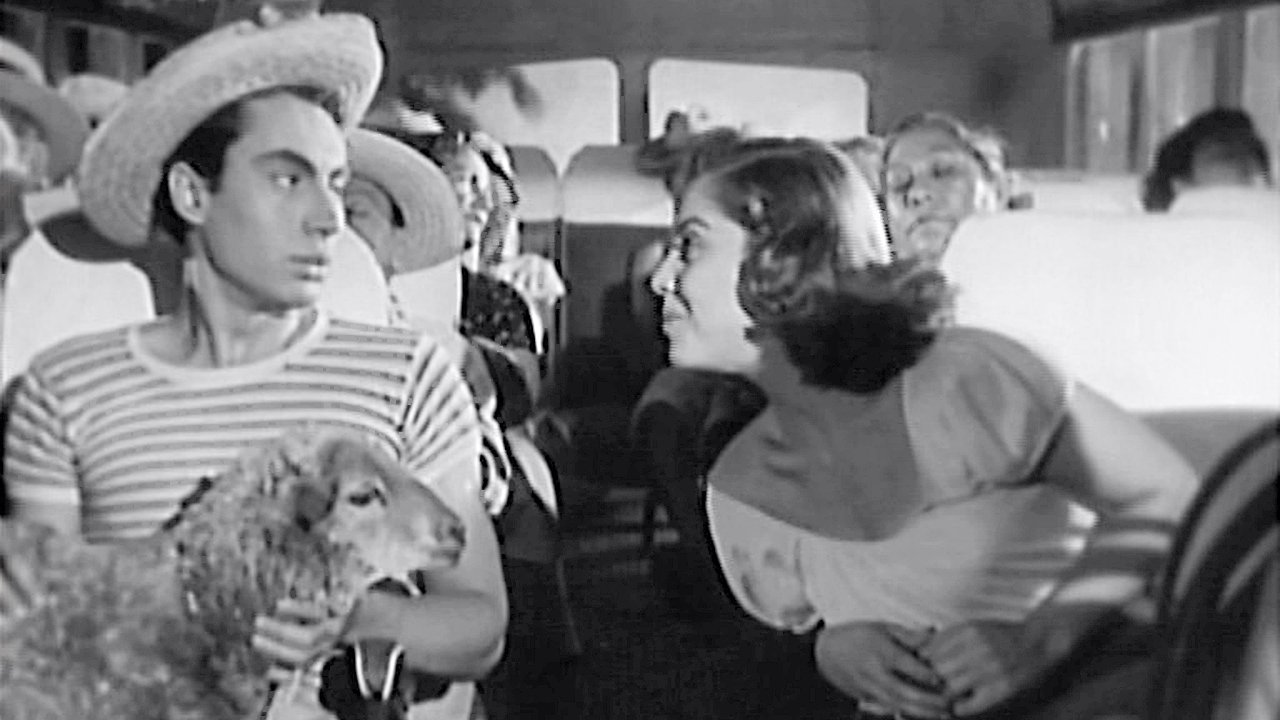
Still from Luis Buñuel’s Mexican Bus Ride (Subida Al Cielo, 1952)

Still from Luis Buñuel’s Mexican Bus Ride (Subida Al Cielo, 1952)

For various reasons, I am inordinately fond of the films that Luis Buñuel made in Mexico between 1946 and 1965. Since then, he has perhaps made greater films, but remember there is a big difference between fondness and admiration. Because these films were made in Mexico, where perhaps not enough money was budgeted for each production, the director had to use his ingenuity to make the films his own. And when he succeeded most, the results were wonderfully human and surreal. The films from this period that I liked the most are, in order of production:

  1. Los olvidados (1950). In the U.S. variously titled The Forgotten and The Young and the Damned.
  2. Susana (1951). In English: The Devil and the Flesh.
  3. Subida al cielo (1952). In English: Mexican Bus Ride and Ascent to Heaven (the literal translation of the Spanish title).
  4. El (1953), In English: This Strange Passion and Torments.
  5. La Ilusión viaja en tranvía (1954), In English: Illusion Travels by Streetcar.
  6. Abismos de pasíon (Cumbres borrascosas) (1954), In English: Wuthering Heights.
  7. The Adventures of Robinson Crusoe (1954).
  8. Ensayo de un crimen (1955). In English: The Criminal Life of Archibaldo de la Cruz.
  9. Nazarín (1959).
  10. El ángel exterminador (1962). In English: The Exterminating Angel.

Of these, the most admirable are the last two, just as the director was ready to step onto the world stage. But the ones I would like to watch over and over again are Mexican Bus Ride and Illusion Travels by Streetcar.

Mexican Poster for Mexican Bus Ride

Mexican Poster for Mexican Bus Ride

In the first film, a young man travels from a coastal village to a large market town on a long bus ride during which one passenger dies, another gives birth, and he himself is seduced by the lusciously ripe Lilia Prado (see photo above). Somehow all works out well, almost magically in fact. I have seen this film half a dozen times and am still not close to getting tired of it.

Illusion Travels by Streetcar involves—and tell me this is not unique—a hijacking of a streetcar in which a disconsolate streetcar driver who hijacks a streetcar, takes it on a route of his own devising while offering free rides to a motley crew of passengers who join him on his route.

Both films are hilarious and loving. It is obvious that Buñuel had considerable feeling for the people of Mexico, which shows through again and again.


“The Enigma of Arrival”

One of My Favorite Paintings by Giorgio de Chirico

One of My Favorite Paintings by Giorgio de Chirico

I remember the first time I landed at the Manuel Crescencio Rejón Aeropuerto in Mérida, Yucatán, in November 1975. It was my first real trip out of the country (I don’t include Niagara Falls and Tijuana as being quite outside the U.S.), and it was a real eye-opener. It was night, and the vibe was tropical. In the cab to the Hotel Mérida, I passed a huge Coca Cola bottling plant before we took the turn to the right toward Calle 60. So many businesses were open to the street, and families were seated at card tables with beers and sodas. The local men were all dressed in white; and the women wore colorfully embroidered huipiles.

What was different between this and all my previous travels was that I was alone in a strange land and feeling an unusual sense of the remoteness of all my previous experience to what I was experiencing in the moment. I felt like the two huddled figures in Giorgio de Chirico’s painting, “The Enigma of Arrival” (shown above)—except that the streets of Mérida were crowded. I didn’t get much sleep that night, much of which was spent leaning out of my sixth floor window onto Calle 60. All night long, figures walked up and down the street, occasionally stopping in mid-stride to stare right at me. (How did they do that?)

The next morning, I had breakfast at the Restaurant Express, which was right across the street from a 17th century Franciscan church and the old Gran Hotel, which used to be the only one in town around the turn of the century. Eventually, I grew used to the crowds, the food, the warm, humid, floral air. I loved Yucatán and went back there four or five times.

In 1987, V. S. Naipaul wrote a novel entitled The Enigma of Arrival, which discussed the strangeness of his life (he was born in Trinidad) in the English countryside.

I have grown to love the actual enigma of arrival in a different country. I am more alive to everything around me. It is a good feeling.