Leaving Tabasco

Flooding in the Streets of Villahermosa

Flooding in the Streets of Villahermosa

To begin with, you can forget the vinegary hot sauce from McIlhenny Company. I’m talking about the State of Tabasco in Southeastern Mexico. I have had four encounters with this state, two by visiting its inappropriately named capital of Villahermosa in 1979 and sometime in the 1980s, and two from literature.

Tabasco first entered my thoughts when reading Graham Greene’s The Power and the Glory back in High School, and subsequently reading the same author’s book about his travels there in The Lawless Roads. From around 1920 to 1935, Tomás Garrido Canabal was virtual dictator of the State of Tabasco. A devout anti-Catholic, he persecuted the church and executed many priests and religious. So Greene went there and investigated for himself, writing his two books. (The Power and the Glory was later made into a film called The Fugitive, directed by John Ford and starring Henry Fonda.)

My first visit to Tabasco was in 1979 with my brother. We planned to overnight in Villahermosa before visiting the Mayan reuins at Palenque in nearby Chiapas. We were stunned to find that Pemex, the Mexican petroleum monopoly, was block-booking all the hotels for its employees and suppliers, leaving us nothing but the down-at-heels Casa de Hospedaje Mary (which my brother christened the “Casa de Hopes-You-Die Mary”), where we were awakened every 15 minutes from our damp and fitful sleep by roosters crowing on the roof and church bells tolling the quarter hour. That was after a dreadful meal of shrimp coated with tar and two hours spent looking for a bus terminal that wasn’t where the guidebook said it was.

Olmec Head at Parque La Venta

Olmec Head at Parque La Venta

The second visit was by myself several years later. I visited the giant Olmec heads at the Parque-Museo de la Venta, taking advantage of a long plane delay flying between Mérida, Yucatán, and Tuxtla Gutiérrez, Chiapas. I was smart enough not to try to spend the night in Villahermosa, which struck me as a jungle shit-pit which was at the confluence of Mexico’s two largest (and oft-flooded rivers), the Grijalva and the Usumacinta.

Finally, I just finished reading a novel called Leaving Tabasco by the talented Carmen Boullosa. Here was an authentic voice from rural Tabasco who uses magical realism to signal her disillusionment with her character Delmira Ulloa’s childhood in the village of Agustini.

Carmen Boullosa

Carmen Boullosa

Safely ensconced in Europe, Delmira muses about her origins:

For three decades I didn’t sleep in a hammock, I saw no strange objects floating in water. No albino crocodile popped into my room, no army of Indians came by sucking voluptuously on juicy insects, no legion of toads exploded against my balcony, there were no imposing witches hawking fake merchandise, no rainstorms purchased for cash. I’ve spent six times five years here without hearing once the nightly tale of my grandmother. I came here in search of a world that obeyed the laws of physics; it is now all around me, but I can’t say I’ve come to terms with it.

Leaving Tabasco ends with a lot of questions, but no answers. That’s all right with me, because I don’t believe too much in answers—and I have a lot of questions of my own. One thing for sure: After reading Boullosa, I want to read more by her … and maybe … just maybe … I’d like to give Tabasco another chance.

Serendipity: The Rain in Mexico

Thoughts in a Dry Season...

Thoughts in a Dry Season…

I am now reading Eve Babitz’s second book—Slow Days, Fast Company: The World the Flesh, and L.A.—and loving it as much as her first, Eve’s Hollywood. Having been so many moons without rain, I was entranced by the following paragraph:

The rain in Mexico, that humid rain-jungle kind of rain with flashy colors and limes and the idea that if you got jungle rot, the tentacles of the carnivorous vines would cover you up, dead—that Mexican rain, I have to think twice about. I have tried to love all rain, but I don’t know about jungle rain. The tropics are not for me. Birds with flaming plumage and fruits with neon-pink centers in the rain—I bet if I had to have even two unbroken days of that, I’d slip right out of my mind the way that missionary did over Sadie Thompson. I’d rather just be Sadie Thompson and get it over with, but I’m afraid I’d turn into a Calvinist in hot rain, with transparent underlying motives and a worm-eaten, jungle-rotted Bible as my brain’s downfall.

Last year, I saw two incredible jungle storms. The first was while I was waiting to change planes at Sao Paolo, Brazil: I saw this huge front coming fast from the northwest, dumping rain in buckets. By the time my plane arrived, it was all over. The second one was in Puerto Iguazu. I sat under a colonnade by the pool as the storm hit quite suddenly, dumping large amounts of rain and hail. I just sat there sipping a bottle of Quilmes while the hotel staff ran around frantically to bring in the chairs. That, too, lasted about an hour. While it was storming, the air was deliciously cool … but once it stopped, then ….

I Am Disappoint

Poverty Certainly Abounds in Buenos Aires’s Villa 31

Poverty Certainly Abounds in Buenos Aires’s Villa 31

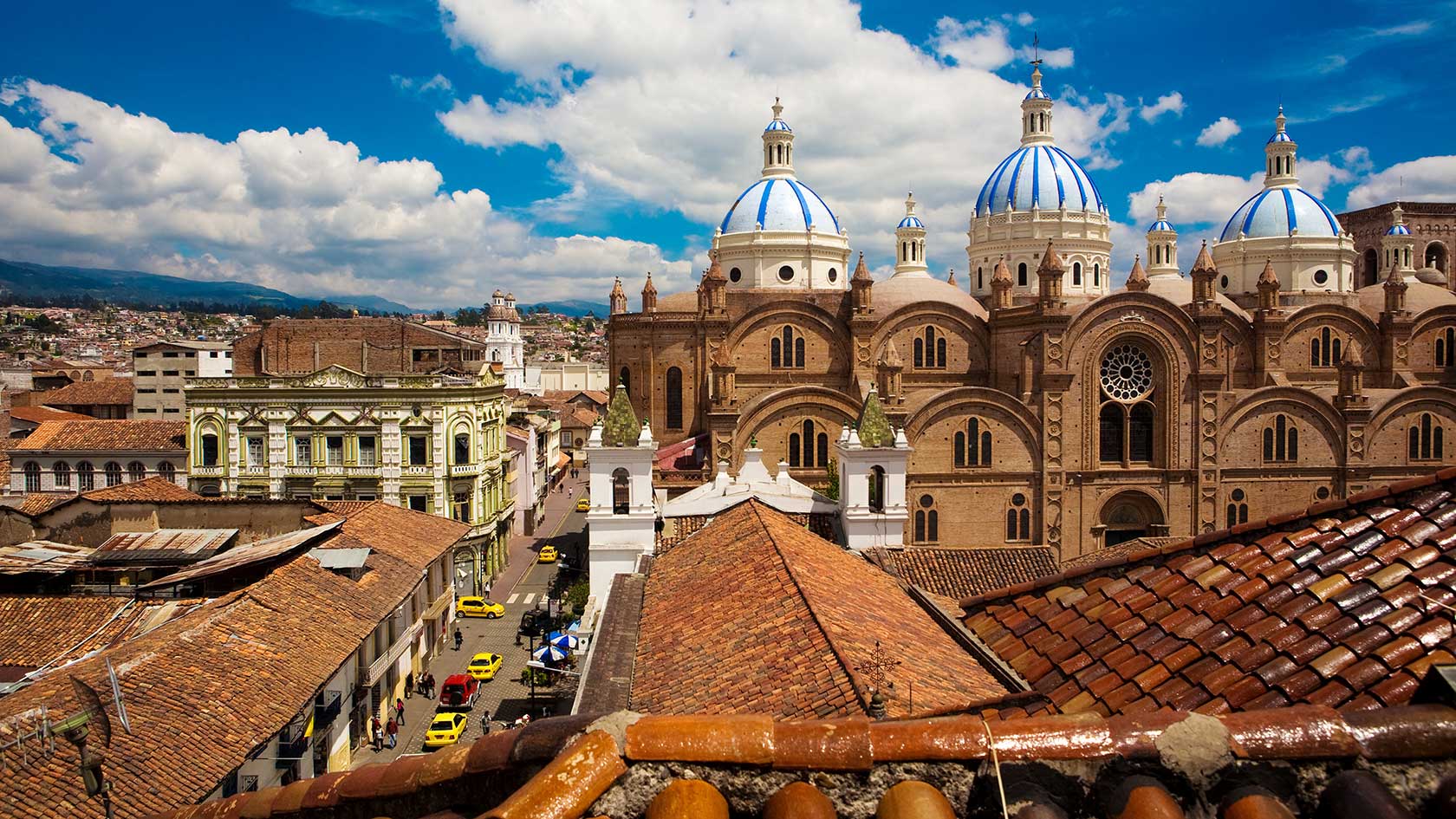
Yesterday, I did a little bit of research on travel in Ecuador on Lonely Planet’s Thorn Tree website. There I encountered the following complaint from a user called nemo_dat:

I’m a month into a two-month stint in Ecuador (enjoying a nice break between assignments). It’s my first time in South America and unfortunately I’ve been disappointed so far. I need to decide whether to stick it out in EC [Ecuador], go elsewhere in South or Central America, or perhaps cut the trip short and return home.

I’m having a hard time dealing with the air pollution, poverty, and sprawl. I’ve spent the past month in Quito and Cuenca. I left Quito because of the air pollution. I’m happier in Cuenca but was really looking forward to taking a scenic drive through the countryside today to see some unspoiled wilderness and breath fresh air. The scenery was nice in parts but my clothes reek of exhaust after spending the day driving. And while I saw some nice scenery I also saw some truly horrid buildings amidst the countryside.

I’ve been to several less-wealthy areas of the developed world, and while those places can be rough around the edges, I was easily able to find scenery and architecture to more than compensate. I just haven’t had the same “wow factor” in Ecuador.

I chose the Andes of Ecuador because I like mountain scenery and I’m not a fan of heat or humidity (not a beach person). But this isn’t working out. Are there places in Ecuador or elsewhere in C or S [Central or South] America I should consider?

I feel like an ass for saying it, but I think somewhere more “European” might be more in line with my preferences (I know that probably brings to mind Argentina).

Any advice on how to proceed is greatly appreciated.

Actually, I am rather sympathetic with nemo_dat: The fact of the matter is that some people are not cut out for travel in developing or undeveloped countries. Their curiosity is trumped by the discomfort factor, which can at times be considerable.

I had the misfortune to visit Yucatán in the early 1980s during a major heat wave and came down with some kind of tropical illness. I went to the front desk of the Hotel Cayre and asked them to send a recommended doctor, which they did—and promptly. He gave me an injection and wrote out a prescription, which I had filled out at a local farmacia. It did lead me to change my plans. I grabbed a flight to Tuxtla Gutiérrez in the State of Chiapas, high up in the Sierra Madres, and took a bus to San Cristóbal de las Casas, where it was reasonably cool at some 5,000 feet of altitude.

The complaint of nemo_dat is more about pollution and  a certain ratty quality prevalent in many if not most Latin American cities. Martine, for instance, complains bitterly about the broken sidewalks in Argentina and Mexico, which forced her to watch her step at all times. (In 1979, while watching for a break in the traffic at Insurgentes and the Reforma in Mexico City, I fell into a 10-foot ditch; so I can understand her.)

If that sort of thing is a problem, I suggest sticking to the mountains of the First World, like the U.S. or Canadian Rockies, the Swiss or Tyrolean Alps, or perhaps Australia. You’ll find a more “paradise-like” (translated: Disneyfied) environment there.

What you won’t run into there is the poor Aymara woman I met in Puno, Peru—now there’s a ratty city!—who was dragging around her home made knitwear. It was an icy morning at 12,500 feet altitude and I badly needed a scarf; so I bought one from her. She was so grateful that tears came to her eyes, and she stroked my arms as if I were a favorite family member.


On Guidebooks

Occasionally Useful, But Not as a Crutch

Occasionally Useful, But Not as a Crutch

In my forty years of travel, I have run the gamut from slavish reliance on the accommodation and restaurant information in guidebooks to merely supplemental use. When I first went to Yucatán in 1975 and Britain in 1976, I was frankly afraid to go to a place that was not blessed by the footsteps of thousands of tourists before me. Then, little by little, I began to take chances. When I discovered that taking pot luck was no worse than strict adherence—which, in any case, was impossible in those early pre-Internet days when one took one’s chances. Also, I found myself meeting more interesting people.

Now, when I go to South America, I’ll take a Lonely Planet guidebook such as the one illustrated above with me—but mostly for the maps. One cannot always get to the tourist office in time for their freebie maps, and sometimes those freebie maps are not very good.

For accommodations, I now use TripAdvisor.Com more frequently (and I review for them as well). Even the reviews in TripAdvisor have to be taken with a grain of salt, as the world is full of whiners and kvetchers. As for restaurants, I have a number of rules of thumb that have never let me down:

  • Don’t go where all the tourists go, especially if they are backpackers
  • Better restaurants are usually on side streets a bit off the main beaten path
  • If the menu is not in the language of the country you’re in, walk out
  • The best restaurants are usually fairly crowded
  • Eschew all signs of snobbery

I suppose if I were just starting out on my travels, I would probably clutch my guidebook as if it were a life preserver in a storm. But I now know that it’s best to travel by what I call Mexican Rules: Be alert, be willing to switch gears at a moment’s notice, be skeptical.

When my brother and I went to Villahermosa in 1979, we couldn’t find any decent places to stay, because they were all block-booked by oil executives and workers. So we stayed in a miserable little Casa de Hospedaje (which my brother pronounced as “Casa de Hopes-You-Die”). Then we spent hours looking for the bus station, which was not where the guidebook said it was. Finally, we just called a taxi and had it drive us to the brand new bus station on the outskirts of time. Finally, the dinner we had was wretched: My brother’s shrimp had tar on it.

Dan and I enjoyed that trip anyhow: We had a lot of war stories associated with it.


To South America … Again

View of Quito’s Old Town

View of Quito’s Old Town

Once again, Martine does not want to travel with me. Her continuing problems with back pain when sleeping in soft beds and almost continuous irritable bowel syndrome makes her want to stay close to home. This year, I will go to Ecuador, especially to the Andes region.

The good news is that I will not be traveling alone: My brother Dan expressed interest in joining me. The last time we traveled together was in 1979, when we did the circuit Mexico City-Villahermosa-Palenque-San Cristobal de las Casas-Oaxaca-Mexico City. It was the same circuit described by Graham Greene in his book The Lawless Roads (1939). We traveled by air to Villahermosa (not a high point in any sense of the term) and by bus the rest of the way back to Mexico D.F.

Dan and I are, I think, good traveling companions. He’s not very interested in ruins (there aren’t that many in Ecuador), and he is very interested in native crafts (as am I). He has already been to Guayaquil and the Galapagos and said that travel to the latter was much too regimented. I was hoping he didn’t want to go there again because (1) when we’re going is the wrong time of the year (October/November) and (2) Zika.

At this point I’ll tell you a couple of anecdotes about traveling with my brother. We were in Palenque at the time of the Christmas Posadas, and Dan loved the coffee served in the area—it was grown locally. When we were in a café one evening, a shoeshine boy came up to us and asked if we wanted a shine. Dad slipped his foot out of his sandals and set it on the stand. The trouble is: As far as anyone could see, he was wearing only bright red socks. All the locals burst out laughing. No matter, I was wearing leather boots and gave him my business.

Another Palenque incident fortunately turned out the right way. Dan ducked out frequently in the evening to satisfy his coffee cravings while I remained behind reading a book. I heard a commotion in the street, and Dan came up shortly after. Apparently, a police informer tried to sell him “magic mushrooms” (psilocybin), and Dan guessed his intent at once. No sale.

There are some other stories from that trip that I’ll write about some other time.

Traveling by Mexican Rules

Benito Juarez Airport in Mexico City

Benito Juarez Airport in Mexico City

It all started in 1979. My brother and I were booked on a flight to Villahermosa, Mexico, one of the less enchanting cities of that great land. Suddenly, our flight disappeared off the departure screens, followed by a garbled PA announcement in Spanish. Dan and I looked at each other, and right then and there, we developed the notion of traveling by Mexican Rules.

Consequently, we hunkered down in our seats and waited for new developments. We disbelieved all announcements until we heard one (that was actually clear) that said our “canceled” flight was boarding at Gate 72. We hurried over to the gate and, sure enough, the flight was boarding; and its destination was the unlovely swamp city of Villahermosa. Within two hours, we were landed.

(It turned out that was only the beginning of our problems: We had to find a room in a city where all hotel rooms were block-booked by the Pemex oil monopoly employees. But that’s another story.)

The point I am trying to make is that one has to make allowance for mass confusion, not only when traveling, but even at home. A week ago, we had a freak rainstorm that forced the evacuation of the high rise in which I work. Until I received authoritative word from the building management, I heard no end of estimates of how long it would be before we could return to our offices. They ranged from one hour to two or three hours to half a day. In the end, the building was shut down for the day until the fire department and the Department of Water & Power was sure the transformer in the parking garage would not be flooded.

So when I am in Argentina and Chile in November, I will still be traveling by Mexican Rules. It’s the only way to fly.


The Real Story

Chapo Guzman

Chapo Guzman

By now, you’ve all heard about the mile-long tunnel that drug cartel jefe Chapo Guzman used to escape from Altiplano Federal Prison in Mexico. Well, I’ve done a bit more research and have the actual sad tale for you with all its gory details.

I suppose when one has a weak government and a strong criminal class, one can expect spectacular prison escapes such as that of Señor Guzman—and spectacular it was!

Not only was the tunnel high enough that “Shorty” (that’s what El Chapo means) would walk out without bending over, but it was air-conditioned and had a chauffeured golf cart at the ready to evacuate the prisoner, who was wearing a tuxedo. At quarter mile intervals, there were mariachi bands to welcome Guzman to freedom, as well as ladies offering fresh tortillas de maiz with selected toppings for tacos, such as Beluga caviar and truffles. Aged Gran Patrón Platinum Tequila was available to quench his thirst.

Prison guards who had collaborated in the escape—in effect, all of them—were given new cars with glove compartments filled with crack cocaine.

Contrast that with the New York State prisoners who met a bad end within the last week or two. They just weren’t rich enough to “grease” their way out of stir.


Mexican Bus Ride

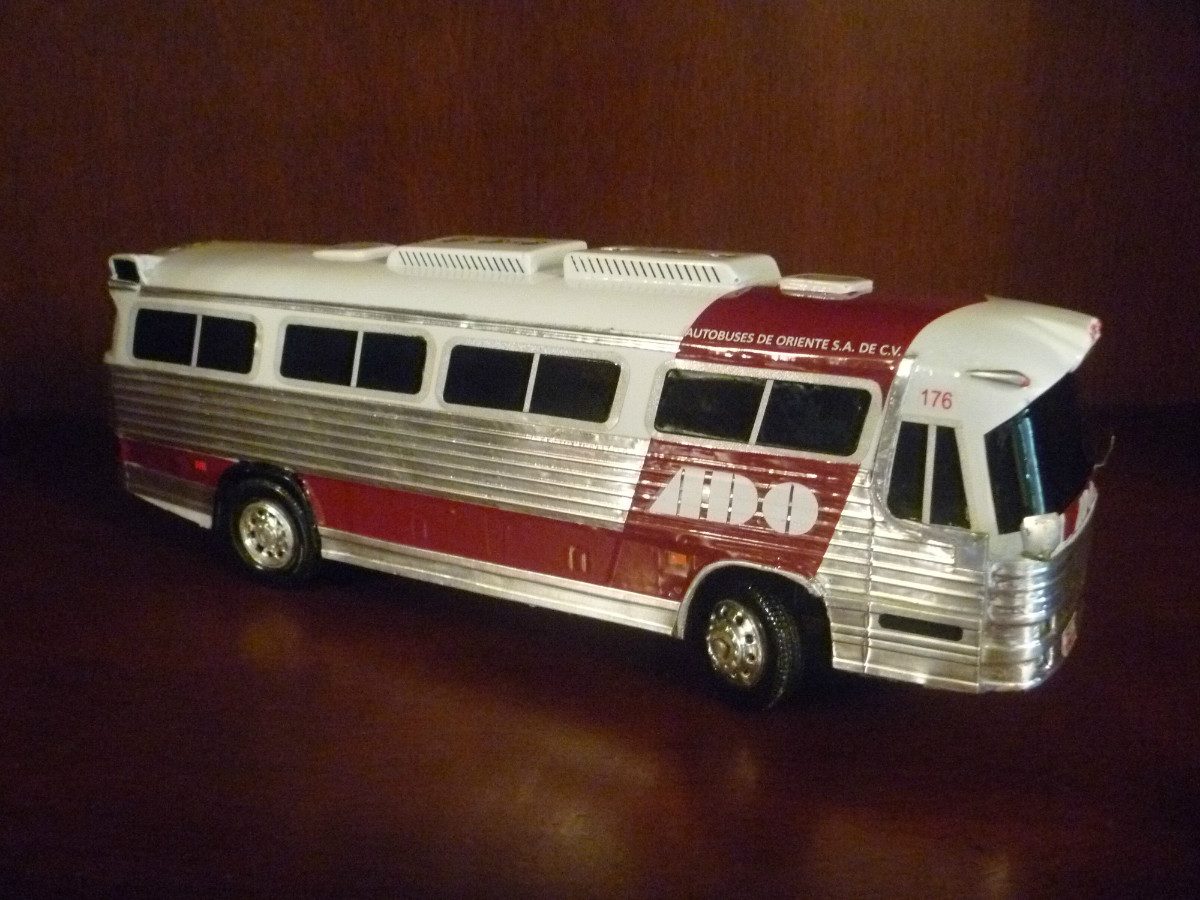
Model of an ADO Bus With 1980s Logo

Model of an ADO Bus With 1980s Logo

It was in the 1970s and 1980s that I first fell in love with Latin America. Unfortunately, at that time, many of the countries that I wished to visit such as Guatemala, Chile, Argentina, Peru, and Uruguay were ruled by dictators and—in the case of Peru—marked by a violent Maoist insurgency (the Sendero Luminoso). But Mexico was okay at the time. Now there are parts of Mexico I would fear to visit because of violent narcotraficante gangs. And Central and South America are generally safer.

I remember traveling thousands of miles by bus—all on buses built in Mexico by such companies as Masa, Sultana, and Dina. I remember one Cristóbal Colón bus between Mazatlán and Durango that crossed the Sierra Madre Occidental and forded several (then) unbridged rivers on roads that would have left a GM bus in pieces.

In central Mexico, I fell in love with the Flecha Amarilla (Yellow Arrow) line of clean second class buses one could board within minutes to destinations such as Guanajuato, San Miguel Allende, Querétaro, Pátzcuaro, and Mexico City. Along the Gulf, there were the buses of ADO (Autobuses de Oriente) that went clear to Yucatán. Only in Yucatán itself were the intercity buses broken-down wrecks, especially the ones operated by Union de Camioneros de Yucatán. (This may no longer be the case, but it was when I traveled there.)

All through my travels, I kept thinking of a Luis Buñuel film entitled (in the U.S.) Mexican Bus Ride (1952), although the original title is Subida al Cielo (“Ascent to Heaven”). Most of the story takes place during a long bus ride from a coastal fishing village over the mountains to the interior. During the film, there is a death, a birth, a seduction—in other words, just about all of life. It is probably one of Buñuel’s best films, and certainly his best production made in Mexico.


Tarnmoor’s ABCs: Yucatán

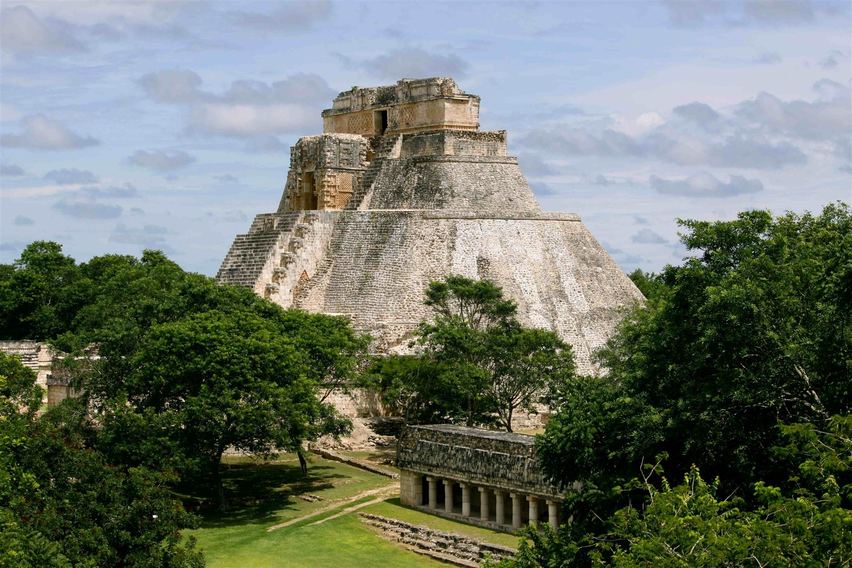
Temple of the Dwarf at Uxmal

Temple of the Dwarf at Uxmal

All the blog posts in this series are based on Czeslaw Milosz’s book Milosz’s ABC’s. There, in the form of a brief and alphabetically-ordered personal encyclopedia, was the story of the life of a Nobel Prize winning poet, of the people, places, and things that meant the most to him.

My own ABCs consist of places I have loved (Iceland, Patagonia, Quebec, Scotland), things I feared (Earthquakes), writers I have admired (Chesterton, Balzac, Proust, Borges, and Shakespeare); locales associated with my past life (Cleveland, Dartmouth College, and UCLA), people who have influenced me (John F. Kennedy), foods I love (Olives and Tea), and things I love to do (Automobiles and Books). This blog entry is my own humble attempt to imitate a writer whom I have read on and off for thirty years without having sated my curiosity. Consequently, in the next couple of weeks, you will see one remaining posting under the heading “Tarnmoor’s ABCs.” To see my other entries under this category, hit the tag below marked “ABCs”. We are approaching the end of the alphabet today with “Y” for “Yucatán.”

It was the start of my travels: November 1975. Before then, all my traveling was at the behest of my parents or schools. That year, I suddenly decided I wanted to see Mayan ruins—on my own. My parents were appalled. They were sure I would be captured by bandidos, roasted and eaten. It didn’t turn out that way: I had the time of my life. Over a period of two and a half weeks, I saw the ruins at Dzibilchaltún, Uxmal, Chichén Itzá, Kabah, Acanceh, and Mayapan. I went to a Mexican tourist agency called Turistica Yucateca and arranged, in Spanish, for tour guides. (When did I ever learn Spanish? I just winged it and have been winging it ever since.)

From the moment I landed at Manuel Crescencio Rejón Airport in Merida, I was in a world of wonders. It was a warm evening, and I saw shops open to the street and people sitting outside drinking beer and sodas and chatting with their friends and neighbors. I had great food at places like the Restaurant Express on Calle 60 and Alberto’s Continental Patio and Los Tulipanes. I stayed at fascinating hotels, including the crumbling old Gran Hotel, which dated back to the late 1800s when Yucatán was the hemp (rope fiber, not marijuana) capital of the world.

I was hooked. So hooked that, ever since, I insisted on people saying just Yucatán, not “the” Yucatán. I knew. I was there. And not once, but many times.I would no more say “the” Yucatán than I would say “the” California or “the” Poughkeepsie.

I loved the tropical ambiance of Merida and the surrounding country. And people were friendly, probably more friendly then than they are now.

So that’s when I caught in travel bug. The next year, I went to England, Scotland, and Wales. Then on to Hungary and Czechoslovakia. But during the 1980s, at several points I returned to Mexico and Yucatán, sometimes for a month at a time. I rode the rickety old buses, held babies for overwrought young mothers, snacked on strange foods, and felt myself growing as a person, and perhaps as a citizen of the world.


Sliced Off at the Knees

The Weather Stops at El Border

The Weather Stops at El Border?

On many counts (almost too numerous to mention) the news is a partial and usually misleading travesty. Take the weather, as represented by this morning’s precipitation map off the Weather Channel’s weather.com. We are approaching the time of year when our weather comes not from the west or north, but from Mexico.

Even as I write this, Hurricane Bianca is threatening the State of Baja California Sur. What does that mean for Southern California? It means that we get the northern edge of whatever monsoonal weather is hitting Northwest Mexico. Stray clouds, winds, and precipitation do occasionally sneak across the fence at the border and make their way to El Ciudad de Los Angeles.

So what use is it to us when we get a weather report that ignores everything south of the line? No, the earth does not change color at that point, and the weather does move around by laws that do not respect national boundaries.

Over the next few weeks, we expect humid weather with possible light showers—not sufficient to rain on our parade or affect the drought in any significant way. But it nonetheless is a factor we should not ignore.