
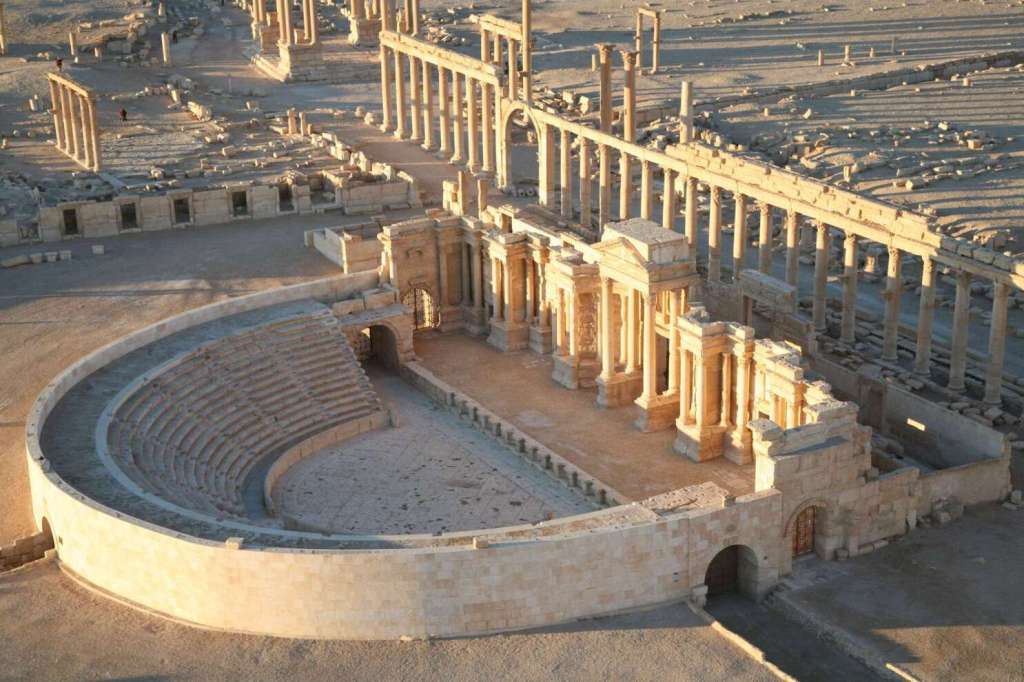
Palmyra

Ruins of Roman Theatre in Palmyra

It’s all in ruin now, more so since the Islamic State (ISIS) decided to extend the ruination in 2015. There was a brief time in the third century A.D. when Palmyra was independent and prosperous. It stood midway between Rome and Persia and was coveted by both. It was ruled by such enlightened leaders as Septimius Odaenathus and, after his death, his widow Septimia Zenobia. Under Zenobia, Palmyra controlled lands from central Anatolia to Southern Egypt.

That was too much for Rome. In 273, the Roman Emperor Aurelian destroyed Palmyra and exiled Zenobia to Rome. At that time, the city had some 200,000 inhabitants. Somewhat later, Diocletian re-established the city, but it never again grew to the size and power it had under Odaenathus and Zenobia.

It is a wonderment to me that throughout history there existed little “golden ages” of relative happiness and prosperity. At Palmyra’s height, its people were considerably wealthier than the citizens of Rome itself. By the third century, the Roman Empire itself was powerful, though its original inhabitants had passed their zenith as all the resources were spent building up the massive army presence along the northern and eastern borders.

I sincerely hope the same thing will not happen to the United States. With this election, I breathed a little more easily and had a few glimmerings of hope.
Palmyra

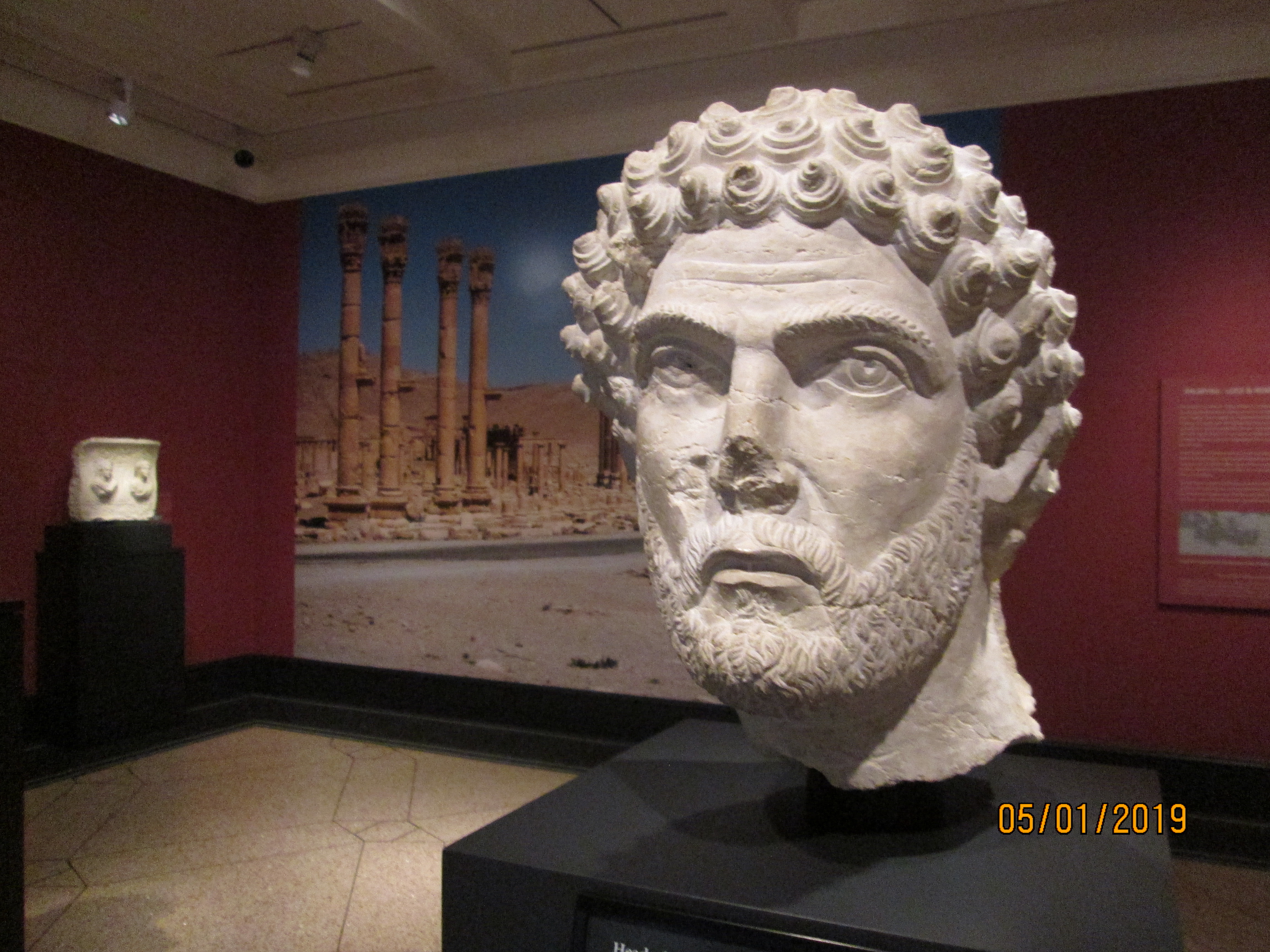
Bust from the Ruins of Palmyra in Syria

In 2015, ISIS seized the ruins of the ancient city of Palmyra in Syria. They proceeded to destroy many of the standing columns, temples, and tombs while gloating over their “accomplishments.” To make matters worse, they captured and beheaded the Khalel al-Asaad, a Syrian archeologist.

This morning, I visited the Getty Villa in Pacific Palisades and was delighted to find an exhibit on loan of mostly funerary statuary from Palmyra, most of which comes from the Ny Carlsberg Glyptotek in Copenhagen. It was titled “Palmyra: Loss and Remembrance.”

It was a revelation to me. Palmyra was neither Roman nor Greek. Their language was a dialect of Aramaic, which was the language of the Holy Land during the life of Christ and for some time after. Most of the items on display were funerary busts and reliefs from the tower tombs that dotted the landscape. The facial expressions were surprisingly realistic, though with larger, more pronounced eyes than found in Greek and Roman sculpture.

“The Beauty of Palmyra”: Obviously a Rich and Powerful Woman

Most women depicted in these sculptures were depicted holding a distaff and spindle in their hands. The statue above displays no such housewifely virtues. Instead she is bedecked with jewels on her headdress as well as her costume. The circles were once filled with precious and semi-precious stones which have disappeared in the course of time.

ISIS Gloating Over the Destruction by Explosives of the Temple of Baal Shamin on One of Their Websites

Naturally, I think ISIS’s actions in Palmyra and elsewhere show a total disregard for the antecedents of their own civilization. They will undoubtedly commit other barbaric crimes until this awful Jihadist movement is brought to account for their crimes against humanity.