Before the Incas

Moche Pottery at Lima’s Museo Larco

As powerful as the Incas were, they were Johnny-Come-Latelies on the Peruvian scene, much as the Aztecs were in Mexico. It was only in the early 15th century that they formed an empire with its capital in Cuzco. Less than a hundred years later, two invaders put an end to the Incas: First there was measles, which spread like wildfire from the Spanish in the Caribbean. Then there were the Spanish conquistadores themselves led by Francisco Pizarro.

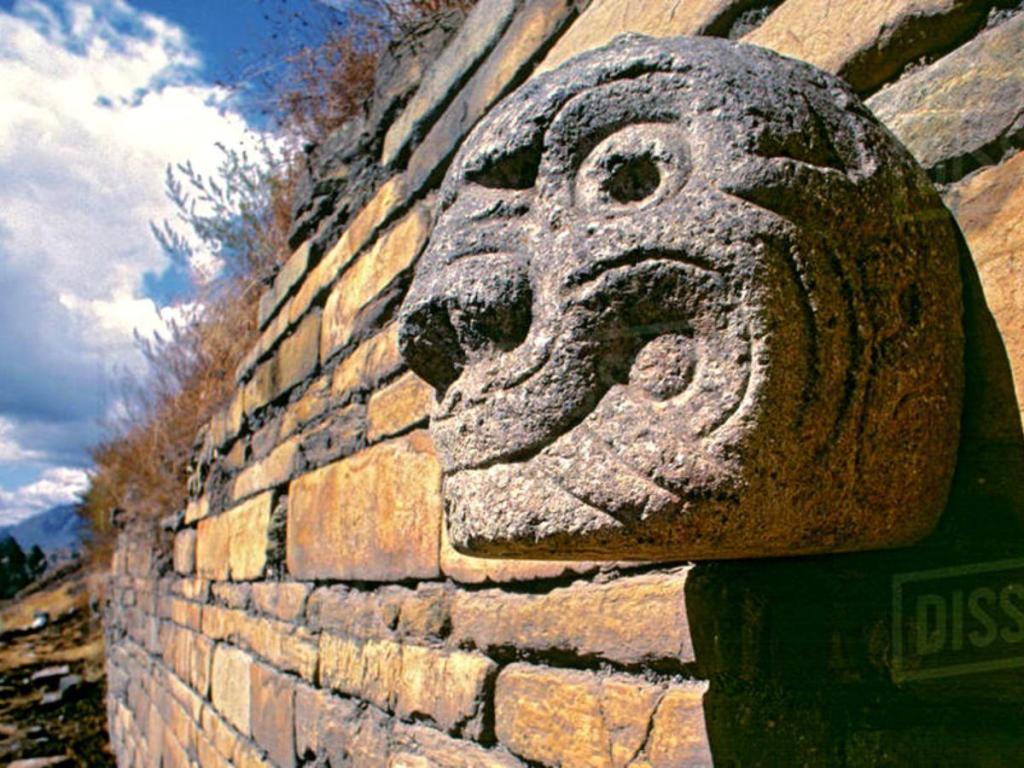
The Incas were only the last chapter in the Pre-Columbian world of Peru. Before them came the Huaca Prieta, Chavin, Moche, Sicán, Chimu, Wari, Chachapoyas, Paracas, Tiwanaku, Nazca, and Cajamarca—to name just a few. And that excludes the various peoples of the Peruvian Jungle.

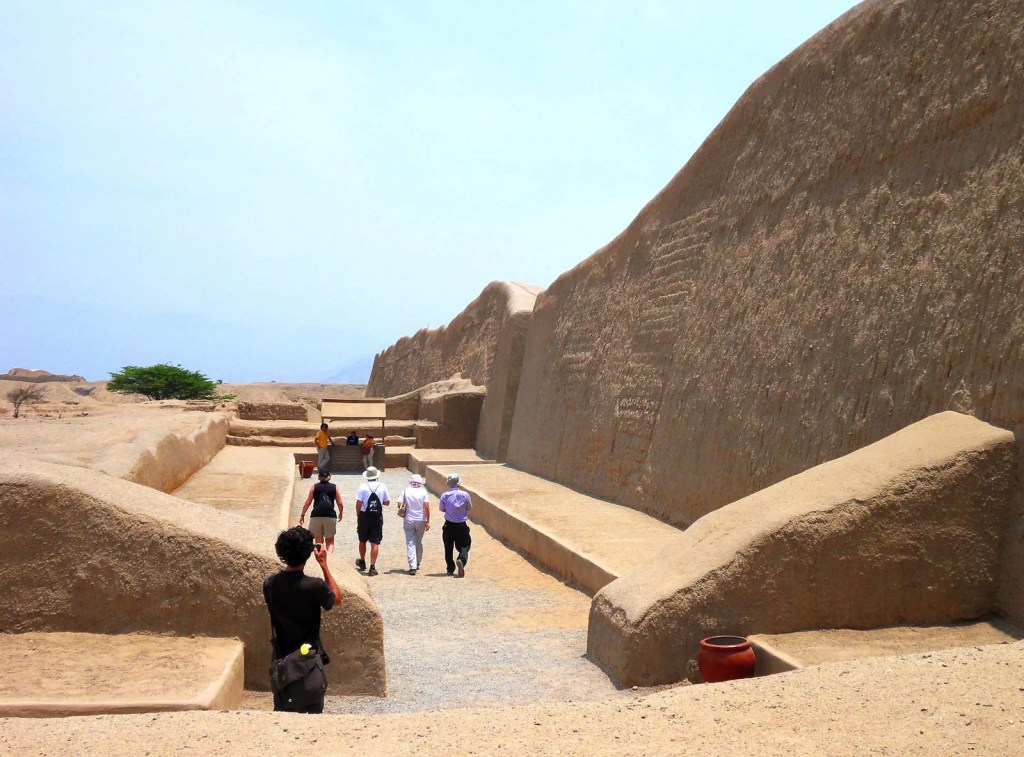
Except for the archeologists, we seem to have forgotten all the peoples who preceded the Inca. Visit Peru, and you will see the ruins of the cities all the Inca predecessors left behind, cities like Pachacamac, Chan Chan, Kuélap, Chavin de Huantar, Huaca Pucllana, Sipán, and Sillustani.

Paracas Culture Funerary Bundle

Although I am getting a bit long in the tooth, I conceived this idea of heading north from Lima to view many of these ancient ruins. It would involve a couple of trips to high ground to visit the ruins around Huaraz and Chachapoyas, including some scary mountain bus rides; but it would prove that there is a good deal more to Peru than Machu Picchu.

Earthquake-Proof

Inca Stonework on Calle Hatunrumiyoc in Cuzco, Peru

The Inca were, to my mind, most eminent for their stonework. Look at this wall in Cuzco. It was built almost 700 years ago, before a number of major earthquakes, particularly the ones of 1650 and 1950, shook most of the Spanish buildings to rubble. The remaining Inca walls did not budge. Interestingly, they were constructed without mortar, with each block trimmed to fit exactly atop the stones beneath it and to either side.

Best-known is the famous Twelve-Angle stone, not more than a few feet away from the above view:

The Famous Twelve Angle Stone

Now imagine trying to get a modern-day stonemason to do something like that. This stone is so revered that it is forbidden by law to even touch it. Yet it has withstood centuries of tremors and hard usage.

Today this wall forms part of the Archbishop’s Palace, which the Spanish wisely incorporated into the present structure.

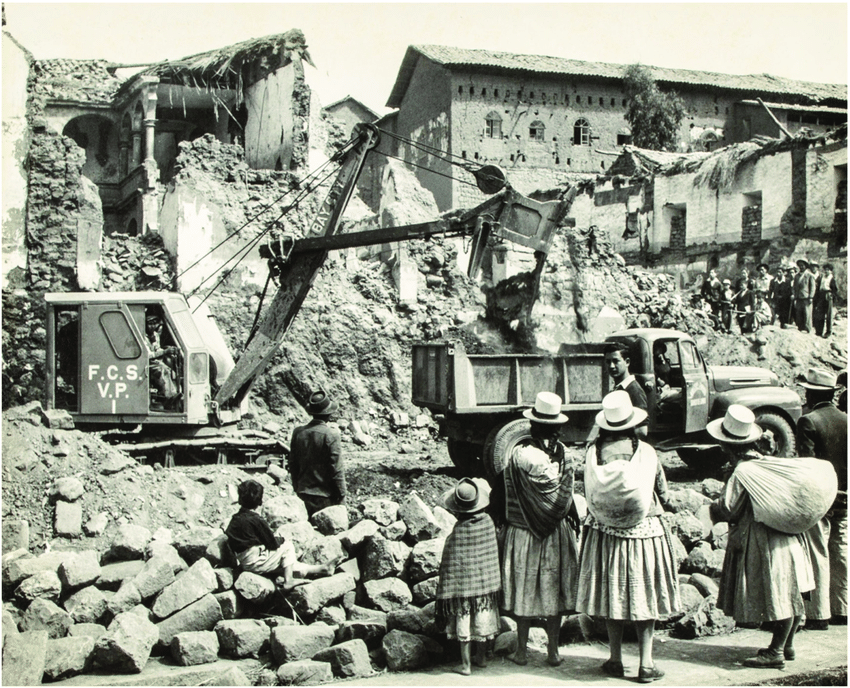
Below is an image of some of the damage after the 1950 earthquake:

Cuzco After the 1950 Earthquake

As good as the Inca were at being stonemasons, it is amazing to think that:

  1. They had no system of writing, though they did have a system of saving numerical data using a system of knotted cords known as quipu.
  2. They did not have the wheel to help them move all those heavy stones. But then they had no draft animals that could pull heavy carts, either,

Surrounded by Volcanoes

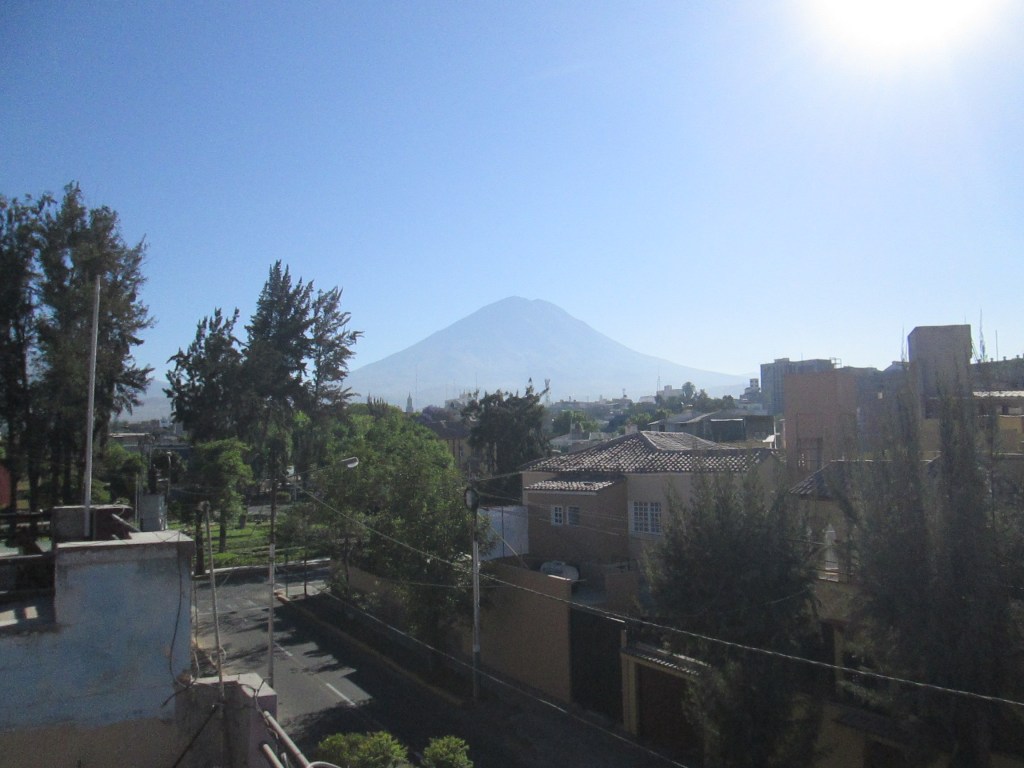
View of Volcan El Misti from Arequipa, Peru

Going back over my old Lonely Planet guidebooks, I am more and more impressed by my visit to Peru ten years ago. One of the places I loved most was the city of Arequipa, which I visited just to accustom my body to the altitudes I was to encounter at Colca Canyon, Puno, and Cuzco. Arequipa’s altitude was 7,660 feet (2,335 meters). Probably the highest altitude I reached was at Patopampas on the road to Chivay at Colca Canyon, which stood at 16,007 feet (4,879 meters).

It turns out that what was to have been primarily an exercise to avoid getting acute mountain sickness turned out to be a great destination.

Arequipa is surrounded by three volcanoes: El Misti, Chachani, and Pichu Pichu. Not surprisingly, the city has suffered major earthquakes that seem to go hand in hand with active volcanoes. Fortunately, the gods were not agitated when I was there late in 2014.

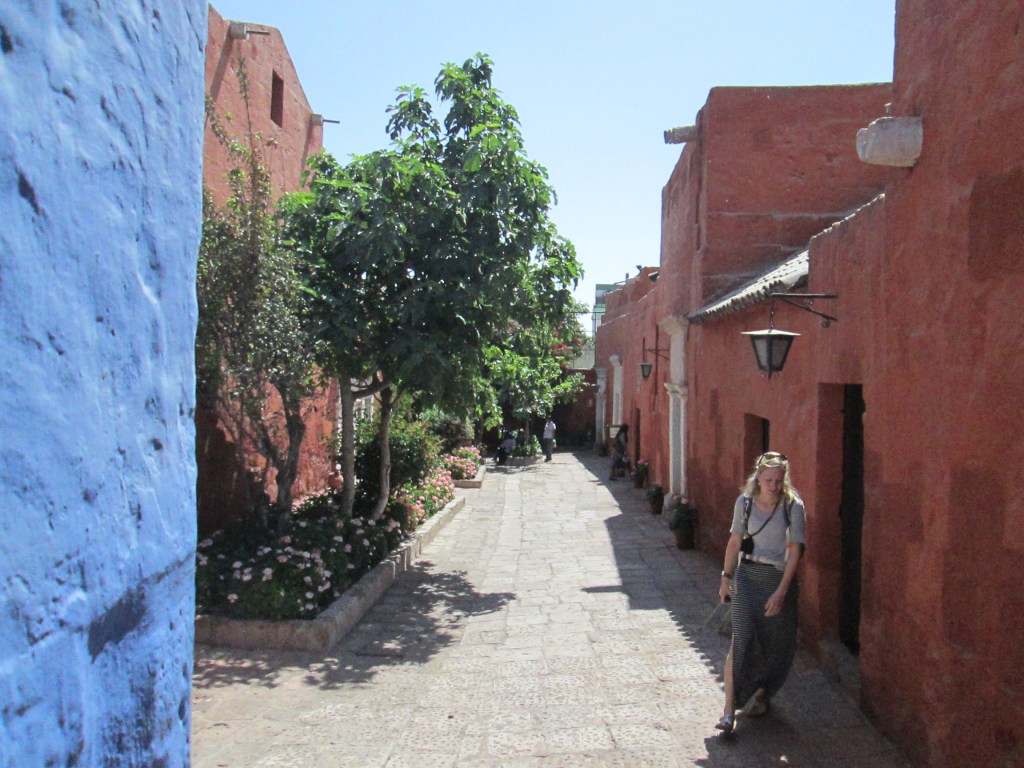
Of the city’s sights, I most enjoyed the monastery of Santa Catalina de Siena, which was itself city-sized. I spent a whole day from morning to late afternoon wandering through the monastery’s many streets, such as the one illustrated below:

Monastery of Santa Catalina in Arequipa

Running a close second and third are the Museo Sanctuarios Andinos, featuring the mummy of a 12-year-old girl sacrificed on Nevado Ampato around 1450 to stop the Volcan Sabancaya from erupting (it’s still erupting today) and the picturesque suburb of Yanahuara.

I would give my eye teeth to return. Maybe even more.

Cuy

BBQ Guinea Pig (Cuy)

In the Andes, one of the main sources of meat are guinea pigs. They are easy to raise, particularly if you don’t give them names or regard them as pets. The above picture was taken in Otavalo, Ecuador, famous for its Saturday tianguis, or market.

I have eaten many local foods, but never bothered to sample cuy, mostly because it is regarded as being full of tiny bones. According to one website:

All over Peru, towns honor the importance of cuy to their cuisine. Pachamanca, a traditional cooking method involving earthen ovens, often features guinea pig meat. A mural in the main cathedral of Cusco depicts Jesus and his disciples eating guinea pig at the Last Supper. During an annual festival in the town of Churin, residents celebrate cuy by dressing the animals up in colorful costumes. And across the country, townspeople gather and eat guinea pigs in honor of folk saints as part of a celebration known as jaca tsariy.

Guinea Pig Served at the Last Supper

In Chivay, Peru, I ate alpaca, which wasn’t half bad. I had the opportunity to eat edible clay at Sillustani, Peru; but I passed on it. That didn’t protect me from getting a horrible case of travelers’ diarrhea aboard a boat on Lake Titicaca.

In general, I took to the local cuisines of the Andean countries I visited. Perhaps one of the most interesting phenomena was the prevalence of chifas, Chinese restaurants, in all but the smallest towns. Even at Machu Picchu, I had a tasty wonton soup in the cool of the evening before my trip up the mountain.

How Did They Know That?

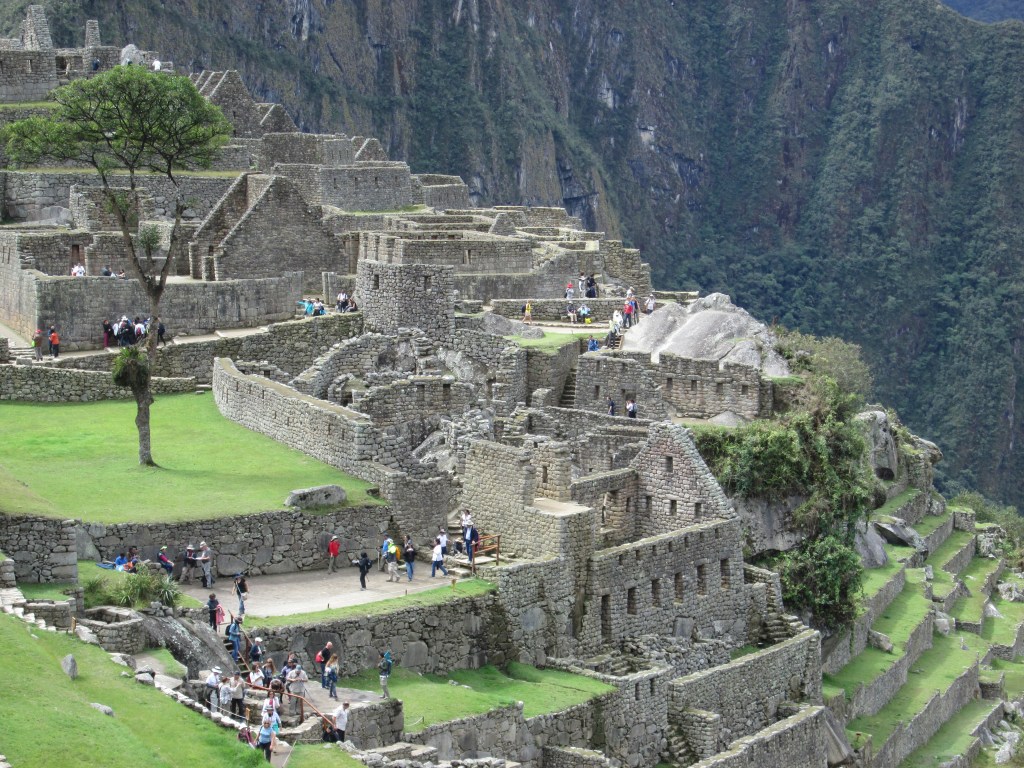
The Inca Ruins at Something Something Picchu

I was surprised to find out that, according to a professor of anthropology, Machu Picchu should be called Huayna Picchu instead. The reason I was surprised is that the Incas never had a written language like the Maya and the Aztecs. They were great engineers and stonemasons, but left no writings or even hieroglyphs. The only “communication” of any sorts we have from the Incas are in the form of quipu, knotted cords that were used to quantify taxes or inventories.

Quipu at the Museo Larco in Lima, Peru

You can read the story here at CNN Travel. It doesn’t much matter what the “official” name of the Inca ruins was. After all, most Meso-American ruins are probably misnamed. Either the Conquistadores or the archeologists just assigned a name for convenience. And, for good or ill, it stuck.

Museo Larco

This is the scanned image of my ticket to the Museo Larco in Lima, Peru. It was the first tourist sight I visited in Lima back in 2015—and it was an eye-opener. Founded in 1926, it was dedicated to the northern coastal cultures of Peru, of which there were many. We tend to think, “Peru … Yeah, that’s the Incas.” Except that the Incas were 15th century latecomers, and some of the earlier cultures were more advanced than they were.

Besides the Incas, there were the Moche, the Wari, the Chimu, the Chavin, the Paracas, the Nazca, the Chachapoyas, and many others.

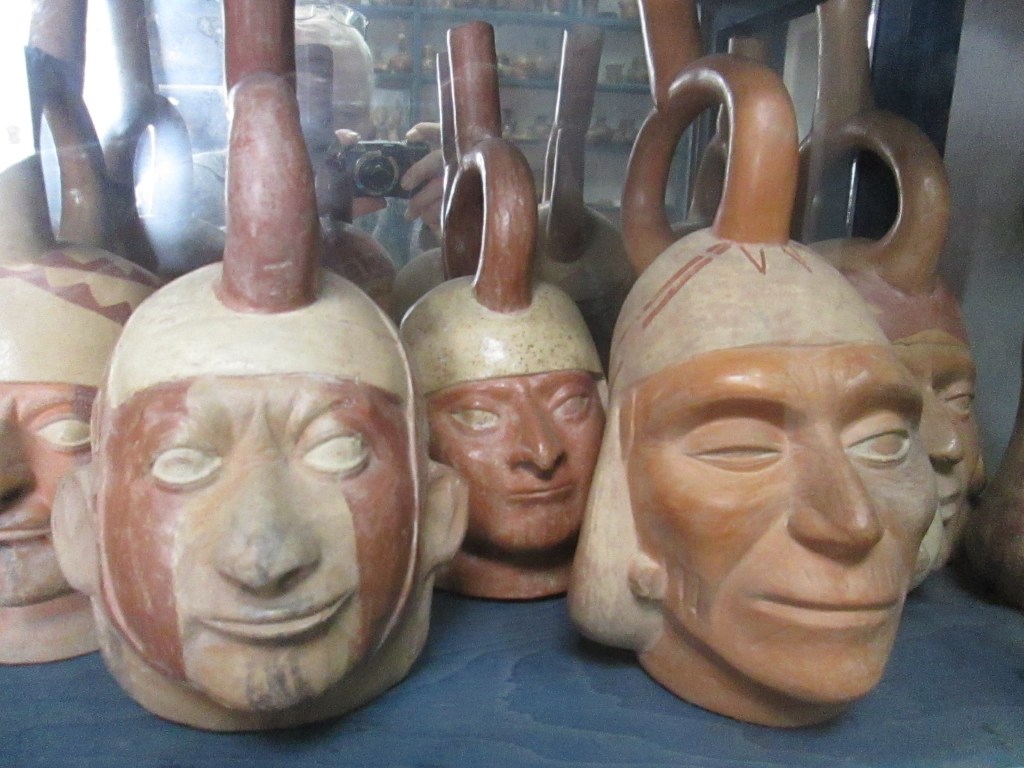
There were scores of these Moche heads at the museum. Like the famous terra cotta warriors at Xian in China, all had distinctive facial features as if they were based on particular individuals.

In addition there were elaborate textiles dating back centuries and still in excellent condition. There were even a few quipus, collections of knotted cords that were used for accounting purposes. None of these peoples appear to have had a written language like the Maya or Aztecs.

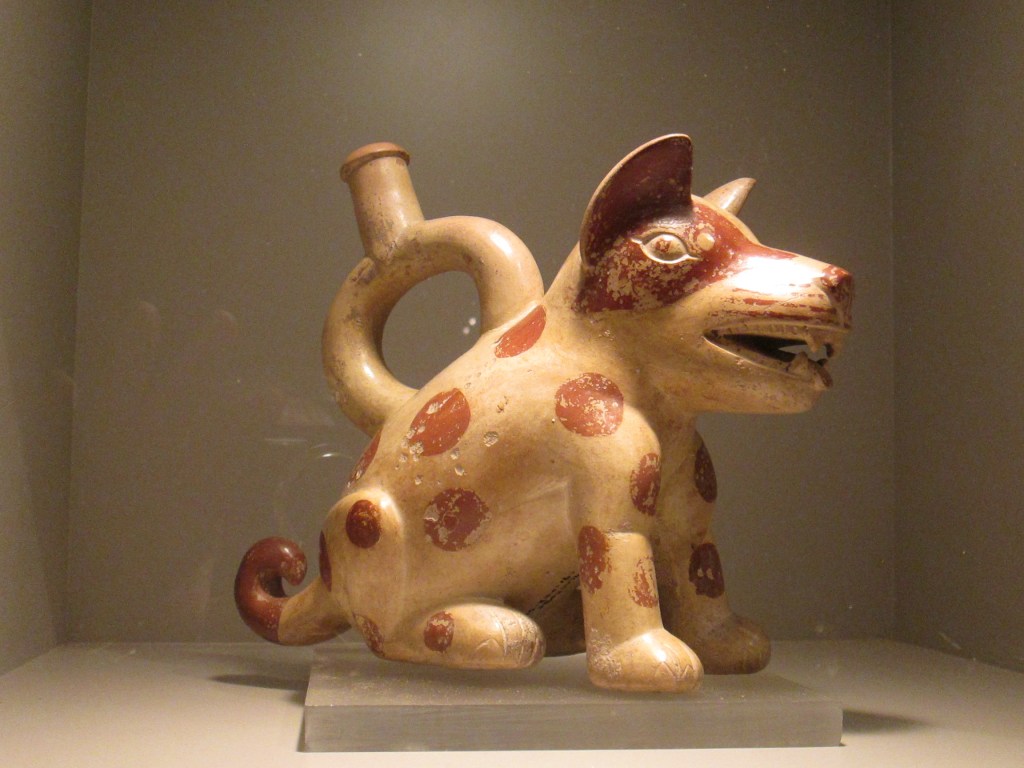
In common with many of the early Mexican cultures, the Moche had cute pottery fashioned in the shape of animals, such as the above dog.

One great thing about many museums in Latin America is that they frequently had adjoining cafés with excellent meals. The Museo Larco was no exception.

If you should find your way to Peru after they horrible Covid infestation, remember that there are a whole lot more to see than just the ruins of Machu Picchu. I could have spent several weeks in Lima without exhausting the list of places I wanted to see, such as the Police Museum in Callao.

Chullpas

Funerary Tower (Chullpa) on the Shores of Peru’s Lake Umayo

In the lands around Lake Titicaca in Peru and Bolivia, the native cultures believed in building funerary towers called chullpas to house their dead. Even under Incan rule, the Aymara-speaking Colla people continued this practice.

In 2015, I visited Sillustani, which contained the most impressive collections of chullpas situated on a nearby hill. Unfortunately, one cannot always guarantee good weather on a vacation outing, and the weather at Sillustani was vile that day. Consequently, I not only took no pictures but decided not to climb the hill in the rain (and at 12,000 feet or 3,700 meters altitude). So I took none of the pictures shown on this page.

Funerary Towers at Sillustani

I paid dearly for my trip to Sillustani, which included sampling some quinoa soup at a local resident’s kitchen. The next day, I was struck with a horrible need to go to the bathroom while on a lancha plying Lake Titicaca. I must have looked green in the face as I soldiered on in search of some toilet somewhere. Finally, on Isla Taquile, I found one; though I can’t say I got much from that day’s journey other than incredible discomfort.

Some days just are like that.

The Eyes of the Inca

The Peru of a Hundred Years Ago Through Peruvian Eyes

Martín Chambi Jiménez (1891-1973) was a Peruvian photographer who was active until a 1950 earthquake destroyed much of his beloved Cuzco. In his studio, he took pictures like the above musical group with their traditional instruments. But he also traveled around, photographing the altiplano of Peru, the city of Cuzco, and such sites as the ruins of Machu Picchu.

Cuzco Street Scene

In 1979, the Museum of Modern Art in New York displayed an exhibition of Chambi’s photographs, which traveled to other cities and inspired other shows displaying his work. Chambi was a native-born speaker of Quechua, the language of the Incas, and he saw the people and the landscape as only a native could see them.

Quechuan Woman Chewing Coca Leaves

Below is one of the many images he shot at the ruins of Machu Picchu.

Machu Picchu As It Was 100 Years Ago

Photographers like Chambi are a rare link to the past in faraway places that were not in the mainstream of Western European Civilization.

Tiwanaku

Tiwanaku: Gate of the Sun

I must think I’m going to live forever.Trapped in my apartment during the quarantine, I am thinking more and more about returning to Peru and including the altiplano of Bolivia. Here I am at age 76, thinking of a strenuous trip at high altitude to one of the most fascinating (albeit difficult) places on Earth.

In 2014, I spent some time on the western shore of Lake Titicaca, on the Peru side. I even took a tour on a launch to Isla Taquile and one of the Uros Isles, but as the boat left the dock, I discovered that I was beginning to suffer the effects of food poisoning. The former afternoon at Sillustani, I ate something in a farmer’s house that violently disagreed with me. What is more, I was hours away from a toilet. Under the circumstances, I was not able to appreciate the beauties of Lake Titicaca, and in fact I took no pictures that day.

Map of Lake Titicaca, Showing the Location of Tiwanaku at Lower Right

Just as I returned to Tierra Del Fuego after breaking my shoulder there in 2006, I plan on returning to the Peruvian side of the lake, and adding some parts of Bolivia to the mix. I find myself suddenly interested in the Aymara-speaking peoples of the Andes.

A funny thing happened to me in Puno during my last visit. It was a bitterly cold morning, as it frequently is at that altitude (12,000 feet or 3,700 meters). I had neglected to bring a scarf with me, and I badly needed one. Enter a poor Aymara woman laden down with hand-knitted handicrafts. I walked up to her and brought a beautiful scarf at a reasonable price. Apparently, I made that woman’s day. She broke into a big smile and was almost prepared to welcome me into her family.

Over a thousand years ago, there was an Aymara empire centered at Tiwanaku in modern-day Bolivia. It lasted until AD 1100 when a massive and persistent drought led to a drop in the level of Lake Titicaca, leaving the Aymara fields high and dry. Hundreds of years later, the Inca took over; but their empire was short-lived once the Spanish conquistadores began to move in.

Walls of the Kalasaya Complex at Tiwanaku

Since the eco-catastrophe that destroyed the Aymara empire a thousand years ago, the Aymara have become a scattered people indulging in subsistence agriculture and the herding of llamas and alpacas.

Cruz del Cóndor

They’re Not the Prettiest Birds, But They Are HUGE!

Along the south rim of Peru’s Colca Canyon, midway between Chivay and Cabanaconde is a place called Cruz del Cóndor. We stopped there late one morning waiting for the thermals that bring that condors up from the canyon below. I had a hard time focusing on the birds when they were against a dark background, so I was not able to take the above picture. Below is the best of the ones I shot, up against a blue sky:

Condor at Colca Canyon

To be a good wildlife photographer, you have to be patient … and you have to have the right equipment. Unfortunately, I have only a digital rangefinder camera, and I wasn’t able to stay put and wait for the right shot to happen. So it didn’t.

Condor on the Dining Room Wall in Chivay

Here’s one condor I was able to photograph—at the restaurant where we ate lunch after viewing the condors. Then it was on to the high point of the trip—Patopampas at 15,000 feet (4,600 meters)—enroute to Puno and Lake Titicaca.