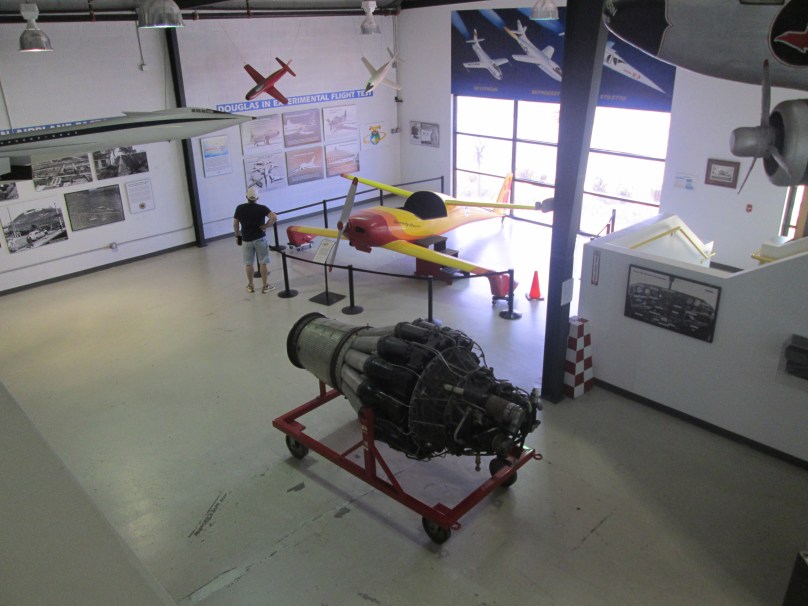
Air Lazarus

The Museum of Flying in Santa Monica

Once upon a time, the Museum of Flying in Santa Monica was two or three times bigger. Founded by Donald Douglas, Jr., of Douglas Aircraft fame, it was originally located north of the Santa Monica airport beginning in 1989 and included many exhibits furnished by an independent partner. In 2002, the museum folded.

After ten years, a new, smaller museum anchored by the Donald Douglas, Jr. collection opened south of the airport in smaller quarters.

Martine and I have always liked aircraft museums. Our favorites were the Palm Springs Air Museum and the Pima Air and Space Museum in Tucson, Arizona. What made all these aircraft museums interesting was the existence of numerous volunteer docents who piloted the planes during the wars of the late 20th century. As many of these docents reach a certain age and pass on, I suspect that the museums themselves will lose a lot of their present appeal. But for now, I think they are wonderful places to visit and learn aviation from Kitty Hawk to today.
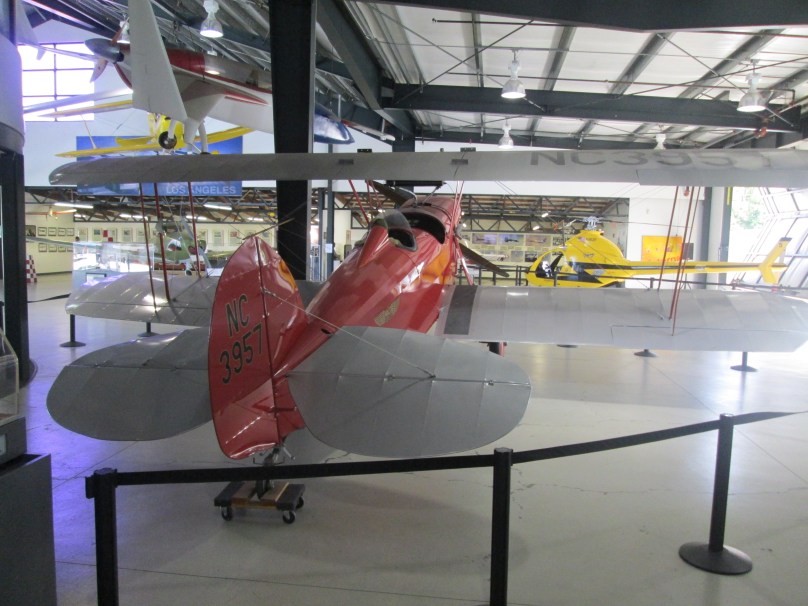
Waco GXE Model 10 Biplane

When I first moved to Southern California, the Santa Monica Airport and much of the land surrounding it were all part of a gigantic MacDonnell Douglas Corporation factory, which after being merged out of existence sold its property to developers and to the general aviation facility that today is the Santa Monica Airport.

So even if the Museum of Flying is something of a Lazarus raised from the dead, we will continue to visit and enjoy it.
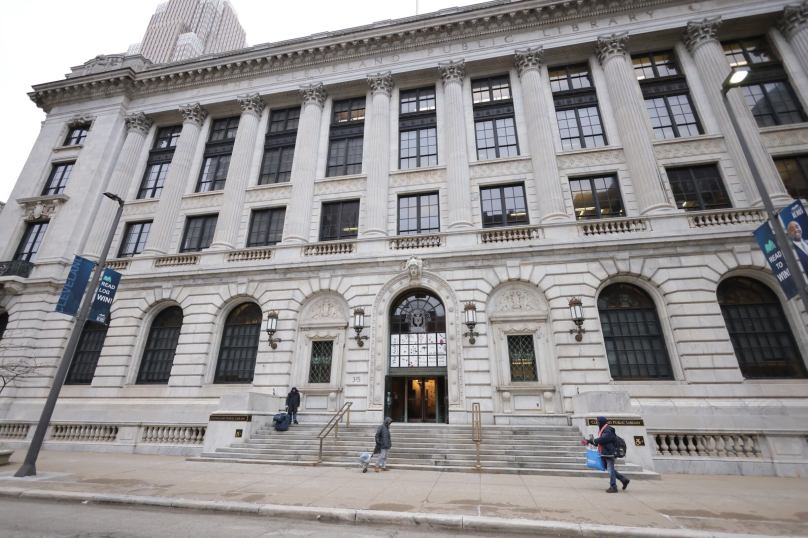
My Libraries

The Main Branch of the Cleveland Public Library Downtown

Books and libraries have always played an important part in my life.

When I was a toddler, my mother took me to the branch of the Cleveland Public Library on East 109th Street (now Martin Luther King Drive). Not that I could read, but I could indicate based on the illustrations the books I would be most interested in. She would check them out and read them to me in Hungarian, probably embroidering a bit. The one book I remember from that period was Dr. Seuss’s The King’s Stilts, which I now have in my collection.

In 1951, after my brother Dan was born, we moved to the Lee-Harvard Area on the East Side of Cleveland. For many years, I went to the Lee-Harvard branch which was located on Lee Road, first north of Harvard, and then south of it. The head librarian was a fellow Hungarian, Mr. Matyi, who played the oboe in the Cleveland Philharmonic Orchestra.

During my college years at Dartmouth, I spent many hours at Baker Library, which was modeled after Independence Hall in Philadelphia. What I loved most about it were the frescoes in the reserve room that were painted in the 1930s by José Clemente Orozco.

Jose Clemente Orozco, Murals at Baker Library Reading room, Dartmouth College, Hanover NH; The Machine

Once I moved to Los Angeles, I spent some time at the UCLA University Library, but I liked going to the main branch of the Santa Monica Public Library—which satisfied me until an opportunity opened up with the construction of the E (for Expo) Line of the Metro Rail. Driving and parking downtown was always a major pain. But now I was able to whiz downtown for 35 cents in three quarters of an hour.

I am now hooked on the Central Branch of the Los Angeles Public Library. Not only because of the library’s holdings, but various events sponsored by the library, especially the guided Thursday mindful meditation sessions.

The one library I forgot to mention is my own personal library of some 6,000 volumes, which I am slowly trying to thin by donations.

Do You Still Pay Your Bills by Check?

During the course of her daily walks, Martine finds the strangest things. Today, it was a hoard of undelivered mail consisting of invoices from which the checks paying them had been removed—presumably to find some checks that could be altered in favor of the thieves.

Mixed in with the bag of mail were food containers with food scraps, typical of the garbage stewed around my neighborhood by the homeless. It is likely that the thief was a homeless ex-con who had learned how to modify checks during a previous imprisonment.

I no longer pay bills by mail. Instead, I use the BillPay service of Bank of America. In five years of usage, I have had no problems; whereas, in previous years, I had problems with mail being delivered late or not at all. This cuts out the Postal Service and all those larcenously inclined bums who prey on it.

Tomorrow, I will give Martine a ride to the main Santa Monica Post Office with the bag of stolen mail, which she brought home from her walk. The mail was scattered all over the intersection of Wilshire Blvd. and 20th Street in Santa Monica.

Martine’s Tiny Treasures

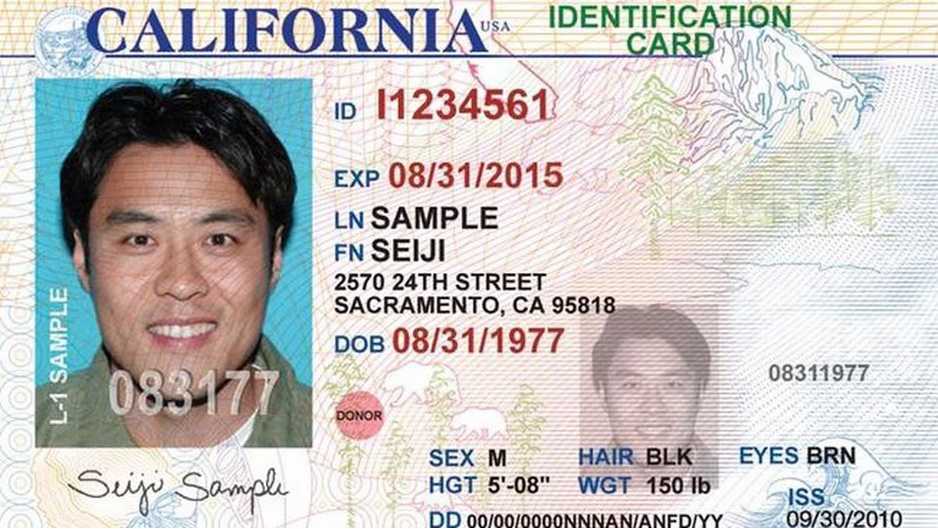
A Sample California State Identification Card

Martine likes to take long walks. She walks very slowly and looks carefully around her and typically finds all manner of things. These include infant socks (many different varieties), unused Narcan nasal spray for opiate overdoses, birth control pills, drug syringes, and coins of all denominations, including foreign coins.

Today, she picked up a California state identification card outside a Santa Monica supermarket, similar in format to the above photograph. It was from a young woman who lived in the immediate vicinity of Santa Monica College. As she was about to go by bus to deliver the card to the address shown on it, I offered to drive her there. Going on foot or by bus would have taken hours, and it was already dark.

So I drove Martine to the house whose address was on the card. She went up to the door and handed it to an older woman who was probably the mother of the card holder.

When I first came to Southern California around 1967, I had one such card. After all, it was not until 1985 that I learned to drive and was able to get a California drivers’ license. The card enabled me to buy alcoholic beverages for eighteen years. I imagine that the young woman whose card Martine found is now able to celebrate by boozing it up with her good buds.

One Night in Santa Monica

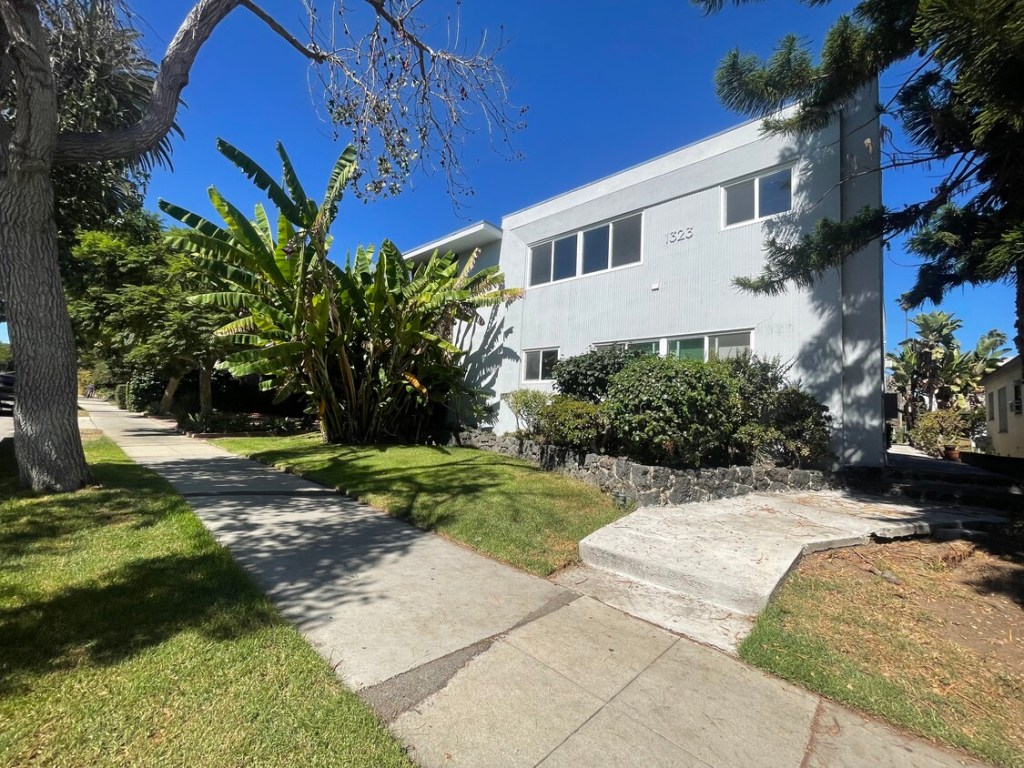
The Apartment Building at 1323 11th Street

During most of the 1970s, I lived in a two-bedroom apartment on 11th Street in Santa Monica. I was on the second floor, with the bottom floor being a carport. On the way up the back stairs to my apartment (#10), I had to pass #8 and #9. I am giving you this detail so that you will be able to better see what happened to me on night around 1978.

I was returning from Von’s Supermarket with a bag of groceries. As I walked down the alley, I saw two young Armenian men crouching behind a car with a trailer loaded with furniture. They motioned for me to take cover. I surmised that they were moving into one of the apartments (the building owner was Armenian), but I had no desire to wait for man indeterminate time in the dark, cold alley. So I continued on.

As I turned to mount the stairs, I saw my alcoholic white trash neighbor Merle standing at the top of the stairs with a rifle. I greeted him: “Hi, Merle. How’s it going?” He complained that those damned kids who were moving in made too much noise and giving him a headache. He added: “You’ve always been a good neighbor to me, Jim.” So he moved to one side and let me pass.

As I turned my back to him to go to my front door, I was conscious that I had just done something irrecoverably stupid and that I might be shot in the back. I turned the key, entered my apartment, and fell on the floor, breathing heavily.

Within minutes, the Santa Monica Police arrived and arrested Merle. I never saw him again. Shortly thereafter, his wife Ursula moved out. One neighbor had told me that once, when he knocked on the door of #8, Ursula answered the door stark naked. I, however, was deprived of that experience.

Actually, except for that one incident, Merle and I got along all right.

1322-D 12th Street

The old building in the center is where I lived from 1968 to 1971. The address was 1322-D 12th Street in Santa Monica. You can see two windows on the second floor: The one on the right in mine. When one walked in to the apartment, there were four rooms in the sequence living room, kitchen, bedroom, and bathroom.

It was fun living there until February 9, 1971. At 6 o’clock in the morning, I heard all the dogs in the area howling. It was followed within seconds by the Sylmar Earthquake, which registered 6.5 on the Richter scale. I was literally shaken to the floor and scared out of my mind. When the noise and shaking subsided, my kitchen was in shambles. I had to throw out several large garbage bagfulls of food.

Within days, I bid the kindly owners, A. J. and Birdie Olliff, farewell and found an apartment on Barrington Avenue in West Los Angeles. I was afraid that, in a hypothetically more severe earthquake, I would not be able to make it to the exit. Looking back, I don’t think that would in fact have been much of a problem. I was afraid and not thinking right at the time. Of course, in an earthquake, the worst thing you can do is run out of the building and be clobbered by falling debris.

The building is still there: The Google Maps picture was taken in August 2007. I am sure that the Olliffs have passed on in the intervening years. Old A. J. was something of a visionary. He talked of seeing items made of “chiROME steel” in his visions. I guess he could not pronounce the word “chrome.”

Fanatical About Libraries

The LA Central Library Flower Street Entrance

I have always depended on public libraries for much of my reading material. When I lived on the East Side of Cleveland, I went to the Cleveland Public Library branch on Lee Road, where a fellow Hungarian, Mr. Matyi, was the librarian. He also played the oboe for the Cleveland Philharmonic Orchestra.

They had a summer reading program in which I participated for so many years that they had to invent a participation certificate at my advanced level. (I wish I still had them.)

Even then, I also visited the main library on Superior Avenue in downtown Cleveland:

It was really quite beautiful, being funded by Andrew Carnegie’s vast fortune. (Can you imagine a modern billionaire doing something like that?)

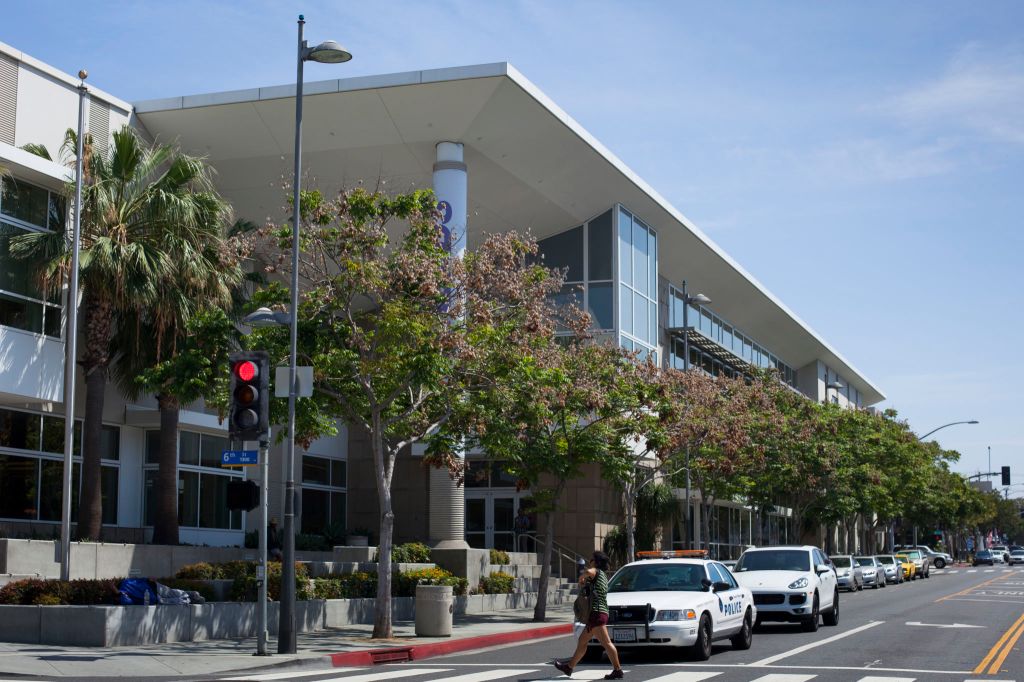
When I came out West, I started by going to the main library in Santa Monica at the corner of Santa Monica Boulevard and 6th Street:

Although it was fairly large with two stories full of books, I actually outgrew it. I found that they got rid of too many of their classical titles, replacing them with more recent … well … dreck.

I was elated with the Expo Line connecting Santa Monica to Downtown LA opened in May 2016. At once, I signed up for a senior pass which enabled me to go from the Bundy Station (about a mile south of I lived) to the 7th Street Metro Center, which was three blocks south of the Los Angeles Central Library—for a mere 50¢.

Even with the library building being closed due to the coronavirus, the LA Library has started a “Library to Go” program which enabled me to put a hold on the books I want to read. Within a few days, I get an e-mail saying they are holding them for me, and I just take the train downtown to pick them up.

Over the last week I have been busy reading these three books:

  • Kōbō Abe’s Inter Ice Age 4, a 1958 sci-fi novel about global warming
  • Ivan Klíma’s Waiting for the Darkness, Waiting for the Light, about Czechoslovakia’s rocky path from Communism to Capitalism
  • Tim Butcher’s Blood River: A Journey to Africa’s Broken Heart, about an English writer who re-traces Henry M. Stanley’s journey along the length of the Congo River in the 1870s.

Plotting a Holiday Picnic

Tongva Park Santa Monica from the Air

Now that Governor Newsom of California has come down hard on people doing any kind of celebratory activities, I am plotting a picnic for Saturday (July 4) or Sunday. At some point in the late morning, I will pick up two Chick-Fil-A chicken sandwiches with French fries, get a couple of cold beverages, and head with Martine to Tongva Park in Santa Monica, where I understand there are some benches and picnic tables. I hope to have a short picnic while we eat our lunch and enjoy the sea air (we will be across the street from the Santa Monica Pier).

If the local constabulary forbids us to use the park for fear of spreading virus to the plants, tables, and benches, we will look for another grassy place—I know several—and head to the alternates. There will just be the two of us. If anyone wants to join us, we will just have to throw rocks at them until they go away. We hardy survivors in the era of coronavirus don’t cotton to strangers.


Unexpected Angels

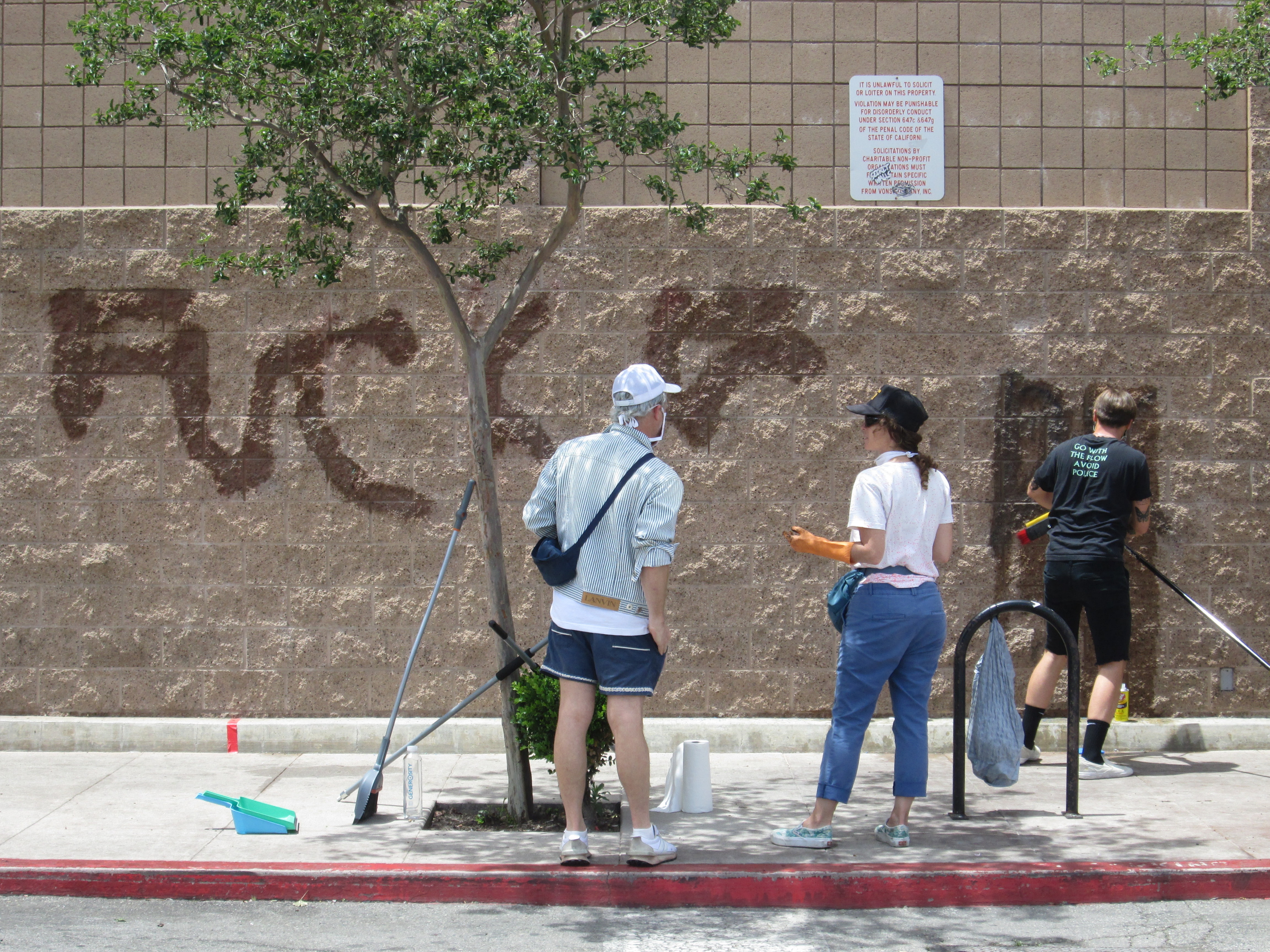
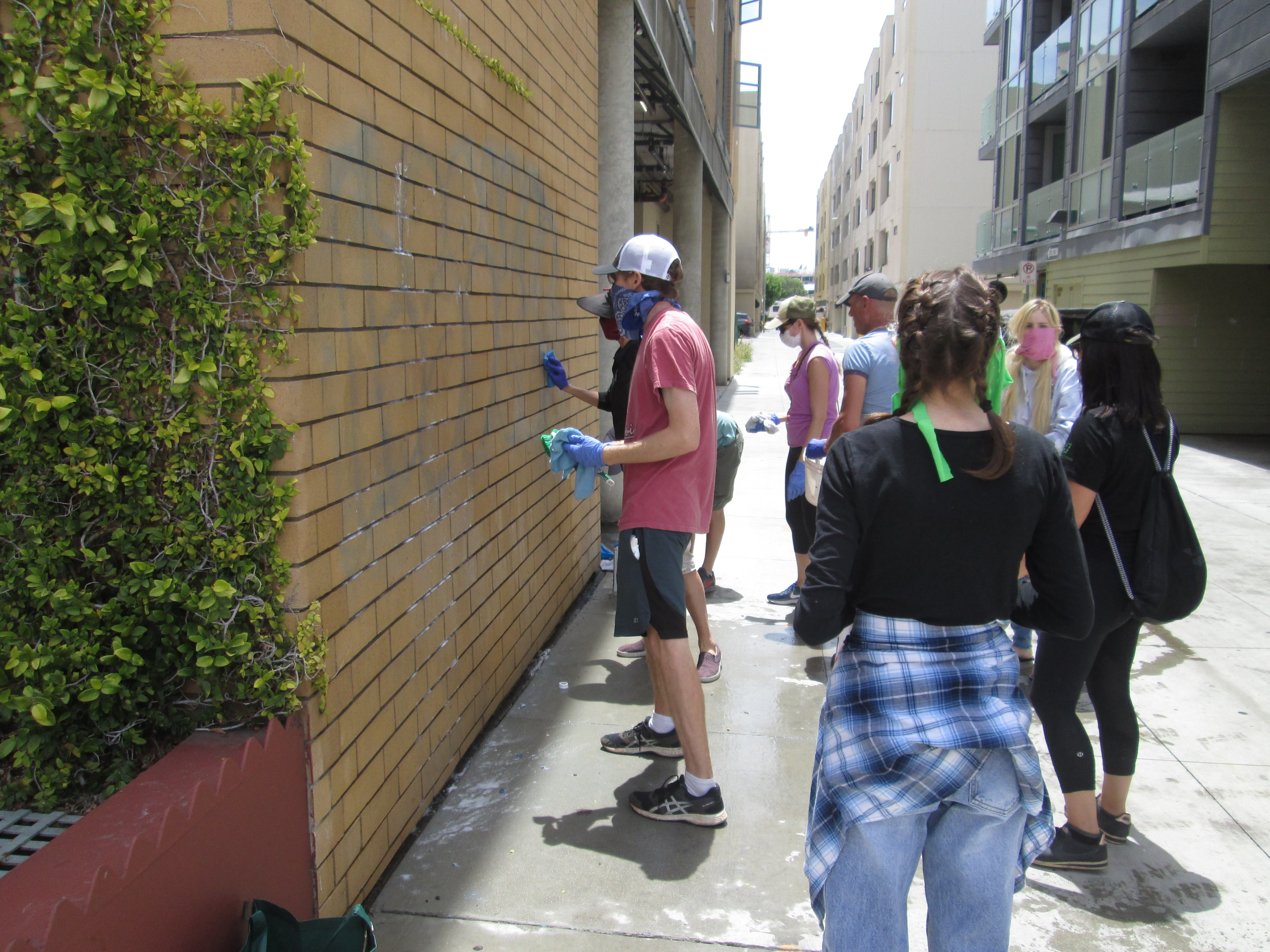
Young Volunteers Removing Graffiti

In general, I am not one to praise the younger generation—probably because they have adopted too many aspects of our culture which I find spurious, including smart phones, e-scooters, and in fact the whole gig economy.

Imagine my surprise when I found many young men and women cleaning up the mess in Santa Monica after the looters and other thugs had their way last Sunday. Okay, I guess I was a little tough on them, but after all they shouldn’t ought to have have stepped on my lawn.

More Graffiti Cleanup

I have always loved the look of Santa Monica. In 1966, when I moved into an apartment on Sunset Boulevard near Barrington Avenue, the first trip I took on my own was by bus to Santa Monica and its beach. After having been raised in grungy Cleveland with its dirty red brick, I saw Santa Monica as a pretty town at the edge of the sea. In Cleveland, we had no beach to speak of along the shores of poor, polluted Lake Erie. For many years, I lived in Santa Monica, until I was squeezed out around 1979 when Proposition 13 was adopted by the voters of California. Still, I live within two and a half miles of the ocean and I like to walk there from time to time.


The Ruins of Santa Monica

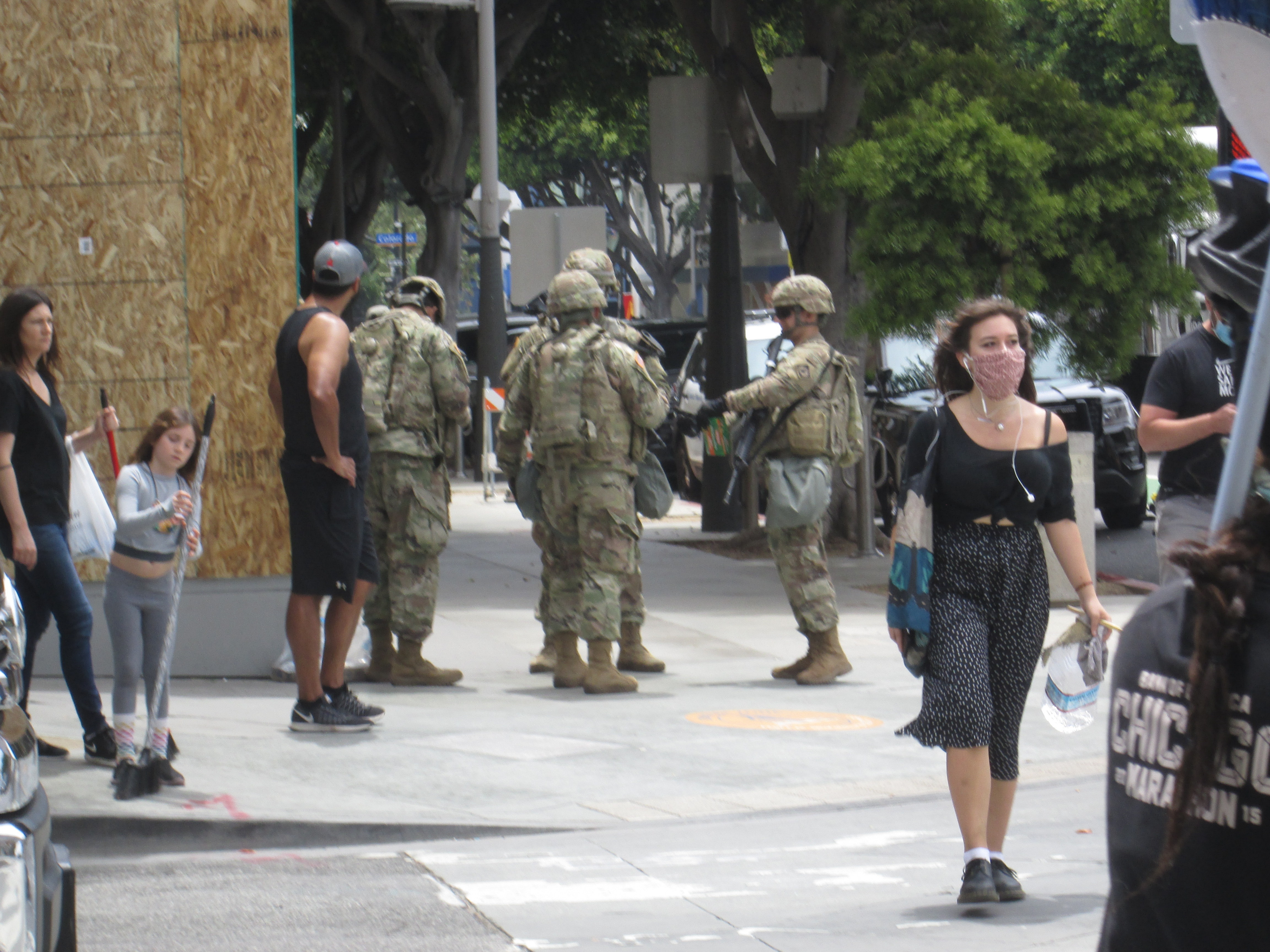
National Guard Protecting Santa Monica Place Shopping Mall

The above picture shows two aspects of yesterday’s widespread looting of Santa Monica businesses. On the one hand, the National Guard was moving into place to protect businesses; and HUMVs with guardsmen were seen in the streets. On the other, if you look to the left of the photo, you will see a mother and daughter with brooms, two of the many people I saw today helping to clean up the mess.

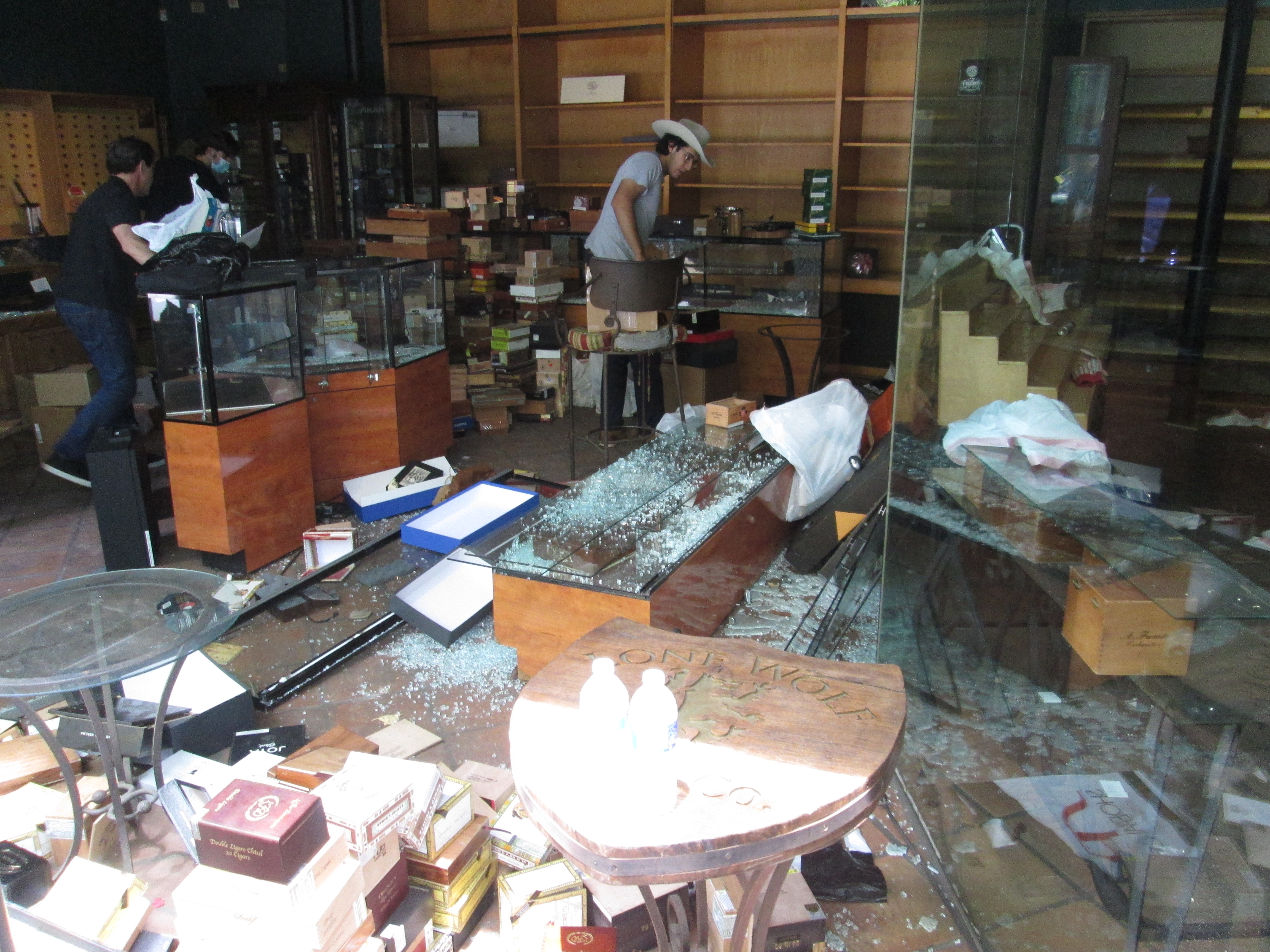
I spent an hour visiting places where Martine and I shop. The amount of damage was appalling. While the demonstrations were going on, looters moved in with hammers to break into businesses by shattering glass doors and windows. Below is a photo I took of a smoke shop on Broadway near 2nd Street that had been entered that way and ransacked. You will notice that the windows and doors had been smashed::

Cleaning Up the Damage at a Looted Tobacco and Vaping Shop

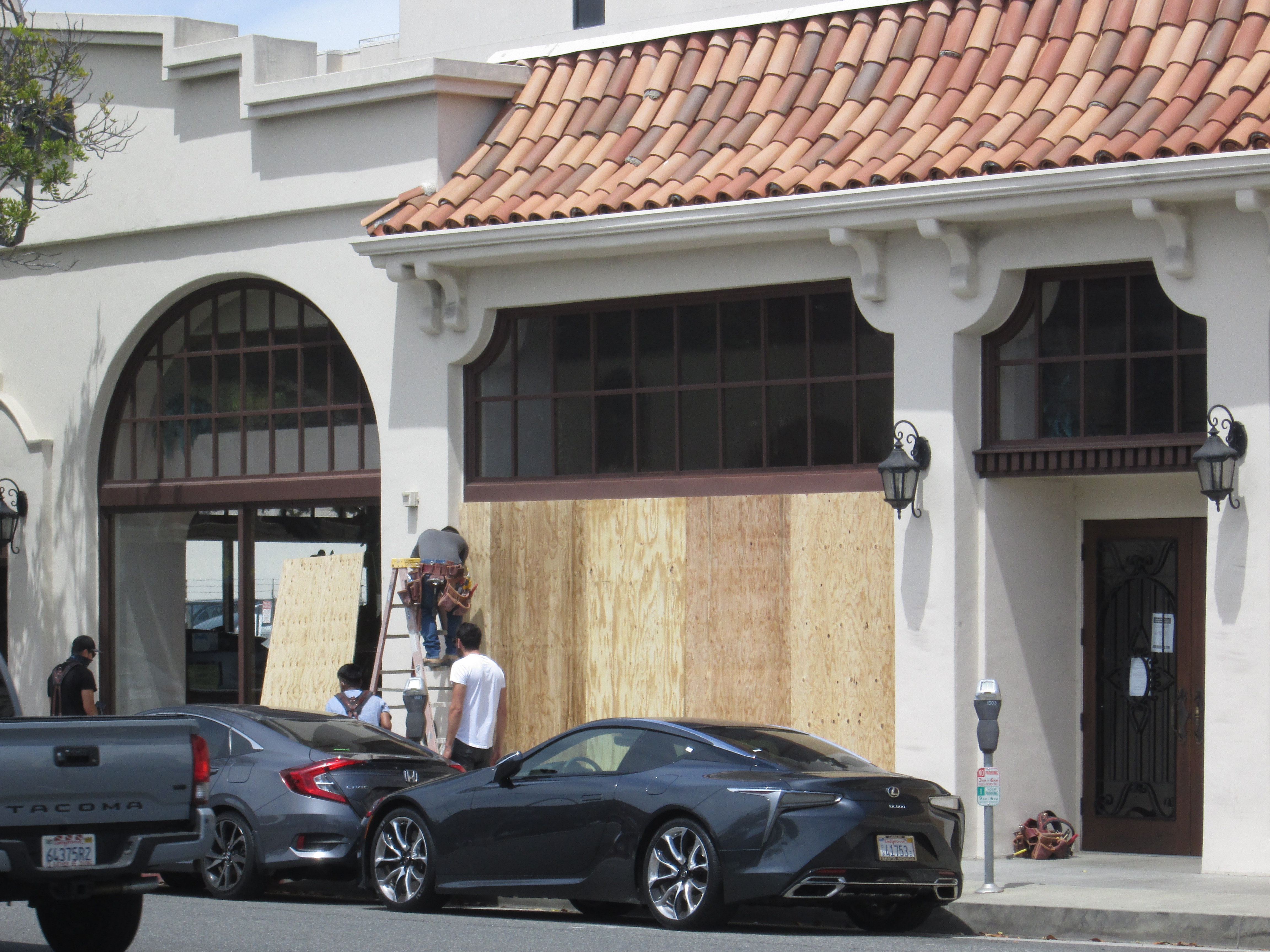
It seems that half the businesses in town were putting up plywood to protect their doors and display windows:

Putting Up Plywood to Protect Businesses

Finally, as I was searching for a bus stop where the re-routed #1 bus could pick me up, I noticed an ATM whose glass had been broken with a hammer:

Damaged ATM Window at Pacific Western Bank

I do not blame the protestors for the looting. It’s just that highly mobile thieves were using them as a screen. While most of the police were with the protestors, the looters quickly moved in, parked their cars, smashed their way into businesses, and made off with whatever merchandise they could find. Among the businesses looted were a Target three blocks away from us, the Italian deli I usually walk to, the Vons Supermarket across the street from it, several local pharmacies, a smoke shop, and a branch of Recreational Equipment Inc (REI).