Floating Weeds

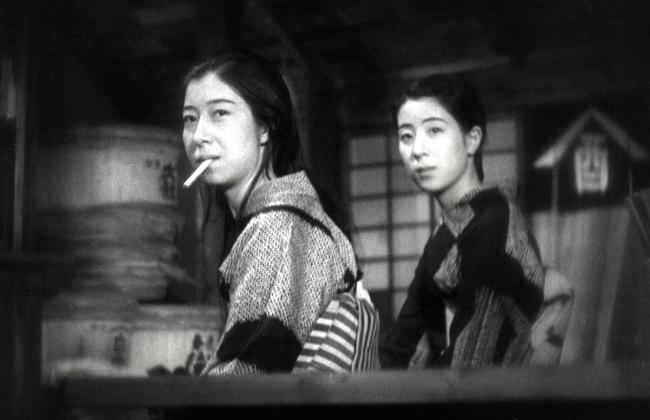
Rieko Yagumo and Yoshiko Tsubouchi in Story of Floating Weeds (1934)

Over the last two days, I have had the good fortune to see two great films by Japanese director Yasujiro Ozu, one the remake of the other. Although the technology to make sound films existed in Japan, Ozu deliberately made only silent films until 1936.

His A Story of Floating Weeds (1934) is about a traveling Kabuki player troupe that visits a small town. On a previous visit to that same town, the head of the troupe, played by Takashi Sakamoto, had an affair with a local woman who ran a small restaurant/bar and had a son by her. In the intervening years, he sent money for his education and begged the mother to say that he was the boy’s uncle instead of his “deceased” father.

Sakamoto loves spending time with his son, and that arouses the envy of Rieko Yagumo, his mistress on the road. She bribes her fellow actress Yoshiko Tsubouchi to seduce the boy, but they fall in love with each other. Furious, Sakamoto dissolves the acting troupe.

Like all of his films, A Story of Floating Weeds shows a group of people at odds with one another coming together in the end with an enhanced respect and gentleness.

It is no surprise that Ozu remade the film in 1959 as Floating Weeds. It is the same basic story, but with sound and color.
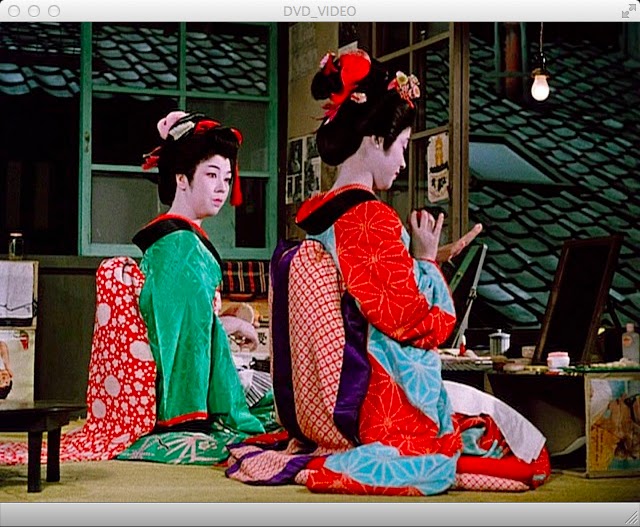
The Same Two Roles a Quarter Century Later

I actually prefer the original silent 1934 version. It was a better story and had better actors (even though the 1959 version had Machiko Kyo in the role of the mistress in the troupe). It was so good, in fact, that I plan to buy the recent Criterion release of both versions on DVD.

Yasujiro Ozu was one of the five or ten greatest film directors who ever lived. Over the years, I have seen over a dozen of his films, and there was not a clinker in the bunch. Even John Ford, Jean Renoir, and Carl Dreyer made some stinkers. But not Ozu. The world lost a magnificent artist when he died in Tokyo in 1963. I plan on discussing his film style in a later post this week.

Favorite Films: Sunrise (1927)

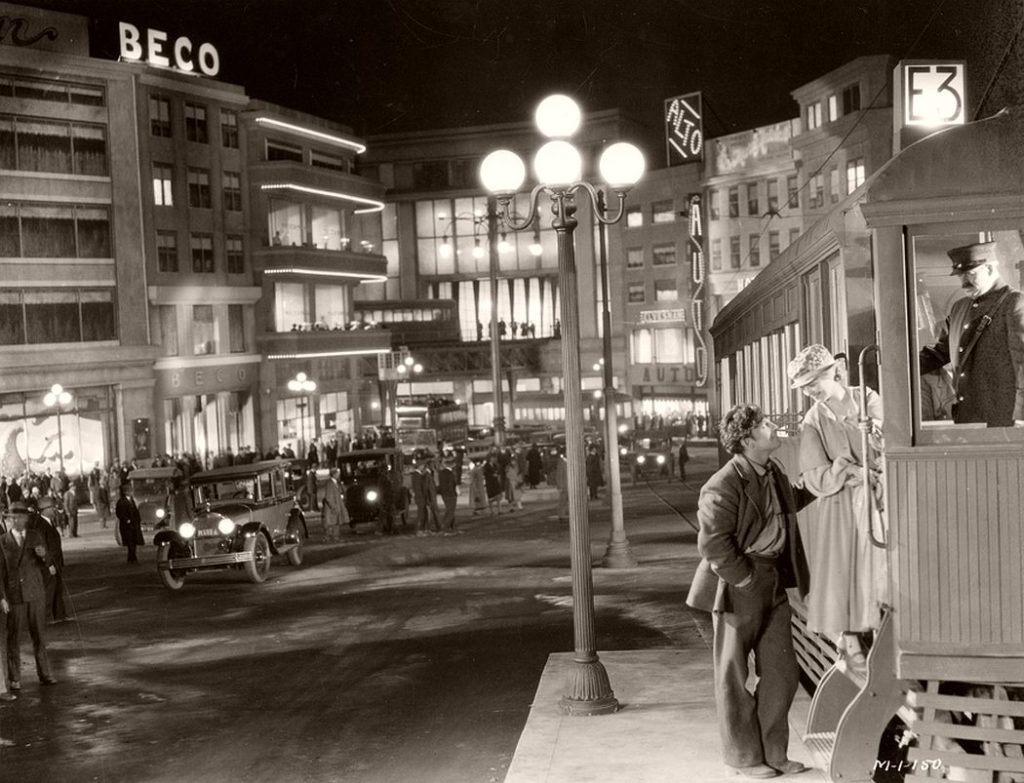
George O’Brien and Janet Gaynor in Sunrise: A Tale of Two Humans

It is difficult to think that the first time I saw F. W. Murnau’s Sunrise: A Tale of Two Humans was some half century after it was produced in 1927. And now I saw it again, almost a century after it was produced. Each time, I thought it was one of the most beautiful films ever made.

None of the characters in the film are named. Unlike most silent films, there were few titles. Murnau had the unique ability to let the visuals speak by themselves, except for a few times when it was absolutely necessary. We begin with a farmer and his wife whose relationship is falling apart because of a girl from the city who is vacationing in their community and who is targeting the farmer for what she can get out of him.

In one of their trysts, the city girl suggests that the farmer take his wife boating and drown her. She even collects bullrushes so that the farmer can save himself by floating on them after he has deliberately swamped the rowboat.

He does take his wife on a boat ride to the city. At one point, he looms over her scaring her. She knows about the relationship and is scared for her life, and for their child, who has been left at home under the care of a maid. The farmer repents of his intention and works at winning her back once they reach the city. These city scenes are by far the best in the film, as he takes her to a restaurant, a photography studio, a church wedding, a barber shop, a carnival, and a dance hall. By the end of the evening, they are obviously still in love with each other. And Murnau’s images of the city are magical.

The Farmer and His Wife in the Magical City Scenes

On the boat ride back to the farm, a storm rises; and the husband and wife are separated as the boat sinks. Has what the farmer planned to do happened by accident? You’ll just have to see the film to find out. And that would definitely be worth your while.

Greater Than Griffith?

In Hollywood, Sjöström Became Seastrom

Much has been written about D. W. Griffith as the greatest early director. True, his very early films were revolutionary; and he had a great actress in Lillian Gish. But it is difficult to like a director who made the Ku Klux Klan into heroes in Birth of a Nation (1915), and to tolerate the Victorian sentimentality of his later films. At almost the same time that Griffith was working in Hollywood, Victor Sjöström was making great films in Sweden, films like A Man There Was (1917) and The Outlaw and His Wife (1918), both of which starred the filmmaker.

When Sjöström was brought to Hollywood by Louis B. Mayer of MGM, he made several silent masterpieces in quick succession:

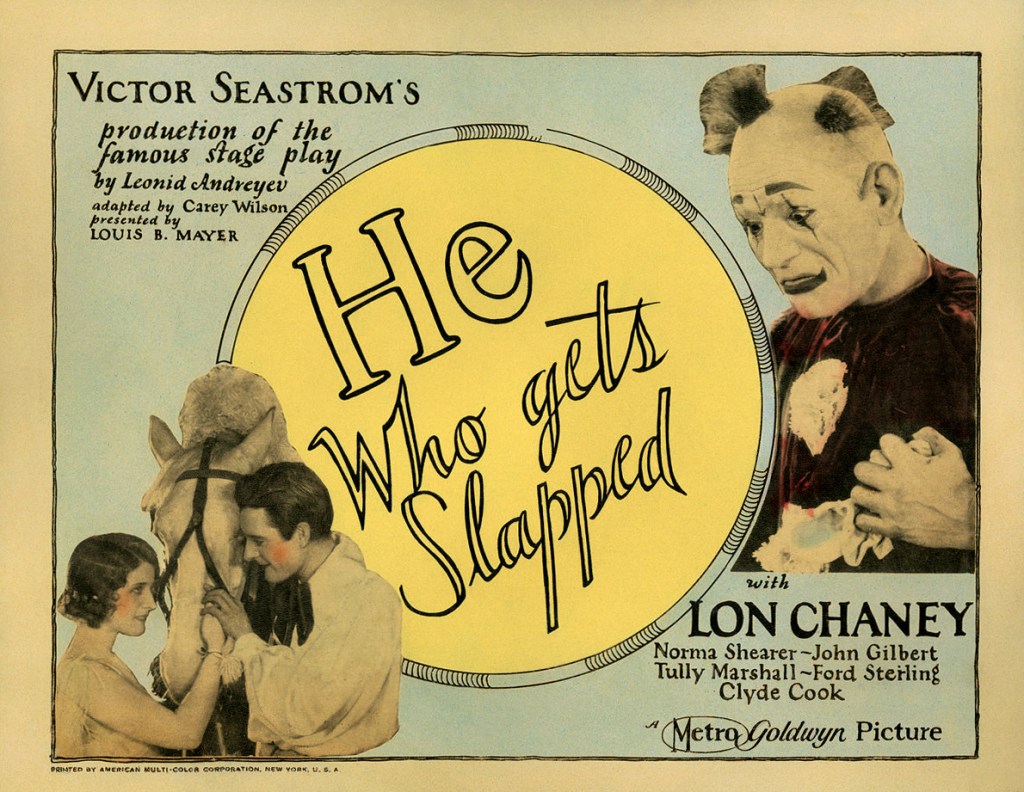
  • He Who Gets Slapped (1924) starring Lon Chaney, Norma Shearer, and John Gilbert
  • The Scarlet Letter (1926) with Lillian Gish and Lars Hanson
  • The Wind (1928) with Lillian Gish and Lars Hanson

These three pictures are—all of them—in my list of the ten all-time best silent films made anywhere. And two of them star Griffith’s favorite star, Lillian Gish, who shines more in both films than she does in any of Griffith’s productions. And without all the ludicrous sentimentality.

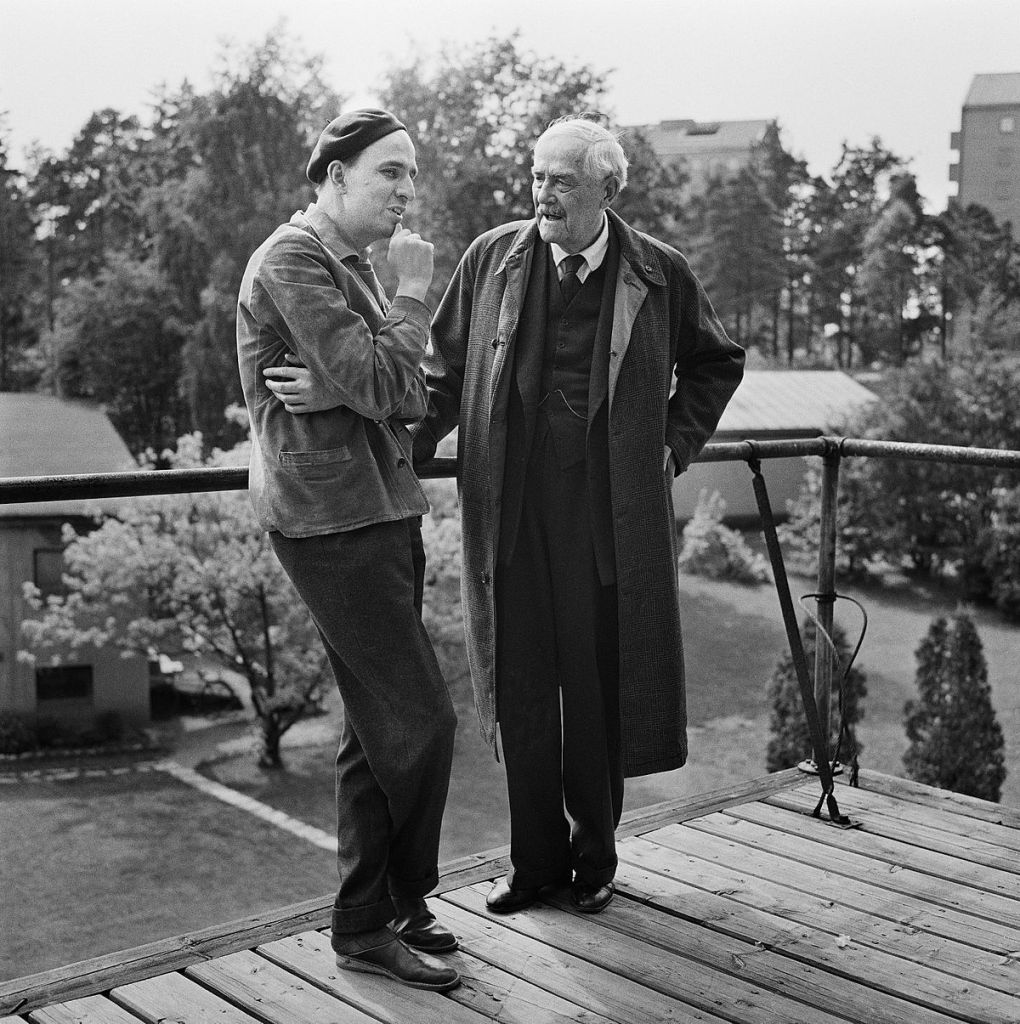
Ingmar Bergman (L) with Sjöström

Sjöström went back to Sweden in 1930, supposedly because he was unwilling to be bound by the many restrictions of early sound films. After making three more films in Europe, he returned to the theater as well as acting. He can be seen in his role of Dr. Isak Borg in Ingmar Bergman’s Wild Strawberries (1957).

If he weren’t so sentimental, I would rate Griffith higher than I currently do, but I still think Sjöström was better.

The Mad Eyes of Oliver Haddo

It’s always interesting to see a famous film director acting in a movie made by others. I am thinking of John Huston in Roman Polanski’s Chinatown (1974), Erich Von Stroheim in Jean Renoir’s Grand Illusion (1937), Victor Sjöström in Ingmar Bergman’s Wild Strawberries (1959), and Paul Wegener in Rex Ingram’s The Magician (1926).

Who’s Paul Wegener, you ask? He directed (and acted in) The Golem: How He Came Into the World (1920), which was a surprisingly good film considering its early production date.

Here’s Paul Wegener as the Golem, a monster created by a rabbi to protect the Jewish residents of Prague from oppression. He actually directed two other films about the Golem going back to 1915, but those films have been lost.

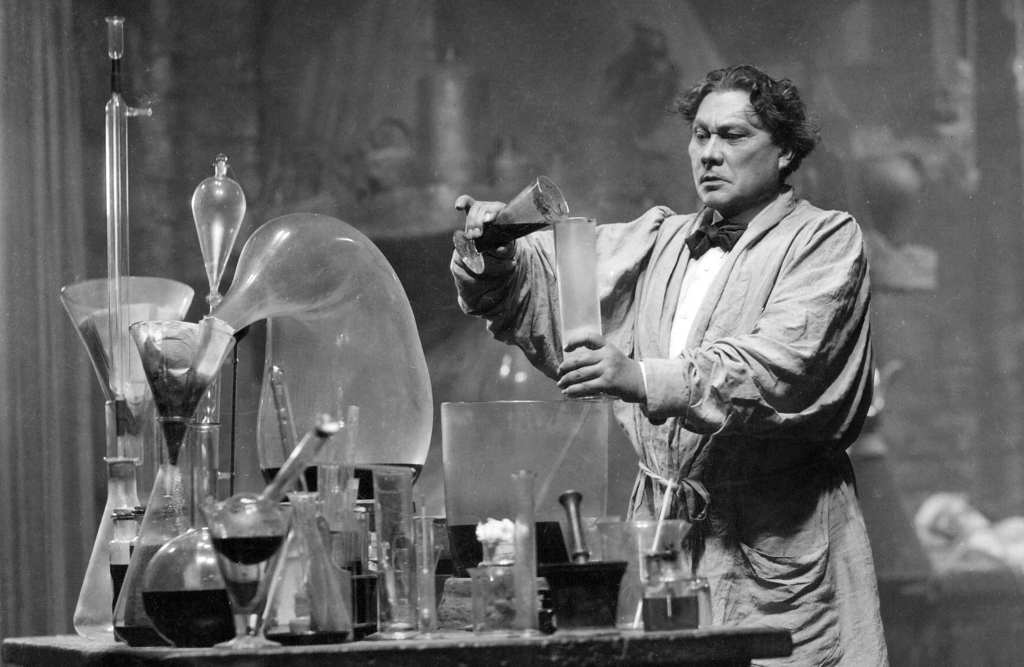
In The Magician, Wegener plays the magician Oliver Haddo, who is obsessed in hypnotizing Margaret Dauncey (played by Alice Terry, Rex Ingram’s wife) and creating life by killing her and taking the blood directly from her heart. Fortunately, her fiancé and guardian arrive at Haddo’s mad doctor’s castle and put the kibosh on him.

Rex Ingram made a number of classic silent films. The most famous is The Four Horsemen of the Apocalypse (1921), which catapulted Rudolph Valentino to stardom. After sparring with studio bosses, he repaired to Southern France with his wife Alice Terry and made a number of beautiful films such as Mare Nostrum and The Magician, both filmed in 1926.

He is not to be confused with the black actor known by the same name.

Twelve Silents

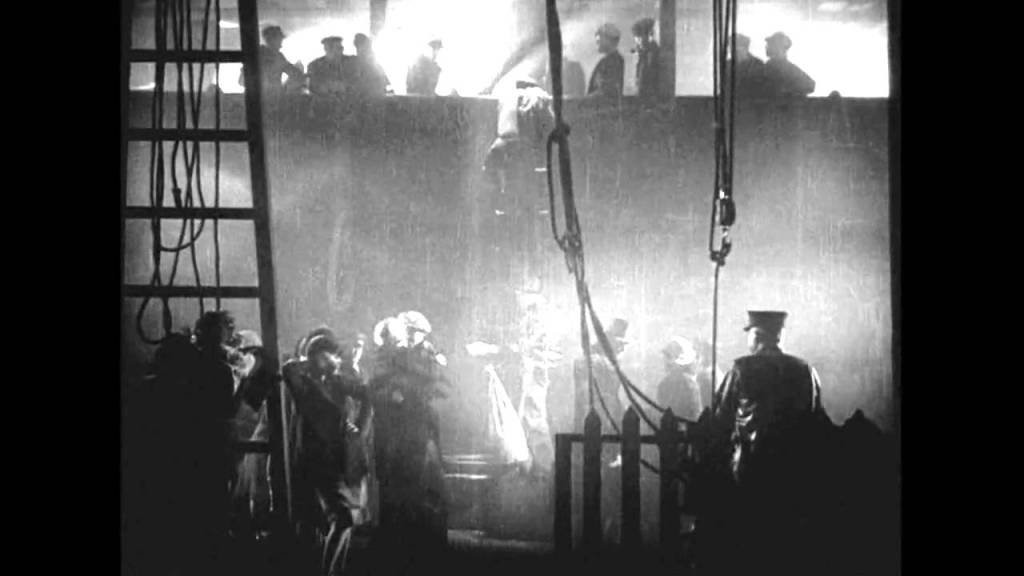
Scene from Josef Von Sternberg’s The Salvation Hunters

As promised, here are an even dozen great American silent films. Left out are the great comedians—Chaplin, Keaton, and Lloyd—mostly because people are pretty familiar with them. Below are films that are mostly dramatic, including one drama that Chaplin directed, but did not star in. The films are arranged by year of release:

  • D. W. Griffith’s Broken Blossoms (1919), probably my favorite among his films
  • Rex Ingram’s The Four Horsemen of the Apocalypse (1921), starring Rudolph Valentino
  • Maurice Tourneur’s Lorna Doone (1922), a real diamond in the rough
  • Charlie Chaplin’s A Woman of Paris (1923), his tribute to the lovely Edna Purviance
  • Victor Sjöström’s He Who Gets Slapped (1924), starring Lon Chaney Senior, based on a Leonid Andreyev play
  • Josef Von Sternberg’s The Salvation Hunters (1925), the director’s first American film
  • Ernst Lubitsch’s Lady Windermere’s Fan (1925), based on the Oscar Wilde play
  • Raoul Walsh’s What Price Glory? (1926), with profanity for proficient lip-readers
  • F. W. Murnau’s Sunrise (1927), a real masterpiece
  • Paul Leni’s The Man Who Laughs (1928), based on a Victor Hugo novel
  • Victor Sjöström’s The Wind (1928), with Lillian Gish going mad on the prairies of 19th century America
  • Erich Von Stroheim’s Queen Kelly (1928), produced by Joseph P. Kennedy and starring Gloria Swanson

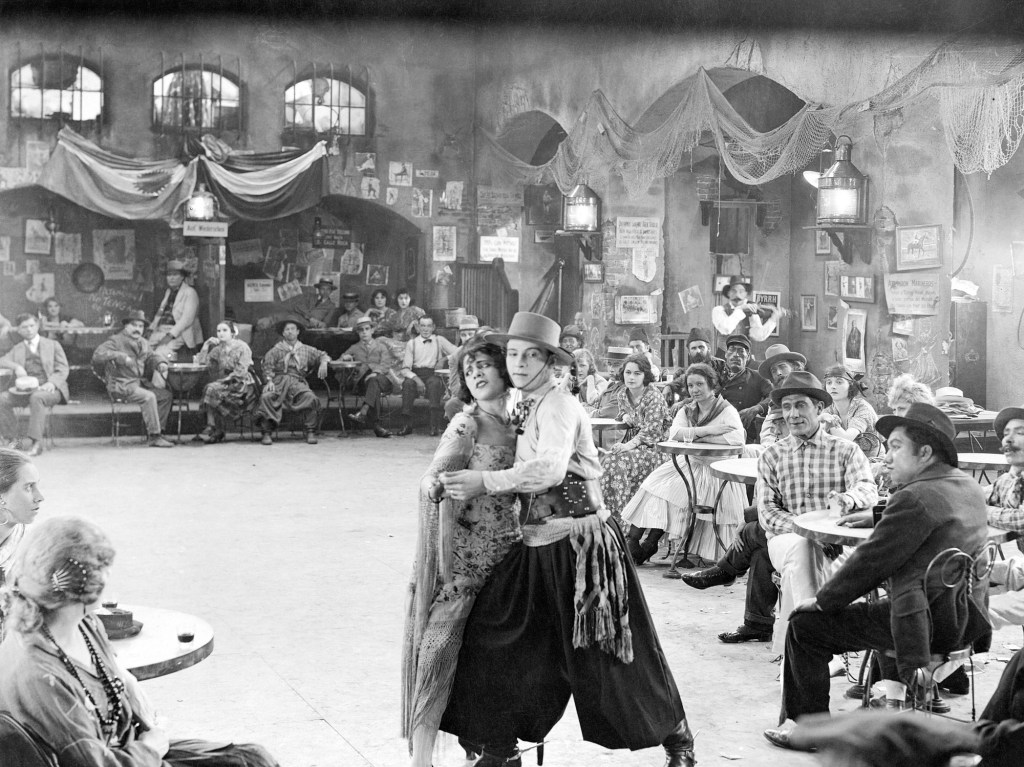
Rudolph Valentino Dancing the Tango in Four Horsemen of the Apocalypse

I think it is worth the effort to see these films if you’re interested in silent films of the period. If you’re not, they very well might make you interested.

NOTE: The 1920s were pretty racist, so I would advise you to remember that our great-grandparents did not hold the same political views that we do.

We Had Faces

Lillian Gish in Victor Sjöström’s The Wind (1928)

The title comes from a quote by Gloria Swanson in Billy Wilder’s Sunset Boulevard (1950), after viewing a silent film that starred her:

Still wonderful, isn’t it? And no dialogue. We didn’t need dialogue. We had faces. There just aren’t any faces like that anymore. Maybe one—Garbo. Oh, those idiot producers. Those imbeciles. Haven’t they got any eyes? Have they forgotten what a star looks like? I’ll show them! I’ll be up there again, so help me!

Over the last four days, I have been watching a whole slew of silent films, including both shorts and features, aired by Cinecon from their website at Cinecon.Org.

Originally, I didn’t much care for silent films. They didn’t look sharp on the screen; they were too sentimental; they were too slow; and there were all kinds of problems with the nitrate stock on which they were printed. But I changed my mind, owing primarily to two reasons. First was my friendship with the late John Dorr, who convinced me to give them a second chance. Second was a phenomenal book that came out while I was at UCLA Graduate School, Kevin Brownlow’s The Parades Gone By.

Also, I had the opportunity to see many silent films that were simply phenomenal, and not just fractured flickers. One of them, I just saw a couple of hours ago from Cinecon’s website, Penrod and Sam (1923), directed by William Beaudine for First National Pictures (which morphed into Warner Brothers). It was a gorgeous print, filmed by a director whom I regarded as a nonentity, with no recognizable stars, but so funny withal that my guffaws disturbed Martine, who was napping in the bedroom.

Poster Announcing a Screening of Penrod and Sam

I cannot help but think this film was a major influence on the Our Gang Comedies of the 1930s, which were a major influence on my youth.

Looking back, I think my original feelings about silent films had mostly to do with the hundred or so years that separated me from them. The 1910s and 1920s were a far different time. The population of the country was overwhelmingly white and Protestant. It was, for all intents and purposes, a different America. Now, it no longer bothers me so much viewing these films of a bygone era, one with which I was not altogether in sympathy.

Within a few days, I intend to present a list of the greatest silent films made in the United States, and perhaps follow it up with a similar European list.

Silents, Golden and Not So Golden

Nancy Nash and Earle Foxe in John Ford’s Upstream (1927)

Silent movies are not for everyone. Because of the times in which most of them were produced, the results can be off-putting because of hokiness or a tendency toward melodrama. This week at Cinecon, I have seen silents that were great, some that were merely interesting, and some that were just plain bad.

The best of the lot was John Ford’s backstage drama, Upstream (1927), a film which was thought to have been lost. In 2009, however, a print was discovered by the New Zealand Film Archive. Although many scenes were spoiled by rotting of the nitrate stock, enough came through to make this one of Ford’s best silents, better even than the more famous The Iron Horse (1924).

The story was about a down at heels Shakespearean actor named Eric Brasingham (Foxe), who is courting Gertie Ryan (Nash), the partner of vaudeville knife-thrower Juan Rodriguez (Grant Withers). He gets his chance for the big time because a London theater is willing to take a chance on him because the Brasinghams are a famous acting family (even though Eric himself is a nonentity). His fellow denizens in a theatrical New York boardinghouse give him a big send-off, but he leaves Gertie in the lurch.

In London, he manages to succeed. He becomes conceited and supercilious, and omits writing to Gertie. She, tired of waiting, marries the knife-thrower. Then, suddenly, Brasingham descends on the boardinghouse as a publicity stunt and finds his reception is not what he had hoped.

Director John Ford does here what he specialized in: Characters who are well developed and interesting. Even the vaudevillian song-and-dance Callahan Brothers are unforgettable, as is the  “star boarder,” played by actual Broadway star Raymond Hitchcock. Even though the theatrical subject matter is not typical Ford—better known for his Westerns and Irish films—the director is at home regardless what he does. And certain stylistic touches link it with films as different as the Hamlet scene in My Darling Clementine (1946), in which Grant Withers is one of the Clanton boys.

More typical of the silents I saw was the excellent The Goose Woman (1925), directed by Clarence Brown and starring Louise Dresser. Graphically, it was a gorgeous film, but the melodramatic plot comes across as risible today: A famed Italian opera star has to make a choice between having a child and continuing to sing at La Scala. She has a child, and her voice goes kaput. What kind of illness is this? Was the baby delivered via the vocal chords? In any case, the singer becomes a goose woman on a farm and a full time lush, until she must make a Sophie’s Choice type of decision regarding her son, who is accused of murder.