My Own Nationality

A Different Kind of Hungarian

As I get older, I am increasingly unwilling to interact with strangers. Chatting with people I do not know is just something I would rather not do any more. I don’t even like sharing an elevator. The absolute worst is having to interact with American tourists when I am traveling abroad.

And yet I remember helping a group of French tourists in Iceland get guesthouse accommodation in Höfn, Iceland, when they couldn’t find any locals who understood them.

The difference was they didn’t have any expectations of help, whereas many or most American travelers, on the contrary, would. It is at that point that I reply to their question(s) very politely in my off rural Hungarian dialect from the 1930s. I could be telling them in Hungarian to get stuffed, but I actually try to answer them politely in my native language.

There is always the danger that the person accosting me knows the Magyar language. That actually happened to me once in Vancouver’s Chinatown, when the beggar asking for spare change recognized what I was saying and answered me back in Hungarian. I immediately melted and gave him a five dollar bill. He actually invited me for coffee, but I was on my way to a movie screening and didn’t want to be late. Else I would have obliged him.

I am not that way, of course, with my friends and acquaintances. Or even with waiters or cashiers. It’s just that I have a phobia of dealing with demands placed on me by strangers. That even includes the unsmiling visage that I characteristically assume—all to avoid having to deal with the public at large.

Comprachicos

Conrad Veidt in Paul Leni’s Film The Man Who Laughs (1928)

It all started in the elevator to the Trader Joe parking lot. Two odd women first commented that I looked like the actor Wilford Brimley, and then asked me why I didn’t smile. That set me off: I don’t particularly like to go around with a smile on my face, and I don’t think much of people who do. Were these frustrated dental assistants to go around accosting strangers for not airing their teeth?

Then I thought of one reason I didn’t like being all smiley. I remembered Victor Hugo’s novel The Man Who Laughs (1869), which was turned into a 1928 silent film by Paul Leni starring Conrad Veidt, better known as Major Strasser “of the Third Reich” in the film Casablanca (1942).

Well, anyway, the novel and film were about people called comprachicos who, as children, were mutilated to look pathetic so that their handlers can could use them for begging:

The Comprachicos, or Comprapequefios, were a hideous and nondescript association of wanderers, famous in the 17th century, forgotten in the 18th, unheard of in the 19th. They traded in children, buying and selling them, but not stealing them. They made of these children monsters. The populace must needs laugh, and kings too. The montebank is wanted in the street, the jester at the Louvre; the one is called a clown, the other a fool. By the artificial production of teratological cases the Comprachicos developed a science and practiced an art. They kneaded the features, stunted growth, and fashioned hunchbacks and dwarfs; the court fool was their specialty.

The Conrad Veidt character in the film was a child who was kidnapped and had a permanent smile carved on his face, which made him look pathetic. And that’s what comes to mind when people tell me to smile. I just don’t care to oblige them.

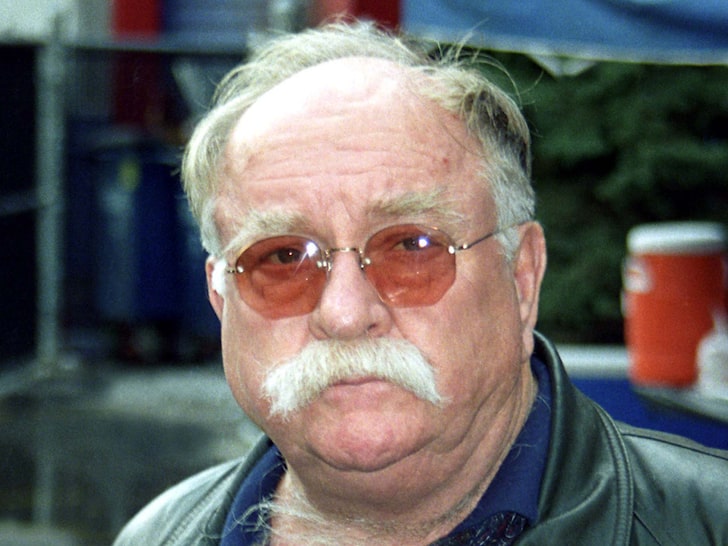
Wilford Brimley (1934-2020)

By the way, I look almost exactly like Wilford Brimley, except that his mustache was a little bigger than mine. Of course, I would prefer that strangers think I am a dead ringer for Brad Pitt, Robert Redford, Warren Beatty, or some other dolicocephalic heartthrob. But then, so it goes.

At the Fish Market

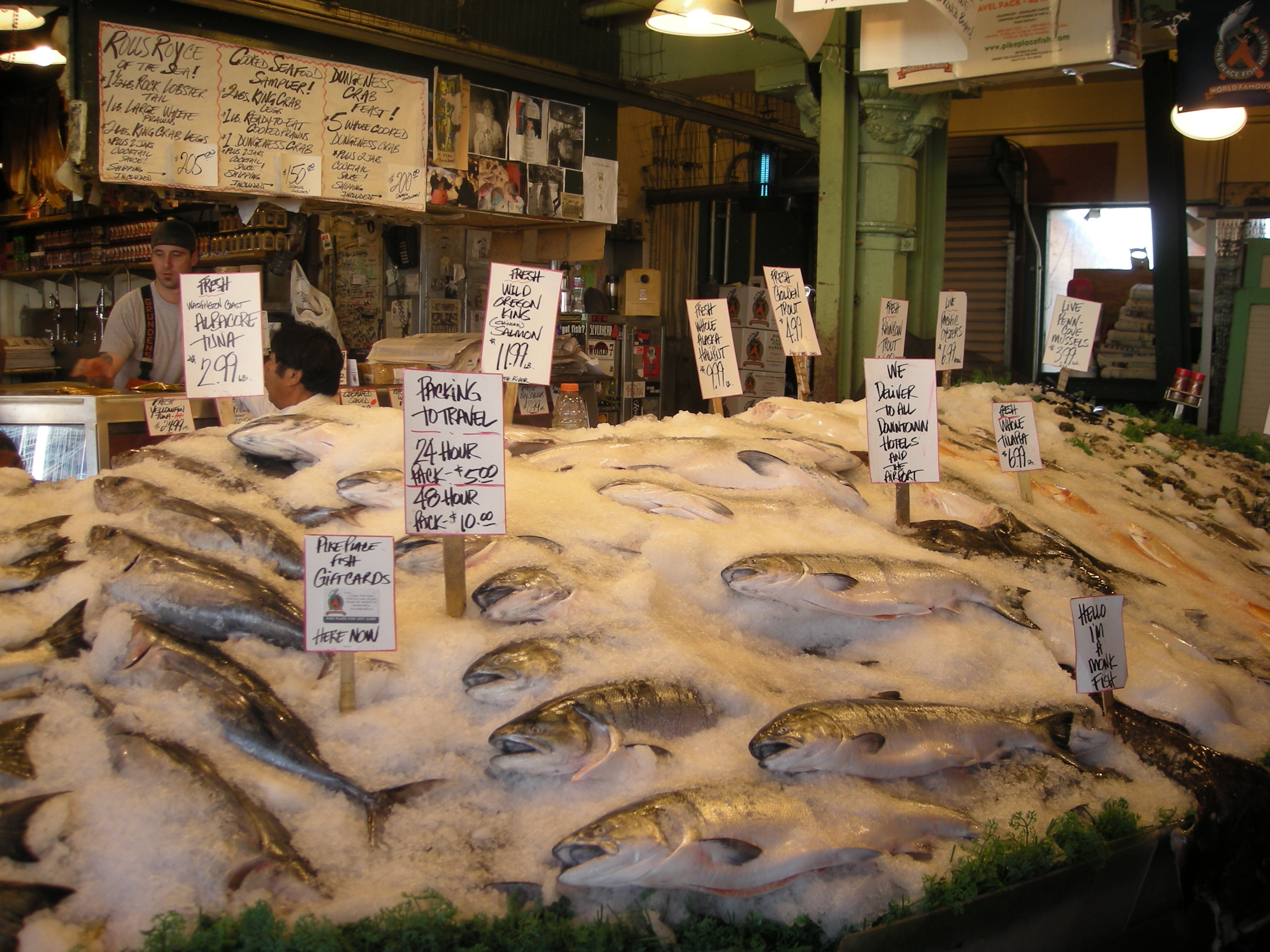
The Fish Market at Pike Place in Seattle (2009)

Sometimes I think a new anti-social Me is coming into existence. Not really so much anti-social as unfriendly to strangers. Martine and I had visited a historical site in Long Beach called the Rancho Los Cerritos National Historical Site. On the return trip to West L.A., we stopped at Captain Kidd’s Fish Market and Restaurant in Redondo Beach where we indulged our love of fresh seafood.

As we checked out the raw fish on ice, a stranger wearing khaki shorts, a T-shirt, sneakers, and those unambitious socks that never quite make it up to one’s ankles, started talking to me about the salmon in the case.

I looked at him. “Are you talking to me?” I asked.

“Yes,” he answered.

With what must have been a puzzled look on my face, I asked, “What on earth for?”

And that shut him up.

This is the type of situation when I normally switch to Hungarian. I couldn’t well do that here because I had to order two fish dinners in English within the next couple of minutes.

What a snarky character I am turning out to be!