Summer Vacation

The following paragraphs come from the beginning of Chapter Eight in John D. MacDonald’s The Crossroads. In it, he satirizes the typical 1950s summer family vacation.

During the first twenty-two days of July the Crossroads Corporation experienced the normal seasonal change in the character of the business. Summer vacationers clogged the roads. The young families stopped at the restaurants and gas stations and motels. The young husbands, with fourteen days, or twenty-one days of freedom, spent it abrading their souls against the shimmer and stink of fast traffic, counting every night the thinning stack of traveler’s checks. The young wives put on pretty summer skirts and blouses in the morning, and by ten o’clock were stained, wilted, wrinkled and rump-sprung, the victims of the attrition of summer heat, sticky hands and road fumes. They called their husbands darling with iron emphasis. Small, weary, wind-burned children whined and threw up. The young families visited dear friends they had not seen in three years, and found nothing to say to them. They visited the showplaces of the nation, made the proper dutiful sounds of appreciation and found them a litter of gum wrappers, bored guides, and ill-mannered children of the other young families. They careened down the endless stone rivers between the bright thickets of billboards. Virginia Beach was where Junie thumped Russell on the head with a rock. Three stitches. The Suwanee River was where the trunk compartment lock jammed. The Grand Canyon was where Baby broke Mummie’s glasses. Franconia Notch was where Tiffin got into the poison ivy.

Tires burst. Speedometer cables squeaked and died. Pebbles chipped windshields. Pets escaped. (You were the one hadda bring that goddam dog in the first place.) Fan belts snapped. Ten billion pieces of Kleenex tumbled along the dusty shoulders.

Summer Is Icumen In

The Malibu Pier at Sunset

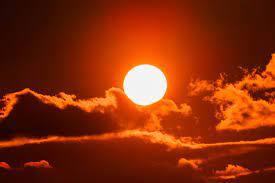
It’s not quite here yet, but it’s coming. Lhude sing cuccu … or whatever. Summer has its moments in Southern California. Mostly, it’s just hot.

This time of year, I like to read works by William Faulkner (this summer, I’ll tackle his Collected Short Stories) and travel books about Arabia and India (I’ve already begun Charles M. Daughty’s Travels in Arabia Deserta, Volume I). Then, too, I will read the Travis McGee novels of John D. MacDonald and some Icelandic detective stories.

I will drink ungodly amounts of iced tea. I know it’s a powerful diuretic, but it does moisten the palate. This summer, it will mostly be the Ceylon loose tea from Ahmad of London. After the autumn equinox, I’ll switch to Darjeeling (when I need a lift) or Baruti or Ghalami Assam.

When it gets too hot, we’ll have a picnic lunch at Chace Park in the Marina and revel in the cool sea breezes, which typically die within a few hundred feet of the shore.

I will sleep without covers at night, usually with the window open. I will have to listen to all the dysfunctional car alarms, the patron’s of the bar across the street, and the cursing and moaning of all the street people.

In the end, it’s doable. One thing I will not do is travel—unless I could afford a flight to Alaska or Patagonia. The desert will be blisteringly hot, and we are surrounded by hundreds of miles of desert.

Summer Is Icumen In

It was bound to happen eventually. We had an unusually cold winter, but now the pendulum has swung to the other extreme. It wasn’t so bad near the ocean, where we live; but Martine spent most of the day downtown, where the temperature was several degrees of Fahrenheit warmer. It was no surprise to me that she took the earlier bus back.

The title of this post is the diametric opposite of the first line of an Ezra Pound satirical poem on the subject of winter, written, of course, in Middle English:

Winter is icumen in,
Lhude sing Goddamm,
Raineth drop and staineth slop,
And how the wind doth ramm!
Sing: Goddamm.
Skiddeth bus and sloppeth us,
An ague hath my ham.
Freezeth river, turneth liver,
Damm you; Sing: Goddamm. 

Goddamm, Goddamm, ’tis why I am, Goddamm,
So ’gainst the winter’s balm.
Sing goddamm, damm, sing goddamm,
Sing goddamm, sing goddamm, DAMM.

Typically during this time of year, I turn into a lizard-like reader of books set in warm climates, like India, South and Central America, or the Deep South. I started by re-reading William Faulkner’s Sanctuary (1932) and have started in on Edouard Glissant’s Faulkner, Mississippi (1999).

I will probably try to get up earlier so I can take my walks in the cooler mornings. Once noon has passed, it is no fun to exercise.

The End of Summer

White Peaches

White Peaches

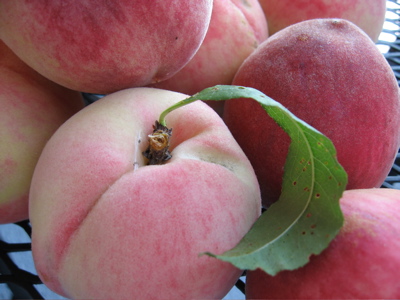
I do not regard Labor Day as the end of summer. Instead, I track the fruits that are in season. My favorites—cherries and apricots—have a short season lasting scarcely more than a month or so. Lasting about two or three months are when white peaches are in season. (I prefer them to yellow peaches, which I find to be too sweet.) When white peaches become pulpy, as I have observed at several places this week, summer is over.

Coming up is the season of Fuyu persimmons and pomegranates, which will last until some time in December. Then, or even before, I will have to switch to apples—preferably Honeycrisps. The worst time of the year for fruits is January and February, until the new season strawberries are ready for harvest.

As a diabetic, I am dependent on fruits for natural sweetness that does not tear down my health. And that’s why I am so fastened on fruit. I love going to places like Oak Glen in San Bernardino County, past Yucaipa, for fresh apples. There is a fruit stand called Cornejo’s near Fillmore where I can find wonderful fresh-picked fruit (though right now they are into Valencia oranges). The best fruits I have ever eaten were purchased from orchards in Tulare County on the road to Sequoia National Park.

So it goes, the year in fruit.


Sumardagarinn Fyrsti

In Iceland, This Is the First Day of Summer

In Iceland, This Is the First Day of Summer

If you can find a place in Iceland that looks like this, let me tell you, my friend, you are not in Iceland. In today’s Iceland Review, there was a brief article about today’s being the first day of summer, or, in Icelandic, Sumardagarinn fyrsti. This holiday falls annually on the first Thursday following April 18 and is a bank holiday throughout the island. The article continues:

According to the science website of the University of Iceland, the first day of summer was also considered the first day of the year, which is why people used to count their ages, and their animals’ ages, in winters rather than years.

It was common to distribute summer gifts on Sumardagurinn fyrsti, four centuries before Christmas presents became a tradition, and the summer gift tradition is still practiced in some households. People celebrated with a feast, often finer than on Christmas Eve.

Farmers took a break from their hard work and children were allowed to play with their friends from the neighboring farms. The day was dedicated to young women and to children (it’s also known as Children’s Day). On this day young men would often reveal whom they fancied.

Another tradition on the First Day of Summer, called húslestur, involved people getting together and listening to readings from the Icelandic sagas, poems or other literature.

If the weather was summery, farmers would let their cattle and rams out, to allow the animals to greet summer, and to also entertain themselves by watching the animals play.

People used to go to mass on Sumardagurinn fyrsti until the mid-18th century when the inspectors of the Danish church authority discovered that mass was being held on this heathen day and banned the practice.

According to legend, people considered it a good sign if summer and winter ‘froze together’ (if there was frost on the last night before summer).

People would put a bowl filled with water outside to check whether it had frozen in the early hours of the next morning, before the morning sun could melt it. If the water had frozen, the summer would be a good one.

As I prepare for my vacation in Iceland, little stories like this help motivate me to learn even more about where I’m going. The idea of spending New Years Day reading sagas, poetry, and other great literature out loud is a welcome change from watching bowl games and merging with one’s inner couch.