The following poem by Victor Hugo is relevant to today’s political situation with President Trump attempting to test:
The Patience of the People
How often have the people said: “What’s power?” Who reigns soon is dethroned? each fleeting hour Has onward borne, as in a fevered dream, Such quick reverses, like a judge supreme— Austere but just, they contemplate the end To which the current of events must tend. Self-confidence has taught them to forbear, And in the vastness of their strength, they spare. Armed with impunity, for one in vain Resists a nation, they let others reign.
It seems that all the wars that involved the United States after 1945 have gone through three phases:
“Shock and Awe” and Waving the Flag and Glorifying the Power of Our Armaments.
Disenchantment sets in as the carnage continues apace and our boys start coming home in body bags. This is the longest stage of the military engagement.
The end where we just walk away call call the mess we have created a Glorious Victory. Followed by recriminations that last as long as the war.
Here is a poem from Lord Dunsany of Ireland, who fought on the British side in the Boer War and the First World War. He is better known as the author of such great fantasy novels as The King of Elfland’s Daughter and The Curse of the Wise Woman—not to mention scores of great short stories.
A Dirge of Victory (Sonnet)
Lift not thy trumpet, Victory, to the sky, Nor through battalions nor by batteries blow, But over hollows full of old wire go, Where among dregs of war the long-dead lie With wasted iron that the guns passed by. When they went eastwards like a tide at flow; There blow thy trumpet that the dead may know, Who waited for thy coming, Victory.
It is not we that have deserved thy wreath, They waited there among the towering weeds. The deep mud burned under the thermite’s breath, And winter cracked the bones that no man heeds: Hundreds of nights flamed by: the seasons passed. And thou last come to them at last, at last!
Oh oh, there I go again! I said I wouldn’t write about politics, and a few hundred bombs and a thousand casualties later later I got so upset that I couldn’t help myself.
I have just finished reading a book about the Second Punic War, in which a Carthaginian force under the generalship of the brilliant Hannibal Barca, invaded Italy and for seventeen years fought the Roman Republic. In his book Hannibal’s War, British Military Historian John Peddie writes:
Wars, historically, wear many different complexions: they may be ideological or defensive, punitive or vengeful. They may be fought for economic or social causes or for reasons of aggrandisement. But however they may rise, of one thing we may be certain: they cannot be successfully fought without a clear-cut, grand objective [italics mine], within which will lie other, minor, objectives, each one a stepping stone, culminating, hopefully, in victory.
Since the end of the Second World War, the United States seems to have lost sight of this simple fact. What was our objective in Korea? Vietnam? Nicaragua? Iraq? Afghanistan? In every case, we just decided it was just eating up too much in time and resources and just declared a victory. But in every case, was it a victory?
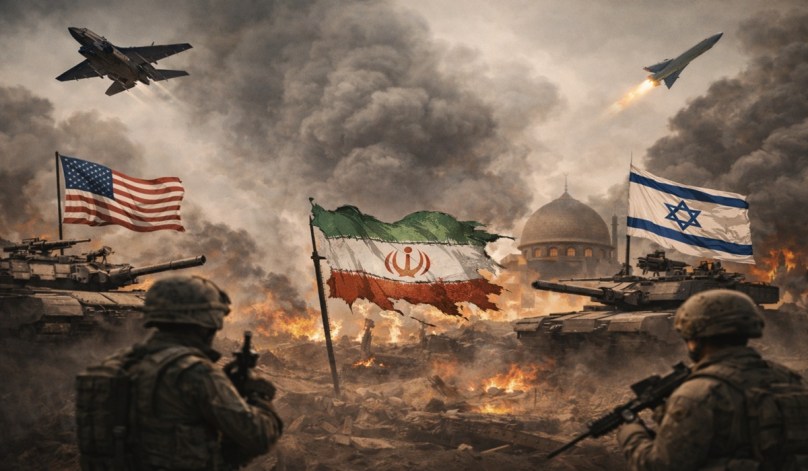
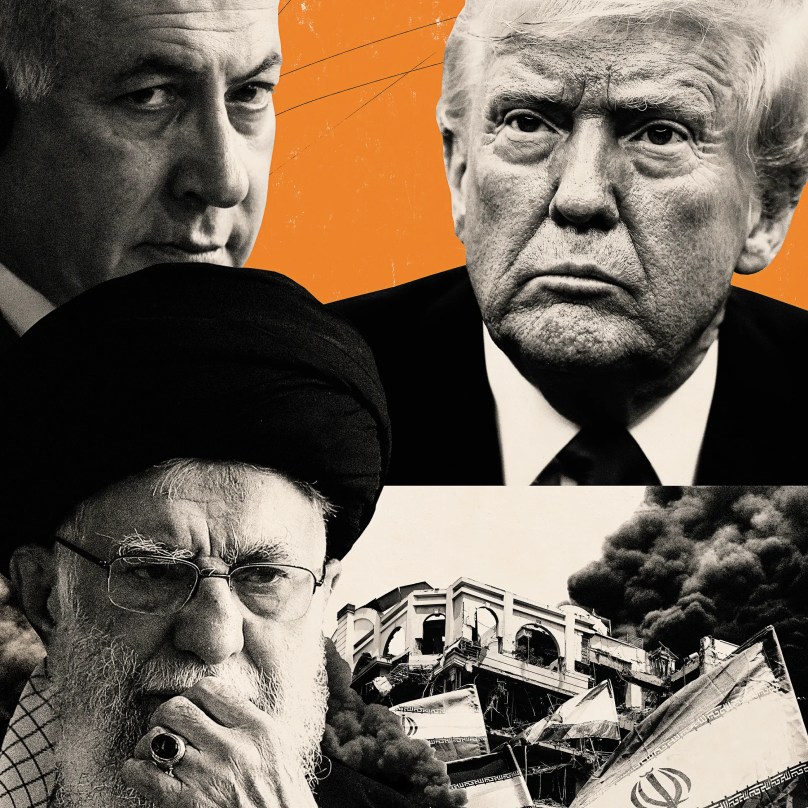
The same is the case with Benjamin Netanyahu’s block by block destruction of Gaza. What has he accomplished to date? Oh, and yes, he is with Trump in invading Iran. And how will that end?
I can just see gas prices rising so quickly that Trump will have to declare a victory prematurely. Wars used to be pretty popular, until we started losing all of them.
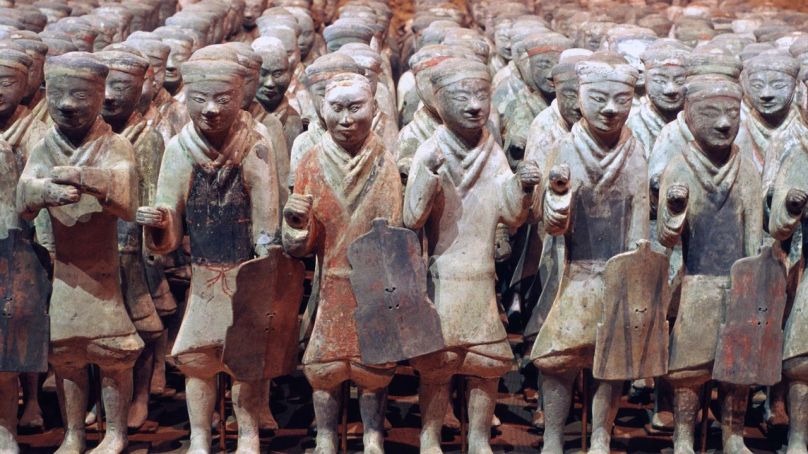
Chinese Soldiers Around Time of Tu Fu (8th Century)
Two of the greatest poets who have ever lived are Li Po and Tu Fu (a.k.a. Du Fu), who not only lived around the same time in China but who knew each other. Here is a heartbreaking poem by Tu Fu about coming back home after the wars to find his home has changed irrevocably.
A Homeless Man’s Departure
After the Rebellion of 755, all was silent wasteland, gardens and cottages turned to grass and thorns. My village had over a hundred households, but the chaotic world scattered them east and west. No information about the survivors; the dead are dust and mud. I, a humble soldier, was defeated in battle. I ran back home to look for old roads and walked a long time through the empty lanes. The sun was thin, the air tragic and dismal. I met only foxes and raccoons, their hair on end as they snarled in rage. Who remains in my neighborhood? One or two old widows. A returning bird loves its old branches, how could I give up this poor nest? In spring I carry my hoe all alone, yet still water the land at sunset. The county governor’s clerk heard I’d returned and summoned me to practice the war-drum. This military service won’t take me from my state. I look around and have no one to worry about. It’s just me alone and the journey is short, but I will end up lost if I travel too far. Since my village has been washed away, near or far makes no difference. I will forever feel pain for my long-sick mother. I abandoned her in this valley five years ago. She gave birth to me, yet I could not help her. We cry sour sobs till our lives end. In my life I have no family to say farewell to, so how can I be called a human being?
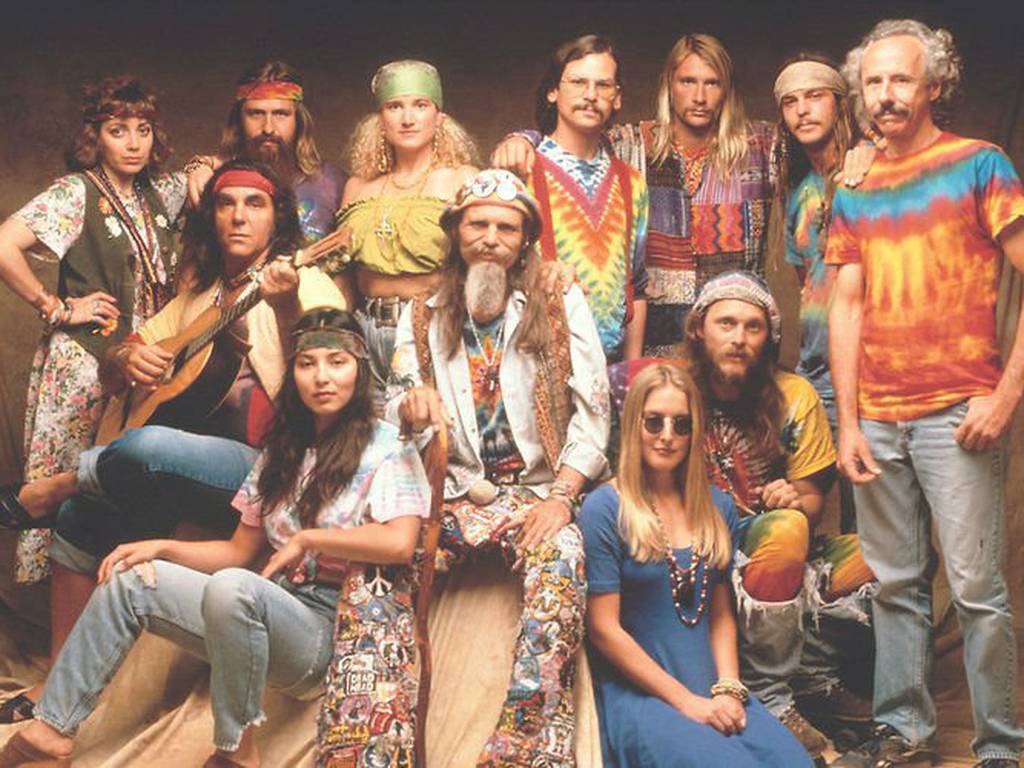
I arrived in Los Angeles at exactly the point when the Hippie movement was reaching its height. Many of my acquaintances looked much like the poseurs in the above photo. Oh, I had long hair all right, but nothing that was radical for the period. I went around dressed in chinos and a Jeans jacket, usually with a black cowboy hat which I bought at Disneyland.
In fact, I never really got close to any Hippies: I regarded them as not quite real, more like play actors.
There was another even more compelling reason I never became a Hippie: I had just undergone brain surgery for the removal of a pituitary tumor and had no desire to experiment with recreational drugs. In the late 1960s, I did not think I was long for this world. I had no desire to rush my exit from this life.
Though not drawn to the Hippies, I was something of a political radical. For a brief time, I attended meetings of the Progressive Labor Party at UCLA, but found studying Marx’s Surplus Theory of Value breathtakingly boring and the girls in the group heartbreakingly ill-favored.
Due to the influence of my late friend Norm Witty, I hung out for a while with The Resistance, which protested the Vietnam War by attempting to interfere with the draft process. In fact, I sent my draft card back to my draft board in Cleveland, fully expecting to be arrested for two felonies ([1] Returning my draft card and [2] Refusing to carry a draft card on my person) and sent to a Federal prison. It turns out that so many of my fellow students returned their draft cards that the Federal Government decided it was too expensive to prosecute and imprison the offenders.
I have been reading Niccolò Machiavelli’s The Discourses, in which he writes about governance and warfare in his day (around AD 1517). In Book II, he gives an anecdote about how not to negotiate with Alexander the Great:
When the whole East had been overrun by Alexander of Macedon, the citizens of Tyre (then at the height of its renown, and very strong from being built, like Venice, in the sea), recognizing his greatness, sent ambassadors to him to say that they desired to be his good servants, and to yield him all obedience, yet could not consent to receive either him or his soldiers within their walls. Whereupon, Alexander, displeased that a single city should venture to close its gates against him to whom all the rest of the world had thrown theirs open, repulsed the Tyrians, and rejecting their overtures set to work to besiege their town. But as it stood on the water, and was well stored with victual and all other munitions needed for its defence, after four months had gone, Alexander, perceiving that he was wasting more time in an inglorious attempt to reduce this one city than had sufficed for most of his other conquests, resolved to offer terms to the Tyrians, and to make them those concessions which they themselves had asked. But they, puffed up by their success, not merely refused the terms offered, but put to death the envoy sent to propose them. Enraged by this, Alexander renewed the siege, and with such vigour, that he took and destroyed the city, and either slew or made slaves of its inhabitants.
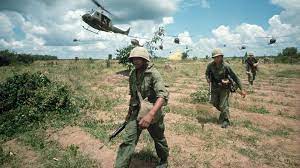
“Pinkville” is the name that the soldiers who fought on the ground gave to the villages around My Lai, site of the 1968 massacre in which hundreds of Vietnamese civilians were killed in 1968. It is an area well described by Tim O’Brien, whose books on the Vietnam War from the point of view of the troops on the ground are probably the best books to read about the war as it was fought.
O’Brien started in 1975 with his own experiences in the war, set forth in a book entitled If I Die in a Combat Zone, Box Me Up and Ship Me Home. He asks “Can the foot soldier teach anything important about war, merely from having been there? I think not. He can tell war stories.”
And that’s exactly what O’Brien does. The stories are all true in his first book, with only the names of characters being changed.
Then, in 1978, he wrote Going After Cacciato, the first of two fictional works about the war. This was followed in 1990 by The Things They Carried, which is my favorite of his books.
Whether writing fiction or straight memoir, O’Brien is a powerful writer. In If I Die in a Combat Zone, there is a chapter entitled “Step Lightly” about the different kinds of land mines used by the Viet Cong. The most horrifying of these is the Bouncing Betty:
The Bouncing Betty is feared most. It is a common mine. It leaps out of its nest in the earth, and when it hits its apex, it explodes, reliable and deadly. If a fellow is lucky and if the mine is in an old emplacement, having been exposed to the rains, he may notice its three prongs sticking out of the clay. The prongs serve as the Bouncing Betty’s firing device. Step on them, and the unlucky soldier will hear a muffled explosion ; that’s the initial charge sending the mine on its one-yard leap into the sky. The fellow takes another step and begins the next and his backside is bleeding and he’s dead. We call it “ol’ step and a half.”
Charles Minard’s Chart of Napoleon’s Russian Campaign 1812-1813
Never before has a military campaign been illustrated so completely as Charles Joseph Minard’s 1869 Carte figurative des pertes successives en hommes de l’Armée Française dans la campagne de Russie 1812–1813. It shows the strength of Napoleon’s forces at every point in the campaign.
Compare the red band at the far left of the illustration showing Napoleon’s force of half a million men as they crossed into Russia in June 1812. Notice as the red band narrows until it reaches Moscow, particularly after the casualties of the Battle of Borodino.
The black band illustrates the retreat from Moscow as winter is beginning to set in. That band gets progressively narrower until the crossing of the Berezina River at Studienka, highlighted by a black smudge I made on the above chart. After Berezina, only 25,000 combatants and 30,000 non-combatants survived. You can see the black band narrow after Berezina.
That particular battle was frequently described in Honoré de Balzac’s stories. particularly “Adieu.” It market the catastrophic end to a catastrophic campaign, which led in short order to Napoleon’s first exile, on Elba.
On the lower part of Minard’s graph, the relative temperature at several selected points during the retreat from Moscow is shown. Note that it was it its lowest around the time the Berezina was crossed.
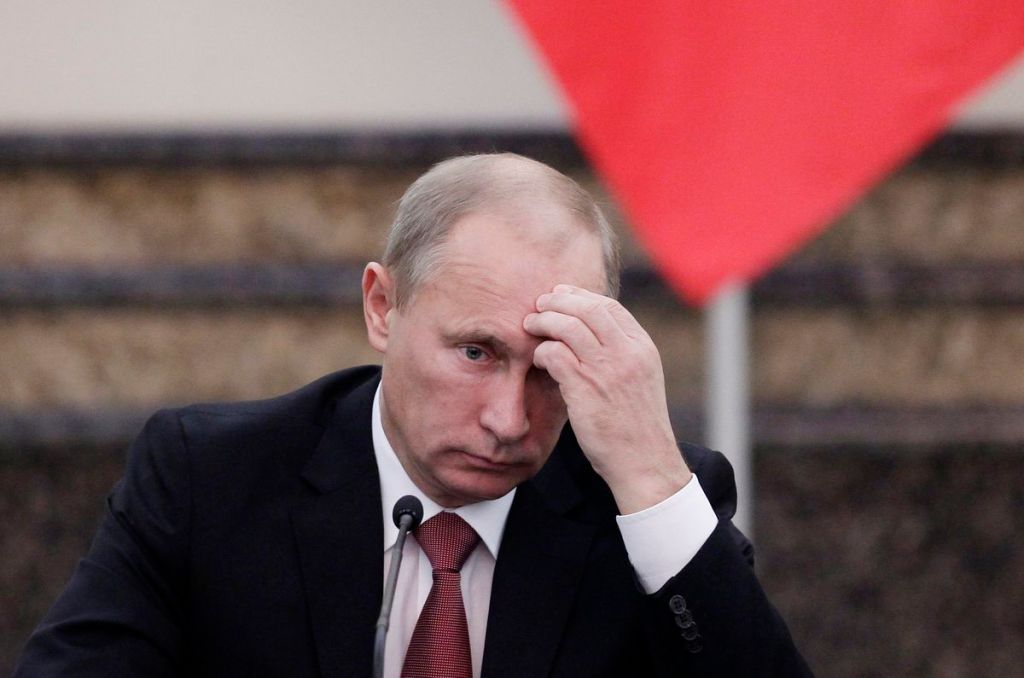
Back in February 27, 2022, I submitted a blog post entitled Putin Screws the Pooch. In it, I wrote:
I cannot help but think that Vladimir Putin has made a serious misstep in his assumptions regarding Ukraine’s willingness to abide by his thuggish behavior. The Russians made the same assumptions that Donald Rumsfeld and Vice President Dick Cheney made when we invaded Iraq in 2003: We were not in fact welcomed with flowers and candy, and, moreover, we are still there.
Now Putin is in a worse position politically than Nikita Khrushchev was in after the Cuban Missile Crisis of October 1962. Not only has Putin failed in his attempt to walk all over Ukraine, but he had to put down a quasi-coup by Yevgeny Prigozhin and his Wagner Group mercenaries.
When one is a totalitarian dictator, one cannot afford to look weak. And Vladimir Putin at this time looks a lot weaker than Khrushchev did in 1964 when Brezhnev and Kosygin replaced him as top dog of the Soviet Union.
And how can you be top dog when you’ve screwed the pooch like Putin has?
Monday, May 9, is the anniversary of Russia’s winning the Great Patriotic War—or, as we know it, World War Two. The news media have been speculating for weeks that Vladimir Putin will make some sort of announcement of victory tomorrow. Or, he just might decide to declare war on the “Neo-Nazis” that have been depriving his troops of anything approaching victory.
There will, of course, be a big military parade. But does Putin have enough working tanks and armored personnel carriers to impress the crowds on Red Square? I am eager to see what that madman plans to do for an encore.
I have young friends who for the first time in their lives are afraid of a nuclear confrontation. There may be one, but only on a small scale because it would cause widespread outrage around the world (but not in Russia). Perhaps Putin has more to fear than my young friends. His Ukraine invasion made the Rodina (Motherland) look not only bad, but downright cheesy. It would be no surprise if the FSB replaced Putin with a new stooge and put Vlady in a psychiatric nursing home “for his benefit.”



 Tarnmoor
You must be logged in to post a comment.