The Coldest and Windiest Place in the Lower 48

Atop Mount Washington in New Hampshire

Atop Mount Washington in New Hampshire in 2005

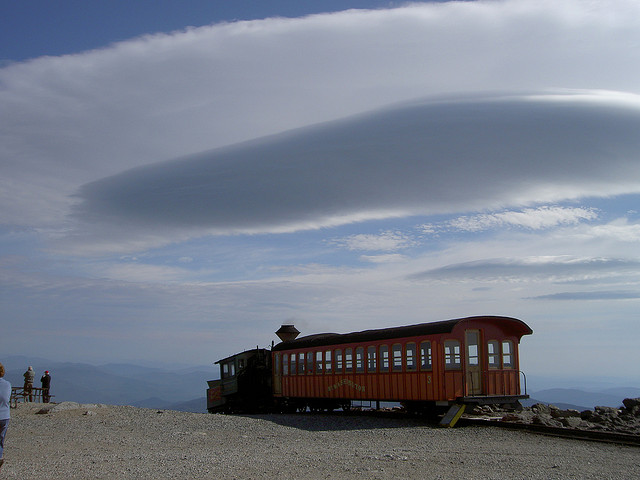
Mount Washington in the White Mountains of New Hampshire has recorded the coldest temperatures in the contiguous 48 states and the highest surface wind measurement. On January 22, 1885, the lowest official temperature reached -50º Fahrenheit (-46º Centigrade). Only Cyclone Olivia in the South Pacific reached higher recorded surface wind speeds than the 231 mph (372 km/hour), which occurred there on April 12, 1934.

As extreme as the temperature gets, you can easily travel up to the top using the historic cog railway (built in 1869). If you go, be sure to bundle up, else you will turn into an icicle.

The reason why Mount Washington has such extreme temperatures is explained as follows by Wikipedia:

The weather of Mount Washington is notoriously erratic. This is partly due to the convergence of several storm tracks, mainly from the Atlantic to the south, the Gulf region and Pacific Northwest. The vertical rise of the Presidential Range, combined with its north-south orientation, makes it a significant barrier to westerly winds. Low-pressure systems are more favorable to develop along the coastline in the winter months due to the relative temperature differences between the Northeast and the Atlantic Ocean. With these factors combined, hurricane force wind gusts are observed from the summit of the mountain on average of 110 days per year.

Suffice it to say, the cog railway does not run when the climactic conditions are unfavorable. The folks there don’t want their tourists blown to Oz and beyond.

Sweating at Pepperdine

The Malibu Campus of Pepperdine University

The Malibu Campus of Pepperdine University

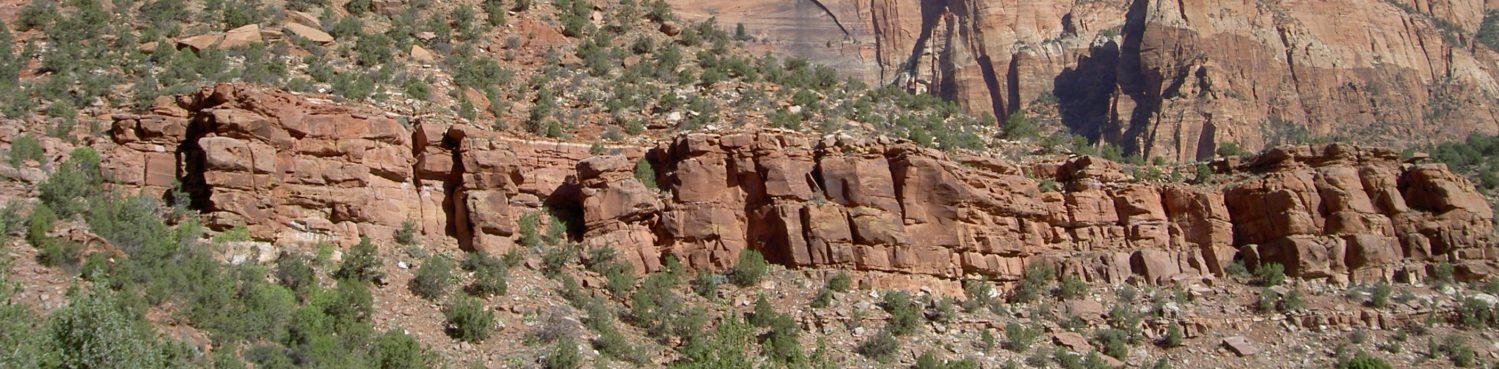
Because I forgot to bring my camera today, I’m using one of my old Minolta pictures of the Pepperdine University Campus in Malibu. Martine likes to walk around the hilly campus, and it’s great exercise. Today, however, we’ve been hit by the northern edge of another Mexican monsoon. The result was incredibly muggy and sweaty weather that felt like Florida this time of year. At several points during the walk, I just wanted to lie down on the grass and take a nap … but we pressed on.

As California is in the middle of a heinous drought, the campus looks much browner today than the above photo. Usually, we would see several groups of deer wandering between the buildings and feeding on the grasses. Today, we saw only two of them from a distance.

It’s strange to consider that (1) we are in a drought, but (2) we can’t just wring all the moisture out of the air so that it drains into the ground.

It will be a month or two before get the really dry Santa Ana winds that make the skin around our fingernails peel painfully. By then, I will be in Peru, high in the Andes, trying to keep from freezing my butt off.


The New Normal

Transitioning to—What?

Transitioning to—What?

As Zadie Smith writes in The New York Review of Books in an April 3, 2014 article entitled “Elegy for a Country’s Seasons”:

Sing an elegy for the washed away! For the cycles of life, for the saltwater marshes, the houses, the humans—whole islands of humans. Going, going, gone!

There is little doubt that our earth is changing, such that the next generation may not recognize the patterns that make for our own daily existence. Glaciers will be all but gone. Tornadoes, polar vortexes, hurricanes, typhoons, and giant storm cells will cover new parts of the globe. I for one will not say authoritatively that we are at fault or that we can prevent or even mitigate it, but I will try to do my part as if we can.

I do not profess to understand the psyche of climate change deniers. Suffice it to say that they will change their minds soon or die wrapped in a veil of profoundest ignorance. This actually has nothing to do with politics: It’s about the Earth, Our Mother. She’s entering a menopausal phase that will affect virtually everyone on the planet.

Zadie Smith continues:

Oh, what have we done! It’s a biblical question, and we do not seem to be able to pull ourselves out of its familiar—essentially religious—cycle of shame, denial, and self-flagellation. That is why (I shall tell my granddaughter) the apocalyptic scenarios did not help—the terrible truth is that we had a profound, historical attraction to apocalypse. In the end, the only thing that could create the necessary traction in our minds was the intimate loss of the things we loved.

Have we as a species ever turned our back on a powerful new technology? I can think of only a single example: When 16th Century Portuguese traders tried to sell the Japanese rifles, the Samurai opted to stick instead with their swords. Their whole military culture was predicated on the blade and their knowledge of how to wield it.

Maybe we should have stuck with the horse.


Predicting Heat Waves

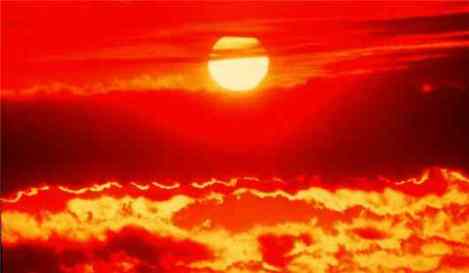
Southern California Has Been Sweltering

Southern California Has Been Sweltering

I dcon’t know why this is so, but whenever rain is predicted by the weather man, there is only a 30% chance we’ll ever see it. But if we’re in the middle of a heat wave, as we are now, whenever the weatherman predicts an early end to the heat, there is a greater than 80% chance that it will persist for at least several days more, or maybe even a week.

On Sunday, I worked with our network consultant installing a new server and workstations in our offices. Being the weekend, there was no air conditioning—it would have cost us $1,000 or more if we had requested it. It had something to do with paying building engineers overtime to turn the HVAC on and off. So we sweat our way through the job.

Eventually, it will cool down. Every day, the sun sets a minute or two earlier, meaning that there is ever so much less exposure in our uninsulated apartment to the searing heat which doesn’t seem to let up until 3 am or so. Martine and I set up fans all around our apartment to encourage to cool outside air to nullify the fetid heat radiating downward from the roof. It works moderately well, but still both of us have a hard time getting a good night’s sleep.


Extreme Weather

Are You Ready for Biblical Storms?

Whether or not you believe in climate change, it’s going to happen—all over you! The Montana thunderstorm illustrated above looks like something from a science fiction movie, but it’s just typical of the kind of intense weather we can expect from now on.

The reason my mind dwells on the subject right now is that we are having a heinous heat wave in Southern California, the kind of heat wave that makes a good night’s sleep impossible. My apartment building was built just after World War Two, so it wasn’t insulated. When I woke up at 6:30 this morning, it was still 82 degrees Fahrenheit in the bedroom. Tonight I expect it to be still hotter.

At lunch today, I read an interesting article in The New York Review of Books (June 20, 2013) on Henry Petroski’s To Forgive Design: Understanding Failure. In it, reviewer Bill McKibben writes:

In the course of Petroski’s life, and all of ours, we’ve left behind the Holocene, the ten-thousand-year period of benign climatic stability that marked the rise of human civilization. We’ve raised the global temperature about a degree so far, but a better way of thinking about it is: we’ve amped up the energy trapped in our narrow envelope of atmosphere, and hence every process that feeds off that energy is now accelerating. For instance, this piece of simple physics: warm air holds more water vapor than cold. Already we’ve increased moisture in the atmosphere about 4 percent on average, thus increasing the danger both of drought, because heat is evaporating more surface water, and of flood, because evaporated water must eventually come down as rain. And those loaded dice are doing great damage. The federal government spent more money last year repairing the damage from extreme weather than it did not education.

Haboob Time

Haboob Time

Now I’m not going to point any fingers, because, frankly, it’s too late. We can expect a lot of terrible weather all around the globe, from hundred-year floods to hundred-year-droughts—except occurring in much less time than a hundred years. Every year we seem to break new records, such as the Rim Fire now threatening Yosemite National Park.

Speaking as a Californian, I hope that the phenomenon we are now facing does not affect the movement of tectonic plates under the earth, or we are in for a wild ride. No, California won’t fall into the ocean, but it will continue to shake and bake … at an accelerated rate.